
The $1.5 Trillion AI Epoch: Inside the Strategic Bets That Powered Anthropic’s Historic IPO
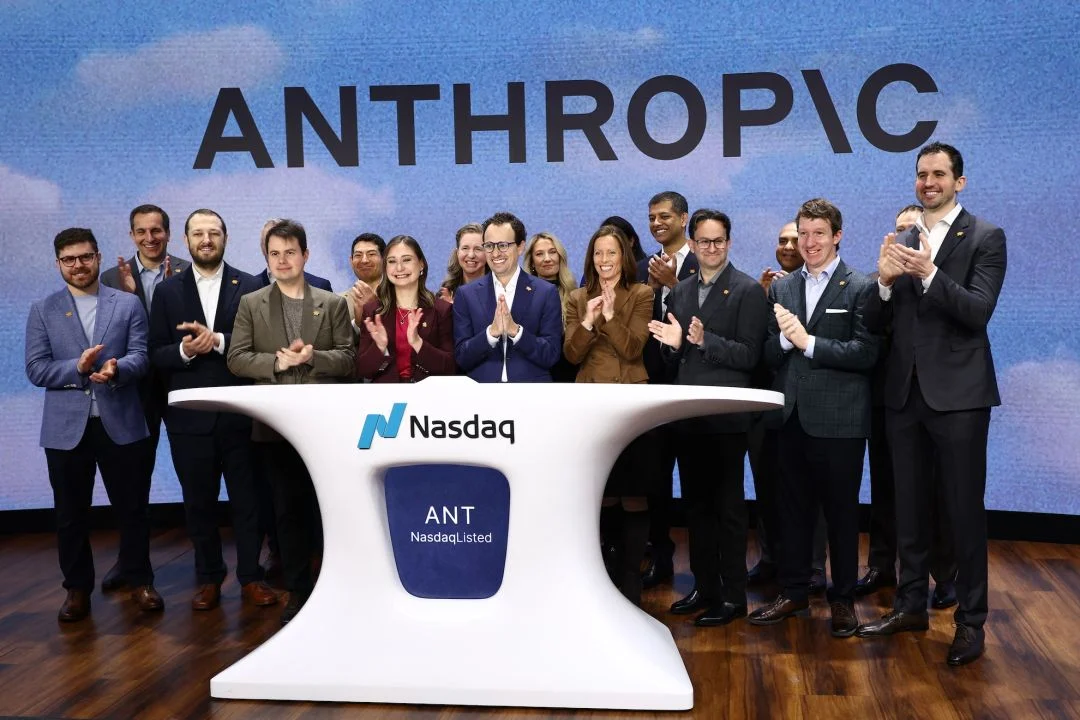
The landscape of Silicon Valley and global finance shifted fundamentally this week as Anthropic, the artificial intelligence lab founded by former OpenAI executives, completed the largest Initial Public Offering (IPO) in history. Raising $81.3 billion at a pricing of $83 per share, the company reached a staggering fully diluted valuation of $1.5 trillion before its shares even began their first day of public trading.
For the venture capital firms and sovereign wealth funds that backed the maker of the Claude LLM (Large Language Model), the event marks more than just a financial windfall; it is a definitive validation of a high-stakes investment thesis that many skeptics once labeled as reckless. From the early, concentrated bets of Notable Capital to the multi-billion-dollar entries by Singapore’s GIC, the journey to Anthropic’s public debut reveals a narrative of calculated risk in an era of unprecedented technological upheaval.
Main Facts: A Record-Breaking Public Debut
Anthropic’s IPO has shattered nearly every standing record for a venture-backed technology company. The $81.3 billion raised represents a capital infusion of a scale typically reserved for national infrastructure projects or the world’s largest conglomerate mergers.
Key highlights of the offering include:
- Valuation: A $1.5 trillion fully diluted market capitalization, placing Anthropic in the elite "Tera-cap" club alongside tech titans like Microsoft, Apple, and Nvidia.
- IPO Pricing: Shares were priced at $83, notably above the initially projected range, reflecting overwhelming institutional demand.
- Paper Returns: Early investors, such as Notable Capital, are seeing paper returns of approximately 15 times their initial investment in less than two years.
- Institutional Concentration: A select group of investors, including GIC and Baillie Gifford, deployed billions in the final private rounds, signaling a shift toward "winner-take-all" concentration in the AI sector.
This milestone comes at a time when the AI industry is facing a crossroads, caught between the soaring costs of compute and the increasing pressure to prove that generative AI can move beyond "chatbots" into "mission-critical" enterprise workflows.
Chronology: From Skepticism to $1.5 Trillion
The path to this IPO was paved with rounds that were, at the time, considered astronomically expensive. To understand how Anthropic reached this peak, one must trace the timeline of its most pivotal funding milestones.
Late 2024: The Notable Capital Gamble
The story of the IPO’s success begins in late 2024, during Anthropic’s Series E round. Notable Capital (formerly the U.S. arm of GGV Capital) made a move that perplexed many of its limited partners (LPs). The firm poured roughly 10% of the U.S. portion of its $1 billion-plus fund into the round at a $61.5 billion valuation.
At the time, the risk seemed immense. Anthropic was still perceived as trailing OpenAI in terms of raw capability and market share. Simultaneously, the rise of open-source models—most notably from China’s DeepSeek—threatened to commoditize the very technology Anthropic was selling. Despite these headwinds, Notable’s leadership, including Hans Tung, Glenn Solomon, and Dan Cahana, saw a shift in developer sentiment that others had missed.
2025: The Year of Institutional Onboarding
By early 2025, the narrative began to shift. In San Francisco, a pivotal meeting took place at the Italian restaurant Che Fico between Anthropic CFO Krishna Rao and Chris Emanuel, head of tech investments at Singapore’s sovereign wealth fund, GIC.
While GIC had been researching the company throughout 2024, the meeting provided the evidence needed to commit. Rao demonstrated that Anthropic’s model improvements were not just incremental but were actively driving a surge in enterprise adoption.
This led to a sequence of rapid-fire funding rounds:
- September 2025 (Series F): Anthropic raised at a $183 billion valuation. GIC and Baillie Gifford made their initial entries.
- Late 2025 (Series G): Led by GIC and Coatue, this round valued the company at $380 billion.
- 2026 (Pre-IPO): A final private round valued the firm at $965 billion, acting as a direct springboard for the $1.5 trillion IPO.
Supporting Data: The "Developer-First" Moat
The primary driver behind these soaring valuations was a fundamental change in the developer ecosystem. Data analyzed by Notable Capital during their due diligence revealed a startling trend: developers were increasingly favoring Claude over ChatGPT.
Internal metrics showed that by late 2024, developers were using Claude for 70% of their coding and development tasks—a complete reversal from the previous year. This "developer preference" served as a leading indicator for enterprise adoption.
Furthermore, the release of Claude Code in mid-2025 proved to be a turning point. As Chris Emanuel of GIC noted, the tool’s immediate popularity among engineers provided "high conviction" that Anthropic was building the essential "operating system" for AI-native software development.
Financially, the company began to show "compelling gross margins," according to Baillie Gifford’s Lilian Li. Unlike many AI startups that struggled with the high cost of inference, Anthropic demonstrated a consistent ability to execute on its vision while maintaining a path toward profitability. The company’s expansion into specialized verticals—legal services, life sciences, and cybersecurity—provided a diversified revenue stream that justified the trillion-dollar valuation.
Official Responses: The Backers’ Perspective
In the wake of the IPO, the architects of these investments have begun to share the rationale behind their "all-in" strategies.
Hans Tung, Co-founder of Notable Capital, addressed the initial skepticism from his LPs. "We just knew that for AI, the developer is at the center because they’re the early adopters," Tung told TechCrunch. He also emphasized the geopolitical necessity of Anthropic’s success. Having navigated the complexities of U.S.-China relations during the GGV split, Tung argued that "mission-critical" work would always require U.S.-based, closed-source models that prioritize safety and alignment.
Chris Emanuel of GIC highlighted the importance of relationship-building and data-driven conviction. Reflecting on the Series F entry, he noted that even though it was "very early," the signs of developer popularity were undeniable. GIC eventually invested more than $4.5 billion across three rounds, amassing a 1% stake in the company—a massive position for a sovereign wealth fund in a single private entity.
Lilian Li of Baillie Gifford pointed to Anthropic’s consistency as their defining characteristic. "It’s actually quite incredible how consistent they have been with how quickly everything’s been changing," Li said. She noted that the firm studied Anthropic for nearly two years before committing, waiting for proof that the company could "execute consistently" on its revenue and margin targets.
Implications: A New Era for Venture Capital and AI
Anthropic’s successful IPO has profound implications for the future of the technology sector and the venture capital model.
1. The Death of "Spray and Pray"
The success of Notable Capital’s concentrated bet suggests a shift in venture strategy. In the AI era, where the capital requirements for "frontier models" are measured in billions, firms may move away from broad portfolios in favor of massive, high-conviction bets on a single market leader. For Notable, a 10% fund allocation into one company was a career-defining risk that has now paid off 15-fold.
2. The Resilience of Closed-Source Models
The IPO serves as a counter-narrative to the idea that open-source models like DeepSeek or Meta’s Llama would render closed-source companies obsolete. The market has signaled that for enterprise-grade, "mission-critical" applications, there is a premium on the security, reliability, and support offered by a closed-source provider like Anthropic.
3. The Enterprise "Super-App"
Anthropic’s expansion into "Cowork" and specialized industries suggests that the future of LLMs is not just a chat interface, but a comprehensive platform that integrates into every facet of professional work. By successfully penetrating legal and life sciences sectors, Anthropic has proven that AI can handle high-stakes, high-complexity tasks that require more than just "probabilistic guessing."
4. A New Benchmark for Success
With a $1.5 trillion valuation, Anthropic is no longer a startup; it is a systemic pillar of the global economy. Its performance as a public company will now serve as the primary barometer for the "AI bubble" or "AI boom." If Anthropic can maintain its growth and margins in the public eye, it will pave the way for a wave of other AI IPOs. If it falters, it could freeze the capital markets for the next generation of innovators.
As the dust settles on this historic week, the message from the markets is clear: the AI revolution has moved from the laboratory to the bedrock of global finance. For the investors who saw the potential in Claude when it was still an underdog, the rewards are as historic as the technology itself.