The Painterly AI Aesthetics of Jacob Holster: Redefining the Digital Canvas
In an era where generative artificial intelligence is often synonymous with hyper-realistic renders, clinical precision, and the "uncanny valley" of digital perfection, a new movement is emerging that prioritizes texture, soul, and traditional artistic sensibility. At the forefront of this movement is Jacob Holster, known to the digital art world by his Instagram handle, @bandyquantguy.
Holster, an Assistant Teaching Professor of Music Education at Penn State University, has carved out a unique niche that bridges the gap between high-level academic inquiry and avant-garde visual experimentation. His work does not merely use AI to generate images; it uses the technology as a brush to evoke the tactile, warm qualities of classical oil painting. By blending his background in music, pedagogy, and technology, Holster is challenging the prevailing narrative that AI art is inherently "cold" or "mechanical."
Main Facts: The Intersection of Academia and Generative Art
Jacob Holster’s artistic output is inseparable from his professional role at Penn State. As a scholar, his research focuses on the convergence of artificial intelligence, creative practice, and pedagogy. This dual identity—professor and practitioner—lends his work a conceptual weight that distinguishes it from the sea of purely aesthetic exercises found on social media.

The "Bandyquantguy" Identity
Operating under the moniker @bandyquantguy, Holster’s digital presence serves as a laboratory for what he terms "painterly AI." His portfolio is characterized by several key elements:
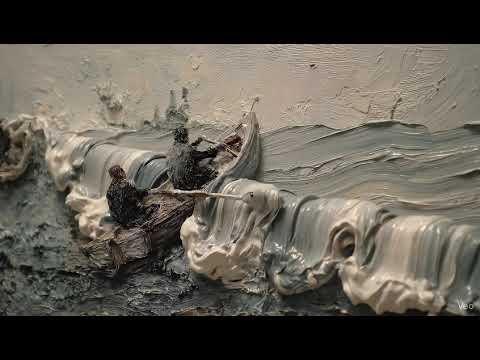
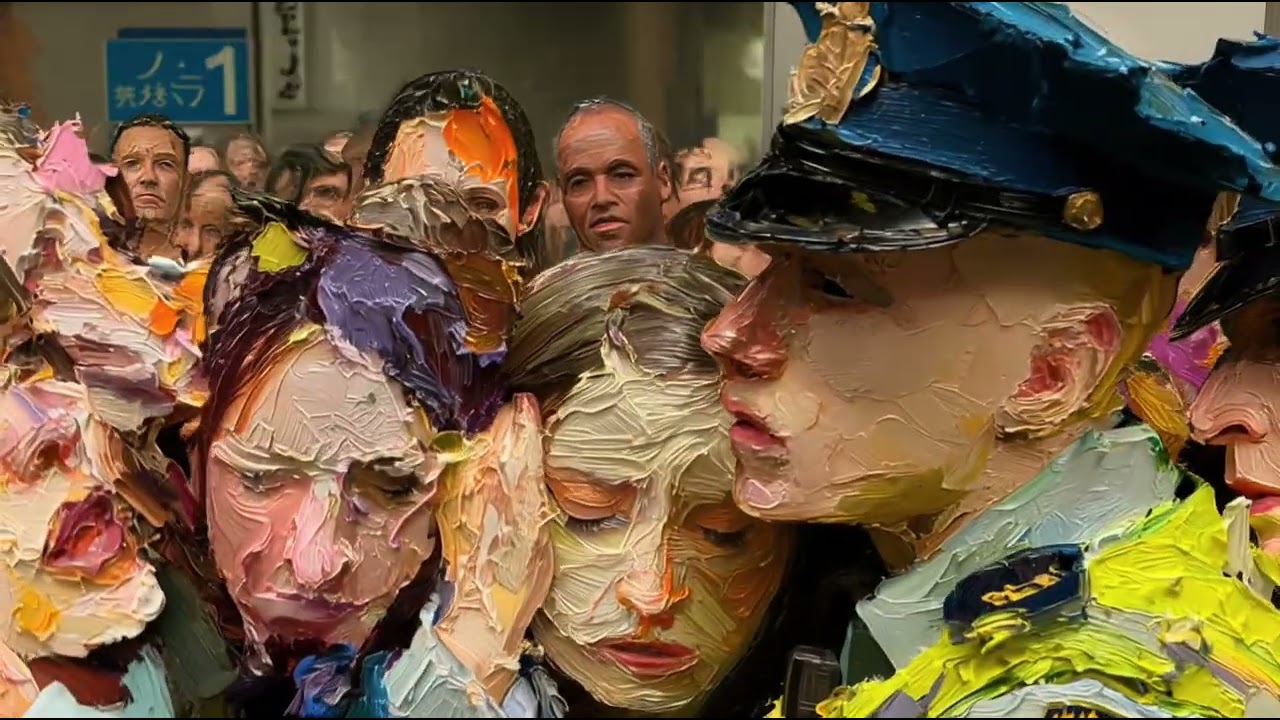
- Tactile Textures: Unlike the glossy finish of standard AI outputs, Holster’s films—such as the Paint World series—feature visible brushstrokes, impasto-like depth, and a deliberate sense of "grit."
- Humanistic Narrative: His work often centers on the human experience, exploring themes of consciousness, memory, and the "human terrain" of art.
- Multimedia Integration: Given his background in music education, his visual projects are deeply intertwined with sophisticated soundscapes, creating a holistic sensory experience.
Key Works and Series
Holster’s recent filmography, largely categorized under his Paint World project, includes standout pieces that have garnered significant attention within the surrealist and AI art communities:
- "Le Voyage" [Paint World 28]: A dreamlike exploration of movement and transition.
- "Recipe for Consciousness" [Paint World 38]: A conceptual piece that attempts to visualize the intangible nature of thought.
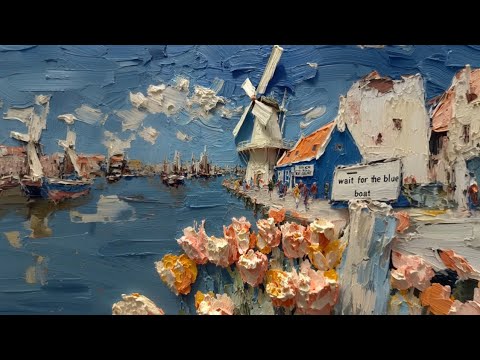
- "Wait for the Blue Boat" [Paint World 18]: A study in color theory and atmospheric perspective.
- "Art Is Human Terrain" [Paint World 33]: Perhaps his most definitive statement on the role of the artist in the age of automation.
Chronology: From Music Education to Visual Surrealism
The evolution of Jacob Holster’s career reflects a broader trend in the humanities: the transition from traditional instruction to tech-integrated creative expression.
The Academic Foundation
Holster’s journey began in the realm of music. As an Assistant Teaching Professor at Penn State, his primary focus has been on how students learn and create music in the 21st century. His early research explored quantitative methods in music education—a background hinted at by the "quant" in his handle. However, as generative AI tools became more accessible around 2022, Holster began to investigate how these algorithms could be used not just for data analysis, but for the synthesis of new artistic forms.
The Emergence of "Paint World" (2023–Present)
In the last two years, Holster transitioned from static AI image generation to complex video synthesis. He moved away from the "out-of-the-box" aesthetics of tools like Midjourney and DALL-E, instead developing a workflow that prioritized a "painterly" look. This involved sophisticated prompting techniques and post-production methods that mimic the physical properties of oil on canvas.
By 2024, his Paint World series became a mainstay of his portfolio. Each installment (numbered 1 through 38 and beyond) represents a different experiment in light, shadow, and narrative. The chronology of these works shows a clear progression from simple environmental studies to complex, character-driven short films that question the nature of creativity itself.
Supporting Data: The Technical and Aesthetic Philosophy
To understand why Holster’s work is significant, one must look at the data regarding current AI art trends. A 2023 industry report on generative media noted that over 70% of AI-generated content aims for "photorealism." Holster’s decision to move in the opposite direction—toward abstraction and traditional media—is a calculated aesthetic rebellion.
The "Painterly" Metric
In digital art theory, "painterly" refers to a style where the artist’s hand (or the simulation of it) is visible. Holster achieves this through:
- Diffusion Model Manipulation: Using specific noise schedules in the diffusion process to ensure that the AI does not "smooth over" the edges of shapes.
- Color Grading: Applying warm, analog-inspired color palettes that evoke 19th-century Impressionism rather than 21st-century digital gradients.
- Temporal Coherence with a Purpose: While many AI filmmakers struggle with the "flicker" or instability of AI video, Holster leans into it, using the shifting textures to simulate the vibration of a living painting.
Pedagogical Influence
Holster’s work is also supported by his research into "Creative AI Pedagogy." He posits that AI should be taught as a "co-creator" rather than a "vending machine." This philosophy is evident in his films; they do not look like they were "ordered" from a prompt, but rather "coaxed" out of a collaboration between human intent and algorithmic randomness.
Official Responses and Academic Context
While the general public often views AI art with a mix of awe and skepticism, the academic response to Holster’s work has been one of rigorous engagement. At Penn State, Holster’s role involves navigating the ethical and practical implications of these tools in the classroom.
The Penn State Perspective
Within the university framework, Holster’s work serves as a case study for the "Human-Centered AI" initiative. Faculty peers have noted that his approach provides a counter-argument to the fear that AI will replace human artists. Instead, Holster demonstrates that a deep understanding of traditional art history and music theory is actually more important when using AI, as it allows the artist to guide the machine toward more meaningful results.
Critical Reception in the Surrealist Community
Platforms like Surrealism Today have highlighted Holster as a bridge between the historical surrealist movement and modern digital tools. Critics argue that Holster is doing for AI what the early surrealists did for photography: taking a "mechanical" process and forcing it to reveal the subconscious and the dreamlike.
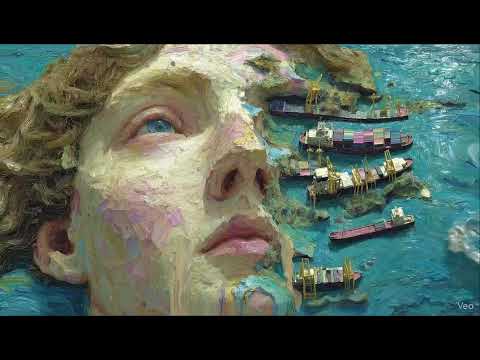
One critique of his film Art Is Human Terrain noted: "Holster manages to strip away the clinical sheen of the computer, leaving behind something that feels like it was pulled from a dusty attic in 1920s Paris, yet it could only have been made today."
Implications: The Future of the "Human Terrain"
The work of Jacob Holster carries profound implications for the future of both art and education. As he continues to document the "Human Terrain," several key shifts are becoming apparent:
1. The Democratization of High-End Visuals
Holster’s ability to produce films with the visual complexity of a high-budget animated feature—using only a desktop computer and his own expertise—points to a future where individual creators can compete with large studios in terms of sheer aesthetic power. However, Holster’s work suggests that "power" is nothing without "perspective."

2. The Return to "Slow" Digital Art
In a world of "fast content," Holster’s Paint World series encourages a "slow" viewing experience. The textures demand that the viewer linger on the frame, much like they would in a physical gallery. This could signal a shift in how social media platforms like Instagram are used: moving from a place of quick scrolling to a venue for digital "slow art."
3. AI as a Tool for Music Education
Perhaps the most significant implication lies in Holster’s primary field. By showing how visual AI can be driven by musical sensibilities, he is opening new doors for music educators. Students may soon be able to "see" their compositions rendered as living paintings, creating a new form of synesthetic education that was previously impossible.
Conclusion: The Artist in the Machine
Jacob Holster (@bandyquantguy) represents a new breed of "academic artist." He is not content to simply use new tools; he is committed to interrogating them, breaking them, and rebuilding them in a human image. His "painterly" aesthetics serve as a reminder that even in an age of silicon and software, the most important element of art remains the "human terrain"—the messy, textured, and deeply emotional landscape of the person behind the screen.
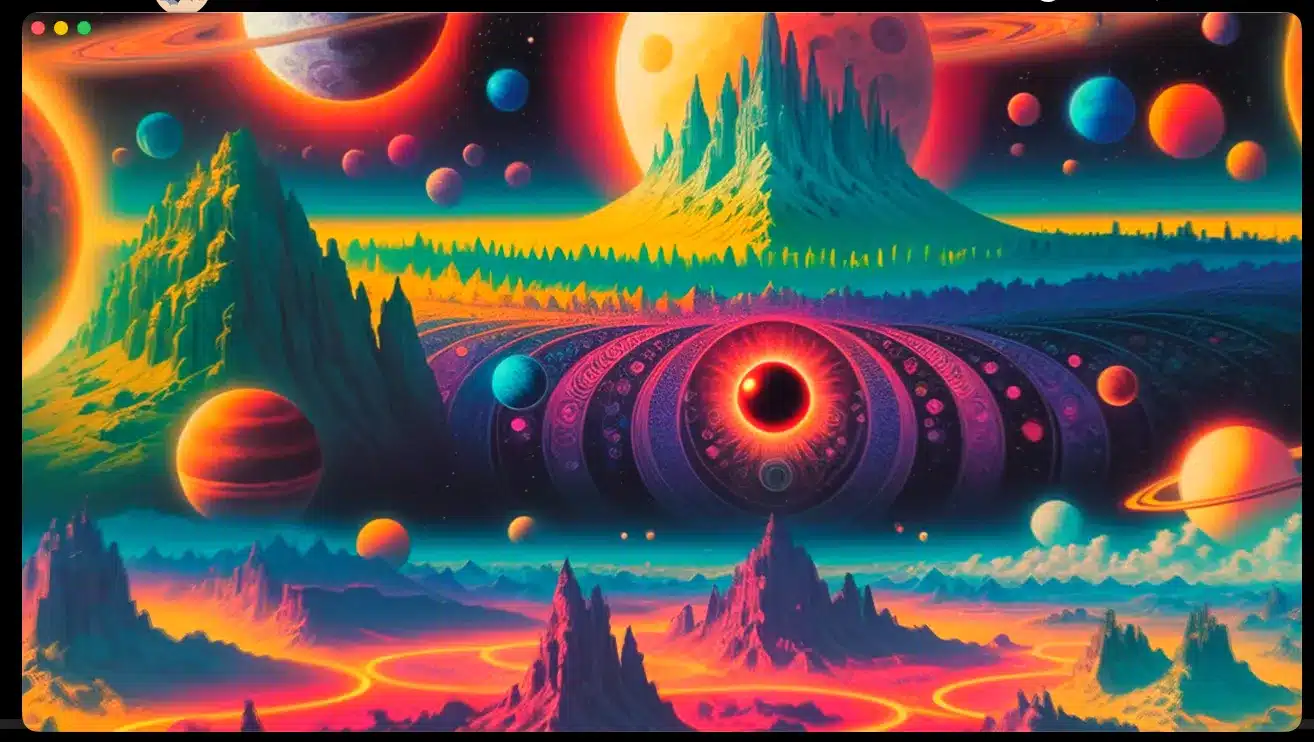
As Holster continues his work at Penn State and his explorations in the Paint World, he remains a vital voice in the conversation about what it means to be a creator in the 21st century. His work is a testament to the fact that the future of art is not a choice between human and machine, but a vibrant, textured collaboration between the two.
Where to Explore His Work:
- Instagram: @bandyquantguy
- YouTube: Jacob Holster – AI Art & Music
- Academic Profile: Penn State University, School of Music.