The $13 Billion Gambit: Nvidia’s Strategic Pursuit of Hugging Face and the Future of Open-Source AI
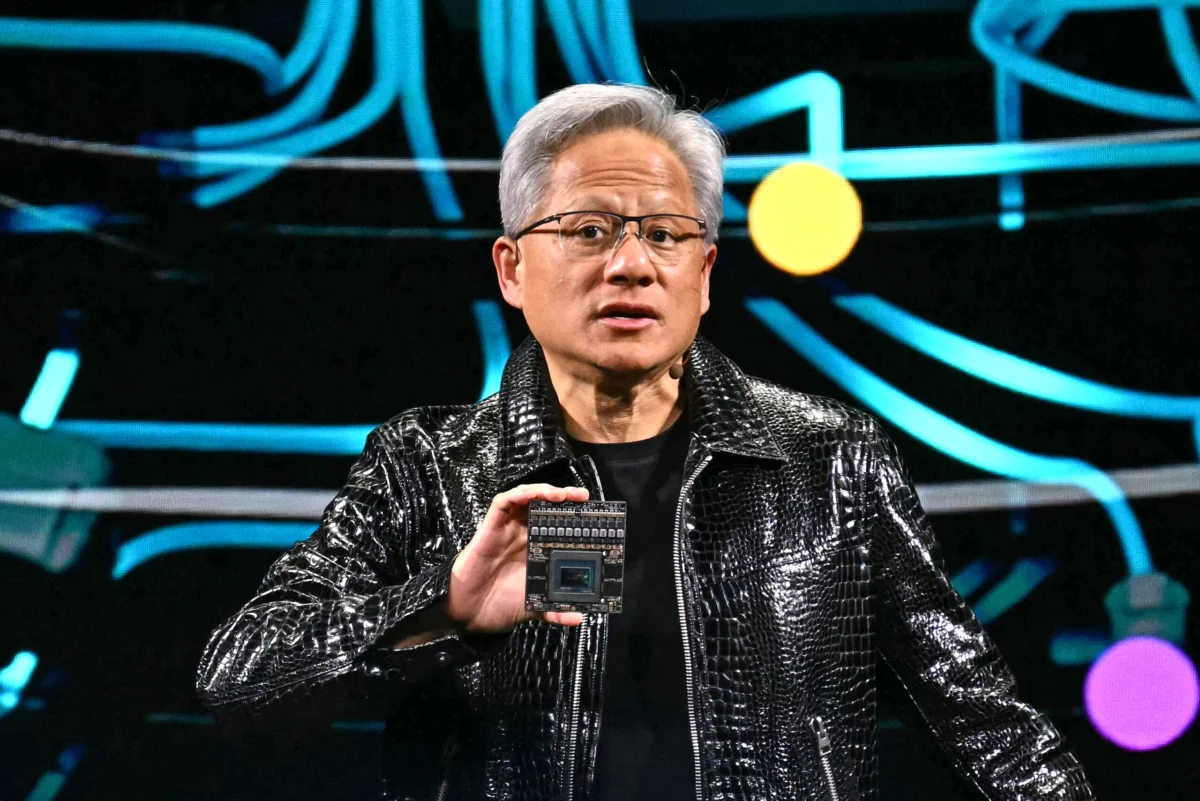
In a move that could fundamentally restructure the power dynamics of the artificial intelligence industry, Nvidia has reportedly reached an agreement to acquire Hugging Face, the world’s leading repository for open-source AI models, for approximately $12.9 billion. The news, first broken by The Information and followed by evolving reports from Business Insider, signals a watershed moment for the "middleware" of the AI ecosystem.
While the deal marks a staggering valuation for a company that was worth less than half that amount a year ago, it underscores a deeper strategic imperative for Nvidia: the preservation of its hardware hegemony through the aggressive cultivation of an open-source alternative to the "walled gardens" of Silicon Valley.
Main Facts: A Landmark Deal in Flux
The reported acquisition price of $12.9 billion—with some sources suggesting the final valuation could exceed $13 billion—represents one of the largest acquisitions in the history of the AI sector. Hugging Face, often described as the "GitHub of AI," serves as the central hub where researchers and developers host, share, and collaborate on machine learning models, datasets, and demo applications.
However, the finality of the deal remains a subject of intense scrutiny. While The Information cited a source familiar with the matter stating an agreement had been reached, Business Insider reported that as of Wednesday night, a signed agreement was not yet in place. These reports suggest that while the two parties are in advanced stages of negotiation, the deal could still "atomize" or collapse if final terms are not met.
The financial leap for Hugging Face is nothing short of meteoric. In 2023, the company raised $235 million at a $4.5 billion valuation. Should the $13 billion figure hold, it would represent a nearly 200% increase in valuation in roughly 12 months—a period during which Hugging Face’s annual recurring revenue (ARR) grew from approximately $100 million to $150 million.
Chronology: From Emoji Chatbot to Industry Pillar
To understand the gravity of this acquisition, one must look at the unconventional trajectory of Hugging Face. Founded in 2016 by Clément Delangue, Julien Chaumond, and Thomas Wolf, the company did not begin as an infrastructure giant. Its original product was a "Tamagotchi-like" chatbot aimed at teenagers.
The pivot occurred when the founders open-sourced the underlying code for their chatbot’s natural language processing (NLP) capabilities. The library, which eventually became the "Transformers" library, saw explosive adoption among researchers at Google, Facebook, and various universities. Recognizing the vacuum in the market for a collaborative platform dedicated to machine learning, the founders leaned into the community-driven model.
Key Milestones:
- 2016: Founded in New York/Paris as a social AI startup.
- 2019-2021: Rapid growth of the Transformers library; becomes the de facto standard for NLP.
- May 2022: Raised $100 million Series C at a $2 billion valuation.
- August 2023: Raised $235 million Series D at a $4.5 billion valuation, with participation from Nvidia, Google, Amazon, and Salesforce.
- Late 2023: Reports surface that Hugging Face rejected a $500 million investment offer from Nvidia that would have valued the company at $7 billion. At the time, Delangue emphasized the need for independence.
- August 2024: Reports emerge of a full acquisition by Nvidia for $12.9 billion to $13 billion.
Supporting Data: The Economics of the Acquisition
The acquisition price raises eyebrows when compared to traditional SaaS (Software as a Service) multiples. At a $13 billion valuation and $150 million in revenue, Nvidia is paying a multiple of roughly 86x revenue. For context, most high-growth tech companies trade at multiples between 10x and 20x.
However, Nvidia’s interest is not primarily driven by Hugging Face’s immediate subscription revenue (derived from its "AutoTrain" and "Inference Endpoints" services). Instead, the value lies in the strategic moat.
The Open-Source vs. Closed-Source War
The AI landscape is currently bifurcated. On one side are the "Closed" labs—OpenAI, Anthropic, Google, and Amazon—who develop proprietary models and, crucially, are increasingly developing their own custom AI silicon (TPUs, Trainium, Inferentia) to reduce their reliance on Nvidia’s expensive H100 and Blackwell chips.
On the other side is the "Open" ecosystem—Meta (Llama), Mistral, and thousands of independent developers. These players almost exclusively use standard hardware—primarily Nvidia’s—to train and run their models. By owning the platform where the open-source community lives, Nvidia ensures that the "alternative" to the closed-source giants remains robust, diverse, and, most importantly, dependent on Nvidia hardware.
Cloud Synergy and Financial Hedging
Nvidia has also struggled to find its footing in the cloud services market. Its "DGX Cloud" initiative, which aimed to rent out AI computing power directly to customers, was reportedly scaled back a year ago. Hugging Face offers a "ready-made" cloud interface. Developers already use Hugging Face to rent compute to deploy their models.
Furthermore, Nvidia has committed tens of billions of dollars to cloud providers to ensure its chips are available. If those chips go unused, Nvidia faces a financial liability. Owning Hugging Face allows Nvidia to funnel its excess compute capacity directly to the millions of developers on the platform, creating a built-in "safety net" for its hardware supply chain.
Official Responses: Noteworthy Silence
As of the time of publication, both Nvidia and Hugging Face have declined to provide official comments. In the tech industry, a "no comment" is often standard, but analysts have pointed out that Nvidia’s silence is particularly telling. Historically, Nvidia has been quick to issue corrections or denials regarding rumors it deems inaccurate or damaging to its stock price.
Clément Delangue, the CEO of Hugging Face, has also remained uncharacteristically quiet on social media regarding the reports. Just months ago, Delangue was a vocal proponent of the "neutrality" of Hugging Face, arguing that the company should serve as the "Switzerland of AI." The potential shift from neutral platform to a subsidiary of the world’s most powerful chipmaker would represent a significant reversal in philosophy, likely driven by the sheer scale of the capital required to compete with the compute-heavy giants.
Implications: A New Era of AI Consolidation
The potential acquisition of Hugging Face is not an isolated incident; it is part of a broader trend of "platform consolidation." Earlier this month, the fintech giant Stripe reportedly acquired OpenRouter—a startup that helps developers toggle between different AI models—for $7 billion.
If the Nvidia-Hugging Face deal closes, the implications for the industry are profound:
1. The End of Neutrality?
Hugging Face’s success was built on being a neutral ground where researchers from Google, Meta, and Microsoft could all share work. If Nvidia owns the platform, will competitors like AMD or Intel be treated as first-class citizens on the site? Will optimization tools on Hugging Face begin to favor Nvidia’s CUDA architecture even more heavily than they already do?
2. Geopolitical Leverage
The reports mention that Delangue has recently been involved in Washington D.C. debates regarding "open-weight" models. Specifically, concerns have been raised about Chinese labs (like Moonshot AI) using open-source frameworks to catch up to U.S. capabilities. By owning Hugging Face, Nvidia places itself at the center of the national security conversation regarding how AI technology is distributed globally.
3. Vertical Integration
Nvidia is no longer just a chip company. With this acquisition, it would control the hardware (Blackwell), the software layer (CUDA), the model repository (Hugging Face), and a significant portion of the cloud deployment infrastructure. This level of vertical integration is rarely seen outside of the early days of the computing revolution (IBM) or the peak of the smartphone era (Apple).
4. The "Brain Drain" and Talent War
Hugging Face employs some of the world’s most respected machine learning engineers. In an era where "talent acquisitions" are common, Nvidia is not just buying a website; it is buying the collective intelligence of the community’s most influential moderators and developers.
Conclusion
Whether the deal is signed this week or remains in the "talks" phase, the fact that a $13 billion figure is on the table for an open-source repository changes the valuation calculus for the entire AI industry. For Nvidia, it is an expensive but arguably necessary defensive play to ensure that the future of AI remains built on its silicon. For Hugging Face, it is the ultimate validation of the open-source movement—even if that movement eventually finds its home within the corporate halls of the world’s largest semiconductor company.
As the AI arms race moves from the laboratory to the infrastructure layer, the "Hugging Face of Nvidia" may well become the face of the next industrial revolution.