
The $250 Million Betrayal: Inside the Legal Battle Between Krafton and the Creators of Subnautica
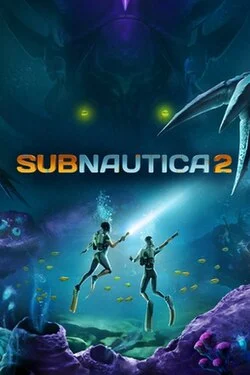
In the high-stakes world of international video game acquisitions, the relationship between a parent corporation and its subsidiary is often a delicate dance of creative autonomy and financial oversight. However, a recent ruling from the Delaware Court of Chancery suggests that the partnership between South Korean gaming giant Krafton and its acquired studio, Unknown Worlds, has devolved into a cautionary tale of corporate maneuvering and alleged bad faith.
The dispute centers on a staggering $250 million "earnout" provision—a performance-based payment—that the founders of Unknown Worlds claim Krafton tried to avoid by systematically dismantling the studio’s leadership. Following a dramatic first phase of litigation, a Delaware judge has ruled in favor of the developers, finding that Krafton breached its contract and ordering the immediate reinstatement of the studio’s leadership.
Main Facts: A Breach of Trust and Contract
The core of the legal battle stems from Krafton’s acquisition of Unknown Worlds, the studio behind the critically acclaimed underwater survival hit Subnautica, in 2021. The deal was structured with a significant upfront payment followed by an "earnout" agreement. An earnout is a common mechanism in mergers and acquisitions (M&A) where the sellers receive additional compensation if the business hits specific financial or development milestones after the sale.
In this instance, the earnout was valued at up to $250 million, contingent on the successful development and launch of Subnautica 2. As the sequel neared its early access phase, Krafton allegedly moved to terminate the founders and key executives of Unknown Worlds, including CEO Edward Gill. Krafton’s justification for these dismissals was "for cause"—a legal distinction that, if upheld, would effectively nullify the studio’s right to the $250 million payout.
However, the Delaware Court of Chancery has found these claims lacking. In the first phase of the trial, the judge concluded that Krafton’s actions constituted a breach of the acquisition agreement. The court ruled that the dismissals were not justified by "cause" but were instead a tactical maneuver to avoid financial obligations. As a result, the court has issued a series of mandates:
- Reinstatement: CEO Edward Gill must be immediately restored to his position.
- Timeline Extension: The duration of the earnout period has been extended by the exact amount of time Gill was "ousted" from the company.
- Injunction: Krafton is legally enjoined from interfering with Gill’s authority regarding the early access launch of Subnautica 2.
Chronology: From Acquisition to the Courtroom
To understand the gravity of the current situation, one must look back at the timeline of the Krafton-Unknown Worlds relationship:
- October 2021: Krafton announces the acquisition of Unknown Worlds. The deal is framed as a way for Krafton to diversify its portfolio beyond the PUBG (PlayerUnknown’s Battlegrounds) franchise. The founders, Charlie Cleveland and Max McGuire, express optimism about the resources Krafton will provide.
- 2022–2023: Development of Subnautica 2 proceeds. Behind the scenes, friction begins to mount regarding the "live service" elements Krafton reportedly wants to implement—a shift from the purely single-player/co-op roots of the original game.
- Late 2024: As the development milestones for the $250 million earnout approach, Krafton initiates internal investigations into the studio’s leadership.
- Early 2025: Krafton fires the founders and CEO Edward Gill, citing "cause." The move sends shockwaves through the industry, as the studio’s leadership is seen as integral to the Subnautica brand.
- Mid-2025: The founders and Gill file a lawsuit in Delaware, the legal home of many American-incorporated businesses, alleging breach of contract and a "bad faith" attempt to sabotage the earnout.
- March 2026: The Delaware Court of Chancery releases its discovery documents and Phase 1 ruling. The judge slams Krafton’s actions, reinstates the leadership, and protects the upcoming launch of Subnautica 2.
Supporting Data: The Mechanics of the Earnout
The $250 million at stake is not merely a bonus; it represents a significant portion of the total valuation of Unknown Worlds. In the gaming industry, earnouts are often used to bridge the gap between what a buyer wants to pay today and what a seller believes the studio will be worth after its next big release.
According to the discovery documents shared by industry figures like Rami Ismail, the earnout was tied to "Early Access" milestones. This is a critical detail because Subnautica (2018) and Subnautica: Below Zero (2021) were both pioneers of the Early Access model, using player feedback to shape the final product. By firing the leadership just before the Subnautica 2 Early Access launch, Krafton was accused of attempting to seize control of the project at its most critical financial juncture.
The judge’s decision to extend the earnout period is a rare and powerful legal remedy. It acknowledges that by removing Gill and his team, Krafton effectively "stopped the clock" on the studio’s ability to earn their compensation. The extension ensures that the developers are not penalized for the months they spent in legal limbo.
Furthermore, the "for cause" argument is notoriously difficult to prove in Delaware law unless there is evidence of gross negligence, criminal activity, or a direct violation of a non-compete clause. The court’s finding suggests that Krafton’s evidence for "cause" was insufficient, painting a picture of a corporation that "regretted the deal" once the price tag for success became clear.

Official Responses and Industry Reaction
While Krafton has remained relatively tight-lipped regarding the specifics of the ongoing litigation, their legal filings suggest a defense based on "managerial necessity." Krafton argued that the changes in leadership were necessary to ensure the commercial viability of Subnautica 2 and that the dismissals were handled according to their interpretation of the employment agreements.
In contrast, the response from the development community has been one of staunch support for the Unknown Worlds team. Nicholas Lovell, writing for Gamesbrief, noted that the situation "doesn’t make Krafton come out of this whole experience very well," suggesting that the company’s reputation as a "developer-friendly" publisher has been severely tarnished.
Rami Ismail, a prominent voice in the indie and mid-tier development scene, highlighted the discovery documents as a "fascinating" look into the darker side of corporate acquisitions. The consensus among industry analysts is that Krafton’s move was a "transparent" attempt to save $250 million at the expense of the people who created the value in the first place.
Implications: The Future of Subnautica and Studio M&A
The implications of this ruling extend far beyond the walls of Unknown Worlds.
For Subnautica 2
The court’s injunction is a massive win for fans of the franchise. By preventing Krafton from "impeding Gill’s authority," the court has essentially protected the creative vision of the game. There were widespread fears that Krafton might force aggressive monetization or "Games as a Service" (GaaS) models onto Subnautica 2 that were inconsistent with the original’s atmosphere. With Gill back at the helm, the project is more likely to stay true to its roots.
For Krafton
Krafton now faces a "Phase 2" of litigation that could be even more damaging. This second phase will determine whether Krafton’s actions "wrongfully impaired" the earnout and what monetary damages are owed. If the court finds that Krafton’s interference delayed the game or reduced its potential earnings, Krafton could be forced to pay the $250 million plus additional punitive damages and legal fees.
For the Gaming Industry
This case serves as a landmark for future studio acquisitions. It highlights the "moral hazard" of earnouts: if a buyer stands to save hundreds of millions of dollars by ensuring a studio fails to hit a target, the temptation to interfere is immense.
Independent studios looking to sell will likely point to the Krafton/Unknown Worlds case as a reason to demand higher upfront payments or more robust legal protections within their earnout clauses. It may also lead to a cooling effect on South Korean investments in Western studios, as developers may now view such deals with increased skepticism.
Conclusion
The battle between Krafton and the makers of Subnautica is a stark reminder that in the world of corporate gaming, the most dangerous monsters aren’t always found in the deep ocean—sometimes, they are in the boardroom.
As Edward Gill returns to his office to oversee the launch of Subnautica 2, he does so with a court-ordered shield against his own parent company. While the developers have won the first round, the second phase of litigation looms, promising to further expose the inner workings of one of the industry’s most contentious acquisitions. For now, the message from the Delaware court is clear: a contract is not a suggestion, and "weaseling out" of a $250 million debt through bad-faith dismissals will not be tolerated.


Leave a Comment