The $250 Million Subnautica Dispute: Krafton’s Legal Setback and the Future of Unknown Worlds
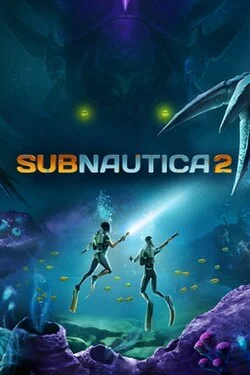
The high-stakes world of video game mergers and acquisitions (M&A) is often characterized by ambitious promises and complex financial structures. However, few cases in recent years have highlighted the potential for corporate friction as starkly as the ongoing legal battle between South Korean giant Krafton Inc. and the founders of Unknown Worlds, the studio behind the critically acclaimed Subnautica series.
In a significant development in March 2026, the Delaware Court of Chancery delivered a scathing preliminary ruling against Krafton. The court found that the publisher had systematically breached its contractual obligations in an attempt to avoid a $250 million earn-out payment. This ruling not only reinstates the ousted leadership but also casts a long shadow over Krafton’s corporate governance and its strategic handling of one of its most valuable intellectual properties.
Main Facts: A Breach of Contract and a Judicial Reinstatement
The core of the dispute centers on the 2021 acquisition of Unknown Worlds by Krafton. As part of the deal, a performance-based "earn-out" clause was established, potentially totaling $250 million. Such clauses are common in the industry, designed to incentivize founders to remain with the company and ensure the success of future projects—in this case, the highly anticipated Subnautica 2.
As the timeline for the earn-out approached, Krafton moved to terminate the founders of Unknown Worlds, including CEO Edward Gill. Krafton alleged that the dismissals were "for cause," a legal distinction that would effectively nullify the founders’ rights to the $250 million payout. The founders promptly filed suit, alleging that the "for cause" claims were a fabricated pretext designed solely to circumvent the financial obligations of the acquisition agreement.
The Delaware judge’s Phase One ruling was a decisive victory for the founders. The court concluded that:
- Contractual Breach: Krafton breached the acquisition agreement by firing the founders without legitimate cause.
- Reinstatement: Edward Gill must be reinstated as CEO of Unknown Worlds.
- Protection of Authority: Krafton is legally enjoined from impeding Gill’s authority, specifically regarding the Early Access launch of Subnautica 2.
- Earn-out Extension: The timeline for the earn-out has been extended by the exact duration of Gill’s "ouster" to ensure the founders are not penalized for the time they were wrongfully removed from the company.
Chronology: From Acquisition to Courtroom
The path to this legal confrontation began during the height of the gaming industry’s pandemic-era expansion.
October 2021: The Acquisition
Krafton, flush with cash from the ongoing success of PUBG: Battlegrounds, sought to diversify its portfolio. It acquired Unknown Worlds for an upfront payment of $500 million, with an additional $250 million structured as an earn-out based on future performance targets. At the time, the deal was lauded as a perfect marriage between a creative powerhouse and a global publishing titan.
2022–2024: Development and Friction
As development on Subnautica 2 progressed, internal tensions began to mount. Industry insiders suggest that Krafton’s corporate culture—often described as more rigid and metric-driven—clashed with the iterative, community-focused philosophy of Unknown Worlds. As the potential for the $250 million earn-out became more tangible, Krafton’s scrutiny of the studio’s leadership intensified.
2025: The Ouster
In a sudden move that shocked the industry, Krafton dismissed Edward Gill and other key founders. The official reason cited was "misconduct" and "failure to follow corporate directives," qualifying the termination as "for cause." This move immediately triggered the forfeiture of the earn-out, leading the founders to seek legal redress in Delaware, the preferred jurisdiction for American corporate disputes.
March 2026: Phase One Ruling
The Delaware Court of Chancery released its findings on the first phase of the litigation. The judge’s review of discovery documents suggested that Krafton’s actions were "uncontractual" and motivated by financial avoidance rather than legitimate performance concerns.
Supporting Data: The High Cost of "Buyer’s Remorse"
The financial stakes of this case are among the highest currently being litigated in the gaming sector. The $250 million earn-out represents a significant portion of the total deal value.
The Earn-out Mechanism
Earn-outs are often used to bridge the gap between a buyer’s valuation and a seller’s expectations. In this instance:
- Upfront Payment: $500 million.
- Contingent Payment: $250 million (The disputed amount).
- Total Potential Value: $750 million.
For Krafton, paying the $250 million would represent a 50% increase in the acquisition cost. In a post-2022 market where gaming valuations have normalized and "easy money" has vanished, analysts suggest Krafton suffered from a severe case of "buyer’s remorse." By attempting to fire the founders "for cause," Krafton hoped to keep the IP and the studio while saving a quarter of a billion dollars.
Discovery Insights
The discovery process, highlighted by industry figures like Rami Ismail, revealed internal communications that undermined Krafton’s defense. The documents suggested that the "cause" for termination was retroactively sought after the decision to fire the founders had already been made. The judge noted that Krafton’s attempts to impede Edward Gill’s authority were direct violations of the autonomy guaranteed in the original purchase agreement.

Official Responses and Legal Defense
Throughout the proceedings, Krafton has maintained a stance of corporate rectitude, though the recent ruling has forced a shift in their public narrative.
Krafton’s Position
Initially, Krafton’s legal team argued that the board of directors had a fiduciary duty to shareholders to remove leadership that they deemed "uncooperative" or "misaligned with the parent company’s strategic goals." They argued that the "for cause" termination was a standard exercise of parental oversight.
Following the Phase One loss, Krafton issued a brief statement:
"While we respect the court’s preliminary findings, we maintain that our actions were taken in the best interest of the Subnautica franchise’s long-term health. We look forward to presenting further evidence in the second phase of this litigation regarding the financial impacts and alleged damages."
The Founders’ Position
Edward Gill and his legal team have characterized the move as a "brazen power grab." In a statement following his reinstatement, Gill noted:
"We sold Unknown Worlds to Krafton with the promise of partnership and growth. Instead, we faced an attempt to rewrite our history and strip us of the rewards of our hard work. This ruling is a victory for every independent developer who dares to dream of scaling up without losing their soul or their rights."
Implications: A Warning for the Gaming Industry
The fallout from Krafton vs. Unknown Worlds extends far beyond a single $250 million check. It touches on the fundamental trust required for M&A activity in the creative arts.
1. The "Founder’s Trap" in M&A
This case serves as a cautionary tale for independent studio heads. It demonstrates that even a well-drafted contract can be ignored by a larger parent company if the financial incentive to do so is high enough. Future deals will likely see founders demanding more robust protections against "for cause" terminations, perhaps including third-party arbitration or higher evidentiary standards.
2. Impact on Subnautica 2
The court’s decision to protect Edward Gill’s authority over the Early Access launch is unprecedented. It effectively creates a "judicial shield" around the development process. However, the atmosphere at Unknown Worlds is likely to remain fraught. Managing a studio while in active litigation against your parent company is a recipe for extreme corporate stress, which could manifest in development delays or talent attrition.
3. Krafton’s Reputation as a Buyer
Krafton has positioned itself as a global publisher capable of nurturing diverse talent (from Striking Distance Studios to Neon Giant). This ruling severely damages that reputation. Potential future acquisition targets may now view Krafton with skepticism, fearing that their own earn-outs could be targeted if market conditions shift.
4. Legal Precedents in Delaware
The Delaware Court of Chancery is the most influential business court in the United States. This ruling reinforces the court’s tendency to hold corporations strictly to the "spirit and letter" of merger agreements. It sends a message to all parent companies: earn-outs are not optional bonuses to be revoked at will; they are deferred purchase prices that must be honored.
Conclusion: Waiting for Phase Two
The battle is far from over. While Phase One has established that Krafton broke the contract and must reinstate the founders, Phase Two will focus on "money damages." This is where the $250 million—and potentially more in punitive damages or legal fees—will be decided.
For the gaming world, the eyes remain on the development of Subnautica 2. The irony of the situation is palpable: the very success Krafton tried to avoid paying for is exactly what they need to justify the acquisition in the first place. Whether a studio can produce a masterpiece while its leadership is at war with its owners remains the industry’s most pressing question. For now, Edward Gill is back in the captain’s chair, but the waters remain incredibly deep and dangerous.