The $5 Million Fiction: Inside New York City’s Battle to Redefine Amazon’s Delivery Empire
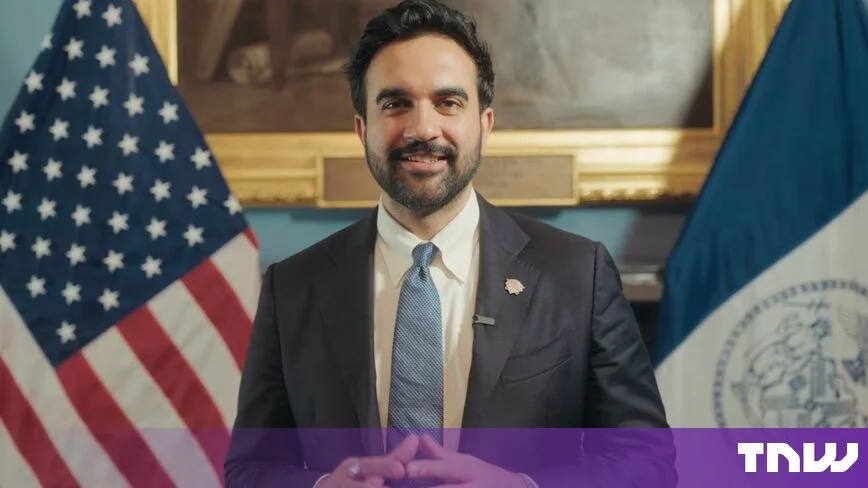
In the high-stakes arena of New York City politics, the price of maintaining a corporate narrative has recently been appraised at exactly $5 million. This is the sum Amazon has reportedly committed to defeating a single piece of municipal legislation: the Delivery Protection Act. While the retail giant frames its opposition as a defense of small businesses and consumer prices, the sheer scale of its lobbying expenditure suggests a deeper existential threat. At the heart of the conflict lies a fundamental question about the future of work: Can a company control every aspect of a worker’s day while simultaneously disclaiming any legal responsibility for their well-being?
Main Facts: The End of the "Fissured Workplace"
The Delivery Protection Act, introduced by City Council Member Tiffany Cabán and championed by Mayor Zohran Mamdani, represents a direct assault on the "fissured workplace." This economic model, famously identified by former Department of Labor official David Weil, allows parent corporations to outsource labor to a web of subcontractors, thereby insulating themselves from the costs of benefits, insurance, and legal liability.
The bill’s primary mechanism is deceptively simple: it requires any company operating last-mile delivery hubs within the five boroughs to directly employ the couriers who distribute their packages. While the legislation would also impact FedEx and various regional logistics firms, its most significant target is Amazon’s Delivery Service Partner (DSP) program.
Currently, the "Amazon experience" for a New York City resident involves a driver wearing an Amazon-branded vest, driving an Amazon-branded van, guided by Amazon-proprietary routing software, and monitored by Amazon’s internal performance metrics. However, on paper, that driver is frequently employed by one of over 40 independent neighborhood contractors. The Delivery Protection Act seeks to bridge this gap, mandating that the name on the van must match the name on the paycheck.
Chronology: From HQ2 to the Delivery Protection Act
The current friction between Amazon and New York City is not an isolated event but the latest chapter in a long-standing and often acrimonious relationship.
2018: The Birth of the DSP Model
Amazon launched its Delivery Service Partner program in 2018 as a way to rapidly scale its logistics network without the massive overhead of a direct workforce. By incentivizing entrepreneurs to start small delivery businesses, Amazon created a buffer between itself and the physical risks of the road.
2019: The HQ2 Fallout
Amazon’s relationship with New York soured significantly in 2019 when the company abandoned plans for a massive "HQ2" campus in Long Island City, Queens. The withdrawal followed intense pushback from local activists and politicians, including Tiffany Cabán, who argued that the billions in tax breaks offered to the company were a poor use of public funds. This defeat left a lasting mark on the company’s approach to NYC politics.
2021–2023: The Rise of Labor Activism
The COVID-19 pandemic highlighted the essential nature of delivery work and the precariousness of the workers involved. During this period, reports began to surface regarding the grueling conditions faced by DSP drivers, including lack of air conditioning, pressure to skip breaks, and inadequate safety protocols. These issues fueled a growing labor movement, culminating in the successful unionization of an Amazon warehouse on Staten Island.
2024: Legislative Action
Building on the momentum of the "Safe Hotels Act"—a 2024 law that forced large hotels to employ their core staff directly rather than using subcontractors—Council Member Cabán introduced the Delivery Protection Act. The bill quickly gained a majority in the City Council, setting the stage for the current $5 million lobbying blitz by Amazon.
Supporting Data: The Cost of Deniability
The arguments in favor of the bill are rooted in stark disparities between direct employees and contracted workers. Proponents argue that the DSP model is not about efficiency, but about externalizing costs onto the workers and the public.
Health and Benefits
Data from the New York delivery sector reveals a significant "benefits gap." At one Brooklyn-based delivery firm, employees reportedly pay $266 per month for a basic health insurance plan—roughly 43% of the total premium cost. In contrast, Amazon’s direct warehouse employees have access to plans costing as little as $20 per month. By forcing direct employment, the bill would theoretically grant thousands of drivers access to Amazon’s superior corporate benefit packages.
Liability and Insurance
The issue of safety is perhaps the most contentious. Small delivery firms typically carry around $1 million in liability insurance. In contrast, UPS, which employs its drivers directly and is a frequent point of comparison for labor advocates, carries approximately five times that amount.
When an Amazon-branded van is involved in an accident, the company’s legal defense often rests on the claim that the driver is not an Amazon employee. This "deniability" allows the multi-billion-dollar corporation to shield its assets from the consequences of the very delivery schedules it mandates.
Working Conditions
Interviews with drivers and independent safety reports paint a grim picture of the DSP experience. Drivers have reported being instructed to continue working through physical injuries and navigating New York’s summer heat in vans where the air conditioning is only functional in the driver’s cab, leaving the cargo area—where drivers spend significant time sorting packages—at dangerous temperatures.
Official Responses: A Clash of Perspectives
The response to the bill has been divided along predictable lines, with Amazon and its partners painting a picture of economic ruin, while proponents frame it as a matter of basic dignity.
Amazon’s Stance
Amazon has warned that the bill would lead to a "catastrophic" disruption of service. In its communications, the company argues that the measure would force the closure of dozens of small businesses (the DSPs) and lead to the loss of thousands of jobs. An industry-funded study even claimed that if Amazon were forced to alter its model or reduce its footprint, the average New York household could see an additional $664 in annual costs due to slower deliveries and higher prices.
The DSP Owners
Contractors have also voiced their opposition, claiming that they provide "local expertise" that a monolithic corporation like Amazon cannot replicate. They argue that they are independent entrepreneurs who have invested their life savings into their businesses and that the bill would effectively expropriate their companies.
The Proponents (Cabán and Mamdani)
Council Member Cabán has been blunt in her assessment: "When there are packages littered across the street or a van hits somebody, Amazon is able to say ‘not my problem, not my employee.’ This bill ensures they can no longer look the other way." Mayor Mamdani has echoed these sentiments, framing the bill as part of a broader "worker-first" agenda intended to rein in the excesses of the gig economy.
Implications: A National Precedent
The outcome of the fight in New York City will have ramifications far beyond the five boroughs. If the Delivery Protection Act passes and survives the inevitable court challenges, it could serve as a blueprint for cities across the United States and the world.
The Teamsters and National Organizing
The Teamsters union has already expressed its intention to take the "New York Model" to other major metropolitan areas. For labor organizers, the bill is a silver bullet against the "independent contractor" loophole that has plagued labor law since the rise of Uber and Lyft. By defining employment based on the reality of control—the logo, the software, the schedule—rather than the language of a contract, the bill threatens the very foundation of the modern platform economy.
Legal Challenges
Legal experts predict that Amazon will challenge the law on the grounds of federal preemption, likely arguing that the Federal Aviation Administration Authorization Act (FAAAA), which regulates interstate commerce and motor carriers, prohibits states and cities from enacting laws that affect the "price, route, or service" of a motor carrier. However, New York’s success with the Safe Hotels Act suggests that municipal governments are finding increasingly sophisticated ways to regulate labor within their borders.
The Evolution of the Platform Economy
For over a decade, the "innovation" of the platform economy has been as much legal as it has been technological. Companies have successfully argued that they are mere "intermediaries" or "technology platforms" rather than employers. New York City is currently calling that bluff.
If Amazon is forced to bring its drivers in-house, the company will have to choose between absorbing the higher labor costs or passing them on to consumers. However, the company’s insistence that it would "flee" the city is met with skepticism. Amazon’s business model is predicated on "Prime" speed, which requires physical proximity to customers. The company did not build 15 hubs in New York City for sentimental reasons; it built them because it has to be there to compete.
Conclusion
The $5 million Amazon is spending to defeat the Delivery Protection Act is a testament to the value of the status quo. To Amazon, that money is an investment in maintaining the "useful fiction" that it is not responsible for the people who deliver its profits to the doorsteps of millions. To the city of New York, the bill is an attempt to restore a sense of accountability to the local economy. As the measure moves toward a final vote, the eyes of the global labor movement and the tech industry alike are fixed on New York, waiting to see if the "fissured workplace" has finally met its match.