
The Aesthetic Paradox: HMD’s Vibe 2 5G and the Bold Strategy of Visual Mimicry in the Indian Market
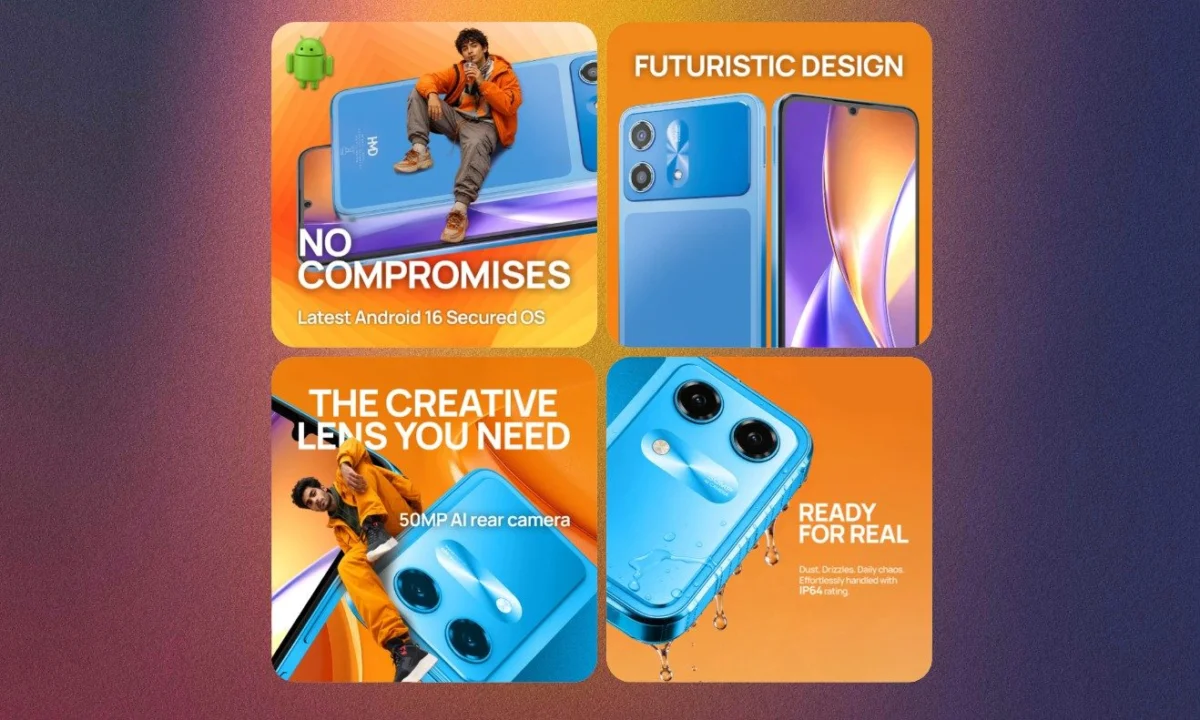
The smartphone industry has long been a theater of "fast-following" design trends, but rarely does a brand with a legacy as storied as HMD Global—the former steward of the Nokia name—lean so heavily into the aesthetic orbit of its competitors. With the launch of the HMD Vibe 2 5G in India, the Finnish manufacturer has ignited a firestorm of discussion among tech enthusiasts and market analysts alike.
Marketed as a "futuristic" leap forward for the budget segment, the Vibe 2 5G presents a striking visual profile that bears an unmistakable resemblance to the iPhone 17 Pro. This move signals a significant shift in HMD’s strategy as it attempts to carve out a distinct identity for its own-brand hardware, moving away from the nostalgic shadow of Nokia and into the hyper-competitive, value-driven Indian 5G landscape.
Main Facts: A Budget Powerhouse with "Pro" Aspirations
The HMD Vibe 2 5G enters the Indian market at a disruptive price point of Rs. 10,999 (approximately $114 USD). Despite its entry-level pricing, the device aims to punch above its weight class through a combination of modern connectivity and a design language that mimics the ultra-premium tier of the mobile world.
The most controversial and discussed feature of the Vibe 2 5G is its rear chassis. It features a broad, horizontal camera island and a sophisticated two-tone finish that echoes the design leaked and popularized by Apple’s high-end "Pro" lineup. While Apple’s flagship utilizes this space for a complex triple-camera array and LiDAR sensors, HMD’s iteration houses a dual-camera setup, prioritizing visual symmetry and "premium feel" over sheer optical hardware.

Key Specifications at a Glance:
- Price: Rs. 10,999 (~$114).
- Display: 6.7-inch panel with a 120Hz refresh rate.
- Battery: 6,000mAh high-capacity cell.
- Operating System: Android 16 (shipped out of the box).
- Camera: 50MP primary rear sensor; 8MP front-facing selfie camera.
- Durability: IP64 dust and splash resistance.
- Connectivity: Dual-mode 5G support.
Chronology: The Evolution of HMD Global’s Brand Identity
To understand the Vibe 2 5G, one must look at the recent trajectory of HMD Global. For years, the company operated almost exclusively as the licensee for Nokia-branded smartphones. While this provided instant brand recognition, it also tethered HMD to a legacy brand that struggled to compete with the aggressive innovation of Chinese OEMs like Xiaomi and BBK Electronics (Realme, Oppo, Vivo).
- The Pivot (Early 2024): HMD Global announced a multi-brand strategy, confirming it would begin releasing devices under the "HMD" (Human Mobile Devices) moniker alongside Nokia-branded phones.
- The Design Shift: Early HMD-branded leaks suggested a move toward vibrant colors and "repairable" designs (the Pulse and Skyline series). However, the Vibe 2 5G represents a different branch of this evolution: the "premium-look-for-less" strategy.
- The Indian Launch (May 2024): HMD identified India as its primary growth engine. The Vibe 2 5G was fast-tracked to capture the burgeoning demand for affordable 5G devices as India’s 5G infrastructure achieved nationwide coverage.
- The "Futuristic" Campaign: Upon launch, HMD’s marketing materials prominently featured the phrase "futuristic design," a choice that drew immediate comparisons to Apple’s design language, leading to the current "copycat" discourse.
Supporting Data: Dominating the Budget 5G Segment
The Indian smartphone market is currently defined by the "5G transition." According to recent market research, the sub-Rs. 15,000 ($180) segment is the fastest-growing category in India, as millions of users upgrade from 4G-only devices.
The Battery and Display Advantage
HMD has strategically allocated its bill-of-materials (BOM) to two areas Indian consumers value most: longevity and screen quality. The 6,000mAh battery is a critical differentiator. In a market where power consistency can vary and long commutes are common, a battery of this size—capable of lasting two full days for most users—is a massive selling point.

Furthermore, the inclusion of a 120Hz refresh rate on a 6.7-inch display at the $114 price point puts HMD in direct competition with the Redmi 13C 5G and the Realme C-series. While many budget phones settle for 90Hz, the jump to 120Hz provides a "smoothness" that users typically associate with devices twice the price.
The Software Longevity Play
Shipping with Android 16 is a notable claim. Given that Android 15 is the current industry standard for mid-to-high-end releases, HMD’s commitment to providing the latest software out of the box suggests a focus on "future-proofing." This appeals to the "value-conscious" consumer who intends to keep their device for three to four years.
Official Responses and Marketing Philosophy
HMD Global has defended its design choices by leaning into its new brand philosophy: "Human Mobile Devices." The company’s official stance emphasizes that premium design should not be a luxury reserved for those who can afford $1,000 flagships.
In promotional materials for the Indian market, HMD representatives stated:

"Our goal with the HMD Vibe 2 5G was to democratize the 5G experience without compromising on the visual pride of ownership. We believe that ‘futuristic’ means making high-end aesthetics accessible to everyone, ensuring that a budget-friendly device can still be a fashion statement."
Industry critics, however, view the "futuristic" label as a clever rhetorical shield. By calling the design futuristic, HMD attempts to frame the device as being ahead of the curve, rather than acknowledging that it is following the design path cleared by Apple’s Pro series.
Implications: The Risks and Rewards of "Visual Homage"
The release of the Vibe 2 5G carries significant implications for HMD’s future and the broader smartphone ecosystem in South Asia.
1. Brand Dilution vs. Market Penetration
The primary risk for HMD is the "copycat" stigma. For a company trying to establish its own brand (HMD) as separate from Nokia, starting with a design that is so clearly derivative could hinder its ability to be seen as a true innovator. However, in the Indian budget market, "prestige by association" often outweighs brand purity. For many consumers, owning a phone that looks like a flagship iPhone for a fraction of the cost is an attractive proposition, not a deterrent.

2. Pressure on Competitors
HMD’s aggressive pricing for a 5G device with a 120Hz screen and a massive battery will force competitors like Samsung (with its M-series) and Xiaomi to reconsider their specs-to-price ratios. If HMD can successfully pair this "Pro" aesthetic with reliable performance, it could claw back market share that the Nokia brand had lost over the last decade.
3. The Future of HMD Global
The Vibe 2 5G is a litmus test. If it sells well, we can expect HMD to continue this trend of "aesthetic premiumization"—taking the most recognizable design elements of the global elite (Apple, Samsung, Google) and distilling them into affordable, localized hardware. If it fails, HMD may have to return to the drawing board to find a truly original visual language that doesn’t rely on the "shameless" mimicry noted by tech critics.
Conclusion: A Calculated Gamble
The HMD Vibe 2 5G is a fascinating study in modern product positioning. It is a device that understands its audience perfectly: a demographic that craves 5G speed, demands "all-week" battery life, and desires the social currency of a high-end looking smartphone.
While purists may scoff at the "futuristic" marketing of a design that is so clearly an iPhone derivative, HMD is betting that the average consumer in Mumbai, Delhi, or Bangalore will care less about design origins and more about the value in their hand. By offering Android 16, a 120Hz display, and a massive 6,000mAh battery for just Rs. 10,999, HMD isn’t just selling a copycat; it’s selling a highly optimized tool for the digital age, wrapped in a package that looks a lot more expensive than it actually is. Whether this "familiar kind of futuristic" is enough to save the house of HMD remains to be seen, but it has certainly succeeded in making the world look at HMD again.




Leave a Comment