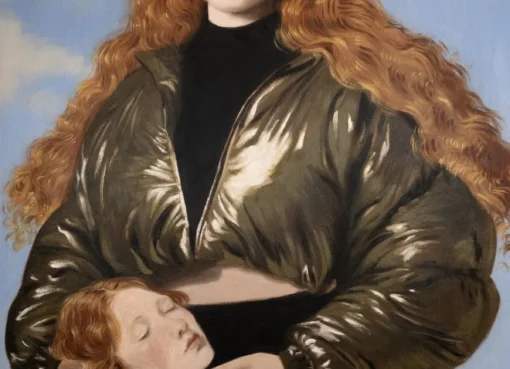
The Architect of Accessible Profundity: The Evolution of Jesús Aguado’s Baroque Surrealism
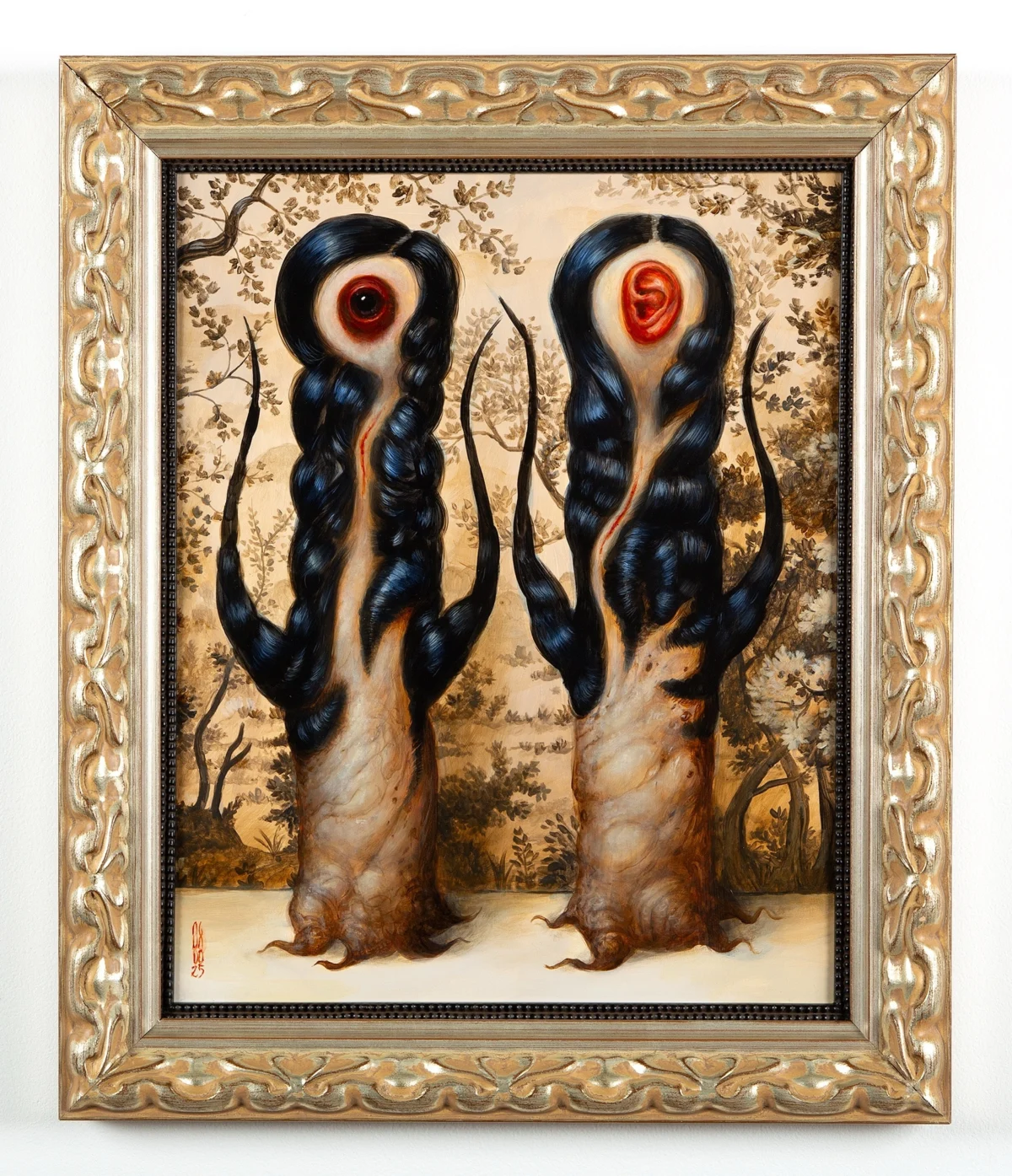
In a contemporary art landscape where accessibility is often viewed as the antithesis of depth, the Spanish artist Jesús Aguado has emerged as a compelling counter-argument. For over a decade, Aguado has meticulously dismantled the wall between commercial clarity and fine art complexity, proving that the two can be secret collaborators rather than sworn enemies. His latest exhibition, Life Milestones, currently on display at Arch Enemy Arts in Philadelphia, serves as a culmination of a career defined by technical mastery, psychological inquiry, and a unique visual vocabulary that bridges the gap between the Renaissance and the comic book.
Main Facts: The Synthesis of Illustration and Fine Art
Jesús Aguado (born 1976) is not a typical product of the ivory tower. While many of his peers in the surrealist movement transitioned directly from prestigious academies to gallery representation, Aguado spent twenty years in the "trenches" of professional editorial illustration. This foundation, far from being a limitation, became his most potent asset. By creating art for global educational giants like Santillana, scientific powerhouses like National Geographic, and various children’s publishers from Europe to Taiwan, Aguado mastered the art of universal visual communication.
His work is characterized by what critics have termed "Baroque Surrealism." This style fuses the dramatic lighting and emotional intensity of the 17th century with the irreverent, narrative-driven imagination of modern graphic novels. His canvases are densely populated with chimerical, anthropomorphic figures—dragons, rabbits, and worms—that inhabit worlds that are simultaneously whimsical and emotionally urgent.

The core of Aguado’s philosophy lies in "accessible profundity." He utilizes a high-detail, inviting aesthetic to draw viewers into a space where they are then confronted with complex existential questions. His transition to fine art around 2017 marked the beginning of a period where he began to use his commercial skills to "quietly engineer" a new kind of surrealism—one that invites the viewer in before expanding their consciousness through strategic visual overwhelm.
Chronology: A Journey from Valladolid to Philadelphia
The trajectory of Aguado’s career is a testament to the power of creative patience and the evolution of a singular vision.
The Formative Years (1976–1998)
Born in Valladolid, Spain, in 1976, Aguado’s artistic DNA was forged in the rich cultural history of the Iberian Peninsula. He pursued formal training at the University of Salamanca, earning his Fine Arts credentials. It was here that he developed his appreciation for classical techniques, though his personal interests remained firmly rooted in the vibrant, narrative worlds of comic books.

The Illustration Era (1998–2017)
Following his graduation, Aguado entered the world of professional publishing. For two decades, he operated under the strict constraints of editorial deadlines and client briefs. This period was a masterclass in visual efficiency. Working for Santillana required him to make complex educational concepts understandable to Spanish schoolchildren, while his work for Taiwanese publishers taught him how to cross cultural and linguistic boundaries through imagery alone. This "mastery seeking new expression" built an immense amount of creative pressure that would eventually find its outlet in oil and acrylic painting.
The Fine Art Transition (2017–2020)
Between 2017 and 2018, Aguado made the pivotal decision to shift his primary focus from digital and editorial illustration to traditional mediums. This was not a rebellion against his past but an expansion of it. He began experimenting with oil and acrylic on wood panels, applying his "universal language" to more personal, surrealist themes. His work quickly caught the attention of the international art community, particularly within the Pop Surrealism and Lowbrow movements.
The Arch Enemy Partnership and Fatherhood (2020–2025)
In 2020, Aguado began a fruitful relationship with Arch Enemy Arts in Philadelphia, a gallery known for championing artists who blend technical skill with imaginative subject matter. However, the most significant biographical shift occurred in 2023 with the birth of his son. This event catalyzed a shift in his thematic focus, leading to his current series, Life Milestones. This new body of work explores the metaphysical and personal transformations inherent in human development, viewed through the lens of a new parent.

Supporting Data: The Mechanics of the "Density Principle"
Aguado’s work is underpinned by several key technical and philosophical pillars that distinguish him from his contemporaries.
Technical Alchemy: Light as Philosophy
Aguado’s signature shimmer is the result of a sophisticated glazing technique. By applying multiple translucent layers of acrylic, he allows light to bounce between the surfaces of the paint, creating a luminosity that makes his impossible creatures feel tangibly present. This method is a deliberate antidote to the "flatness" of digital consumption.
Furthermore, his choice of support is strategic. He paints on traditional wood panels and birch supports, a practice used by Renaissance masters. This choice lends a physical and historical "gravitas" to subjects that might otherwise be dismissed as mere whimsy. It is, in effect, Hieronymus Bosch reimagined with modern psychology.

The Bestiary of the Universal
A striking feature of Aguado’s work is the almost total absence of human figures. Instead, he utilizes a recurring cast of animals to represent human traits:
- Dragons: Representing ferocity, power, and the untamed.
- Rabbits: Embodying innocence, vulnerability, and "cuteness."
- Worms and Insects: Suggesting the grotesque, the earthbound, and the cycle of decay.
By removing specific human demographics, Aguado creates universal characters that any viewer can project themselves onto, regardless of their background.
The "Horror Vacui" and Narrative Density
Aguado employs the "Density Principle," a strategic use of horror vacui (fear of empty space) borrowed from Baroque masters like Rubens. His canvases operate like visual novels, packed with narrative threads. This "strategic overwhelm" mirrors the information density of the digital age but serves a different purpose: it offers a refuge where the viewer is encouraged to slow down and "read" the painting rather than simply scanning it.

Official Responses and Critical Reception
The art world’s response to Aguado’s evolution has been overwhelmingly positive, particularly regarding his ability to maintain high technical standards while remaining emotionally resonant.
Critics have described his work as "Renaissance beauty impregnated with the darkest baroque," noting that his ability to capture "academic poetry" is genuinely revolutionary within the Pop Surrealism movement. The gallery Arch Enemy Arts has signaled sustained institutional confidence in Aguado, hosting three solo exhibitions for him since 2020. Their curatorial team notes that Aguado’s work represents a sophisticated fusion of "commercial appeal with intellectual depth," a bridge that few artists navigate successfully.
In interviews, Aguado has been vocal about his mission to provide a "psychological architecture" for overstimulated minds. He describes his work as a space where "joy and darkness coexist," and where "light and love are appreciated after experiencing darkness." This candidness about the "exhausting" nature of modern information-heavy culture has resonated with collectors and critics alike, positioning him as an artist who offers a "visual prescription" for contemporary anxiety.

Implications: Surrealism for the 21st Century
The success of Jesús Aguado has broader implications for the future of the surrealist movement and the relationship between commercial and fine art.
The End of "Either/Or" Thinking
Aguado’s career serves as a blueprint for the "And/Both" solution. He has proven that an artist does not have to choose between being a "serious" fine artist and a "communicative" illustrator. By embracing his roots in universal visual communication, he has made the profound approachable without "dumbing it down." This suggests a future where the boundaries between commercial design, illustration, and fine art continue to blur, favoring artists who can navigate multiple visual languages.
Art as a Sanctuary from Digital Fatigue
As the world becomes increasingly saturated with AI-generated imagery and rapid-fire digital content, Aguado’s "Density Principle" and his use of traditional wood panels offer a much-needed sense of permanence and "slow art." His work implies that the future of surrealism may lie in its ability to provide a "psychological refuge"—not through simple escapism, but through a complex exploration of life’s paradoxes that demands the viewer’s full presence.

The Legacy of Life Milestones
His current exhibition, Life Milestones, marks a shift toward a more "existential" surrealism. By using fantastical imagery—such as winged caterpillar mothers and lobster-clawed gardeners—to represent mitosis and developmental turning points, Aguado is expanding the emotional range of the movement. He is proving that surrealism is a viable tool for exploring the most grounded of human experiences: parenthood, growth, and the passage of time.
The Bottom Line
Jesús Aguado has spent the last decade proving that the skills learned in the "trenches" of commercial illustration can become a fine art superpower. In an era that demands the navigation of contradiction with grace, Aguado has created the visual vocabulary we need. His work offers a "vivacious ecstasy of tranquil joy," reminding us that even in a world of "too much information," there is still room for the free play of the imagination.
LIFE MILESTONES by Jesús Aguado
Currently on display at Arch Enemy Arts, Philadelphia.
- On view: May 24 – June 15, 2025
- Location: Arch Enemy Arts, Philadelphia
- Opening Reception: First Friday, June 6, 2025
- Learn more: archenemyarts.com/lifemilestones2025