M. John Harrison Ascends to #1: Analyzing the Shifting Landscape of Speculative Fiction Bestsellers
November 2026 — The speculative fiction market has reached a significant turning point this season, characterized by a fascinating collision between avant-garde literary prose and the juggernaut of commercial "Romantasy" and "LitRPG." According to the latest data from the Los Angeles Times, The New York Times, and USA Today, the week ending November 29, 2026, has seen a surprising shift at the summit of the charts.
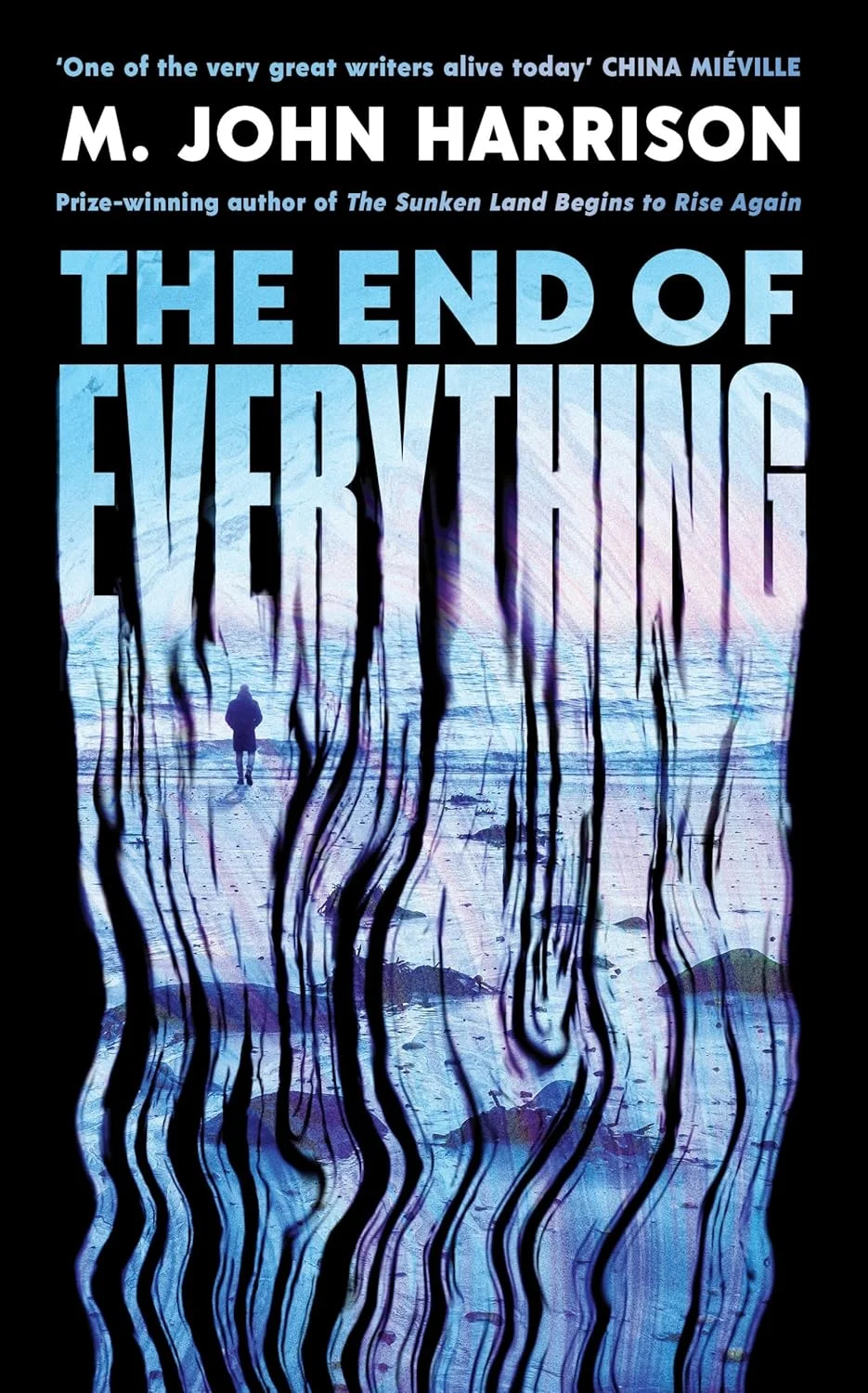
The headline story of the week is the meteoric rise of M. John Harrison’s The End of Everything. The US edition, published by Riverhead Books, has officially claimed the #1 spot on the LA Times fiction hardcover list. For a writer often described as a "writer’s writer" and a pioneer of the New Wave of science fiction, this commercial peak represents a rare moment where high-concept literary speculative fiction has fully captured the mainstream zeitgeist.
Main Facts: A Week of High-Stakes Ranking
The latest bestseller tracking indicates a robust market for genre fiction, with several key titles maintaining iron grips on the top tiers while new debuts disrupt the status quo.
- The Harrison Breakthrough: M. John Harrison’s The End of Everything debuted at #1 on the LA Times list and #49 on the USA Today comprehensive list. This marks a significant achievement for Harrison, whose work typically garners critical acclaim but has now translated into massive retail momentum.
- The Maas Hegemony: Sarah J. Maas continues to dominate the industry. Her latest, A Court of Splintered Harmony, holds the #1 position on both The New York Times and Publishers Weekly lists, demonstrating the enduring power of the "Romantasy" genre.
- The LitRPG Explosion: Matt Dinniman, the author behind the Dungeon Crawler Carl series, has achieved a feat rarely seen in publishing. He currently has five separate titles appearing on the USA Today Top 150 list simultaneously, signaling that LitRPG (Literary Role-Playing Game fiction) has moved from a niche internet subculture to a major pillar of the publishing industry.
- Legacy Longevity: Titles like Suzanne Collins’s The Hunger Games and Sarah J. Maas’s A Court of Thorns and Roses remain on the charts after 231 and 293 weeks respectively, showcasing the "evergreen" nature of young adult and adult fantasy backlists.
Chronology: The Evolution of the November Charts
The data for this period was compiled across several key dates, revealing how sales momentum shifted throughout the month of November.
The cycle began on November 18, with the release of the USA Today list. This list is unique in that it combines all formats—hardcover, paperback, and digital—into one comprehensive ranking. On this day, Sarah J. Maas took the #2 spot, while Matt Dinniman’s Dungeon Crawler Carl showed its first signs of massive upward mobility, hitting #15.
By November 22, the LA Times published its hardcover-specific rankings. It was here that M. John Harrison’s The End of Everything made its stunning debut at #1, unseating more traditional commercial thrillers and romance novels.
On November 23, Publishers Weekly and Amazon’s internal trackers updated their data. Amazon’s US, UK, and Canadian lists showed a divergence in international tastes. While Maas remained a global constant, the UK market showed a stronger preference for the illustrated edition of Harry Potter and the Half-Blood Prince, which climbed to #82 on the global Amazon chart but performed significantly better in regional UK outlets.
Finally, the November 29 New York Times list (released in advance for the December print edition) solidified the hierarchy. It confirmed A Court of Splintered Harmony as the definitive bestseller of the season, while also highlighting the steady performance of Rebecca Yarros’s Threshing Day, which remained in the top five despite being on the list for 30 weeks.
Supporting Data: Deep Dive into the Numbers
The statistical breakdown of the current charts reveals a market that is bifurcated between "new hits" and "unstoppable backlists."
Hardcover Resilience
In the hardcover category, the competition is fierce. Sarah J. Maas’s A Court of Splintered Harmony has remained at #1 for 28 weeks on the NYT list. However, the emergence of Veronica Roth’s The Sixth Faction at #2 suggests that readers are hungry for new intellectual property from established authors.
M. John Harrison’s performance is particularly noteworthy when compared to his UK sales. While the US edition hit #1 in Los Angeles, the UK edition of The End of Everything currently sits at #58 on the Amazon UK charts. This suggests a highly successful marketing campaign by Riverhead Books in the US, positioning Harrison as a "must-read" contemporary voice.

The Dinniman Phenomenon
Matt Dinniman’s presence on the charts provides the most compelling data point for industry analysts. His rankings are as follows:
- The Dungeon Anarchist’s Cookbook: #54 (USA Today)
- The Gate of the Feral Gods: #68 (USA Today)
- Carl’s Doomsday Scenario: #84 (USA Today)
- The Butcher’s Masquerade: #93 (USA Today)
- Dungeon Crawler Carl: #15 (USA Today)
Having five books from a single series on a national bestseller list is a statistical anomaly usually reserved for the likes of Stephen King or J.K. Rowling. This data suggests that once a reader enters the "Dungeon Crawler Carl" ecosystem, they tend to purchase the entire backlist immediately, driving a recursive sales loop.
Official Responses and Industry Context
While publishers rarely issue public statements regarding weekly chart fluctuations, the "Big Five" publishing houses have privately noted the shifting demographics of these lists. The success of Harrison at Riverhead (an imprint of Penguin Random House) is being viewed as a victory for "prestige genre fiction."
Industry analysts at Locus Magazine observe that the current charts reflect a "post-genre" world. "We are seeing a convergence," says one industry insider. "In the past, you had the ‘literary’ books and the ‘genre’ books. Today, a book like Exit Party by Emily St. John Mandel or The End of Everything by Harrison can sit comfortably next to a LitRPG title like Dungeon Crawler Carl. The audience has become more eclectic, and the ‘Bestseller’ label is no longer the exclusive domain of the airport thriller."
Furthermore, the rise of "Deluxe Editions"—such as Pierce Brown’s Red Rising (Deluxe Slipcase Edition), which hit #44 on the USA Today list—indicates a growing "collector" market. Readers are no longer just buying books to read; they are buying them as high-end physical artifacts, often purchasing a digital copy for consumption and a $50-$100 hardcover for display.
Implications: What This Means for the Future of Publishing
The data from late November 2026 suggests several long-term trends that will likely shape the publishing industry heading into 2027.
1. The "Mid-List" is Disappearing
The charts are increasingly dominated by "mega-hits." Authors like Sarah J. Maas and Matt Dinniman occupy so much "shelf space" on the digital and physical charts that it is becoming harder for mid-tier authors to break through. The success of Harrison is the exception that proves the rule; it required a perfect storm of critical consensus and aggressive platforming to reach #1.
2. LitRPG is a Permanent Fixture
For years, traditional publishing ignored LitRPG and GameLit, leaving it to flourish on Amazon’s Kindle Unlimited and Audible. The current charts prove that this is no longer a viable strategy. With Dinniman’s massive success, we can expect major publishers to begin aggressively scouting for the next big LitRPG series, potentially leading to a "gold rush" similar to the YA dystopian craze of the 2010s.
3. The Power of the Illustrated and Deluxe Format
The presence of the Harry Potter illustrated editions and the Red Rising deluxe editions suggests that physical bookstores can survive by focusing on "un-copyable" physical experiences. As AI and digital distribution make text more ubiquitous, the "book-as-object" becomes more valuable.
4. International Divergence
The difference between the Amazon US, UK, and Canada lists highlights that "Global English" is not a monolith. While Maas is a global brand, Harrison and Mandel show significant regional variance. Publishers will need to continue tailoring their marketing efforts to specific cultural enclaves—such as the literary-heavy market of Los Angeles versus the more traditional genre-loving market of the UK.
In conclusion, the week of November 29, 2026, will be remembered as the moment M. John Harrison reached the summit, and Matt Dinniman proved that the new digital genres have officially arrived on the national stage. The speculative fiction market is healthier and more diverse than ever, even as it becomes more competitive and data-driven. For readers, this means a wealth of options—from the deepest literary meditations on the end of the world to the most frantic, gamified adventures in the dungeon.