
The Architectural Resurrection: Markus Brunetti’s Two-Decade Quest to Map Europe’s Sacred Facades
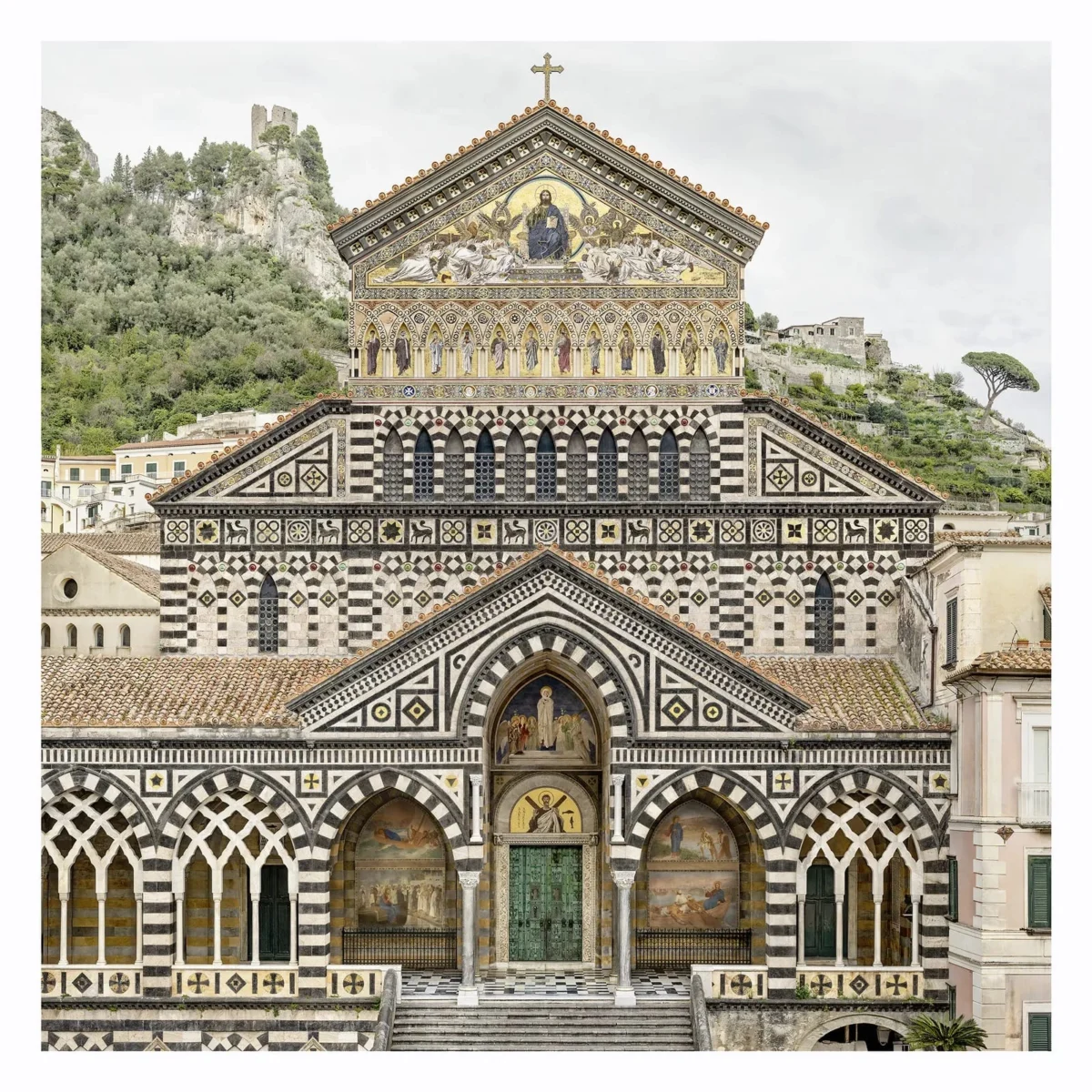
The intersection of devotion, technology, and art has rarely found a more meticulous expression than in the work of Bavarian photographer Markus Brunetti. For over twenty years, Brunetti, alongside his collaborator Betty Schöner, has embarked on an exhaustive pilgrimage across the European continent. Their mission is not one of religious conversion, but of visual preservation—a grand undertaking titled Facades, which seeks to capture the continent’s most iconic ecclesiastical landmarks with a level of detail that defies human optical capability.
Currently, the culmination of their recent efforts is on display at the Yossi Milo Gallery in New York City. The exhibition, Facades IV, presents a series of "portraits" of buildings that are as much digital reconstructions as they are photographs. By stripping away the distortions of perspective and the temporal clutter of modern life, Brunetti offers a view of history that is perfectly still, hyper-resolved, and inherently impossible to witness with the naked eye.
Main Facts: A Firetruck, a Camera, and Two Decades of Patience
At the heart of Brunetti’s project is a nomadic lifestyle that borders on the ascetic. Since the early 2000s, Brunetti and Schöner have lived and worked out of a converted firetruck. This vehicle serves not only as their primary residence but also as a sophisticated mobile laboratory. Within its reinforced walls, the pair processes terabytes of data, stitching together thousands of individual frames to create a single, monolithic image of a cathedral, basilica, or monastery.

The methodology is grueling. Brunetti does not simply set up a tripod and click a shutter. Instead, he treats the facade of a building like a grid. He captures the structure meter by meter, often requiring thousands of high-resolution shots for a single finished work. This process can take weeks of physical shooting, but the logistical hurdles—weather, lighting, tourist crowds, and scaffolding—frequently extend the timeline of a single "portrait" to several years, or in some cases, nearly two decades.
The resulting images are printed on an immense scale, with some archival pigment prints reaching heights of seven-and-a-half feet. The goal is to create a "monument on paper" that rivals the physical presence of the stone structures themselves. By utilizing a one-point perspective, Brunetti eliminates the "oblique" view—the natural tapering effect where the top of a tall building appears narrower than its base when viewed from the street. In Brunetti’s world, every line is perfectly vertical, every ornament is in focus, and the building stands in a vacuum of architectural perfection.
Chronology: The Evolution of a Lifelong Project
The Facades project did not emerge fully formed; it evolved alongside the very digital technologies that make it possible.

- 2005–2010: The Foundation. Brunetti and Schöner began their journey, focusing initially on the grand Gothic cathedrals of Northern Europe and the intricate duomi of Italy. During this period, they refined the "firetruck lab" concept, realizing that the precision required for their vision necessitated a mobile, dedicated workspace.
- 2007: The St. Peter’s Initiation. One of the most significant undertakings in the series began in 2007 in Rome. The pair started documenting the Basilica di San Pietro (St. Peter’s Basilica). Given the site’s status as one of the most visited locations on earth, the project faced unprecedented challenges.
- 2014–2020: Expanding the Scope. The project moved beyond the most famous landmarks to include lesser-known but architecturally significant sites, such as the Templul Coral in Bucharest and the Duomo di San Corrado in Molfetta. This era marked a shift toward capturing the diversity of European religious architecture, from Baroque flourishes to Romanesque austerity.
- 2024: The Unveiling of Facades IV. The current exhibition at Yossi Milo represents the latest chapter, featuring works that have been in production for over 15 years. It showcases the perfection of Brunetti’s technique, where the digital "stitching" has become entirely seamless, creating a hyper-reality that feels both ancient and futuristic.
Supporting Data: The Technicality of Hyper-Resolution
The sheer volume of data involved in a Brunetti print is staggering. While a high-end commercial photograph might consist of 50 to 100 megapixels, a single Facade work is composed of thousands of such images.
The Perspective Shift
In standard architectural photography, a wide-angle lens is often used to capture a building in its entirety. This results in "converging verticals," where the building seems to lean backward. Brunetti rejects this. He employs a technique akin to orthographic projection used in architectural blueprints. By capturing the building in small segments from a consistent distance and then digitally reassembling them, he flattens the depth. This allows the viewer to see the details of the roofline with the same clarity and proportion as the entrance portal.
The Temporal Composite
Brunetti’s works are not just composites of space, but also of time. Because he shoots over days, months, or years, he can curate the lighting and environment. If a particular statue is in shadow on Monday, he captures it on Tuesday when the sun has shifted. If a tour bus is parked in front of the southern gate, he waits until it moves. The final image is a "clean" version of reality—free of birds, pedestrians, power lines, and the atmospheric haze that typically obscures the upper reaches of a cathedral.

Scale and Resolution
The prints in Facades IV are produced as archival pigment prints. The resolution is so high that a viewer standing inches away from a seven-foot-tall print can see the texture of the lichen on the stone, the individual grout lines between bricks, and the weathered grain of ancient wooden doors. This level of detail is physically impossible to perceive in person, as the human eye cannot focus on the entirety of a 150-foot-tall facade with such uniform precision.
Official Responses: Critical and Gallery Perspectives
The art world has recognized Brunetti’s work as a bridge between the traditional "New Topographics" movement—which emphasized objective, deadpan descriptions of locations—and the high-tech "Düsseldorf School" of photography (typified by Andreas Gursky).
A spokesperson for the Yossi Milo Gallery noted the Herculean effort behind the St. Peter’s Basilica image: "Brunetti and Schöner returned to St. Peter’s Basilica seven times over nineteen years. With each survey, they grew closer to realizing this grand image—a particular challenge given that it is one of the largest and most visited churches in the world."

Critics have pointed out that Brunetti’s work transcends mere photography. "The result exceeds the possibilities of any single photograph, even at the highest possible resolution," the gallery statement continues. "These works stand as monuments in and of themselves." By removing the context of the surrounding city, Brunetti elevates the buildings from functional spaces to objects of pure aesthetic and historical contemplation.
Implications: The Preservation of Heritage in the Digital Age
Brunetti’s Facades project carries profound implications for architectural history and cultural preservation.
Digital Archiving
As the world faces the threats of climate change, urban decay, and conflict, Brunetti’s work serves as a high-fidelity digital record of Europe’s heritage. Should any of these structures suffer damage—much like the tragic fire at Notre-Dame de Paris—records of this magnitude provide an invaluable blueprint for restoration.

The "Death" of the Oblique
Brunetti’s work challenges the way we consume architecture. In the age of the smartphone "selfie" and the distorted wide-angle lens, we have become accustomed to seeing buildings as skewed, looming shapes. Brunetti forces a return to the "ideal" form. He presents the building as the architect might have imagined it on a drafting table, rather than how a pedestrian experiences it on a crowded street.
The Sublime and the Human Scale
There is a philosophical tension in Facades IV. By presenting these buildings at such a massive scale and with such clarity, Brunetti invokes the "sublime"—a feeling of awe mixed with a sense of one’s own insignificance. Yet, because the images are so clear, they also invite an intimate, human connection with the craftsmanship of the past. We are invited to look at the work of a 14th-century stonemason with more clarity than that mason’s own contemporaries ever could.
Conclusion
Markus Brunetti’s Facades IV is more than an art exhibition; it is the result of a lifelong obsession with the intersection of stone and spirit. Through his firetruck-turned-lab and his decades of patience, Brunetti has managed to do the impossible: he has stopped time for Europe’s greatest monuments.

As the exhibition continues in New York City through June 20, it serves as a reminder that in an era of "fast" digital content, there is still a place for the slow, the meticulous, and the monumental. Brunetti’s images do not just show us what these buildings look like; they show us what they are in their most idealized, eternal form.


Leave a Comment