The Architecture of Anxiety: Understanding Emotional Hyper-vigilance and the Path to Autonomy
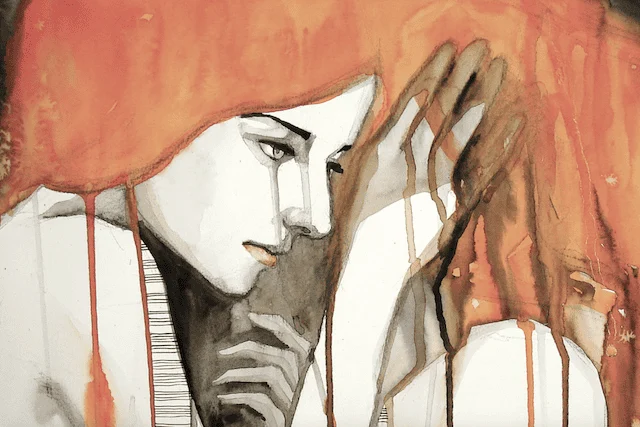
“Don’t take anything personally. Nothing others do is because of you.” — Don Miguel Ruiz
In the landscape of modern interpersonal dynamics, there exists a subtle but pervasive phenomenon known as emotional hyper-vigilance. For many, the simple act of entering a room triggers an instinctive, subconscious scan of the "emotional temperature." Every tightened jaw, every distracted glance, and every unpunctuated text message is processed not as an external event, but as a direct reflection of one’s own worth or safety.
While often mislabeled as "extreme empathy," psychologists identify this behavior as a complex coping mechanism—one that transforms the observer into an emotional chameleon, constantly adjusting their internal state to match the perceived moods of others. This report explores the mechanics of this psychological pattern, its origins in developmental history, and the systemic shifts required to reclaim emotional autonomy.
1. Main Facts: The Burden of the Emotional Mirror
The core of emotional hyper-vigilance lies in the inability to distinguish between noticing an emotion and absorbing it. For individuals struggling with this pattern, the boundary between the self and the "other" is porous.
The Mechanism of Interpretation
When an individual takes things personally, they engage in a process of "borrowing" external feelings and wrapping a narrative around them. A partner’s sigh while performing a household chore is no longer just a sign of fatigue; it becomes a coded message of resentment. A short reply to a text message is interpreted as a "soft" way of signaling a breakup.
The Cost of Hyper-awareness
While the hyper-vigilant individual may pride themselves on their attentiveness, the psychological cost is high. This state of constant "scanning" leads to:
- Cognitive Fatigue: The mental energy required to analyze every social cue is exhausting.
- Loss of Self-Identity: By prioritizing the "weather" of others, individuals often lose touch with their own emotional needs and opinions.
- Anxious Controlling: Ironically, the desire to soothe others to achieve internal peace can become a form of control, where the individual demands constant reassurance to quiet their own fears.
2. Chronology: From Survival Mechanism to Adult Malady
The development of emotional hyper-vigilance rarely happens in a vacuum. It is typically a chronological progression that begins in early childhood environments where emotional stability was inconsistent.
Phase I: The Childhood "Weather Station"
For many, the skill of reading a room was born out of necessity. In households where a parent’s mood was unpredictable or volatile, a child learned to monitor the "sound of keys in the front door" or the "weight of a cupboard door closing." By predicting a mood, the child gained a few precious seconds to prepare—either by making themselves small, leaving the room, or attempting to "fix" the atmosphere.
Phase II: The Adult Manifestation
As these children enter adulthood, the survival mechanism remains active even when the threat has vanished. The sensitivity that once protected them begins to run them. In professional and romantic settings, these individuals become experts at "softening" their opinions or changing subjects at the first sign of a peer’s discomfort.
Phase III: The Catalyst Event (The Case Study)
A common turning point occurs when the disparity between the "perceived story" and "reality" becomes too great to ignore. In one documented instance, a woman spent an entire evening in a state of near-panic after receiving a three-word text from her partner: "Can’t talk tonight."
Over the course of three hours, she analyzed the lack of a period, checked his "online" status repeatedly, and built a comprehensive theory of his impending departure. By midnight, she had drafted a "case against herself." The following morning, the reality was revealed: he simply had a headache and had gone to bed early. This "referendum on the self" highlights the dangerous gap between observation and interpretation.
3. Supporting Data: The Science of Interpersonal Sensitivity
Psychological research provides a framework for why some individuals are more prone to taking things personally than others.
Anxious Attachment and Mind Reading
According to Attachment Theory, individuals with an "anxious-preoccupied" attachment style are more likely to engage in "mind reading"—a cognitive distortion where one assumes they know what others are thinking without sufficient evidence. Data suggests that these individuals have a heightened sensitivity to facial expressions, particularly those indicating rejection or anger, often perceiving them even when they are neutral.
The "Fawn" Response
In the context of trauma recovery, hyper-vigilance is often categorized as a "fawn" response—one of the four primary stress responses (Fight, Flight, Freeze, Fawn). Fawning involves seeking safety by merging with the needs and wishes of others. This is a physiological state where the nervous system remains in high alert, scanning for social cues to ensure survival.
The "Ten-Minute Rule" and Emotional Regulation
Studies on impulse control and emotional regulation suggest that a "cooling-off period" can significantly reduce the impact of cognitive distortions. When individuals wait ten minutes before responding to a perceived slight, their prefrontal cortex (the rational brain) has time to catch up with the amygdala (the emotional center), allowing for a more measured perspective.
4. Official Responses: Expert Perspectives on Recovery
Psychologists and relationship experts emphasize that the goal is not to become "less sensitive," but to decouple sensitivity from responsibility.
The Concept of Emotional Differentiation
Family systems therapist Murray Bowen introduced "differentiation of self" as the capacity to stay emotionally connected to others while remaining autonomous. Experts suggest that recovery involves "naming the feeling before explaining it." For example, replacing "He is ignoring me" with "I feel anxious" shifts the focus from a potentially false external narrative to a verifiable internal truth.
Support vs. Proof
Clinical psychologists often differentiate between asking for support and asking for proof.
- Asking for Support: "I’m having a tender day; can we talk when you’re free?"
- Asking for Proof: "Are you mad at me? Tell me we’re okay."
Experts argue that "proof" is a diminishing resource. The reassurance gained from it is temporary and does not address the underlying insecurity. True support, however, fosters intimacy by allowing the individual to own their vulnerability without making it the other person’s "fault."
The "Four Agreements" Framework
Don Miguel Ruiz’s seminal work, The Four Agreements, serves as a cornerstone for this psychological shift. Ruiz posits that taking things personally is an act of "maximal selfishness" because it assumes that everything in the world is about the observer. By accepting that others’ actions are a product of their own reality and "dream," the individual is liberated from the need to manage everyone else’s emotions.
5. Implications: Redefining Empathy and Boundaries
The transition from hyper-vigilance to healthy emotional boundaries has profound implications for mental health and societal interactions.
The Distinction Between Empathy and Responsibility
The most significant implication of this shift is the redefinition of empathy. True empathy allows a person to see that someone else is hurting without feeling that the hurt belongs to them or is theirs to fix. This "clean" empathy allows for more genuine support because it isn’t weighed down by the observer’s own panic or guilt.
Long-term Relationship Health
When individuals stop treating "ordinary pauses like sirens," relationships become more stable. The "monitoring" behavior that once stood in the way of closeness is replaced by authentic presence. Instead of being in a relationship with their predictions of a person, they can be in a relationship with the actual person.
The Practice of the "Pause"
The path forward is not a linear journey toward "curing" sensitivity. Rather, it is a practice of the "pause." It involves:
- Somatic Awareness: Noticing the physical sensations of anxiety (tight chest, warm face) before they turn into a story.
- Clean Questioning: Asking, "Is something on your mind?" instead of "Did I do something?" This leaves room for the other person to have an experience that has nothing to do with the observer.
- Ownership: Accepting that one can be sensitive to the "weather" of a room without being the "meteorologist" responsible for changing it.
Conclusion: The Freedom of the Phone Face Down
Ultimately, the journey of unlearning the habit of taking things personally leads to a quiet, powerful form of freedom. It is the freedom to put the phone face down, to let a message go unanswered for an hour, and to let an anxious feeling exist without obeying it. While there may be a real problem on the other side of the screen, more often than not, there is simply a tired person on one end and an old fear on the other. Learning to tell the difference is the beginning of emotional peace.
This article was compiled using psychological frameworks on hyper-vigilance, attachment theory, and cognitive-behavioral strategies for emotional regulation. For those struggling with severe anxiety or C-PTSD, consulting a licensed mental health professional is recommended.