The Architecture of Change: The Restless Legacy of Christopher Hinton
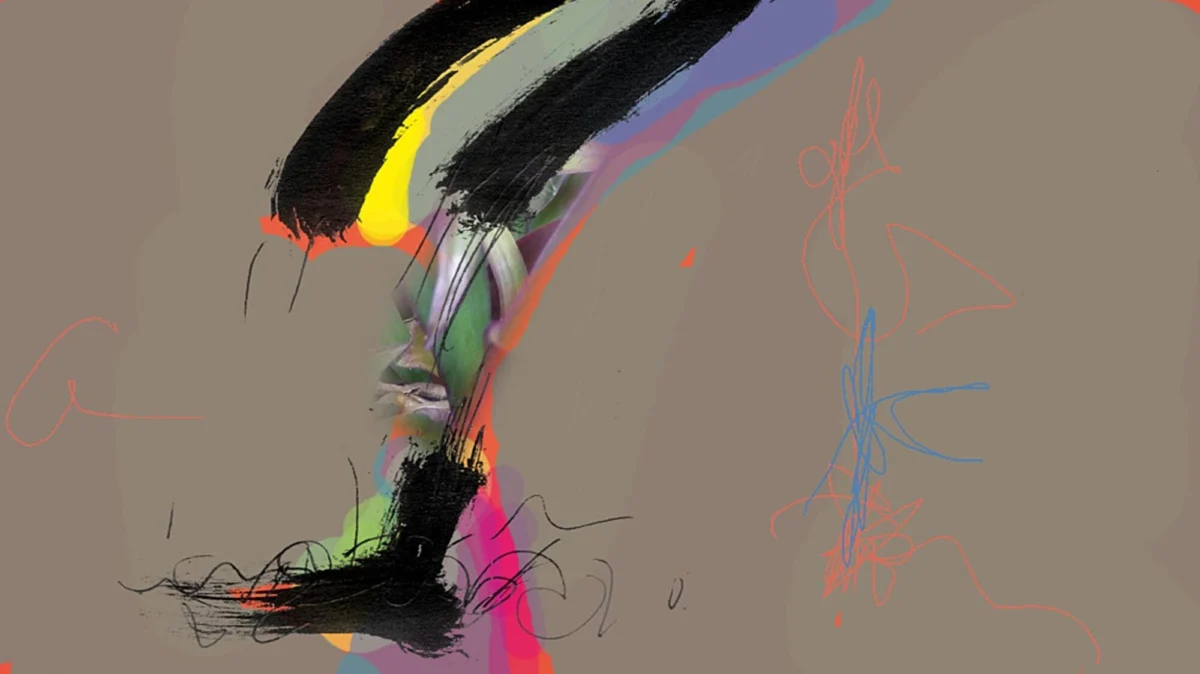
Christopher Hinton’s career in animation has never been a straight line; it is, instead, a series of sharp turns, sudden breaks, and frantic scribbles. A two-time Academy Award nominee and a cornerstone of the National Film Board of Canada’s (NFB) experimental legacy, Hinton has spent five decades redefining what the animated frame can hold. Yet, if one film stands as the definitive map of his artistic soul, it is the 2002 masterpiece Flux.
The film, a raw and unstable meditation on memory and family, marked a point of no return for Hinton. It signaled the death of his interest in the polished, gag-driven satire that made him famous and the birth of a more visceral, abstract philosophy. Today, as Hinton steps away from the medium that defined him to pursue writing and music, his trajectory offers a profound case study in the necessity of artistic reinvention and the sobering reality of "doing the math" on a creative life.
Main Facts: A Career Defined by Disruption
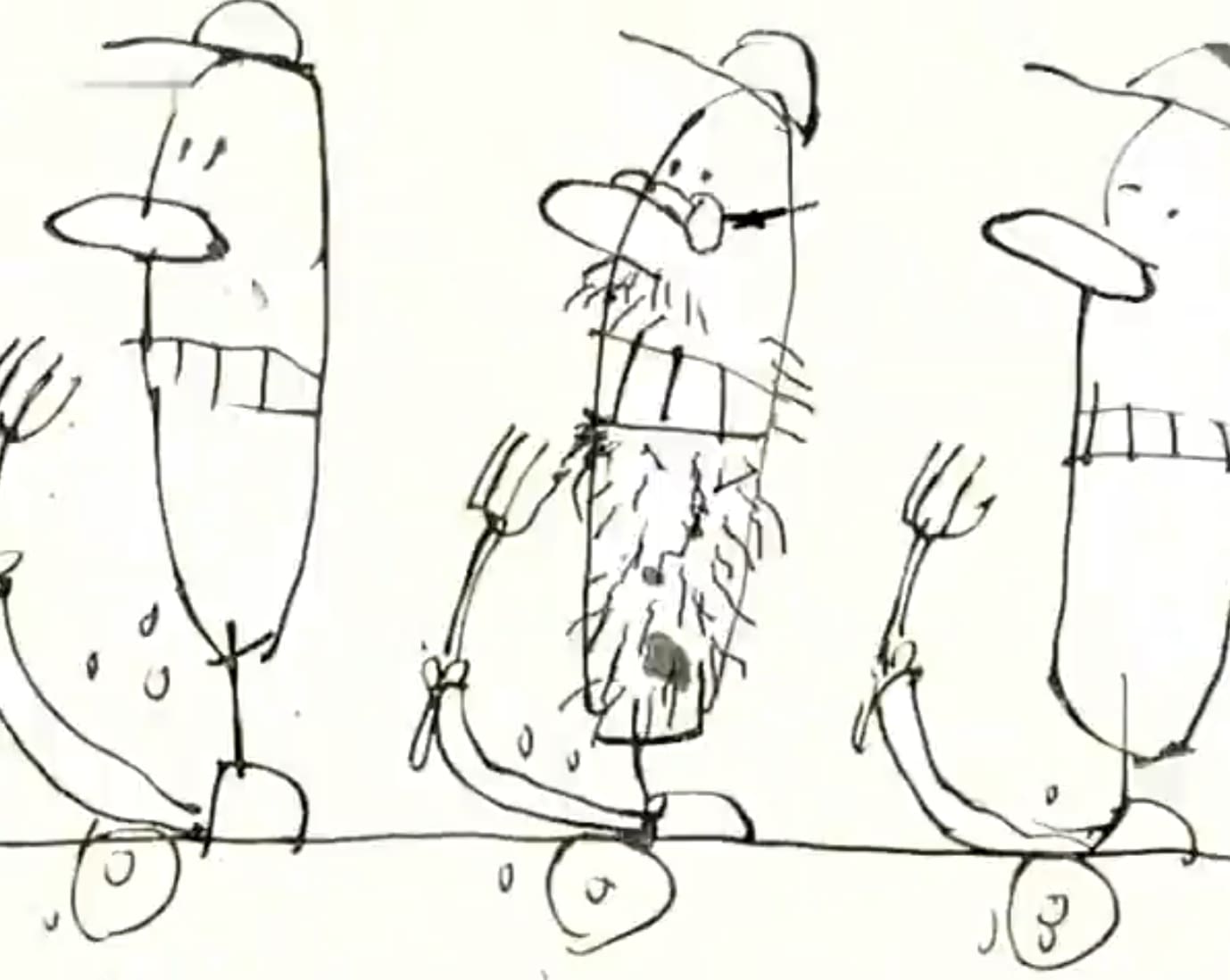
Christopher Hinton’s reputation was built on a foundation of "anxious bodies, shaky eyes, and fleshy noses." His early work, including the Oscar-nominated Blackfly (1991), was celebrated for its rhythmic timing and satirical bite. However, Hinton’s career is best understood through its pivots rather than its constants.
Key highlights of his career include:
- Two Academy Award Nominations: For Blackfly (1991) and Nibbles (2004).
- The NFB Connection: A long-standing relationship with the National Film Board of Canada, particularly during its expansion into Winnipeg.
- Technical Innovation: The transition from traditional cel animation to a "dollar-store" methodology involving pen, ink, and copy paper, and eventually into digital-audio collaborations.
- A Shift to Abstraction: The move from character-driven comedy to the "free-floating" emotional landscapes of Flux and cNote.
Despite his accolades, Hinton’s recent years have been marked by profound personal tragedy and a growing disillusionment with the traditional animation festival circuit, leading to his current transition into the world of literature and the clawhammer banjo.
Chronology: From Rebel Student to Experimental Icon
The Accidental Animator (1960s–1970s)
Hinton’s entry into the world of animation was a matter of administrative serendipity. In the late 1960s, he applied to the photography program at Sheridan College but found himself enrolled in animation instead. He describes the experience as "serendipity," instantly falling in love with the "power of the art form" and the ability to direct the viewer’s eye through invented spaces.
However, the academic environment was stifling. Hinton’s teachers, rooted in rigid traditionalism, discouraged his creative impulses. "I put some lines on the ball [for an exercise]," Hinton recalls. "I got beaten down for that big time. No inventiveness required… Don’t play." By the end of his second year, administrators suggested he find a new career. Undeterred, Hinton dropped out when he received a job offer from Ken Perkins Animation in Winnipeg—a move he calls the "best decision I ever made."
The Winnipeg Era and the NFB (1970s–1980s)
In Winnipeg, Hinton found himself at the center of a creative boom as the NFB sought local talent for its Canadian Vignettes series. His contribution, Lady Frances Simpson (1978), established his early style: a fast-paced, absurd look at the grueling realities of pioneer life. This period saw Hinton honing his craft through commissioned works like Blowhard (1978) and Giordano (1985).
In 1988, he produced his first true short, A Nice Day in the Country. Working out of his attic with colored pencils, Hinton began testing the limits of abstraction. "I was amazed at how loopy you could stretch things and still have them understood," he says. This experimentation laid the groundwork for Blackfly, the musical comedy that would earn him international acclaim and his first Oscar nod.
The Crisis of Technique: Watching TV and Flux (1990s–2002)
By 1994, Hinton reached a breaking point with Watching TV. Despite its success, Hinton "really hated" the film, viewing it as a "self-important rant" that lacked preparation and audience space. He vowed never to work in that technique again.
Two seismic shifts followed: the arrival of digital technology and the death of his father. The latter, in particular, forced a confrontation with mortality. "I started doing the math on how many years I had left to make films," Hinton reflects. "I just decided that I was going to do things my way and tell my stories."
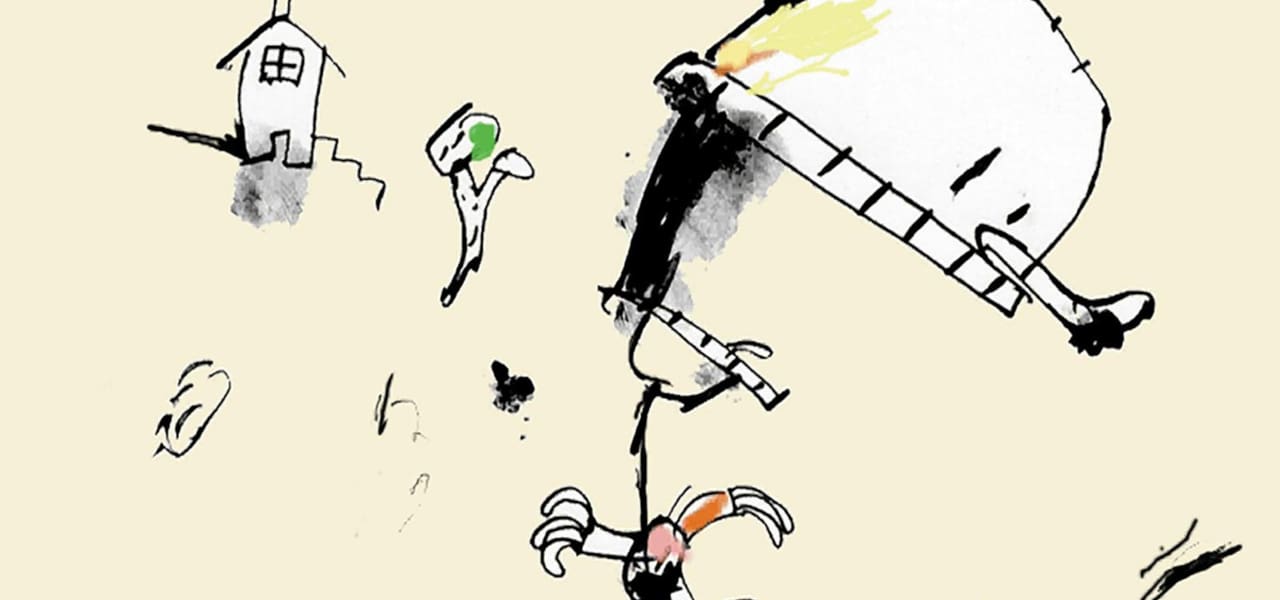
The result was Flux (2002). Inspired by a family dinner where five people had five different memories of the same event, the film abandoned horizon lines and stability. Hinton experimented with paint under the camera and Silicon Graphics software before settling on a radically simple method: cutting dollar-store copy paper into quarters and drawing with pen and ink. This "freedom" allowed him to produce frames in 30 seconds, creating a "mess" that was raw, personal, and profoundly moving.
The Late Experimental Period and Tragedy (2003–2019)
Following Flux, Hinton’s work became increasingly abstract. Nibbles (2004) brought a second Oscar nomination, while cNote (2005) explored the intersection of image and sound. However, his creative output was halted by a decade of unimaginable personal loss.
In 2012, his daughter Emma died in a car accident. Hinton was "incapacitated" for eight years, vanishing from the animation circuit. He continued to work in private, messing with imagery and scores by Canadian composers, but much of this work remained unseen. In 2019, his wife, Kathy, passed away, further distancing him from the public eye.
Supporting Data: The "Dollar Store" Methodology
One of the most significant aspects of Hinton’s legacy is his rejection of high-cost production in favor of tactile, immediate tools. His shift from the "Oxberry" camera and cel animation to "low-fi" methods was a deliberate choice to regain control.
| Technique | Period | Characteristics |
|---|---|---|
| Traditional Cel | 1970s–1990s | Gag-driven, structured, time-intensive. |
| Plywood Pegbar | Early 2000s | Pushing plywood under a camera to create a "floating" sensation. |
| SGI Software | 2001 | A failed experiment in digital tech; Hinton found it too restrictive. |
| Copy Paper/X-Acto | 2002–Present | 30-second drawings, pen and ink, total portability and control. |
| Digital Triggering | 2024 | Collaborations with Eve Egoyan; piano keys triggering layered film. |
Hinton’s "math" on his career often came down to the relationship between time and output. By reducing the time spent per drawing, he was able to capture the "quality" of an idea before it became stale through over-rendering.
Official Responses: Hinton on the State of the Art
Hinton’s recent reflections provide a candid, often biting critique of the modern animation landscape. His decision to move away from the medium is not just a personal choice, but a response to a changing industry.
On the Rejection of Recent Work:
When his 2025 film CLIK and other experimental works were rejected by major festivals, Hinton took it as a sign to re-evaluate. "If films aren’t screened at festivals, they’re probably not going to see the light of day," he says. "I don’t think I have any right to acceptance, but it made me sit up and take stock."
On the Loss of Festival Culture:
Hinton recalls the "old days" of festivals as being filled with "gems… from different nationalities, using a wide array of techniques." Today, he feels that inspiration has faded. "I no longer feel this," he admits, noting that the excitement that once fueled his returns from festivals has evaporated.
On the Appeal of Writing:
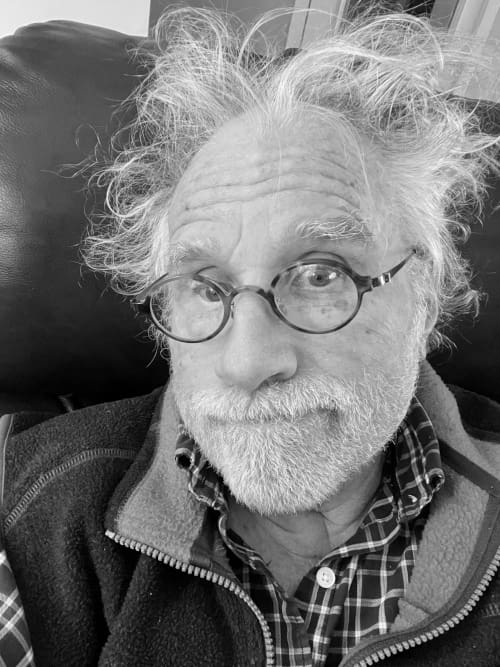
Now enrolled in a writing course at the University of Victoria, Hinton sees the pen as his new frontier. "I feel I’ll get more out of reinventing myself through writing," he says. "It’s a new challenge, and I am easily bored without one."
Implications: The End of an Era and the Persistence of "Flux"
The withdrawal of Christopher Hinton from the animation world marks the end of a specific era of Canadian experimentalism. Hinton represented a bridge between the traditional character animation of the mid-century and the wild, unmapped territory of digital and abstract expressionism.
His departure raises several critical implications for the industry:
- The Fragility of the Experimental Circuit: If a two-time Oscar nominee feels there is no space for his experimental work in modern festivals, it suggests a narrowing of the "curatorial lens" that may stifle other veteran or emerging voices.
- The Evolution of the "Auteur": Hinton’s career proves that an animator is not bound to a single style. His willingness to "throw out" work and move into writing suggests that the creative impulse is more important than the medium itself.
- The Power of Personal Narrative: Flux remains a touchstone because it prioritized emotional truth over technical perfection. In an age of increasingly polished CGI, Hinton’s "messy" legacy serves as a reminder that the most enduring images are often the most unstable ones.
Ultimately, Hinton’s life and work are a testament to the philosophy of his 2002 masterpiece. Life is a state of constant change—a flux of memory, loss, and reinvention. Whether he is holding a pen to write a story or a banjo to play a tune, Christopher Hinton continues to move toward "the next mess, the next uncertain thing worth testing." For Hinton, the end is merely the beginning of another experiment.