
The Architecture of Imagination: Concept Art World and the Vanguard of Visual Storytelling
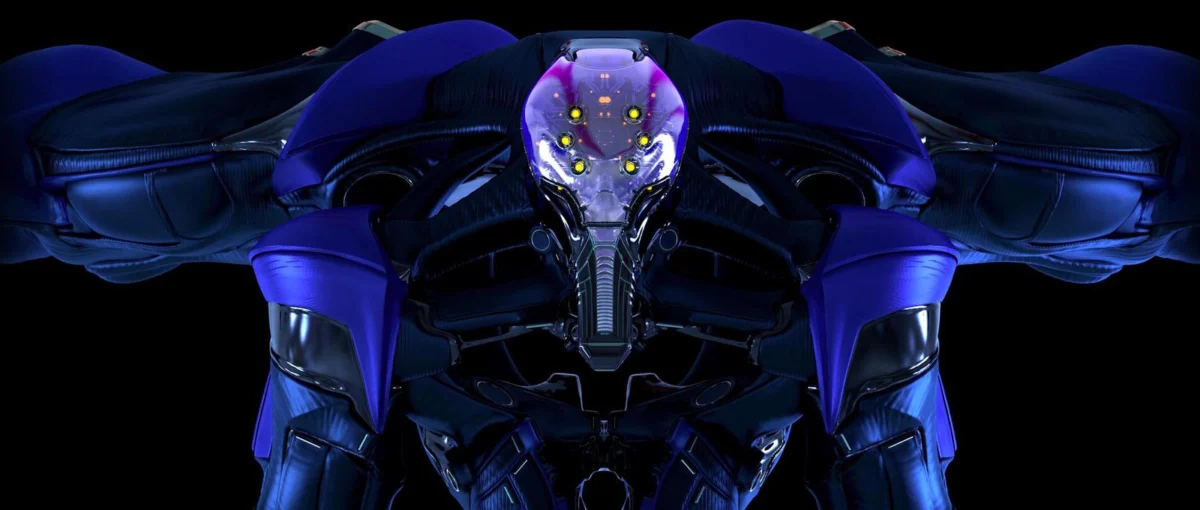
In the modern landscape of global entertainment, the distance between a writer’s script and the final frame of a blockbuster film or a triple-A video game is bridged by a group of specialized visionaries: concept artists. Recently, Concept Art World (CAW), a premier digital platform and industry resource, highlighted a series of retrospective and contemporary showcases that underscore the critical role of visual development in shaping today’s cultural icons. Featuring the works of industry titans such as Nathan Schroeder, Eddie Del Rio, Arthur Fong, and Sidharth Chaturvedi, the platform has reaffirmed its position as a digital archive and a protective bastion for human creativity in an era of rapid technological transition.
The following report examines the recent highlights from Concept Art World, the technical evolution of the craft, and the significant industry-wide implications of the platform’s strict stance on intellectual property and artificial intelligence.
Main Facts: A Pantheon of Visual Architects
Concept Art World’s latest updates spotlight a diverse array of creative talent, spanning the realms of high-octane superhero cinema, prehistoric animation, and legendary monster mythologies. These showcases provide a rare glimpse into the "blueprints" of some of the most successful media franchises in history.
The Pillars of Modern Myth
At the forefront of the recent features is the work of Nathan Schroeder, a veteran concept designer whose portfolio includes foundational work for The Avengers. Schroeder’s contributions to the Marvel Cinematic Universe (MCU) are noted for their ability to ground fantastical elements—such as the Helicarrier or Stark Tower—in a sense of engineering reality. His designs provided the visual vocabulary that allowed audiences to accept a world where gods and high-tech billionaires coexist.
Similarly, the platform highlighted Eddie Del Rio’s work on Godzilla. In the realm of creature design and environmental scale, Del Rio is considered a master of "sense of scale." His concept art for the MonsterVerse emphasizes the sheer magnitude of the Titans, using atmospheric perspective and architectural contrast to make the impossible feel visceral.
The Spectrum of Visual Development
Beyond live-action realism, CAW featured the "Visual Development" (VisDev) designs of Arthur Fong for DreamWorks’ The Croods. Visual development differs slightly from pure concept art in that it focuses on the total aesthetic harmony of an animated world—from the specific "squash and stretch" of a plant to the unique color palette of a prehistoric sunset. Fong’s work illustrates the vibrancy and stylistic cohesion required to build a world from scratch.
Finally, the spotlight on Sidharth Chaturvedi brings a more painterly, illustrative focus to the platform. Chaturvedi represents the bridge between classical fine art techniques and modern digital application, proving that even in a high-tech industry, the fundamentals of light, shadow, and human emotion remain the artist’s most potent tools.
Chronology: The Evolution of the Concept Art Industry
The prominence of platforms like Concept Art World marks a significant shift in how the entertainment industry views its pre-production phase.
1. The Era of Behind-the-Scenes Obscurity (1970s–1990s)
For decades, concept art was a utilitarian stage of production. Artists like Ralph McQuarrie (Star Wars) or Syd Mead (Blade Runner) were known to enthusiasts, but their work was largely hidden from the public eye until "Art Of" books were published years after a film’s release. The process was primarily analog, involving gouache, markers, and physical models.
2. The Digital Revolution and the Rise of the "Rockstar" Artist (2000s–2015)
With the advent of high-end digital tablets and software like Adobe Photoshop and Corel Painter, the speed and complexity of concept art exploded. This era saw the rise of the first digital art communities. Concept Art World emerged during this period (established in the late 2000s) to curate the overwhelming amount of digital work being produced, elevating the artist from a nameless "production hand" to a recognized creator with a personal brand.
3. The Franchise Era and the Demand for World-Building (2015–Present)
As Hollywood shifted toward interconnected "universes" (Marvel, DC, Star Wars, MonsterVerse), the demand for consistent world-building skyrocketed. Concept art became the most important phase of pre-production, used not just to guide the crew, but to sell the "vision" to studio executives and investors. The recent features of Schroeder and Del Rio on CAW represent the pinnacle of this era, where the concept artist is essentially the architect of a multi-billion dollar reality.
Supporting Data: The Economic and Creative Weight of Visual Design
While concept art is an aesthetic pursuit, its impact is measurable in economic and production efficiency.
- Production Efficiency: According to industry reports, every dollar spent on comprehensive visual development can save up to ten dollars in the post-production and VFX phase. By resolving design issues on a 2D plane (concept art) before moving to expensive 3D modeling and rendering, studios drastically reduce "crunch" and wasted assets.
- The Growth of the Concept Art Market: The global market for visual effects and pre-visualization is projected to grow at a CAGR (Compound Annual Growth Rate) of over 10% through 2030. This growth is driven by the expansion of streaming services (Netflix, Disney+, HBO Max) which require a constant stream of high-fantasy and sci-fi content.
- Educational Demand: The rise of professional concept art has birthed a new sector of private education. Platforms like CAW often serve as the primary discovery point for students looking for mentors, leading to the success of specialized schools like Gnomon, ArtCenter, and FZD School of Design.
Official Responses and the Stance on Artificial Intelligence
Perhaps the most significant aspect of the recent Concept Art World update is the explicit legal and ethical stance included in their organizational "About Us" section.
The Anti-AI Training Mandate
The platform explicitly states: "Any training of AI systems using this content is strictly prohibited."
This is a direct response to the ongoing controversy surrounding Generative AI models (such as Midjourney, Stable Diffusion, and DALL-E), which are often trained on vast datasets scraped from the internet without the consent of the original artists. CAW’s move reflects a broader industry-wide pushback.
- The Artist’s Perspective: Professional concept artists, including those featured like Nathan Schroeder, rely on the uniqueness of their style and the intellectual property of their designs. If an AI can mimic Schroeder’s specific "industrial-realist" style by scraping his work from CAW, his market value is directly threatened.
- The Legal Frontier: By including these prohibitions in their metadata and site policies, CAW is laying the groundwork for potential copyright litigation. They are positioning themselves not just as a gallery, but as a protected vault for human-made intellectual property.
Industry Solidarity
Major studios have begun to follow suit, with some contracts now including "Human-Only" clauses for visual development. The stance taken by Concept Art World serves as a signal to the industry that the top-tier talent featured on their site—the people who designed The Avengers and Godzilla—will not have their legacies used to automate their own professions.
Implications: The Future of Human Creativity in Media
The curation of artists like Arthur Fong and Eddie Del Rio on a platform that actively resists AI training suggests several long-term implications for the entertainment industry.
The Premium on "Human Insight"
While AI can generate images, it cannot yet "design" in the way a concept artist does. A concept artist must consider the narrative, the physics of a world, the emotional arc of a character, and the practicalities of a film set. The work of Nathan Schroeder is not just a pretty picture; it is a solution to a narrative problem. The implication is that the industry will see a widening gap between "commodity imagery" (produced by AI) and "prestige design" (produced by elite human artists).
The Preservation of Artistic Legacy
By archiving the work of these artists, Concept Art World is creating a historical record of how our modern myths were built. This ensures that even as technology changes, the foundational techniques of composition, color theory, and storytelling are preserved.
A New Era of Copyright
The strict prohibition of AI training on CAW may be a precursor to a new type of "Digital Rights Management" (DRM) for visual art. We may see the emergence of "Closed-Loop" portfolios where high-end concept art is only viewable through secure, encrypted platforms to prevent scraping, fundamentally changing how artists share their work with the public.
Conclusion
The recent updates from Concept Art World are more than a simple gallery update; they are a testament to the enduring power of human imagination and a strategic defense of the creative profession. By showcasing the intricate, world-building efforts of Nathan Schroeder, Eddie Del Rio, Arthur Fong, and Sidharth Chaturvedi, CAW reminds the public and the industry alike that the icons of modern cinema are not the products of algorithms, but the result of decades of human mastery.
As the entertainment industry navigates the complexities of the digital age, the role of the concept artist remains the same: to venture into the unknown and bring back the first visual evidence of a world we have yet to see. Concept Art World continues to be the primary map-maker for that journey, ensuring that the architects of our dreams remain protected, recognized, and revered.



Leave a Comment