The Architecture of Spontaneity: Mike Leigh and the Collaborative Genesis of "Tender Loving Care"
In an era of cinema often defined by rigid intellectual property, meticulously pre-visualized action sequences, and scripts polished by committee, Mike Leigh remains a singular anomaly. The British auteur, a titan of social realism and character-driven drama, has spent decades refining a creative process that would terrify most contemporary producers: he begins his projects without a script.
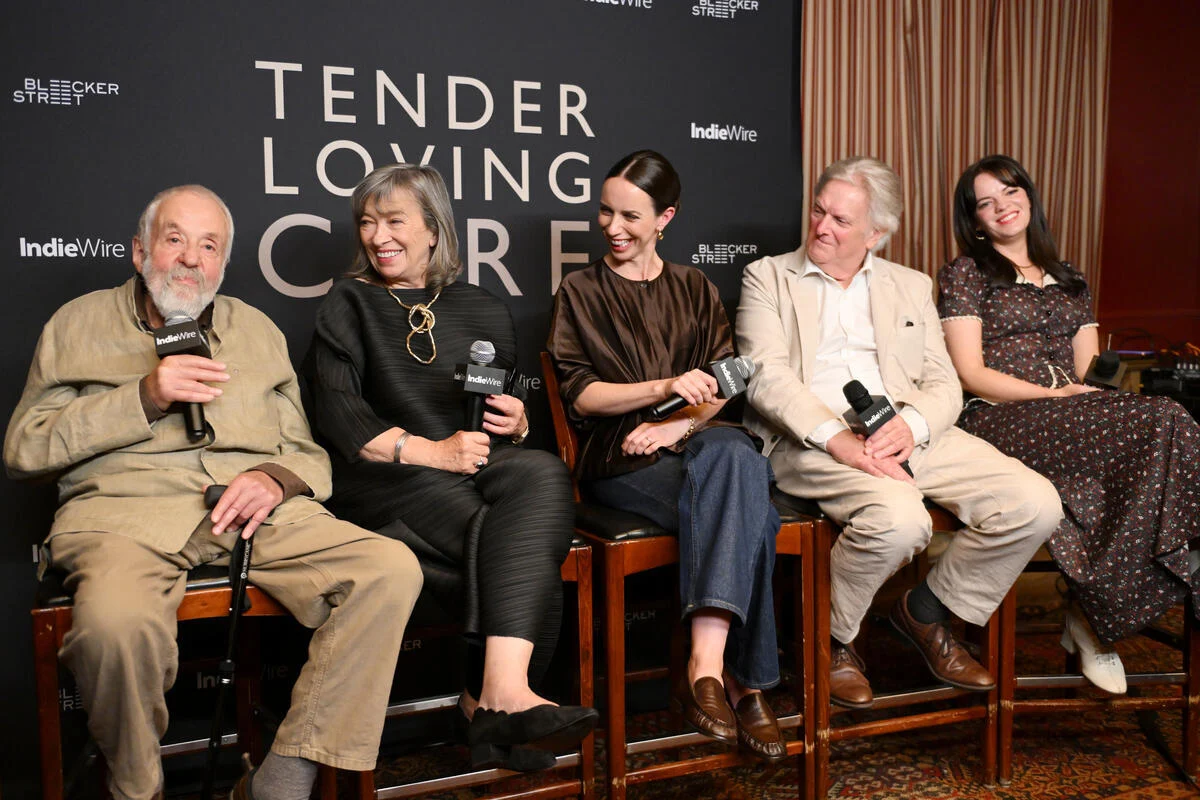
Recently, at the Toronto International Film Festival (TIFF), Leigh and his long-time collaborators gathered to pull back the curtain on this mysterious methodology. During a celebratory dinner hosted by IndieWire and Bleecker Street at Biff’s Bistro, the cast and director of the upcoming film Tender Loving Care discussed the unique alchemy that transformed a "glimmer of an idea" into one of the most anticipated films of the festival circuit.
Main Facts: The Radical Absence of the Script
The core of Mike Leigh’s brilliance lies in his refusal to impose a narrative upon his actors from the outset. Instead of handing a performer a 120-page screenplay, Leigh begins with a concept—sometimes nothing more than a specific emotion or a social dynamic. From there, he embarks on a grueling, months-long rehearsal process during which the actors and the director "discover" the story together.
Tender Loving Care, which screened to critical acclaim at TIFF, is the latest product of this idiosyncratic system. Unlike his previous work, Hard Truths, which delved into the darker recesses of human irritability and trauma, Leigh described his latest venture as being born from a "spirit of positivity."
The film features an ensemble of Leigh’s "regulars"—actors who have stepped into his world multiple times, including Marion Bailey, Kate O’Flynn, Paul Jesson, and Alice Bailey Johnson. Their collective testimony at the TIFF event painted a picture of a filmmaking process that is less about "acting" in the traditional sense and more about the organic cultivation of human truth.
Chronology: From Glimmer to Premiere
The lifecycle of a Mike Leigh film follows a timeline that is entirely inverted compared to the Hollywood standard. To understand the depth of Tender Loving Care, one must look at the chronological steps of its creation:

1. The Conceptual Seed
Every Leigh project begins with what the director calls an "idea or a feeling." For Tender Loving Care, Leigh sought to explore the possibilities of human kindness and resilience. He does not write a treatment; he does not pitch a plot. He pitches a "spirit."
2. The Casting of the Ensemble
Leigh selects actors not for their ability to fit a specific role, but for their creative intelligence and willingness to engage in a collaborative experiment. For this film, he turned to a trusted circle of performers, many of whom have worked with him for decades.
3. The Rehearsal Period
This is the most intensive phase of the Leigh method. For several months, actors work one-on-one with Leigh to develop their characters’ entire backstories. These characters are built from the ground up, often based on real people the actors have observed. Crucially, the actors do not know what the other characters are doing or who they are until their characters "meet" in the world of the film.
4. The Discovery of the Narrative
As the characters interact through improvisation, the "story" begins to crystallize. Leigh acts as a curator and editor of these improvisations, eventually distilling the months of work into a structured shooting script—but only after the actors have fully inhabited their roles.
5. Production and Premiere
By the time the cameras roll, the dialogue is set, but the performances possess a lived-in quality that is impossible to replicate through traditional rehearsals. This journey culminated on September 12, during the Toronto International Film Festival, where the film was presented to the world as a finished, cohesive work of art.
Supporting Data: The Proven Success of the "Leigh Method"
While Leigh’s process may seem experimental, its efficacy is backed by one of the most decorated filmographies in modern cinema. His method has consistently yielded results that resonate both with critics and major awards bodies.

- "Secrets & Lies" (1996): Perhaps the ultimate proof of his process, this film won the Palme d’Or at Cannes and received five Academy Award nominations. It was developed through the same improvisational rigors as Tender Loving Care.
- "Topsy-Turvy" (1999): This film demonstrated that Leigh’s method could be applied even to period pieces and musical biographies, winning two Oscars.
- Actor Longevity: The fact that actors return to Leigh repeatedly is a statistical anomaly in a volatile industry. Marion Bailey has completed six films and two stage plays with Leigh; Paul Jesson has appeared in five films; Kate O’Flynn has four. This high rate of retention suggests that the process, while demanding, offers a level of professional fulfillment rarely found on traditional sets.
- Critical Consistency: Leigh’s films rarely miss the mark. His focus on "truth" over "plot" ensures that even if a film is quiet or domestic, it remains emotionally gripping. Hard Truths, his recent exploration of a woman’s chronic anger (starring Marianne Jean-Baptiste), currently holds a high critical rating, setting the stage for Tender Loving Care to follow suit.
Official Responses: Insights from the TIFF Panel
During the conversation moderated by IndieWire Editor-in-Chief Brent Lang, the participants offered profound insights into why this collaborative, script-free environment is so vital to their craft.
Mike Leigh himself pushed back against the idea of the "auteur" as a solitary dictator. "We make these films in the same way that painters paint pictures and novelists write novels," Leigh explained. "But here it’s not the solo artist in the studio; it’s about the work that we share. For me, it’s about having a feeling of the spirit and the sense of possibilities."
The actors echoed this sentiment, describing the process as a form of artistic liberation.
Marion Bailey described her first encounter with Leigh’s method as a turning point in her career. "To me, it wasn’t alien, it was absolutely revelatory," she said. "I suddenly thought, ‘Oh, that’s how you do it. Now I get how to act.’ I just want to do this all the time."
Kate O’Flynn admitted that she initially took the process for granted. "I thought every great director worked this way," she remarked. "I realized how rare it was in the years after it, and how brilliant it was."
Paul Jesson highlighted the "sense of adventure" inherent in the Leigh method, noting the thrill of "setting off on a project about which you really don’t know anything."

Alice Bailey Johnson, representing a newer generation of the Leigh ensemble, emphasized the psychological safety required for such work. "It’s so freeing for an actor. You just feel really trusted, and that’s so important for us."
Implications: The Future of Auteur Cinema and Independent Distribution
The existence of Tender Loving Care and its successful launch at TIFF carry significant implications for the broader film industry.
Firstly, it reinforces the importance of "patient capital" and boutique distributors like Bleecker Street. In a landscape dominated by streaming algorithms, Bleecker Street’s willingness to back a director who cannot provide a script on day one is a testament to the enduring value of the "prestige" theatrical model. Without distributors willing to trust the process rather than the proposal, Leigh’s unique contributions to the cinematic canon would cease to exist.
Secondly, the shift in tone from the caustic Hard Truths to the positive Tender Loving Care suggests that Leigh is using his late-career period to explore the full spectrum of human temperament. By focusing on "positivity" in his latest work, Leigh is challenging the notion that social realism must inherently be "gritty" or "depressing."
Finally, the success of this film serves as a call to action for film education and actor training. In an industry increasingly reliant on green screens and post-production fixes, the Leigh method is a reminder that the most powerful special effect in cinema is a human face conveying a genuine, unscripted emotion.
As Tender Loving Care moves from the festival circuit to a wider release, it stands as a monument to the power of collaboration. It proves that when a director trusts his actors enough to let them build their own world, the result is not chaos, but a profound and resonant truth. For Mike Leigh, the journey is the destination, and the "glimmer of an idea" remains the most potent tool in the filmmaker’s arsenal.