
The Architecture of the Infinite: A Deep Dive into Chris Harnan’s ‘Big Pool’
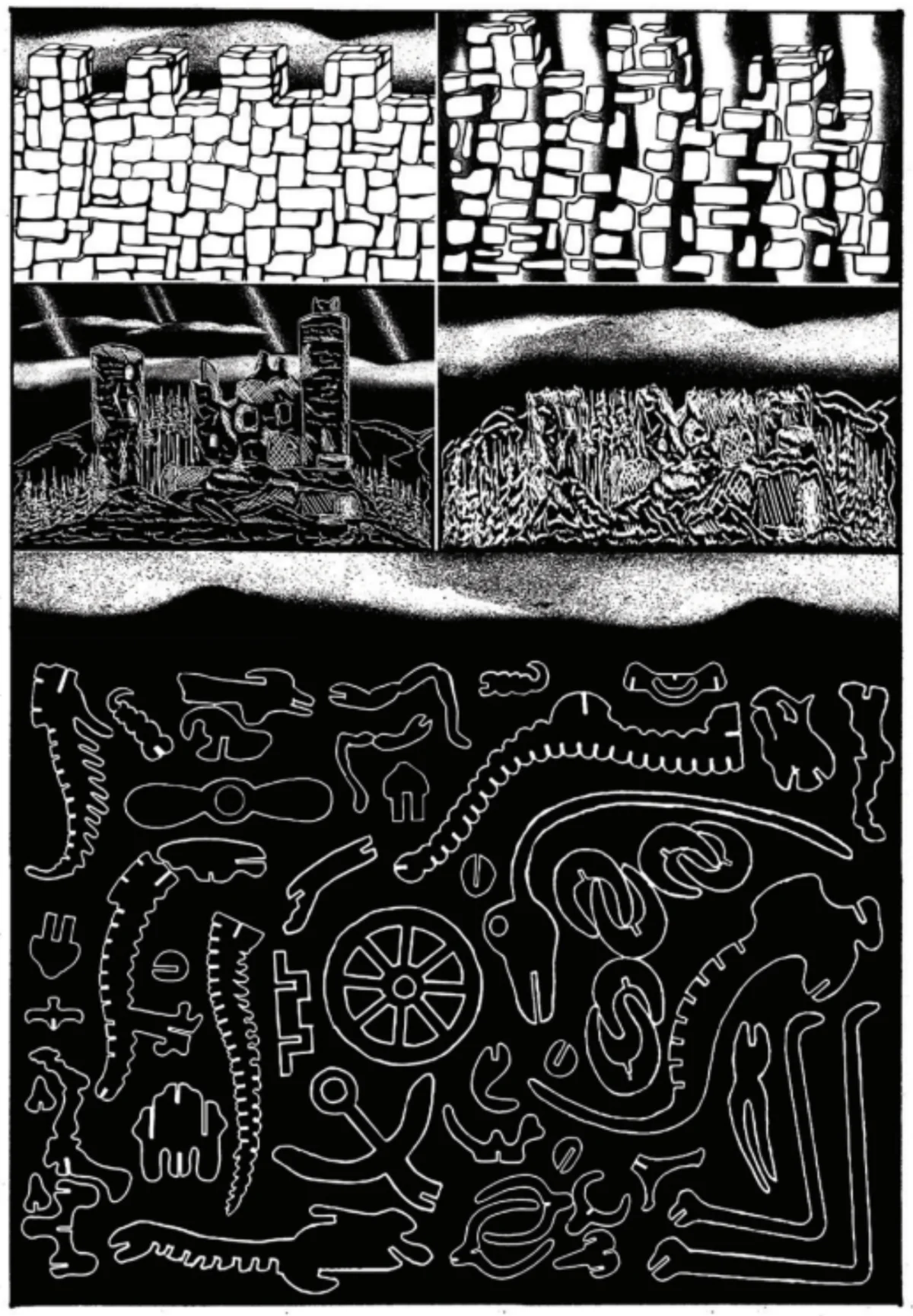
In the landscape of contemporary sequential art, few works challenge the fundamental boundaries of the medium as provocatively as Chris Harnan’s debut graphic novel, Big Pool. Released in July 2025, the work represents a landmark collaboration between the UK’s Breakdown Press and the French risograph specialists Fidèle Editions. Rather than adhering to the linear constraints of traditional storytelling, Big Pool operates as a sophisticated visual manifesto, prioritizing the poetry of form, the physics of optics, and the philosophy of interconnectedness over conventional plot.
Harnan, a creator known for his meticulous attention to the physical properties of print, has produced a work that demands to be read not merely as a story, but as an object. By stripping away the crutches of dialogue and narrative sequencing, Big Pool forces the reader into a state of active interpretation, where the act of seeing becomes an act of creation itself.
Main Facts: The Genesis of a Visual Epoch
Big Pool is not entirely a collection of new material; rather, it is a curated synthesis of Harnan’s evolving aesthetic. It incorporates previous works such as Le Casino, which originally appeared in Marécage, an anthology published by the influential French collective Lagon Revue. This pedigree is evident in the book’s experimental DNA, reflecting a broader movement in European and independent comics toward "abstract sequencing."
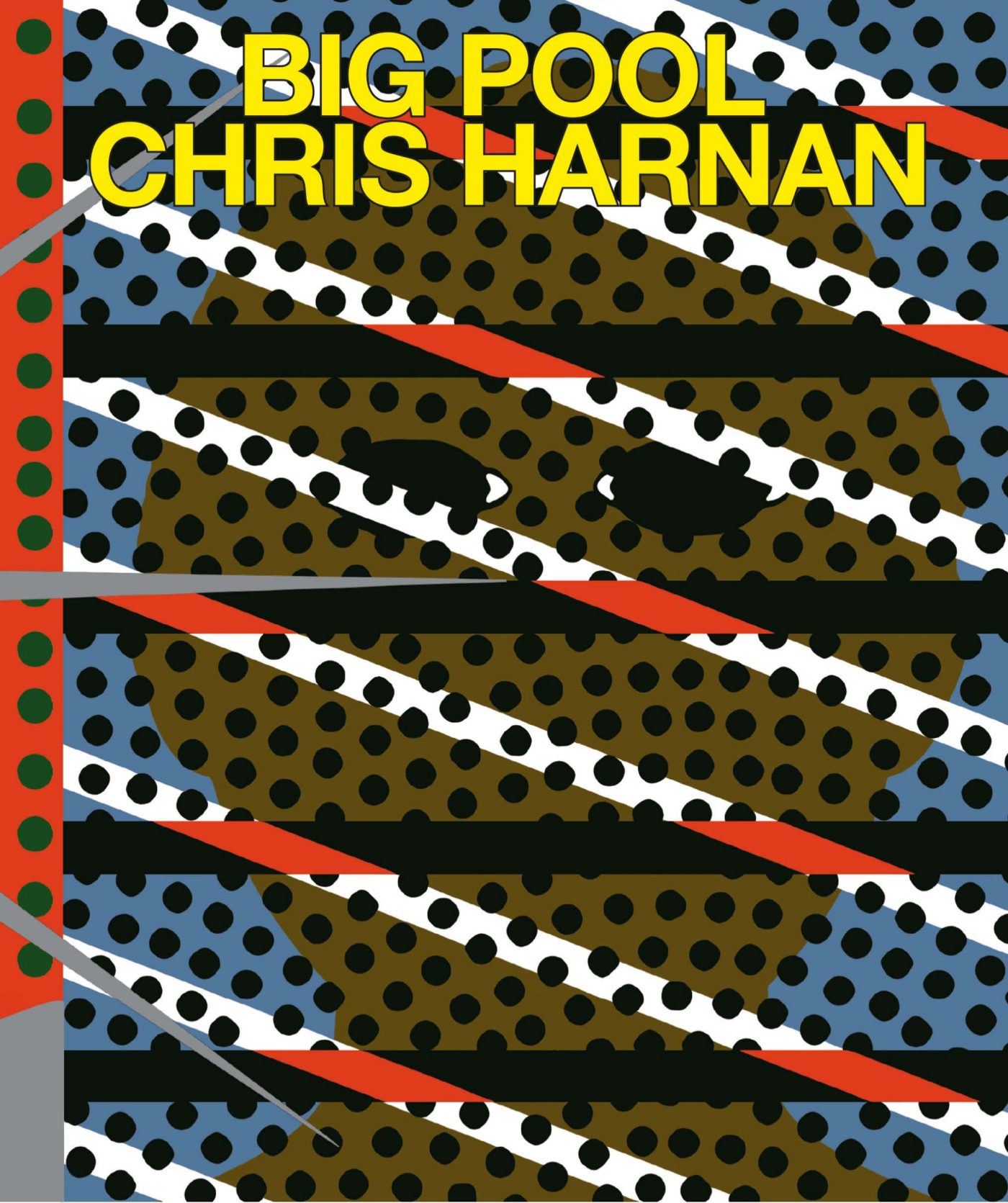
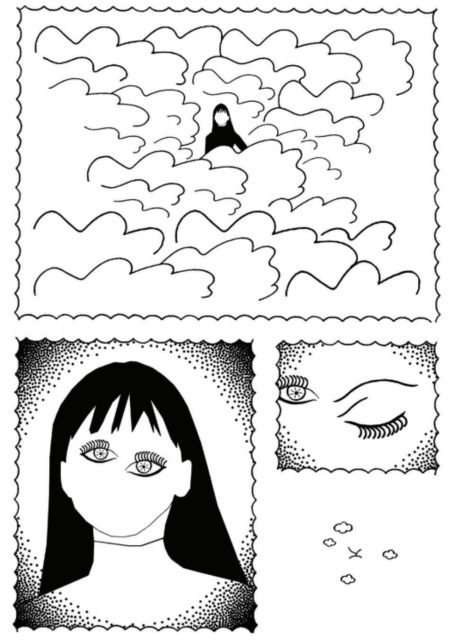
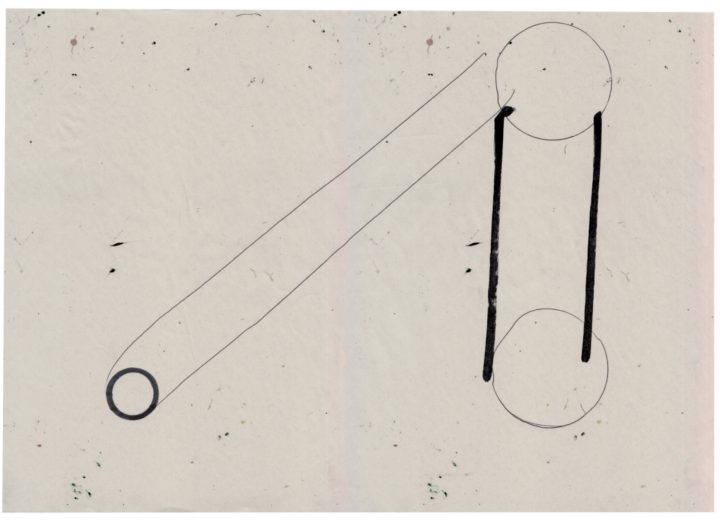
The publication is a triumph of materiality. By utilizing the specific strengths of both Breakdown Press (known for their avant-garde editorial eye) and Fidèle Editions (masters of the Risograph process), the book achieves a tactile quality that digital screens cannot replicate. The first instance of text does not appear until page 22, and even then, it is used as a graphic element rather than a narrative driver. This "diminution of the diegetic," as critics have noted, allows Harnan to focus on a "unity of messaging" through color, symbolism, and framing.
The title itself, Big Pool, serves as a metaphor for the work’s structural philosophy. Just as a body of water is composed of indistinguishable molecules that create a singular, powerful whole, Harnan’s page layouts suggest that every dot, line, and color field is a vital component of a larger cosmic tapestry.
Chronology: From Vignette to Universal Narrative
The development of Big Pool can be traced through a clear evolution of Harnan’s stylistic preoccupations:
- The Anthology Phase (Pre-2025): Harnan’s early contributions to Lagon Revue established his interest in "micro-narratives." Works like Le Casino experimented with how much narrative weight a single, abstract image could carry.
- The Collaborative Synthesis (Early 2025): The partnership between Breakdown Press and Fidèle Editions allowed Harnan to scale these experiments. The production process involved a complex layering of collage, offset printing, and digital manipulation to create the book’s unique visual texture.
- The July 2025 Launch: Upon its release, Big Pool was immediately recognized for its rejection of the "gutter"—the traditional white space between comic panels—in favor of a continuous, saturated visual field.
- The Creation Myth Arc: The book’s internal chronology begins with a blank canvas, followed by the introduction of basic geometric shapes. This mirrors the opening of the Book of Genesis, a theme explicitly referenced on the book’s jacket: "Once upon a time there was nothing…"
Supporting Data: The Mechanics of the "Obtuse Meaning"
To understand the impact of Big Pool, one must look at the technical data of its construction. Harnan employs a concept described by theorist Roland Barthes as the "obtuse third meaning." This is a level of communication that exists beyond the obvious (the literal image) and the symbolic (the intended message). It is a meaning that can only be felt through the "filmic" quality of the art—the rhythm of the pages and the physical sensation of the colors.
The Science of the "Peripheral Flicker"
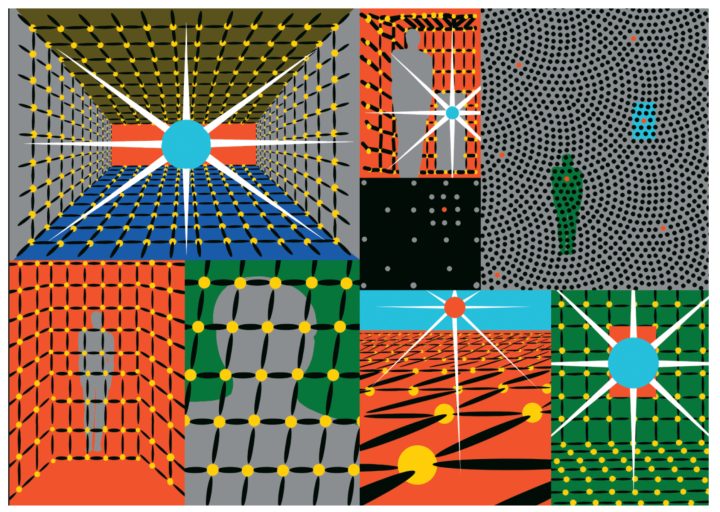
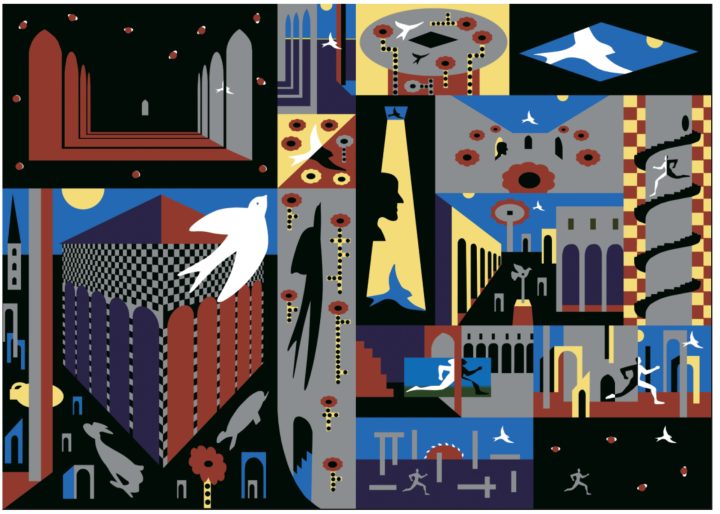
A standout feature of the book is Harnan’s use of "peripheral flicker illusions." By overlaying high-contrast images and specific dot-tone patterns, Harnan triggers "microsaccades" in the human eye. As the reader’s gaze moves across the page, the images—specifically the recurring yellow ellipses—appear to vibrate or flicker.
- Signifier: The yellow ellipse.
- Signified (Physical): An atom, a building block of matter.
- Signified (Metaphysical): The soul, in a state of constant flux.
This technical achievement ensures that the book is never static. It is a literal embodiment of the theme of "constant change."
Color as Architecture
Harnan replaces traditional panel borders with color contrasts. The use of deep blues and stark blacks mimics the transition from the Earth’s horizon to the void of outer space. The edges of the pages themselves are printed in a binary black-and-white pattern, reinforcing the book’s obsession with dualities: life versus death, the physical versus the metaphysical.
Official Responses and Theoretical Framework
The critical reception of Big Pool has centered on its relationship to established comics theory, specifically the work of Scott McCloud and Michael Nicoll Yahgulanaas.
Challenging the McCloudian Gutter
In his seminal work Understanding Comics, Scott McCloud argues that the "gutter" is where the "magic" of comics happens—it is the space where the reader’s imagination bridges the gap between panels. Harnan, however, rejects this "colonial" view of empty space.

Critics have pointed to the influence of Michael Nicoll Yahgulanaas’s Red: A Haida Manga on Harnan’s work. Yahgulanaas argues that in indigenous art traditions, there is no "empty space"; every inch of the canvas is occupied by meaning. By eliminating gutters and using conjoined panelling, Harnan follows this path, refusing to leave "limbo" for the reader to fill. Instead, he saturates the reader’s field of vision, insisting that the "Big Pool" of existence is full, interconnected, and devoid of true absence.
The "Iconic Solidarity" of the Ellipsis
Luis Ramirez-Liberato, writing for The Comics Journal, notes that Harnan’s use of "iconic solidarity"—the repetition of symbols across different contexts—forces a "re-reading" of the work. The ellipsis that represents a sun on page 5 might represent an atom on page 50. This creates a "general arthrological relationship" where the reader must build a personal vocabulary to navigate the book’s world.
Implications: The Future of the Graphic Novel as Object
The success and critical depth of Big Pool suggest several shifting trends in the medium:
1. The Rise of the "Post-Narrative" Comic
As digital media consumes the market for traditional, plot-heavy storytelling, physical graphic novels are pivoting toward "tactile art." Big Pool proves that there is a significant audience for works that prioritize the sensory experience of print over the consumption of a script.
2. Materiality as Content
Harnan’s work suggests that the method of printing (risograph, offset, collage) is just as important as the subject of the drawing. The "peripheral flicker" is a meaning that cannot be "spoiled" or summarized; it must be experienced. This elevates the comic book from a vessel for a story to a piece of interactive technology.
3. The Rejection of Passive Reading
By removing pagination and dialogue, Harnan strips away the traditional markers of progress. The reader cannot "skim" Big Pool. One must sit with the images, allowing the optical illusions to take effect and the symbolic connections to form. This marks a return to a more meditative, demanding form of literacy.
Conclusion: A Unified Theory of Everything
Big Pool stands as a rigorous reimagining of what comics can achieve when they privilege the expressive capacities of form and visual logic. Through the deliberate minimization of language, Chris Harnan does not diminish meaning; he redistributes it across every dot and fiber of the page.
Ultimately, the book enacts its own thesis: that all elements—visual, material, and conceptual—participate in a unified whole. By eliminating the empty spaces traditionally afforded to the reader’s imagination and saturating every aspect of the page with intentional design, Harnan rejects absence in favor of total interconnectedness. Big Pool is more than a debut; it is an immersive, interpretive process that invites us to see the universe not as a series of disconnected events, but as a single, vibrating body of water.



Leave a Comment