The Autonomous Frontier: Zoox Expands Commercial Operations to Las Vegas Airport
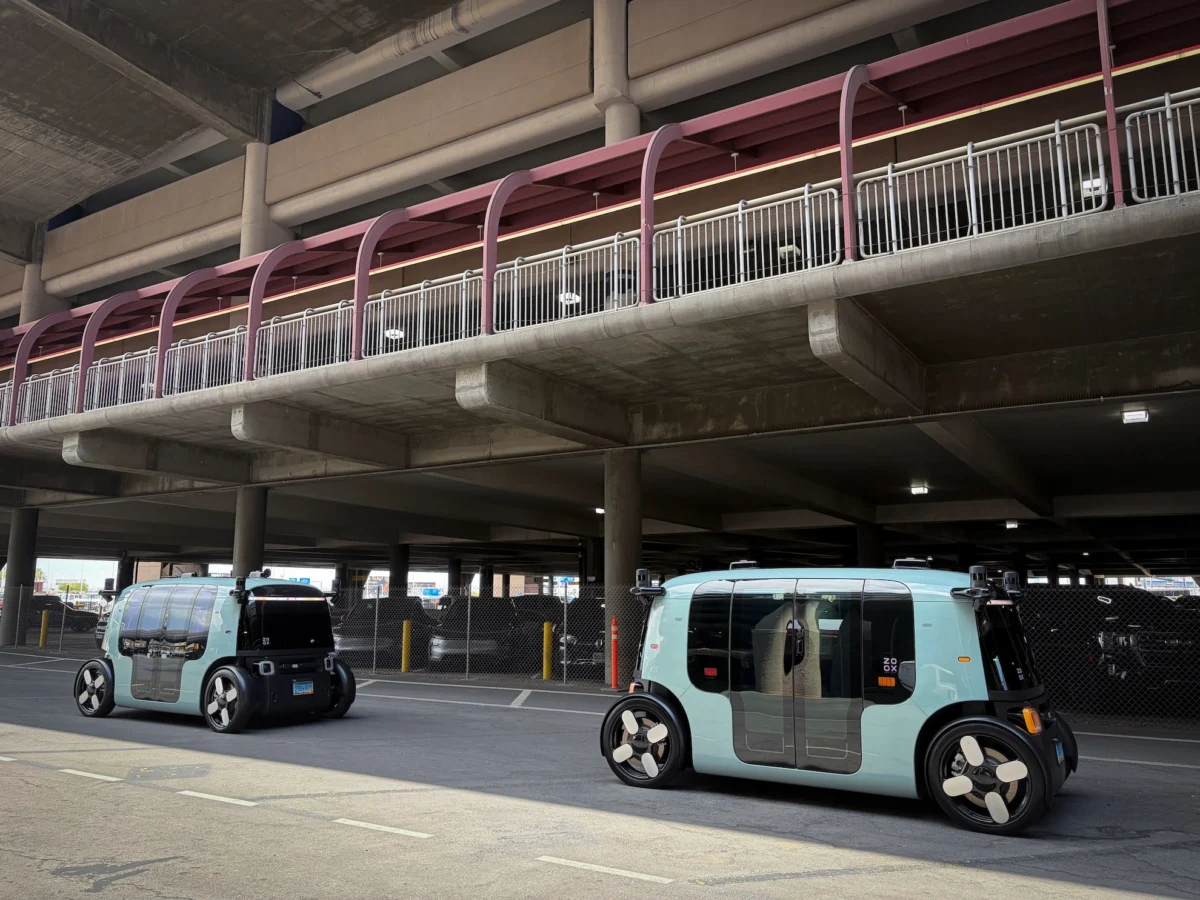
In a landmark move for the autonomous vehicle (AV) industry, Zoox, the self-driving subsidiary of Amazon, has officially extended its commercial robotaxi service to include Harry Reid International Airport (LAS) in Las Vegas. Starting this Thursday, passengers will be able to hail the company’s custom-built, bidirectional robotaxis for transit to and from one of the busiest travel hubs in the United States.
This expansion marks a pivotal moment for Zoox, transitioning the company from a long-term research and development project into a direct competitor within the lucrative airport transportation market. By securing a presence at the airport, Zoox is not only validating its proprietary technology but also challenging the established dominance of traditional ride-hailing giants like Uber and Lyft through a superior logistical integration at the terminal level.
Main Facts: A Strategic Leap in the Heart of Nevada
The expansion into Harry Reid International Airport represents the first time a purpose-built robotaxi—designed without a steering wheel or pedals—has been authorized to provide commercial service to a major American airport. Unlike competitors who often utilize modified mass-production SUVs, Zoox’s vehicle is a ground-up reimagining of urban transport, featuring a "carriage-style" interior where four passengers face one another.
The Competitive Advantage
Perhaps the most significant aspect of this launch is the logistical advantage Zoox has secured over traditional ride-sharing platforms. Currently, passengers arriving at Harry Reid International Airport who use Uber or Lyft must navigate a five- to ten-minute walk from the baggage claim area to a designated pick-up zone located on the upper levels of a parking garage.
In contrast, Zoox has secured permission to pick up and drop off riders at both airport terminals directly near the baggage claim areas. This proximity eliminates one of the primary "friction points" of airport travel, potentially shifting consumer preference toward autonomous options based on convenience alone.
Operational Scale
The launch follows a series of regulatory clearances that have transformed Zoox’s business model. After a year of providing non-commercial "preview" rides to select groups, the company is now fully operational as a paid service. This move into the airport sector is the first of many planned expansions intended to capitalize on the high-density tourist traffic that defines the Las Vegas Strip and its surrounding infrastructure.
Chronology: From Visionary Concept to Commercial Reality
The journey to the Las Vegas airport has been a decade-long endeavor, marked by significant technological hurdles and a high-profile acquisition.
- 2014 – The Inception: Zoox was founded in Silicon Valley with a radical premise: the industry should not just automate existing cars but build a new category of vehicle from scratch.
- 2020 – The Amazon Acquisition: In a move that provided the necessary capital to compete with Alphabet’s Waymo, Amazon acquired Zoox for an estimated $1.2 billion. This acquisition signaled Amazon’s long-term interest in autonomous mobility, both for passenger transit and potential future logistics applications.
- 2023 – Initial Testing in Vegas: Zoox began testing its custom robotaxis on public roads in Las Vegas, though these early trials were limited to employees and closed-loop testing environments.
- July 2024 – The Federal Breakthrough: The National Highway Traffic Safety Administration (NHTSA) granted Zoox a temporary, two-year exemption from certain Federal Motor Vehicle Safety Standards (FMVSS). This was the critical "green light" needed to deploy a vehicle that lacks traditional manual controls.
- August 10, 2024 – Commercial Launch: Zoox officially began charging for rides in Las Vegas, moving away from its testing phase and into a revenue-generating business model.
- September 2024 – Airport Integration: The company announces and implements service to Harry Reid International Airport, marking its most significant commercial milestone to date.
Supporting Data: Regulatory Frameworks and Market Projections
The rapid acceleration of Zoox’s operations is underpinned by specific regulatory milestones and a shifting landscape in Nevada’s transportation oversight.
The NHTSA Exemption
The ability of Zoox to operate at all is contingent on a specific federal exemption. Because the Zoox robotaxi does not have a steering wheel, pedals, or a traditional windshield layout, it cannot meet standard FMVSS requirements for items like "windshield defrosting" or "light vehicle braking systems" in the way they were originally written for human drivers.
The two-year exemption allows Zoox to deploy up to 2,500 vehicles. This window is intended to provide the NHTSA with real-world data to determine how safety standards should be modernized for the age of autonomy.
The Las Vegas Ecosystem
Las Vegas is rapidly becoming the "Silicon Valley of AVs." According to recent filings with the Nevada Transportation Authority (NTA):

- Permit Approvals: In the last month alone, Tesla, Uber, and Waymo all received permits to operate commercial robotaxi services in Clark County.
- Fleet Density: Current projections suggest that up to 8,000 robotaxis could be deployed across Clark County within the next 12 months.
- The Uber-Zoox Partnership: While Zoox operates its own fleet, it has also entered into a partnership with Uber to offer rides through the Uber app in certain markets, showcasing a hybrid approach to market penetration.
Official Responses and Safety Frameworks
Zoox has maintained a policy of "safety through transparency" as it scales its operations. In conjunction with the airport expansion, the company released an updated version of its Safety Framework, a comprehensive document detailing the redundancies built into the vehicle’s hardware and software.
Corporate Statement
In a statement regarding the expansion, Zoox representatives emphasized the importance of the airport route as a "critical ride-hailing destination." The company noted that the ability to service Harry Reid International Airport is a testament to the reliability of their autonomous driving stack, which has navigated the complex, high-traffic environment of the Las Vegas Strip for over a year without significant incident.
Safety Redundancy
The Zoox vehicle utilizes a "sensor pod" system at all four corners, providing a 360-degree field of vision that overlaps to ensure no blind spots. The system includes:
- LiDAR: For high-resolution 3D mapping and object detection.
- Radar: For tracking the velocity of moving objects in various weather conditions.
- High-Definition Cameras: For traffic light recognition and fine-detail obstacle detection.
The company has stressed that its "bidirectional" capability—meaning the car can drive forward or backward with equal ease—allows it to maneuver out of tight spots at airport terminals more efficiently than traditional vehicles.
Implications: Reshaping the Future of Urban Transit
The entry of Zoox into the airport market has profound implications for the travel industry, urban planning, and the gig economy.
1. The Disruption of the Gig Economy
For over a decade, Uber and Lyft drivers have relied on airport runs as a primary source of high-value fares. Zoox’s ability to offer a more convenient pick-up location (at baggage claim) at a potentially lower price point (due to the lack of a human driver) poses a direct threat to the livelihoods of thousands of gig workers in the Las Vegas area. If the projected 8,000 robotaxis hit the streets of Clark County this year, the economic pressure on human drivers will be unprecedented.
2. Urban Infrastructure and Congestion
The success of robotaxis at the airport will likely force city planners to rethink terminal design. If autonomous vehicles can be more tightly integrated into baggage claim areas, it could reduce the "curbside chaos" currently seen at major airports. However, there is also the risk of "induced demand," where the ease of robotaxis leads to more vehicles on the road, potentially worsening traffic on the already congested I-15 and Las Vegas Boulevard.
3. The "Platform Wars"
The battle for autonomous supremacy is no longer just about who has the best AI; it is about who has the best service integration. By focusing on the airport-to-hotel corridor, Zoox is targeting the highest-margin segment of the ride-hailing market. Waymo and Tesla’s impending entry into the Nevada market suggests that a "price war" in the autonomous space is inevitable, which could accelerate consumer adoption but squeeze the margins of the operators.
4. Beyond Las Vegas
Zoox’s success in Nevada is a precursor to its plans in San Diego and Houston. The data gathered from the Las Vegas airport expansion will serve as the blueprint for how the company integrates into other major metropolitan areas. If Zoox can prove that its carriage-style, no-controls vehicle is safer and more convenient than a human-driven car in one of the most chaotic driving environments in the world, the path to national expansion becomes significantly clearer.
As of Thursday, the residents and visitors of Las Vegas will no longer view self-driving cars as a futuristic novelty. Instead, they will be a practical tool for getting home after a long flight, marking the beginning of a new era in commercial transportation.