
The Battle for the Soul of AI: Sam Altman Accuses Elon Musk of Seeking "Total Control" in Landmark Trial

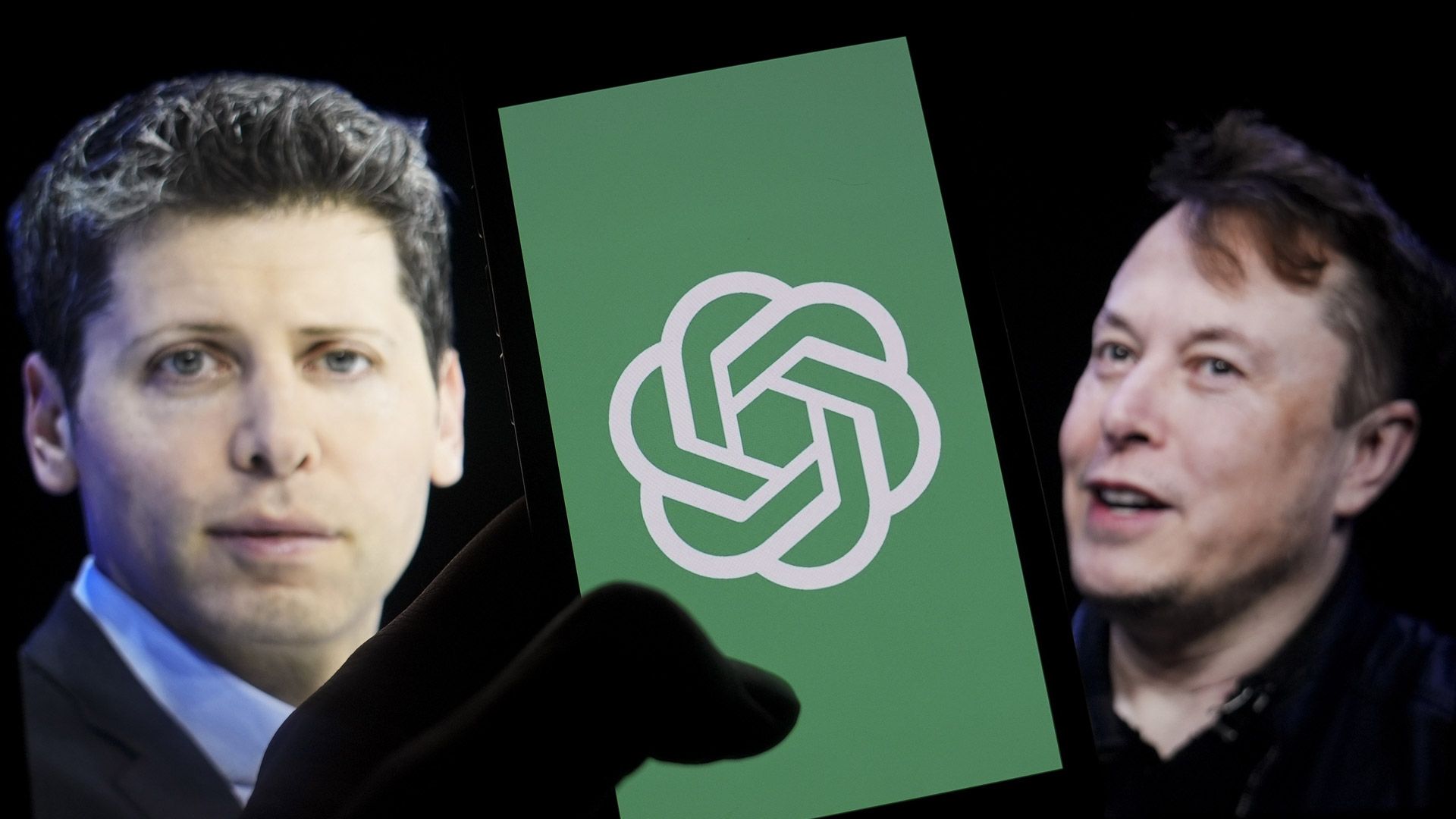
The legal confrontation between Elon Musk and OpenAI has transcended mere corporate litigation, evolving into a high-stakes philosophical and personal war over the future of Artificial General Intelligence (AGI). In a courtroom in Oakland, California, Sam Altman, the CEO of OpenAI, took the witness stand to deliver a pointed rebuttal to Musk’s allegations. Altman’s testimony painted a picture of a man—Elon Musk—whose commitment to the "democratization" of AI was allegedly contingent upon his own absolute authority.
Main Facts: A Courtroom Clash of Titans
The crux of the current testimony centers on the early years of OpenAI and the ideological schism that eventually led to Elon Musk’s departure in 2018. Sam Altman testified that Musk was not merely a concerned founder, but an aspiring autocrat who refused to support the company’s transition into a for-profit entity unless he was granted "total control."
According to Altman, Musk’s insistence on dominance was rooted in a profound, perhaps messianic, self-belief. Altman told the jurors that Musk "felt very strongly that if we were going to form a for-profit, he needed to have total control over it initially." He further elaborated that Musk "only trusted himself to make non-obvious decisions that were going to turn out to be correct."
One of the most striking moments of the testimony involved a discussion about the long-term succession of power. Altman recounted an exchange where Musk was asked what would happen to his control of the AI titan after his death. Musk reportedly replied, "I haven’t thought about it a ton, but maybe control should pass to my children." This revelation, described by observers as "downright feudal," stands in stark contrast to OpenAI’s stated mission of ensuring that AGI benefits all of humanity.
Musk’s lawsuit, meanwhile, alleges that OpenAI has committed a "perversion" of its original nonprofit mission. Musk argues that the company’s multi-billion-dollar partnership with Microsoft has transformed it into a "closed-source de facto subsidiary" of the world’s largest tech corporation. Musk’s legal team has invoked "Terminator-style" scenarios, suggesting that OpenAI’s pursuit of profit over safety poses an existential threat to the species.
Chronology: From Altruistic Roots to Commercial Giant
To understand the weight of Altman’s testimony, one must look at the decade-long timeline that brought these two former allies to a California courtroom.
- 2015: The Founding. OpenAI was established as a nonprofit research lab. The founding group, which included Musk, Altman, Greg Brockman, and Ilya Sutskever, pledged to develop AGI for the benefit of humanity, explicitly promising to remain unencumbered by financial obligations to shareholders.
- 2017: The Internal Friction. As the computational costs of training large-scale models began to skyrocket, the leadership debated how to secure more capital. Altman alleges this is when Musk’s demands for control intensified. Musk reportedly proposed folding OpenAI into Tesla to solve the funding issue, a move the other founders resisted.
- 2018: The Split. Musk officially left the OpenAI board. The public reason was a potential conflict of interest with Tesla’s own AI development, but Altman’s testimony suggests the real reason was Musk’s failed attempt to seize the reins of the organization.
- 2019: The Pivot. OpenAI created a "capped-profit" subsidiary, OpenAI LP. This allowed the company to attract massive venture capital and talent by offering equity, while theoretically remaining under the governance of the nonprofit board. Shortly after, Microsoft invested its first $1 billion.
- 2022-2023: The ChatGPT Revolution. The release of ChatGPT turned OpenAI into a household name and ignited a global AI arms race. Microsoft increased its investment to a total of approximately $13 billion.
- November 2023: The Board Coup. In a chaotic four-day period, the OpenAI board fired Altman, only to reinstate him after a near-total employee revolt. This event highlighted the fragility of the company’s unique governance structure.
- March 2024: The Lawsuit. Elon Musk filed his initial lawsuit, accusing Altman and Brockman of breaching the "founding agreement" of the company.
Supporting Data: The Economic and Technical Reality
The transition from a pure nonprofit to a commercial powerhouse was driven by the brutal economics of modern AI. The "supporting data" underlying this trial reveals why the original nonprofit model became unsustainable in the eyes of Altman and his allies.
- Compute Costs: Training a model like GPT-4 is estimated to cost over $100 million in hardware and electricity. Future models are expected to require billions in infrastructure. Without the Microsoft partnership and the for-profit pivot, Altman argues OpenAI would have become a "footnote" in history, unable to compete with Google or Meta.
- The Talent War: In 2015, top AI researchers were earning six-figure salaries. By 2023, the world’s leading "AI scientists" were being offered compensation packages exceeding $1 million annually, often supplemented by lucrative stock options—something a traditional nonprofit cannot offer.
- Valuation Disparity: OpenAI’s valuation has soared from a research lab to a company valued at over $150 billion in secondary markets. This massive wealth creation is at the heart of Musk’s grievance; he provided the initial seed funding (roughly $44 million) under the premise that the venture would never be a commercial vehicle.
Official Responses: A War of Words
The public and legal responses from both sides have been acerbic.
The Musk Camp:
Musk’s legal team characterizes the current OpenAI as "OpenAI Inc. in name only." They argue that the "Founding Agreement" was a binding contract, even if it wasn’t a single signed document. Musk has used his platform on X (formerly Twitter) to mock Altman, calling the company "ClosedAI" and accusing the leadership of "lying to the public" about their commitment to safety. Musk’s lawyers argue that by keeping GPT-4’s architecture secret, OpenAI is violating its promise of transparency to maximize Microsoft’s profits.
The OpenAI/Altman Camp:
In legal filings and public statements, OpenAI has dismissed Musk’s claims as "revisionist history" and "the legal equivalent of a temper tantrum." They maintain that there was never a formal "Founding Agreement" and that Musk himself signed off on the need for a for-profit pivot before he left. OpenAI recently published a series of 2017-2018 emails from Musk, which appeared to show him acknowledging that OpenAI would need "billions of dollars a year" and suggesting that it should "attach to Tesla as its cash cow."
Microsoft’s Position:
While not a direct defendant in this specific phase of the trial, Microsoft has remained a looming presence. CEO Satya Nadella has publicly stated that Microsoft provides the "essential infrastructure" for AI and that their partnership with OpenAI is a pro-competitive force against Google’s search dominance.
Implications: The Future of Governance in the Age of AGI
The outcome of Musk v. Altman will have profound implications for the technology industry and the legal framework of nonprofit-corporate hybrids.
1. The Legal Precedent of "Mission Drift"
If the court finds in favor of Musk, it could set a major precedent for how nonprofit organizations transition into commercial entities. It raises the question: Can a "mission" be legally binding if the market conditions change? A victory for Musk could force OpenAI to open-source its technology or divest from its profit-making arm, potentially crippling its ability to compete.
2. The Concentration of Power
Altman’s testimony highlights a terrifying reality of the AI age: the concentration of power. Whether that power sits with a "feudal" Musk, a corporate-backed Altman, or a tech giant like Microsoft, the "unchecked control" that Altman warned about seems increasingly inevitable. The trial underscores the lack of a global regulatory framework to manage AGI, leaving the future of the technology to be decided by billionaire infighting and contract law.
3. The Definition of "Open"
The trial is forcing a public reckoning over what "Open" means in "OpenAI." In the early days, it meant open-source code. Today, Altman argues it means "open access" to the benefits of the tools through APIs and products. This shift in definition is central to the commercial viability of the entire AI sector. If "Open" is legally mandated to mean "Open Source," the business models of OpenAI, Anthropic, and Google could be fundamentally undermined.

4. The Safety vs. Speed Debate
Musk’s "Terminator" rhetoric, while theatrical, touches on a legitimate concern shared by many in the industry. If the primary driver of AGI development is the need to provide returns to investors like Microsoft, safety protocols may be viewed as obstacles to profit. Conversely, Altman argues that the best way to ensure safety is through a well-funded, stable organization that can afford to hire the world’s best safety researchers.
As the trial continues in Oakland, the tech world watches not just for a verdict, but for the revelations found in the discovery process. The "feudal" comments and the "total control" demands described by Altman suggest that while the technology is futuristic, the human conflicts driving it are as old as time: ego, power, and the desire to leave a legacy that outlasts the man.



Leave a Comment