The Battle of Philippi: Unveiling the American Civil War’s True Opening Act
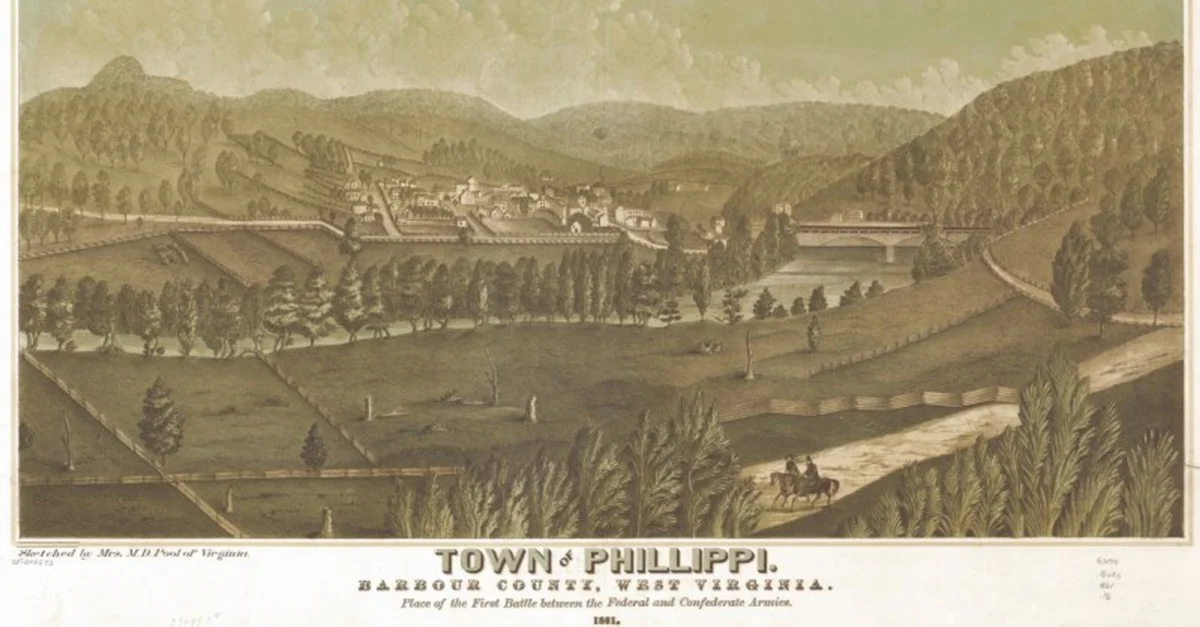
Philippi, West Virginia (June 3, 1861) – Often overshadowed by the more widely recognized First Battle of Bull Run, the Battle of Philippi, fought on June 3, 1861, holds a distinct and crucial place in the annals of American history. This engagement, occurring over a month before the iconic clash at Manassas, stands as the American Civil War’s first organized land engagement, marking the formal commencement of hostilities between Union and Confederate forces. While sometimes dismissed as a mere skirmish, its immediate impact on public perception, military strategy, and the nascent political landscape of a divided nation proved profoundly significant.
Main Facts: A Skirmish of Pivotal Significance
The Battle of Philippi unfolded in Philippi, Virginia (now West Virginia), and resulted in a decisive Union victory. Unlike the accidental clash at Fairfax Court House just two days prior, Philippi represented a deliberate and orchestrated military maneuver by the Union Army. The engagement quickly earned the derisive moniker "Philippi Races" from the Northern press, mocking the swift and chaotic retreat of the surprised and ill-prepared Confederate troops. This perceived triumph was heralded in the North as a sign of an imminent, easy resolution to the "War of the Rebellion," setting an optimistic yet ultimately misguided tone for the conflict ahead. Beyond its status as the inaugural land battle, Philippi also produced the first battlefield amputations of the war and directly influenced the political trajectory that would lead to the creation of West Virginia.
A Nation Divided: The Tensions in Virginia
Historical Roots of Disunion in Virginia
The seeds of conflict in Virginia were sown long before 1861, rooted in the divergent economic and social development of its eastern and western regions. Established in 1607, the Jamestown Colony gradually expanded westward. By the mid-17th century, chattel slavery had become deeply institutionalized, shaping the agrarian economy of eastern Virginia, which thrived on large plantations cultivating cash crops like tobacco, heavily reliant on enslaved labor.
However, this plantation economy did not extend into the rugged, mountainous northwest. Here, the landscape favored smaller farms, diversified agriculture, and nascent industries, fostering a society with fewer enslaved people and a different economic orientation. The citizens of northwestern Virginia found their commercial and cultural ties increasingly aligning with the free states of Ohio and Pennsylvania rather than the slaveholding aristocracy of their own state’s eastern seaboard. This fundamental divergence created a persistent tension within Virginia, characterized by disparities in representation, taxation, and political priorities.
Secession and the Rise of Pro-Union Sentiment
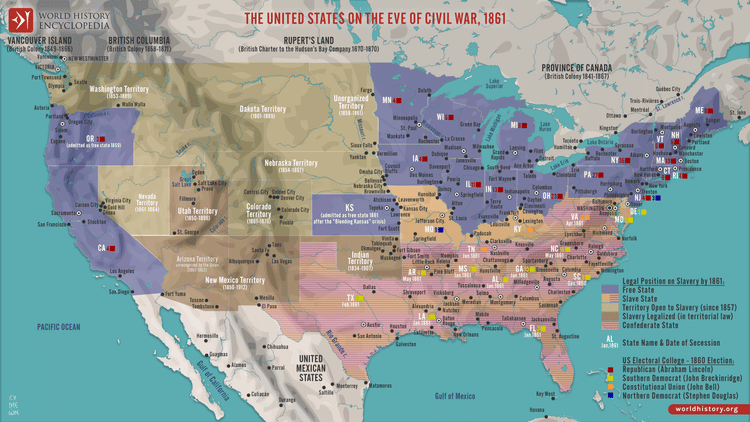
The firing on Union-held Fort Sumter by Confederate troops on April 12, 1861, and President Abraham Lincoln’s subsequent call for 75,000 volunteers to suppress the rebellion, pushed Virginia to a breaking point. On May 23, 1861, the Virginia government in Richmond, heavily influenced by its eastern delegates, voted in favor of secession from the Union. This decision, however, was met with staunch opposition in the northwestern counties, where pro-Union sentiment ran deep.
This strong loyalty to the Union coalesced particularly in Wheeling, which soon became the de facto capital of a pro-Union "government-in-exile." Despite this regional loyalty, pockets of secessionist support existed throughout the northwest. Following Richmond’s secession vote, Confederate officers were dispatched to these areas to recruit men for the nascent Confederate Army. One such officer was Confederate Colonel George Porterfield, who initially chose Grafton as a mustering point. However, Grafton’s overwhelming pro-Union leanings forced Porterfield to retreat to Philippi, a smaller town with more pronounced secessionist sympathies, where he hoped to find more receptive recruits.
The Stage is Set: Lead-up to Conflict
Confederate Preparations and Union Objectives
Colonel Porterfield’s forces in Philippi were a testament to the early war’s improvisational nature. He managed to muster between 750 and 775 recruits, a motley assembly largely untrained in military tactics and completely lacking battlefield experience. Their armament was equally rudimentary: approximately 1,000 antiquated muskets dating back to the War of 1812, percussion caps intended for shotguns, and a collection of personal hunting rifles, long knives, and whatever other weapons the men could procure. This ill-equipped and inexperienced contingent was hardly prepared for the organized assault that was about to descend upon them.
Recognizing the strategic importance of slowing any Union advance, Porterfield ordered the burning of bridges between Philippi and Wheeling. This act, however, inadvertently provided Major General George B. McClellan, then commanding Union forces in Ohio, the justification he needed to send troops into Virginia from his headquarters in Cincinnati. McClellan’s objectives were clear and multi-faceted: primarily, to secure the loyalty of the pro-Union populace in western Virginia, protect the vital Baltimore & Ohio (B&O) Railroad—a critical transportation artery for both troops and supplies—and suppress Confederate recruitment and activity in the region.
As scholar Hunter Lesser observed, "On May 27, 1861, General McClellan ordered Federal troops to cross the Ohio River on steamboats and invade Western Virginia… Leading his invasion was the First Virginia Infantry, a regiment of United States volunteers, mustered on Virginia soil. Here the war was truly brother against brother." This invasion marked a significant escalation, bringing the conflict directly into Virginia’s disputed western territories.
The Union’s Pincer Strategy
McClellan entrusted Brigadier General Thomas A. Morris with command of the invasion. A meticulous plan for a pincer movement, a classic two-pronged attack, was devised by Colonel Benjamin Franklin Kelley, who commanded the First Virginia Infantry. Kelley’s strategy called for his 1,600 troops to approach Philippi from the south, while a second column, comprising 1,400 troops under Colonel Ebenezer Dumont, supported by Colonel Frederick W. Lander, would advance on the town from the northwest.
To mislead Confederate intelligence, Kelley’s regiment was initially loaded onto a train heading east, creating the impression of a move towards Harpers Ferry. They disembarked at the village of Thornton and then commenced a covert march back towards Philippi. Meanwhile, Dumont and Lander led their column through the darkness and pouring rain of June 2-3. Morris’s orders were precise: the attack was to commence before dawn on June 3rd, signaled by a single pistol shot, followed by an artillery barrage and a coordinated assault on the town by Dumont’s forces, with Kelley advancing from the south to trap the Confederate rebels between the two Union columns.
The "Philippi Races": A Dawn Surprise
An Unforeseen Catalyst
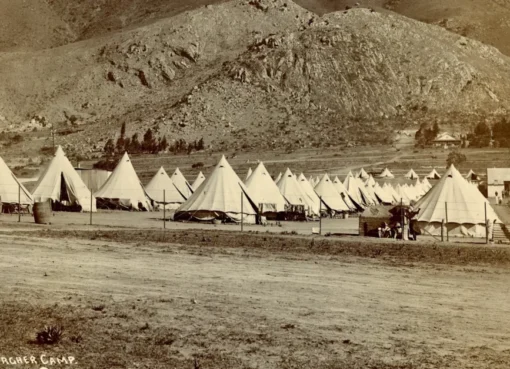
The early morning of June 3rd mirrored the previous night’s inclement weather, with persistent rain soaking Philippi. The Confederate camp, utterly unprepared for an attack, was in a state of disarray. Most men were still asleep or seeking refuge from the rain in their tents. Crucially, no picket lines had been established, and no guards were posted around the camp’s perimeter, leaving the Confederates completely exposed. Everything seemed to favor the flawless execution of Morris’s meticulously planned pincer movement until an unexpected intervention altered the course of events.
Mrs. Thomas Humphreys, a staunch secessionist sympathizer residing in Philippi, observed Union troops quietly taking up their positions overlooking the town. Realizing the imminent danger, she dispatched her son to saddle his horse and warn the unsuspecting Confederate camp. However, Union pickets intercepted her son. In a desperate act of defiance and warning, Mrs. Humphreys fired her pistol at the Union soldiers. Though she missed her mark, the gunshot served as an unintended, premature signal, triggering the Union assault earlier than planned.
The Confederate Rout
Mrs. Humphreys’ pistol shot shattered the pre-dawn quiet, igniting the battle. Colonel Kelley, having taken a wrong turn in the dark and rain, found himself further north than intended. With the attack already underway, he had no time to redeploy his troops to the south to complete the pincer movement and block the Confederate escape route.
Dumont’s artillery immediately opened fire on the Confederate camp, unleashing a barrage of cannon fire into the heart of the unsuspecting rebels. The sudden bombardment, combined with the earlier gunshot, caused widespread panic and immediate flight. Many Confederates, roused abruptly from sleep, fled in their bedclothes, some pausing only briefly to return fire before joining the chaotic exodus towards the south. Dumont’s infantry, having secured their position, then advanced, entering the town across the now-famous Philippi Covered Bridge. Simultaneously, Colonel Lander executed a daring ride down the steep hillside above the town, a feat that would later be widely celebrated by the Northern media, particularly after an artist’s rendering appeared in the periodical Leslie’s Weekly, becoming one of the most iconic images of the battle.
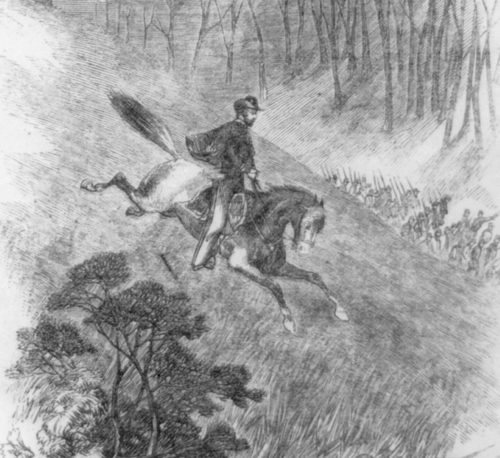
The haphazard and undignified flight of the Confederate camp gave rise to the popular and mocking name for the engagement: the "Races at Philippi," soon shortened to the enduring "Philippi Races." Kelley, despite his misdirection, pursued the fleeing Confederates with his troops. During this pursuit, he was shot in the chest by a retreating rebel (though he remarkably survived). Colonel Lander, witnessing Kelley’s injury, retaliated by shooting Kelley’s assailant (who also survived). The Confederates continued their disorganized retreat for a staggering 45 miles (72 km) before finally reaching the relative safety of Huttonsville.
Aftermath and Enduring Legacies
Casualties and a Medical Breakthrough
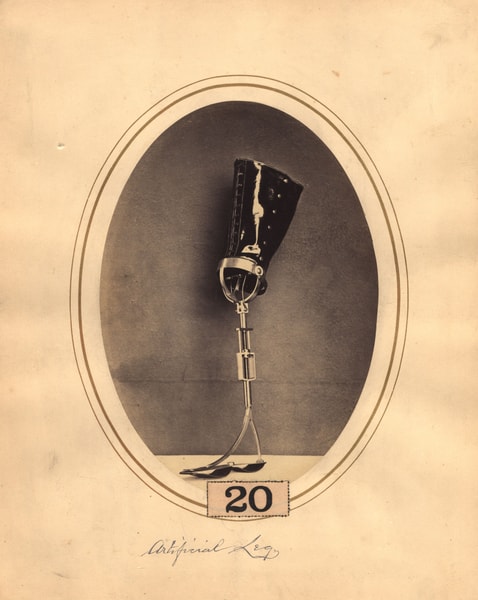
Remarkably, despite the intense artillery barrage and pursuit, the Battle of Philippi resulted in no fatalities on either side. Casualties were minimal: two Union soldiers were wounded, and three Confederates sustained injuries. However, two of these Confederate wounded, struck by cannon fire, required limb amputations. These procedures are historically noted as the first field amputations of the American Civil War.
One of these wounded was James E. Hanger, an 18-year-old college student from Virginia. After losing his leg, Hanger returned home and, with remarkable ingenuity, designed and constructed his own artificial leg from barrel staves and rubber, incorporating innovative hinge mechanisms at the knee and ankle. His prosthetic was so effective and well-designed that the Virginia State Legislature in Richmond commissioned him to create more for other wounded soldiers. This invention became known as the "Hanger Limb," the most popular prosthetic of the entire conflict. Hanger patented his creation and, after the war, founded what would evolve into the Hanger Orthopedic Group, Inc., known today as Hanger, Inc., the world’s leading provider of prosthetics and medical equipment. His personal tragedy thus sparked a medical innovation that continues to benefit countless individuals.
A Ghost Town and Northern Triumphalism
The immediate aftermath for Philippi was bleak. Along with the Confederate troops, many secessionist-sympathizing citizens fled the town, abandoning their homes and possessions. A month later, Union troops stationed in Philippi reported that only three families had returned, leaving the town largely a ghost town, a stark testament to the disruption of early war.
In the North, the press seized upon the Union victory, proclaiming it an epic triumph. Articles lauded the valor of the Union generals, particularly the perceived brilliance of McClellan’s campaign (even though he was not present at the battle), instantly propelling him to fame. The "cowardly flight of the rebels" was repeatedly highlighted as irrefutable evidence that the Confederacy was weak and could be easily subdued. This narrative fostered a widespread belief in a swift Union victory, achievable through a rapid advance on Richmond, the Confederate capital. President Lincoln and his staff, buoyed by this public sentiment and the perceived ease of the Philippi victory, agreed to this strategy. This decision directly led to the ill-fated advance that was famously halted by Confederate forces at the First Battle of Bull Run (First Manassas) on July 21, 1861. Without the premature optimism generated by the Battle of Philippi, the timing and nature of First Bull Run might have been entirely different.
Implications and the Birth of a New State
Reshaping Perceptions and Political Landscape
The Battle of Philippi, though a Union victory, ultimately contributed to a dangerous overconfidence in the North. First Bull Run, a crushing Confederate victory, swiftly disabused the Union of its notions of a quick war and led to further Union defeats throughout 1861 and into 1862. Much of this early struggle was attributed to the overly cautious and often inept leadership of Major General George B. McClellan, who, despite being hailed as the "Hero of Philippi," had no direct involvement in the battle or its success.
The common historical narrative frequently cites the First Battle of Bull Run as the "first battle of the American Civil War," often implying it was the first encounter between Union and Confederate troops. However, Philippi unequivocally predates it as the first organized land engagement. While Bull Run was certainly the first major battle, Philippi provided the initial taste of coordinated conflict, and importantly, it was a Union victory – a fact often obscured by the subsequent Confederate successes that defined the early war. It foreshadowed the eventual Union victories of 1863-1865, achieved through the strategic brilliance of generals like George Meade, Ulysses S. Grant, and William Tecumseh Sherman.
Beyond its military significance, the Battle of Philippi had profound political ramifications. The Union victory emboldened the pro-Union government in Wheeling. This empowerment culminated in the adoption of "A Declaration of the People of Virginia" at the Second Wheeling Convention in June 1861. This declaration mandated that any fundamental changes to the state government, such as secession, must be approved directly by the people, not solely by the legislature, as had been the case in Richmond’s secession vote. This pivotal action set in motion the political processes that would lead to the eventual separation of the northwestern counties from the rest of Virginia and the formation of West Virginia, which was officially admitted to the Union in June 1863, a direct consequence of the regional loyalties highlighted and solidified by early engagements like Philippi.
A Lasting Legacy
Today, the city of Philippi, West Virginia, with a population of over 3,000, stands as the county seat of Barbour County. Its historical significance is actively preserved and celebrated. Every June, the city hosts the "Blue and Gray Reunion," a multi-day event commemorating the Battle of Philippi. This reunion features a spirited re-enactment of the battle, a parade, and a community festival, drawing visitors and history enthusiasts from across the nation.
A meticulously reconstructed version of the iconic covered bridge, over which Colonel Dumont led his Union troops into the town, still spans the Tygart River. Daily, residents and visitors walk the streets of Philippi, a town forever etched into American history for the "Philippi Races"—the chaotic, yet pivotal, first organized campaign of the American Civil War, a battle that set the stage for four years of unimaginable conflict and ultimately, a reunited nation.