The Chimerical Architecture of Jesús Aguado: Bridging the Baroque and the Contemporary
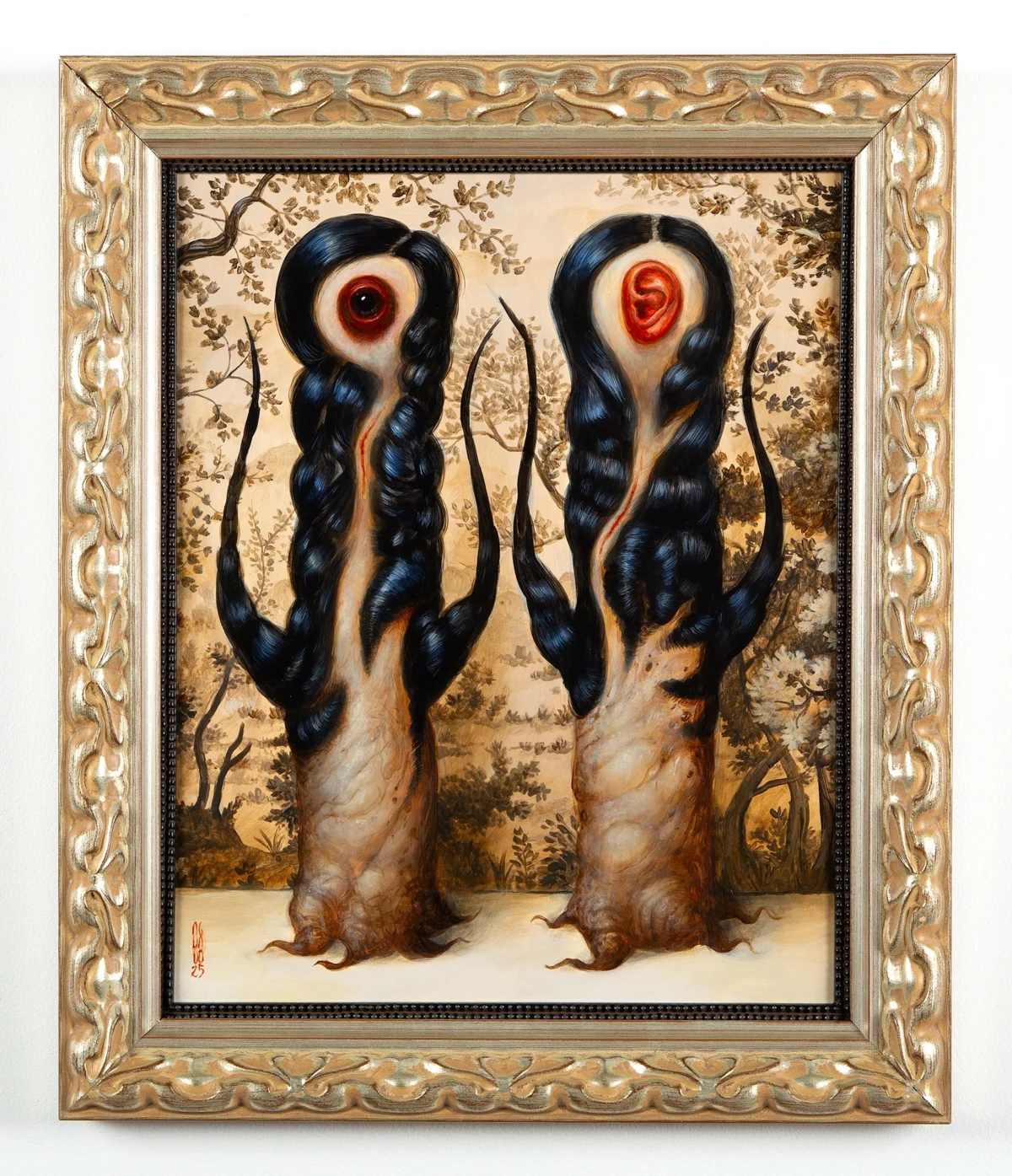
In a contemporary art landscape often fractured by the perceived wall between commercial accessibility and high-art profundity, Spanish artist Jesús Aguado has emerged as a singular voice. Over the last decade, Aguado has meticulously dismantled the notion that illustration and fine art are mutually exclusive disciplines. Instead, he has utilized a twenty-year career in the rigorous world of global publishing to engineer a new brand of "Baroque Surrealism"—a visual language that is as technically demanding as a Renaissance masterpiece and as emotionally resonant as a modern graphic novel.
With his latest solo exhibition, Life Milestones, currently showing at Arch Enemy Arts in Philadelphia, Aguado’s trajectory from a commercial illustrator in Valladolid to a vanguard of modern surrealism offers a profound case study in artistic evolution.
Main Facts: The Synthesis of Two Worlds
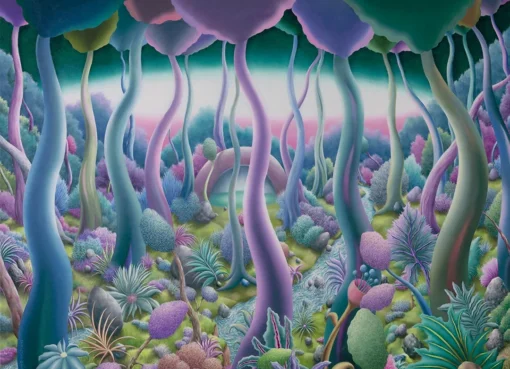
Jesús Aguado (b. 1976) represents a rare breed of artist: the "visual polyglot." While many of his peers in the Pop Surrealist movement rely on irony or kitsch, Aguado’s work is grounded in a deep reverence for classical technique. His canvases are characterized by a dense, almost claustrophobic arrangement of anthropomorphic figures, flora, and fauna—a stylistic choice critics have termed "Baroque Surrealism."

The primary facts of Aguado’s current standing in the art world include:
- The "Life Milestones" Exhibition: His third solo showcase with Arch Enemy Arts (Philadelphia), running from May 24 to June 15, 2025.
- The Technical Fusion: A mastery of traditional oil and acrylic glazing techniques performed on birch and wood panels, mirroring the methods of Old Masters like Rubens and Caravaggio.
- The Narrative Shift: A move away from purely fantastical imagery toward "metaphysical autobiography," sparked by the birth of his son in 2023.
- The Global Footprint: A visual style honed by decades of creating educational and editorial art for diverse markets, including Spain, Taiwan, and the United States.
Aguado’s work functions as a "psychological architecture," creating immersive spaces that allow viewers to escape the overstimulation of the digital age. By banishing human figures from his compositions, he creates a universal stage where dragons, rabbits, and hybrid creatures act out the complexities of the human condition.
Chronology: From the Trenches to the Gallery
The evolution of Jesús Aguado is a story of patient mastery and the strategic release of creative pressure.

1976–2000: The Foundational Years
Born in Valladolid, Spain, in 1976, Aguado’s early interest in the visual arts led him to the University of Salamanca. It was here that he earned his Fine Arts credentials, immersing himself in the academic traditions of anatomy, perspective, and color theory. However, unlike many graduates who immediately sought the gallery circuit, Aguado turned his attention to the world of professional illustration.
2000–2017: The Illustration "Masterclass"
For nearly two decades, Aguado worked in the "trenches" of commercial art. His client list was prestigious and varied, including the Spanish textbook giant Santillana, National Geographic, and numerous children’s publishers in Taiwan and across the globe.
This period was critical for two reasons. First, it taught him the "Universal Language" of visual communication—how to convey complex ideas to a child in Taipei as effectively as a student in Madrid. Second, the constraints of editorial deadlines and client briefs built a reservoir of creative energy. He wasn’t just drawing; he was studying how to make imagery "work" for an audience.

2017–2018: The Fine Art Pivot
Around 2017, Aguado began his transition into fine art painting. Moving from digital and mixed-media illustration to oil and acrylics on wood, he sought to reclaim the tactile nature of the Renaissance masters. This transition was not a rejection of his past but an expansion of it. He brought the clarity and narrative drive of illustration to the depth and luminosity of fine art.
2020–2024: Institutional Ascent
Since 2020, Aguado has found a consistent home at Arch Enemy Arts in Philadelphia. His ability to bridge "Lowbrow" accessibility with "High Art" technicality resonated with collectors. His work began to evolve from "chimerical dreamscapes" into more structured, symbolic satires.
2023–Present: The Fatherhood Transformation
The birth of his son in 2023 marked the most significant thematic shift in his career. This biographical event catalyzed the Life Milestones series, moving his work from the purely surreal into the realm of existential metaphor, exploring the "crucial moments" of human development.

Supporting Data: The Mechanics of "Baroque Surrealism"
To understand Aguado’s impact, one must look at the specific technical and thematic data points that define his "Density Principle."
The Technical Alchemy
Aguado’s signature aesthetic is achieved through a meticulous process of acrylic glazing. By applying multiple translucent layers of paint, he allows light to pass through the pigment and bounce off the white primer of the wood panel. This creates a "shimmer" or internal luminosity that makes his impossible creatures feel tangibly present.
His choice of support—birch and traditional wood panels—is a deliberate dialogue with art history. Unlike canvas, wood provides a rigid, smooth surface that allows for the fine-line detail required by his "Horror Vacui" (fear of empty space) approach. This density mirrors the information-heavy nature of modern life but organizes it into a harmonious, if chaotic, whole.

The Symbolic Bestiary
Aguado uses a recurring cast of characters to bypass demographic barriers:
- Dragons: Representing ferocity, ancient wisdom, or hidden power.
- Rabbits: Embodying vulnerability, innocence, or "cuteness" as a mask.
- Worms and Insects: Suggesting the grotesque, the cycle of decay, and the subterranean aspects of the psyche.
- Hybrid Entities: (e.g., lobster-clawed gardeners) Representing the "mitosis" of personality—how we grow by splitting and reforming.
Official Responses and Critical Reception
The art world’s response to Aguado has been one of growing fascination, particularly regarding his ability to maintain "academic poetry" within a pop-culture framework.
Critics have noted that Aguado’s work captures "Renaissance beauty impregnated with the darkest baroque." This assessment highlights his use of chiaroscuro—the dramatic contrast between light and dark popularized by Caravaggio. By applying this to comic-book-inspired creatures, Aguado creates a friction that feels "genuinely revolutionary."

Noah Tingley, a commentator on contemporary surrealism, notes that Aguado’s paintings are "a feast for the eyes… blending one world with many others." The consensus among curators at Arch Enemy Arts is that Aguado offers a "pressure valve" for audiences. His work is praised for not offering "easy emotional solutions" but rather creating a space where "joy and darkness coexist."
The gallery’s decision to host three solo exhibitions for Aguado in five years underscores a high level of institutional confidence. In the niche of Pop Surrealism, where trends can be fleeting, Aguado’s reliance on classical weight and existential depth provides him with a longevity that many of his contemporaries lack.
Implications: Surrealism as a Sanctuary
The rise of Jesús Aguado has broader implications for the trajectory of 21st-century art.

1. The Death of the "Commercial vs. Fine Art" Binary
Aguado proves that a commercial background is not a "contamination" of fine art but a superpower. His ability to communicate across cultural boundaries is a direct result of his years in publishing. As the art market becomes increasingly globalized, the "universal visual language" Aguado mastered will become more vital.
2. The Prescription for Digital Exhaustion
Aguado’s philosophy of "Psychological Architecture" addresses a specific modern malady: overstimulation. By creating dense, narrative-heavy works that require "sustained looking," he forces the viewer to slow down. His art is a deliberate antidote to the "instant consumption" of social media. The implication is that the future of surrealism may lie in its ability to provide "refuge" rather than just shock.
3. The Evolution of the "Life Milestones"
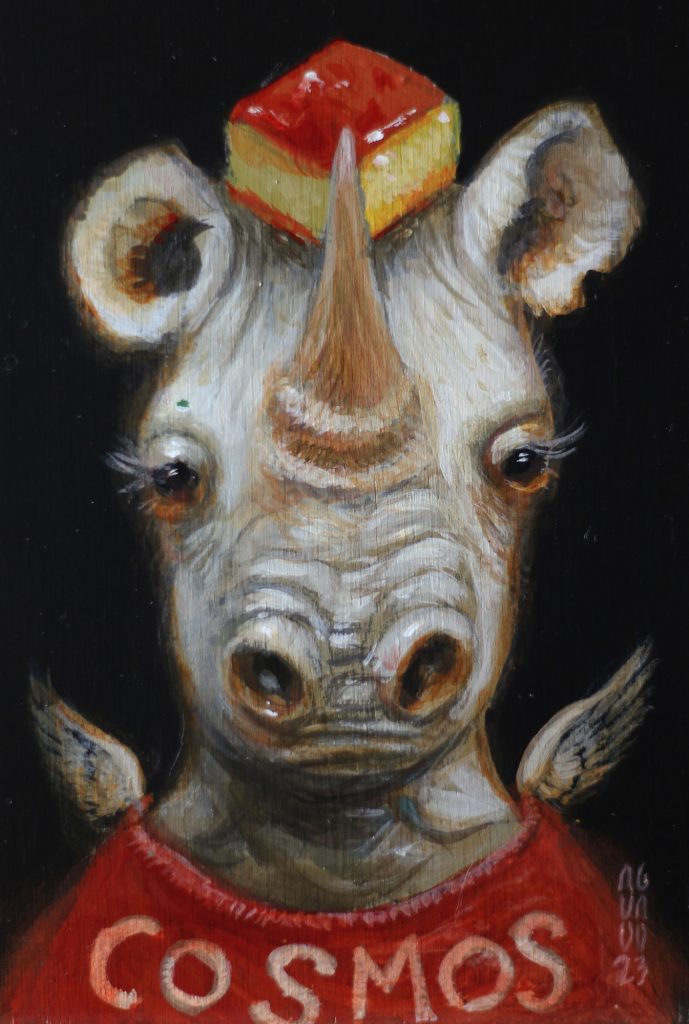
His latest work suggests that surrealism is moving toward a more autobiographical and metaphysical stage. By using winged caterpillar mothers and lobster-clawed octopuses to represent fatherhood and growth, Aguado demonstrates that the "absurd" is often the most accurate way to describe the "profound."
The Bottom Line: A Legacy of "And/Both"
Jesús Aguado has spent the last decade proving that an artist does not have to choose between being approachable and being deep. He has built a career on "and/both" solutions: his work is both Baroque and modern; it is both endearing and disturbing; it is both an escape and a confrontation with reality.
As Life Milestones continues its run in Philadelphia, Aguado stands as a testament to the power of patient evolution. He has created a visual vocabulary for an era that demands we navigate contradiction with grace. In his hands, the "chimerical" is not just a fantasy—it is a mirror.
Exhibition Details:
- LIFE MILESTONES by Jesús Aguado
- Dates: May 24 – June 15, 2025
- Location: Arch Enemy Arts, Philadelphia, PA
- Highlight: Opening Reception on First Friday, June 6, 2025
- Contact: archenemyarts.com