The Chopstick Craftsman Scaling the Virtual Frontier: Inside the Grassroots Revolution of VR Villa
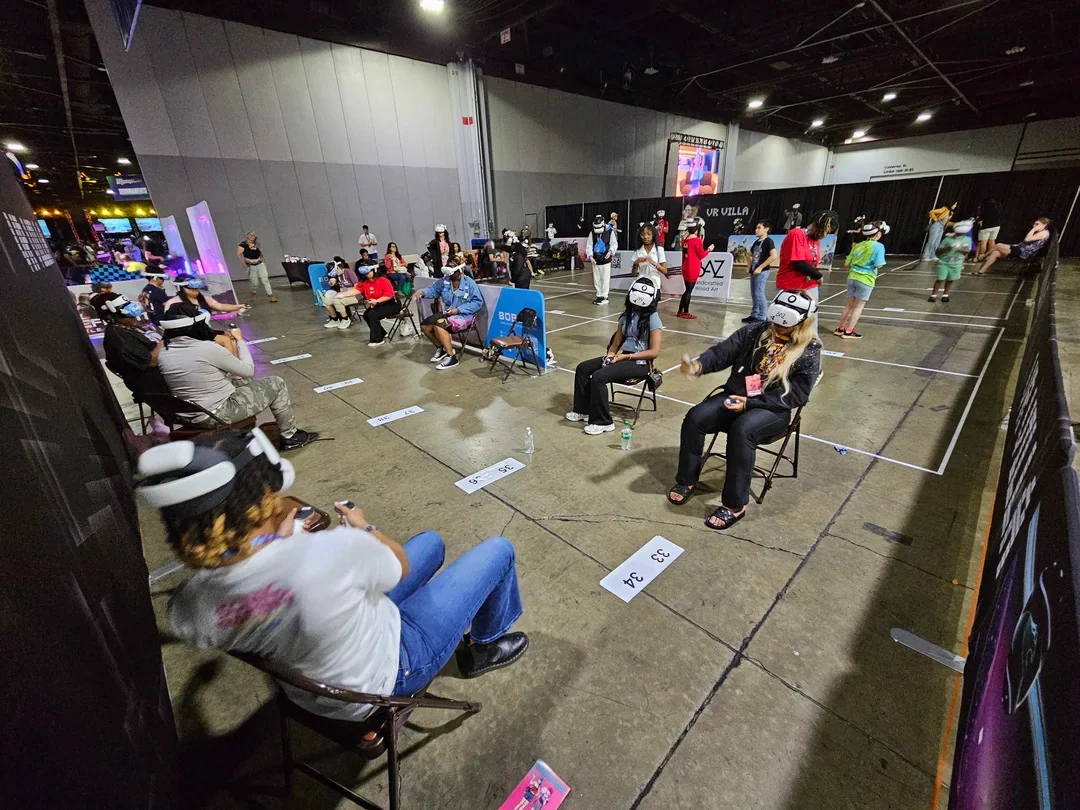
In the rapidly evolving landscape of extended reality (XR), the most significant barrier to mass adoption is not necessarily hardware cost or graphical fidelity, but the "experience gap." While multi-billion-dollar corporations like Meta and Sony struggle to convert curious onlookers into dedicated users through traditional retail channels, a woodworker from the Midwest is quietly outperforming them. Jeff Basladynski—known to the Reddit community as "Bazitron"—has spent the last eight years bridging this gap by reinventing the LAN party for the spatial computing age.
Through his organization, VR Villa, Basladynski manages a logistical feat that would intimidate most marketing firms: transporting hundreds of headsets across the United States to facilitate free-to-play, large-scale VR installations at major conventions. From Hawaii to Washington D.C., Basladynski’s grassroots operation has introduced tens of thousands of people to high-end virtual reality, all while maintaining his primary business as a master craftsman of exotic wooden chopsticks.
Main Facts: The Grassroots Scale of VR Villa
The scale of Jeff Basladynski’s operation is unprecedented for a non-corporate entity. Operating under the banner of Baz LLC, VR Villa functions as a hybrid between a computer club and a professional event management firm. Unlike "pay-to-play" VR arcades or location-based entertainment (LBE) centers like Sandbox VR, VR Villa focuses on the "community-centric" model of gaming.
Key operational highlights include:

- Hardware Inventory: A rotating fleet that has peaked at over 200 headsets. Currently, the operation utilizes approximately 75 Meta Quest 3 and 3S units to ensure a high-fidelity first impression for users.
- Logistical Footprint: Activations often span 5,000 to 10,000 square feet, featuring localized servers, AV equipment, and specialized haptic accessories.
- Reach: In the last four years alone, VR Villa has recorded over 80,000 unique player sessions. In 2023, the organization facilitated nearly 30,000 sessions across various U.S. events.
- Engagement: The average play session duration stands at 32 minutes—a remarkably high figure for a convention floor environment—with one out of every five players returning for a second session.
Chronology: From Vive Wands to the Quest 3S
The journey of VR Villa began in 2016, coinciding with the consumer launch of the HTC Vive and the Oculus Rift. At the time, Basladynski was already a regular fixture on the convention circuit, selling his custom-made exotic chopsticks. A lifelong gamer, he began bringing a single headset to events to share with friends after the exhibit halls closed.
2016–2018: The "VR Zone" Era
Initially dubbed "VR Zone," the project was a modest attempt to bring high-end PCVR to the public. Basladynski recognized early on that the friction of setting up sensors and tethered PCs was a major deterrent for the average consumer. He began collaborating with a small group of enthusiasts to provide staffing and equipment, slowly increasing his inventory as he traveled for his woodworking business.
2019–2021: The Pivot to Standalone
The release of the Oculus Quest was a watershed moment for Basladynski. The ability to deploy dozens of headsets without external sensors allowed VR Villa to scale exponentially. During this period, he transitioned from a "hobbyist with a headset" to a "Director of VR Content" for major shows like DreamHack and various Anime festivals. He began forming direct relationships with developers like Resolution Games and Schell Games, ensuring his fleet had the best optimized content.
2022–Present: The Professionalization of Passion
In the post-pandemic era, VR Villa refined its data collection and training protocols. Basladynski moved away from older hardware, liquidating his Quest 2 inventory in favor of the Quest 3/3S. Today, the operation is a finely tuned machine, capable of shipping 200 pounds of equipment to Hawaii or setting up massive 100-headset LAN parties at DreamHack Atlanta.

Supporting Data: Demographics and the "Conversion" Effect
One of the most valuable aspects of VR Villa is the data Basladynski collects through waiver processes and session tracking. This data challenges several industry assumptions regarding who is interested in VR and how they perceive the technology.
The Demographic Breakdown
Contrary to the belief that VR is solely the domain of "Gen Alpha" or young children, VR Villa’s statistics show a broad appeal:
- 10–18 Years Old: 30% of the user base.
- 19–26 Years Old (Young Professionals): 26% of the user base.
- 27+ Years Old: 44% of the user base, including a significant number of "family-centric" adults and even grandparents.
The First-Timer Metric
Despite the millions of headsets sold globally, 30% of VR Villa’s participants are experiencing VR for the first time. This number has remained consistent for eight years, suggesting that the industry is still failing to reach the "unconverted" through traditional marketing.
Conversion and Sentiment
In a survey of 3,600 participants conducted by VR Villa, the impact of a guided, social VR experience was profound:

- 57% of participants reported a positive shift in their perspective on VR after a 20-minute session.
- 17% of participants stated they would have purchased a headset immediately on-site if a retail option were available, specifically citing the enjoyment of playing with friends.
Official Context: Why Corporate Demos Fail
A significant portion of Basladynski’s success stems from his critique of how major players like Meta handle public outreach. Recently, Meta announced a return to retail demos in 50 Best Buy locations. However, Basladynski argues that these corporate efforts often miss the mark due to a lack of "human-centric" guidance.
"They aren’t getting enough play space, and they don’t have dedicated staff to actually teach people," Basladynski notes. Retail demos often involve a user standing in an aisle, holding a headset to their face for a 90-second canned trailer. In contrast, VR Villa focuses on "Experiences, not Demos."
By using third-party accessories like KIWI Design head straps and BOBOVR battery packs, VR Villa removes the physical discomfort that plagues stock hardware. By teaching users how to navigate the OS and providing one-on-one coaching for game mechanics, they remove the cognitive friction. The result is a user who plays for 30 minutes and leaves with a genuine understanding of the technology’s value proposition.
Implications: Sustainability over "Billion-User" Hype
The work of Jeff Basladynski offers a vital lesson for the XR industry: the path to success is paved with sustainability and social connection, not just hardware iterations. Basladynski is vocal about his skepticism regarding industry promises of "a billion users in ten years." Instead, he advocates for a focus on the 10 to 12 million active users who currently exist and finding ways to serve them better.

The Power of Collaborative Play
The most popular games at VR Villa are not solo "triple-A" experiences, but collaborative social games. Cook-Out (Resolution Games) has remained the number one requested title for five years, followed by Fruit Ninja, Space Pirate Trainer, Blaston, and Walkabout Mini Golf. The implication is clear: VR’s "killer app" is the ability to do something fun with a friend.
The "Google Cardboard" Hangover
Basladynski identifies a significant hurdle in the form of "bad first impressions." Many adults who are "VR-curious" had their only experience with a Google Cardboard or a low-end phone-based viewer a decade ago. They assume the technology hasn’t evolved. VR Villa’s mission is effectively a "perception repair" operation, showing the public that modern standalone VR is a different species of technology entirely.
A Model for the Future
As the gaming industry faces a period of contraction and uncertainty, the VR Villa model suggests a decentralized, community-driven approach to marketing. By meeting people where they are—at gaming conventions, anime festivals, and esports events—and providing a "free-to-play" environment without the pressure of a sales pitch, Basladynski has created the most effective conversion funnel in the industry.
Conclusion: The Craftsman’s Legacy
Jeff Basladynski remains a unique figure in technology—a man who spends his weeks carving exotic woods into precision eating utensils and his weekends managing the world’s largest mobile VR LAN party. His advice to the community is simple: "Go play games, get others to go play games, and have a good time."

While the giants of Silicon Valley focus on "chips and graphics," the Chopstick King of VR is focusing on the humans inside the headsets. If virtual reality is ever to achieve the ubiquity its creators dream of, it will likely be because of grassroots advocates like Baz, who understand that technology is only as good as the memories it helps friends create together.
For those interested in supporting Jeff Basladynski’s mission or exploring his woodwork, visit Baz.llc. To see where VR Villa will be next or to join their community, visit vrvilla.org.