The Cost of Consolidation: Analyzing the Economic Impact of the Potential Paramount-Warner Bros. Discovery Merger
The landscape of American entertainment is currently facing a transformative—and potentially volatile—period of consolidation. As the industry pivots away from the "streaming wars" toward a model defined by debt reduction and cost-efficiency, the proposed union of Paramount and Warner Bros. Discovery (WBD) has emerged as a focal point of concern for labor advocates, economists, and California state officials.
A comprehensive new report commissioned by Los Angeles County and conducted by CVL Economics paints a sobering picture of what this merger could mean for the "Creative Capital" of the world. The study suggests that while the merger may offer a lifeline to two debt-laden conglomerates, the collateral damage to California’s economy could be measured in billions of dollars and thousands of lost livelihoods.
Main Facts: A Billion-Dollar Blow to the Golden State
The CVL Economics report, released in August 2026, serves as a formal "impact assessment" for Los Angeles County, an entity that has long viewed the entertainment industry as its primary economic engine. The findings suggest that the merger is not merely a corporate reshuffling but a macroeconomic event with the potential to destabilize the regional labor market.
Direct and Indirect Job Losses
According to the report, the union of Paramount and Warner Bros. Discovery could lead to the immediate loss of 4,500 film and television production jobs within California. These are not just administrative roles; they include the "below-the-line" workers who form the backbone of the industry—camera operators, set designers, editors, and sound technicians.
When the scope is widened to include the broader "creative ecosystem"—including talent agents, equipment rental houses, catering services, and post-production boutiques—the number of at-risk positions climbs to an estimated 10,360.
The Wage Gap
The financial implications for the state’s tax base and consumer spending are equally stark. The study estimates that $1.26 billion in annual wages are at risk. This represents a significant portion of the middle-class income generated by the entertainment sector, threatening to further hollow out a workforce already struggling with the rising cost of living in Southern California.
The Debt Catalyst
The driving force behind this aggressive consolidation is a combined debt load of nearly $80 billion. Both Paramount and WBD have spent the last several years navigating the high costs of building proprietary streaming platforms while seeing traditional linear television revenues evaporate. Analysts note that the only way to service this debt in a high-interest-rate environment is through "aggressive cost-cutting," a euphemism for layoffs, the cancellation of projects, and the shuttering of redundant facilities.
Chronology: The "Slow Bleed" of California Production
To understand the urgency of the CVL report, one must look at the trajectory of the entertainment industry over the last half-decade. The report frames the potential merger as the final blow in a series of economic retreats.
2022–2024: The Great Exodus
The report notes that California has already lost 52,000 production-related jobs over the last four years. This "slow bleed" was not caused by a lack of creativity, but by a competitive disadvantage in the global market. States like Georgia and New Jersey, along with international hubs like the United Kingdom, Canada, and Australia, have implemented aggressive tax incentive programs.
By 2024, many major tentpole productions—the kind that employ thousands of workers—had migrated away from Hollywood’s historic soundstages to the outskirts of Atlanta or the studios of London.

2025: The Shift in Distribution
By 2025, the industry saw a marked shift in how content reached audiences. While the number of companies releasing films in theaters actually increased (from 308 in 2015 to 365 in 2025), the nature of those releases changed. Tech-heavy streamers like Apple and Amazon began to embrace theatrical windows, but they did so with their own in-house productions, rather than acquiring independent work.
2026: The Merger Proposal
The proposal for Paramount to acquire or merge with Warner Bros. Discovery emerged as a defensive maneuver against the dominance of Netflix and the deep pockets of Big Tech (Apple/Google). This set the stage for the Los Angeles County Board of Supervisors to commission the CVL Economics study, seeking to quantify the damage before federal regulators could approve the deal.
Supporting Data: The Erosion of the Independent Market
One of the most striking sections of the CVL report focuses on the "independent film sector," often seen as the R&D department of Hollywood. The data suggests that even without the merger, the path for independent creators has become "financially exposed."
The Sundance Indicator
The Sundance Film Festival has long been the primary marketplace for independent cinema. The report provides a stark comparison:
- 2019: 104 films were acquired at Sundance and subsequently released theatrically.
- 2025: That number plummeted to 53.
This 50% drop indicates that "specialty labels" (like the former Paramount Vantage or Warner Independent) have largely ceased to exist or have become extremely risk-averse.
The Rise of Self-Distribution
Perhaps the most alarming statistic in the report is the rise of self-distribution.
- 2021: Only 4.7% of U.S. theatrical releases reached screens without being acquired by a distributor.
- 2025: That number surged to 21%.
This means that one out of every five movies in theaters is being "rented" onto screens by the producers themselves. In these scenarios, the filmmaker assumes all the financial risk of marketing and distribution, a burden that used to be carried by the studios. A Paramount-WBD merger would likely further contract the number of potential buyers, leaving even more filmmakers to fend for themselves in an unforgiving marketplace.
Official Responses: Paramount’s Counter-Narrative
In the wake of the report, Paramount has moved to defend the merger, arguing that consolidation is the only way to preserve the industry’s future. In a statement to Variety, a spokesperson for the company framed the CVL report’s findings as proof that the status quo is unsustainable.
The Argument for Scale
“L.A. County’s own economic report underscores what we have been saying all along: our industry is in decline, production is down and jobs are being lost—and lost for good if we don’t act,” the spokesperson said.
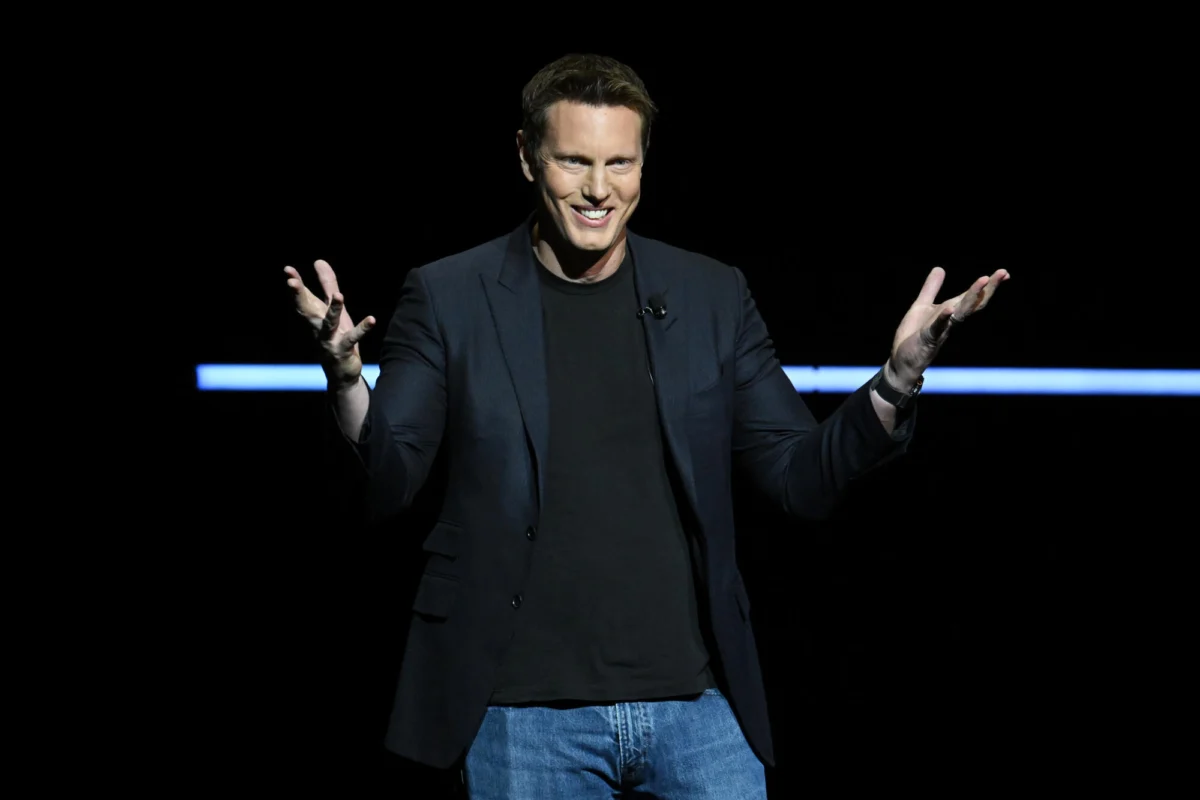
Paramount’s leadership, led by David Ellison, argues that a combined entity would have the "scale" necessary to compete with Silicon Valley. To appease regulators and labor unions, Paramount has made several high-profile pledges:

- Increased Output: A promise to produce 30 movies a year between the two legacy studios, a figure that would lead the industry.
- Theatrical Commitment: A pledge to adhere to longer theatrical windows, supporting the struggling cinema exhibition circuit.
- Capital Investment: An annual investment of $30 billion in production across all platforms.
The spokesperson added that this plan would result in "more production that supports more jobs over time, and ultimately, a stronger, more durable entertainment industry for generations to come."
Implications: A New Era of "Survival of the Biggest"
The potential merger of Paramount and Warner Bros. Discovery carries implications that extend far beyond the balance sheets of Wall Street. It signals a fundamental shift in the American cultural landscape.
The Death of the Middle-Market Film
If the merger proceeds, the "middle-market" film—the $30 million to $60 million drama or comedy—faces extinction. With $80 billion in debt, the combined entity will likely prioritize "guaranteed" blockbusters (franchises, sequels, and reboots) while neglecting original stories that don’t have built-in IP. This creates a "bimodal" industry: massive $200 million spectacles on one end and micro-budget indie films on the other, with nothing in between.
The "Creative Brain Drain"
As California faces a potential loss of over 10,000 jobs, the state risks a permanent "brain drain." Skilled artisans who have spent decades perfecting their craft in Hollywood are increasingly moving to Albuquerque, Atlanta, or London. Once that infrastructure and talent pool migrate, they are notoriously difficult to lure back, regardless of future tax credits.
Regulatory Hurdles
The CVL Economics report will likely become a key piece of evidence for the Department of Justice (DOJ) and the Federal Trade Commission (FTC). Under current antitrust scrutiny, regulators are increasingly looking at "monopsony power"—the idea that when there are too few employers, workers’ wages and bargaining power are suppressed. The loss of $1.26 billion in wages provides a quantifiable metric for regulators to challenge the deal.
The David Ellison Factor
While critics are quick to point to the merger as the cause of the industry’s woes, the CVL report also notes that the decline of the indie sector began long before David Ellison’s Skydance moved to acquire Paramount. The closure of Warner Independent Pictures in 2008 and Paramount Vantage in 2013 signaled a retreat from prestige cinema that predates the current merger mania.
However, Ellison now stands at a crossroads. His vision for a "New Paramount" promises a return to high-volume production, but he must achieve this while navigating the massive debt inherited from the Redstone era.
Conclusion
The CVL Economics report serves as a "canary in the coal mine" for the California economy. It highlights a painful irony: the very moves intended to save these storied Hollywood institutions may end up gutting the community that built them. As the merger discussions continue, the industry must grapple with a difficult question: Can Hollywood survive as a corporate titan if it fails as a local economy?
For the 4,500 production workers whose jobs hang in the balance, the answer isn’t found in a stock price, but in whether there will be a camera to operate or a set to build on a California soundstage next year.