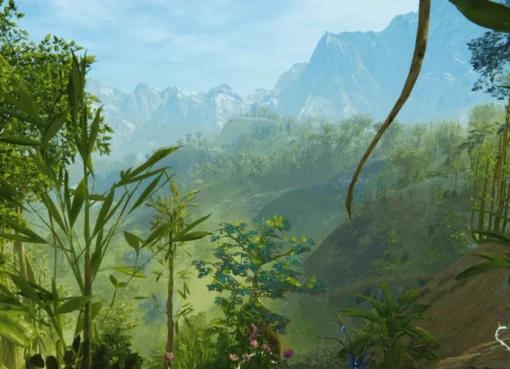
Redefining Perspective: The Technical Evolution and Lasting Legacy of ‘Lucky’s Tale’ in Virtual Reality

The early days of the modern virtual reality (VR) renaissance were defined by a singular, almost dogmatic belief: for VR to be truly immersive, it had to be experienced through the eyes of the protagonist. Developers and critics alike argued that the "presence" required for a successful VR experience was synonymous with first-person perspective. Anything else, it was feared, would break the illusion of being "inside" the world or, worse, induce debilitating motion sickness.
However, when Lucky’s Tale debuted as a flagship launch title for the Oculus Rift, it shattered these preconceptions. Developed by Playful Studios, the game was a third-person, character-action platformer—a genre many assumed was fundamentally incompatible with a head-mounted display. In a comprehensive technical postmortem, the developers revealed how they navigated the "unexpected delight" of third-person VR, uncovering technical truths that would eventually reshape the entire industry’s approach to immersive game design.
Main Facts: A Paradigm Shift in VR Design
Lucky’s Tale was not merely a game; it was a proof of concept that challenged the "First-Person Mandate" of early VR development. The game follows a courageous fox named Lucky through a series of vibrant, 3D environments, but rather than seeing through Lucky’s eyes, the player acts as an omnipresent observer—a floating camera that follows the hero.
The postmortem of the project highlights several key revelations:
- Comfort over Chaos: Contrary to expectations, a third-person perspective proved to be one of the most comfortable ways to experience VR. By providing a stable visual reference point (the character of Lucky), the brain is less likely to experience the sensory mismatch that causes nausea.
- The "Diorama" Effect: The game pioneered the use of scale to create a sense of presence. Instead of trying to simulate a life-sized world, the developers treated the game world like a living miniature, creating a profound psychological sense of "reach-in" immersion.
- Technical Innovation in Camera Logic: To prevent motion sickness, the team had to invent entirely new rules for camera movement, focusing on constant linear velocity and avoiding the sudden accelerations common in traditional 3D platformers.
Chronology: From Skepticism to Launch
The journey of Lucky’s Tale began in 2013, during the "Wild West" era of VR development. At the time, the Oculus Rift was still in its "Development Kit" (DK1) phase, and the industry was obsessed with horror games and cockpit simulators.
2013: The Prototype Phase
The team at Playful Studios, led by Paul Bettner (co-creator of Words With Friends), began experimenting with the Oculus DK1. Their initial goal wasn’t necessarily a third-person game. However, during internal "game jams," they discovered that placing a camera behind a character in a 3D space felt surprisingly natural. They realized that the player’s head wasn’t just a camera; it was a physical entity within a miniature world.
2014: The E3 Revelation
When Lucky’s Tale was first shown at E3 2014, the reaction from the press was a mix of confusion and curiosity. Critics asked why a platformer—a genre perfected in 1996 with Super Mario 64—needed VR. But upon putting on the headset, the narrative changed. Journalists reported a "toy-box" feeling that was impossible to convey on a 2D screen.
2015: Refining the Technical Framework
As the launch of the consumer Oculus Rift (CV1) approached, Playful Studios spent a year refining the technical hurdles of VR navigation. They focused on "The Camera Problem." In traditional gaming, cameras often "rubber-band" behind characters, speeding up and slowing down. In VR, this caused immediate nausea. The team spent months perfecting a "constant velocity" camera system that moved the player through the world as if they were on a smooth, invisible rail.
2016: Launch and Postmortem
In March 2016, Lucky’s Tale launched alongside the Oculus Rift. It was bundled with every headset, making it the first VR experience for hundreds of thousands of users. The subsequent technical postmortems, delivered at events like GDC (Game Developers Conference), provided the industry with a roadmap for how to handle third-person perspectives, scale, and lighting in a 360-degree environment.
Supporting Data: The Technical Pillars of Third-Person VR
The success of Lucky’s Tale was rooted in specific technical choices that addressed the unique limitations and strengths of VR hardware.
1. Scale and the "Toy" Aesthetic
One of the most significant discoveries was the power of "World Scale." In VR, the distance between the player’s eyes (Interpupillary Distance or IPD) dictates how large objects appear. By manipulating this scale, Playful Studios made Lucky appear about six inches tall. This "diorama effect" allowed players to feel a sense of mastery over the environment. It also reduced the "vergence-accommodation conflict"—the eye strain caused by looking at objects that are too close or too far away in a VR headset.
2. Parallax and Depth Perception
In a 2D platformer, depth is an illusion created by shadows and overlapping textures. In Lucky’s Tale, depth is a literal gameplay mechanic. Because the player has stereoscopic vision, they can judge distances with 100% accuracy. The postmortem data showed that players were significantly more successful at landing difficult jumps in VR than they were in a 2D version of the same level, purely because of the parallax provided by head movement.
3. Lighting and Performance
Maintaining a consistent 90 frames per second (FPS) was mandatory for the Oculus Rift to prevent sickness. This required a radical approach to lighting. The team used "baked" lighting (pre-calculated shadows and highlights) to save processing power, but they combined it with high-quality "specular highlights" on Lucky himself. This ensured the character always looked grounded in the world, maintaining the "presence" of the digital fox even when the background was static.
Official Responses: Insights from the Development Team
During the postmortem sessions, the developers at Playful Studios reflected on the counter-intuitive nature of their success.
"Everyone told us that third-person VR wouldn’t work," one lead developer noted during the talk. "The assumption was that if you weren’t the character, you wouldn’t feel ‘there.’ But we found the opposite. By being a ‘watcher’ or a ‘guardian’ for Lucky, the player develops an emotional bond with the character that is actually enhanced by the third-person perspective."
The team also addressed the "Unexpected Delight" mentioned in the session title. They revealed that the most surprising revelation was how players used their heads. In first-person games, players often feel restricted by the "body" of the avatar. In Lucky’s Tale, players treated their heads like a physical tool—leaning into bushes to find hidden coins, peeking around corners, and looking down into pits. This "positional tracking" became the primary way players interacted with the world, turning the act of "looking" into a core gameplay loop.
Implications: The Legacy of the "Diorama" Genre
The technical postmortem of Lucky’s Tale did more than just explain how one game was made; it provided a blueprint for a new sub-genre of VR.
The Rise of the VR Platformer
Following the success of Lucky’s Tale, other developers felt empowered to explore third-person perspectives. This led directly to some of the most critically acclaimed VR titles in history, including:
- Moss (Polyarc): Which took the "diorama" concept further by making the player a literal character in the world (The Reader) who interacts with a small mouse.
- Astro Bot Rescue Mission (Sony Japan Studio): Often cited as one of the greatest VR games of all time, it utilized the camera and scale lessons pioneered by Lucky’s Tale to create a masterpiece of 3D platforming.
Broadening the VR Demographic
By proving that VR could be comfortable and familiar, Lucky’s Tale helped broaden the demographic for the technology. It moved VR away from being solely a platform for "hardcore" simulation enthusiasts and toward a broader audience that appreciated traditional gaming genres. It showed that VR wasn’t just about "new" experiences, but about making "old" genres feel new again.
Technical Standards for Comfort
The "constant velocity" camera logic developed for Lucky’s Tale is now a standard recommendation in VR development kits. The game proved that moving a camera through a 3D space is possible without causing nausea, provided the movement is predictable and lacks the "acceleration jitter" that confuses the inner ear.
Conclusion: A Small Fox with a Big Impact
Lucky’s Tale stands as a landmark in the history of interactive media. While it may look like a simple, charming platformer on the surface, its technical underpinnings represent a sophisticated solution to some of the most difficult problems in virtual reality.
The technical postmortem of the game serves as a reminder that in the face of a new medium, the "obvious" rules are often meant to be broken. By challenging the necessity of the first-person perspective, Playful Studios didn’t just create a game; they discovered a new way for humans to inhabit digital worlds. As VR continues to evolve with more powerful hardware and wireless freedom, the lessons of scale, perspective, and the "unexpected delight" of the third-person view remain as relevant today as they were at the dawn of the Rift. Lucky the fox didn’t just jump over platforms; he helped an entire industry leap over its own limitations.