The Fabric of the Uncanny: How SoHo’s Furry Puppet Studio and the Henson Lineage Redefine Modern Surrealism

In an era dominated by high-fidelity computer-generated imagery and generative AI, a quiet revolution of the tactile is taking place within a sun-drenched studio in SoHo, Manhattan. Furry Puppet Studio, a design house dedicated to the hand-carved creation of custom puppets and creatures, has emerged as a primary torchbearer for a specific, physical brand of surrealism. By blending the avant-garde traditions of Jim Henson with the "street-ambush" philosophy of troupes like Big Nazo, these artisans are proving that the most profound disruptions of reality are often those we can touch, hold, and look in the eye.
I. Main Facts: The Intersection of Foam, Fleece, and the Fantastic
Furry Puppet Studio does not describe itself as a toy manufacturer or a mere prop house. Instead, they characterize their output as "pretty unusual work." Located in the heart of SoHo, the studio operates as a multidisciplinary laboratory where mechanical engineering, couture fashion, and fine art intersect. Their portfolio is a testament to the "marvelous" — a term coined by Surrealist manifesto-writer André Breton to describe the eruption of the extraordinary into the mundane.
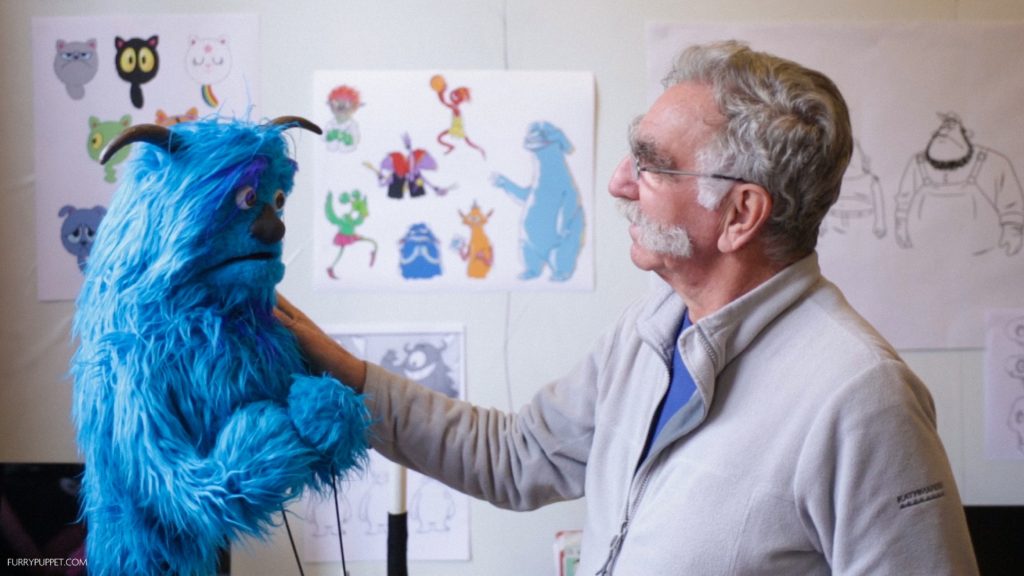
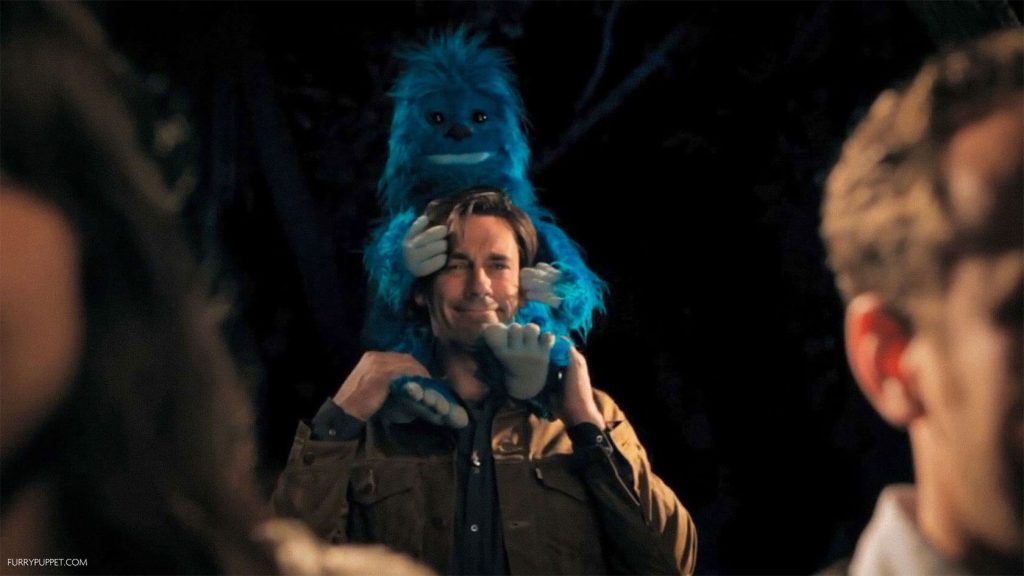
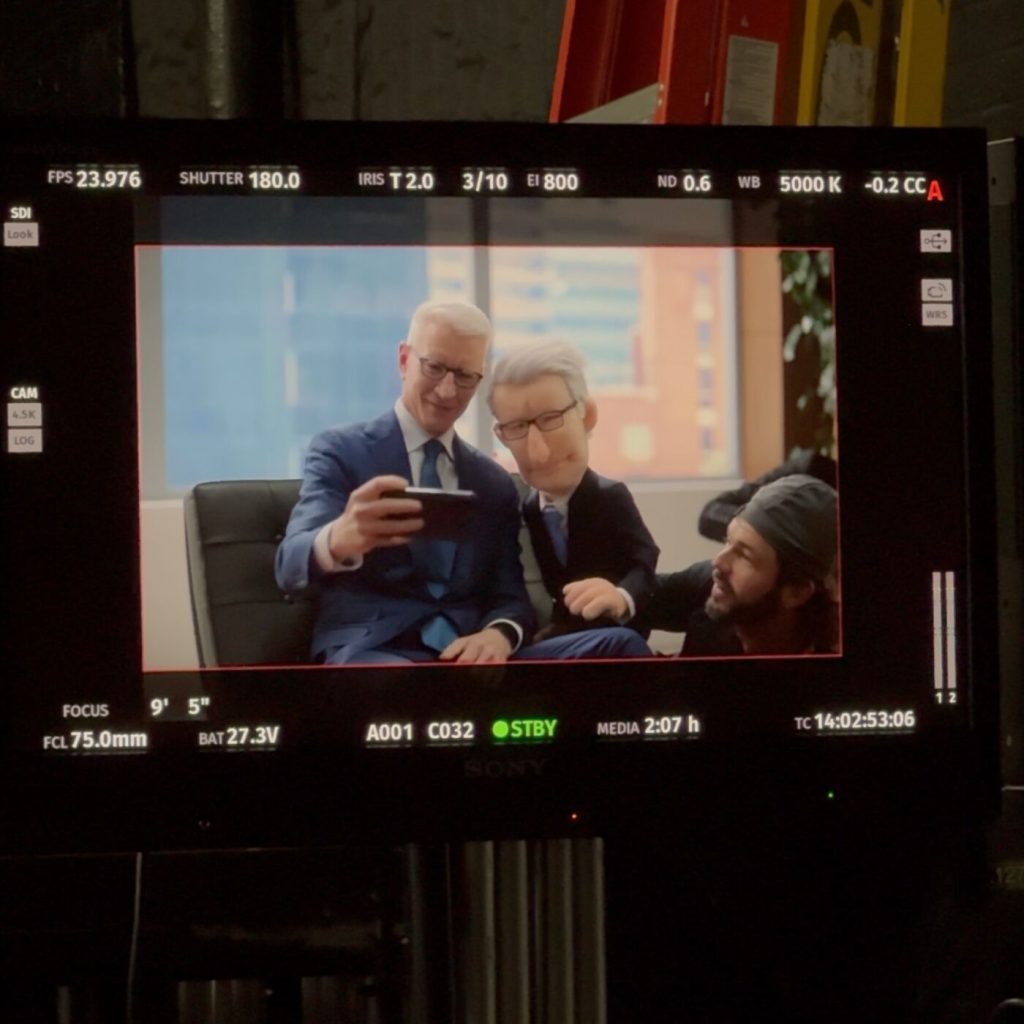
The studio’s work is ubiquitous in modern media, though often uncredited to the hands that carved it. From the melancholic, blue-furred yeti sharing a quiet moment with actor Jon Hamm in a Herman Düne music video to the hyper-realistic puppet doubles of Anderson Cooper and Andy Cohen for CNN’s New Year’s Eve broadcasts, the studio specializing in the "impossible."
Unlike the polished, often sterile perfection of digital effects, the creatures produced in SoHo possess a "weight of belief." This physical presence allows them to occupy the same frame as human actors without the jarring "uncanny valley" effect often found in CGI. The studio’s team is a curated assembly of talent, including mechanical engineers, specialized foam carvers, and legendary costume designer Polly Smith—co-inventor of the sports bra—who brings a structural rigor to the puppets’ "dream fleece" skins.

II. Chronology: From the Avant-Garde to the Street
To understand the current state of puppet-based surrealism, one must trace the lineage of the medium back through three pivotal movements.
1960s: The Experimental Henson
The popular consciousness largely associates Jim Henson with the educational warmth of Sesame Street or the vaudevillian charm of The Muppets. However, the chronological root of today’s surrealist puppetry lies in Henson’s early, experimental film work. In 1965, Henson produced Time Piece, a dialogue-free short film that was eventually nominated for an Academy Award and screened at the Museum of Modern Art (MoMA).
Time Piece utilized associative logic—a man in a hospital bed, a heartbeat becoming a drumbeat, and a cowboy shooting a hole through the Mona Lisa—to explore the passage of time. This era established the puppet not as a toy, but as an avant-garde instrument. Henson’s later insistence on the "darkness" of The Dark Crystal (1982) was a return to these surrealist roots, proving that the medium could handle high-concept, psychological narratives.
1980s: Big Nazo and the Public Ambush
In 1986, the movement shifted from the screen to the streets. Erminio Pinque, a RISD-trained illustrator, founded Big Nazo in Providence, Rhode Island. Pinque’s vision was a "puppet show without a stage." By creating massive, wearable foam creatures that roamed festivals and street parades, Big Nazo removed the "fourth wall" of the theater. This was surrealism as a public ambush, forcing unsuspecting citizens to interact with nine-foot-tall aliens and mutated insects in broad daylight.
2000s–Present: The SoHo Synthesis
Furry Puppet Studio, founded by Zack Buchman, represents the modern synthesis of these two traditions. Buchman, an "outsider" artist who bypassed traditional collegiate training, brought a raw, carving-focused aesthetic to the craft. Since the studio’s inception, it has moved puppetry into the realms of high-fashion (Apple Japan campaigns) and contemporary music (Missy Elliott’s "WTF" marionettes). Today, the studio stands as the pinnacle of "boutique" fabrication, where the goal is no longer just to entertain, but to convince the viewer that the inanimate is alive.
III. Supporting Data: The Mechanics of the Uncanny
The effectiveness of surrealist puppetry relies on a delicate balance of psychology and material science. At Furry Puppet Studio, the process is defined by several technical "pillars" that separate their work from traditional puppet making.
The "No-Undo" Method
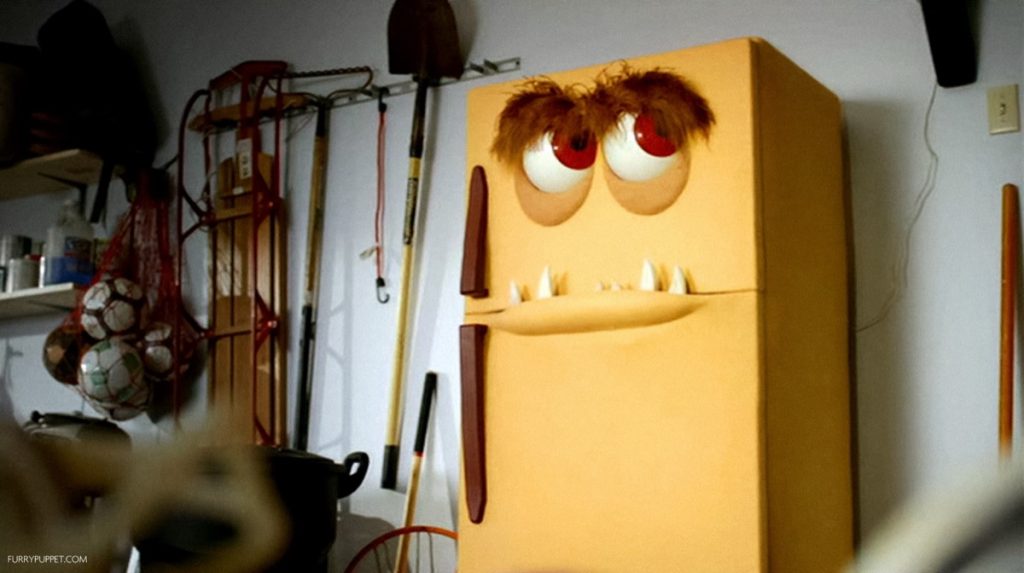
Every creature begins as a solid block of industrial foam. Unlike digital modeling, where a mistake can be erased with a keystroke, the studio’s carvers work with blades in a subtractive process. This "permanent" method requires a level of confidence Buchman compares to "Edward Scissorhands." This manual carving creates organic imperfections that the human eye reads as "natural," even when the subject matter is an alien or a sentient refrigerator.
Material Propriety: Dream Fleece
The studio manufactures its own fabric, dubbed "dream fleece." This material is designed to catch light in a specific way, mimicking the subsurface scattering found in biological skin or fur. This proprietary textile allows the puppets to appear vibrant under the harsh lights of a television studio or the natural, flat light of a Tokyo street corner.
The Hinge of the Eye
According to studio data and internal philosophy, the "soul" of the puppet is determined in the final 1% of the build: the placement of the eyes. A fractional shift of a millimeter can change a creature’s expression from "curious" to "predatory." This is the point where fabrication ends and "presence" begins. It is the literal application of Masahiro Mori’s "Uncanny Valley" theory, where the studio aims to stay on the "human/alive" side of the dip, avoiding the revulsion triggered by things that look "almost" real but "broken."
IV. Official Responses: Perspectives from the Creators
In documenting the philosophy of these studios, the creators emphasize that their work is a rejection of the "joke" in favor of the "experience."
Zack Buchman, Founder of Furry Puppet Studio, notes that his lack of formal education allowed him to view the puppet as a sculptural challenge rather than a theatrical prop. "We do pretty unusual work," Buchman states, referring to the studio’s ability to create "impossible" objects. He describes the moment of success as the "instant disbelief clicks off," where the brain stops looking for the puppeteer’s rods and accepts the creature as a living entity.
Erminio Pinque of Big Nazo has long championed the "wonderful failure." For Pinque, the accidents that happen during a live street performance are where the most potent surrealism is found. He believes that "traveling far from what he knew" allowed him to find "the good juxtapositions." This aligns with the surrealist concept of automatism—the belief that the subconscious (or the accident) knows more than the conscious plan.
The Henson Legacy continues to speak through the archives. Historical records of Henson’s interactions with NBC and MoMA reveal a man who viewed the camera as a tool for "visual music." His refusal to "sand the weirdness off" his later projects like The Dark Crystal serves as the foundational mandate for modern puppet studios: the "weirdness" is the point.
V. Implications: The Future of the Tangible
The resurgence of interest in handmade, surrealist puppets has significant implications for the future of art and advertising.
The Digital Fatigue Factor
As audiences become increasingly desensitized to CGI, the "physicality" of a puppet becomes a premium asset. Advertisers like Apple and CNN are opting for physical builds because they provide a "tactile truth" that digital pixels cannot replicate. The presence of a physical object on a set changes how human actors perform; Jon Hamm’s interaction with the blue yeti is grounded in a way that a green-screen performance rarely is.
Surrealism as a Tool for Connection
The work of Furry Puppet and Big Nazo suggests that surrealism is not just about "weirdness" for its own sake. By placing "impossible" beings in ordinary settings—a family of one-eyed monsters or a refrigerator with teeth—these artists force the viewer to re-examine their own reality. This "defamiliarization" is a core goal of surreal art, intended to wake the viewer from the "sleep of the everyday."
The Preservation of Craft
Finally, the success of these studios ensures the survival of specialized manual skills. The blend of 3D-printed components with hand-carved foam and custom-milled textiles represents a "new craft" movement. It is a world where the mechanical engineer and the foam carver are equally vital, proving that in the 21st century, the most "modern" art may well be the kind made by a person with a blade and a block of foam in a room in SoHo.
In conclusion, the puppets of Furry Puppet Studio and the wider Henson lineage are not merely characters; they are "surrealism you can hold." They represent a bridge between the dream world and the physical world, reminding us that as long as we can be convinced that a piece of foam is looking back at us, the "marvelous" is still very much alive.