LONDON, UK – For centuries, the source of the Nile River remained one of humanity’s most captivating and enduring geographical enigmas. A lifeblood to ancient civilizations, its origins were shrouded in myth and speculation until the fervent age of 19th-century European exploration. Driven by a complex tapestry of scientific curiosity, economic ambition, missionary zeal, and ultimately, imperial aspirations, a cadre of intrepid explorers embarked on perilous journeys into the heart of East Africa, forever altering the map and the destiny of a continent.
The quest for the Nile’s source was more than a mere cartographical exercise; it was a race against the unknown, a grand endeavour that promised fame, fortune, and a strategic foothold for European powers. Figures like David Livingstone, Richard Francis Burton, John Hanning Speke, Samuel Baker, and Henry Morton Stanley carved their names into history through arduous expeditions, battling disease, hostile environments, and often, each other, to claim the ultimate geographical prize. Their relentless pursuit not only filled a monumental blank on the global map but also laid the groundwork for the monumental shift towards the colonization of Africa.
The Uncharted Interior: Europe’s 19th-Century Obsession
As the 19th century dawned, vast swathes of Africa remained terra incognita to Europeans, marked by daunting "blank spaces" on maps that fueled both fascination and frustration. The interior of the continent was largely impenetrable, guarded by formidable natural barriers and, crucially, by diseases like malaria, which exacted a brutal toll on early adventurers. Explorers like Mungo Park, who tragically lost his life attempting to trace the Niger River’s course in the early 1800s, exemplified the immense dangers involved.
However, the scientific breakthroughs of the 1820s, particularly the development and increasing availability of quinine, began to shift the balance. This potent anti-malarial drug, derived from cinchona bark, offered a crucial, albeit imperfect, defense against one of Africa’s deadliest foes. With this new tool, the prospect of deeper penetration into the continent became viable, intensifying the focus on its most profound mysteries, chief among them the source of the majestic Nile – a river whose waters had nourished Egyptian civilization for millennia.
The Dual Quest: Blue and White Niles
The Nile’s bifurcated nature was already known: near Khartoum, it splits into the Blue Nile and the White Nile. The Blue Nile’s source had been identified in the highlands of Ethiopia, a region explored earlier by figures such as James Bruce. The greater mystery, and the focus of 19th-century European attention, lay with the White Nile, which flowed southwards into the largely unknown territories of East Africa. Rumours of vast inland lakes, brought back by Arab traders who had long navigated the continent’s interior from Zanzibar in search of slaves and ivory, tantalized European geographers. These lakes were believed to be the ultimate reservoir for the White Nile, with some speculating they might even form a single, enormous inland sea, referred to as Unyamwezi.
Early expeditions, often Egyptian-sponsored, pushed south into Sudan, reaching the formidable cataracts at Juba by 1842. However, these efforts merely confirmed the complexity of the White Nile’s upper reaches, necessitating a more systematic approach from the south. The goal was clear: follow the White Nile, identify the rumored Great Lakes, and definitively locate the primary source.
Beyond pure geographical curiosity, the motivations were profoundly pragmatic. The dream of establishing navigable waterways, particularly for steamships, captivated European imaginations. Such routes promised to unlock Africa’s perceived "vast natural resources"—gold, ivory, rubber, and other precious commodities—for European markets, while simultaneously opening new markets for European manufactured goods. This vision of commerce, inextricably linked with missionary efforts and the abolition of the slave trade, formed the ideological bedrock for what would eventually become the Scramble for Africa. Yet, the reality on the ground was far harsher than the dreams: travel was excruciatingly difficult, fraught with danger, and entirely dependent on the cooperation and goodwill of local African communities and chiefs. The European explorers, often prejudiced and self-interested, were nevertheless individuals of immense bravery and resourcefulness, operating in an alien environment where survival was a daily struggle.
David Livingstone: Missionary, Explorer, and Enduring Icon
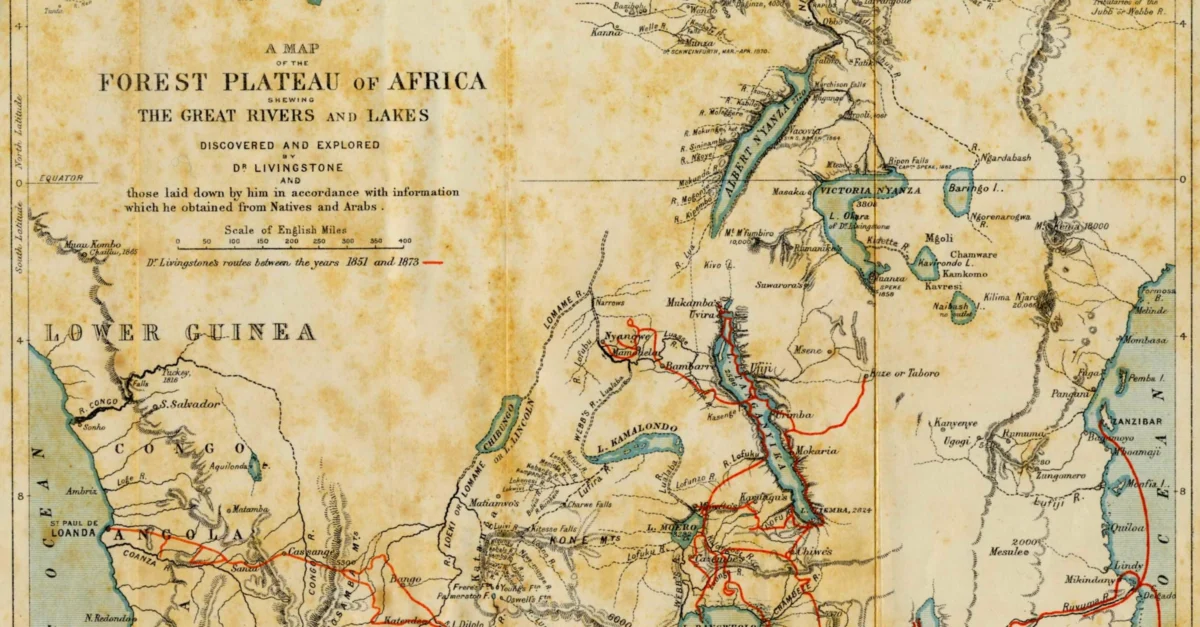
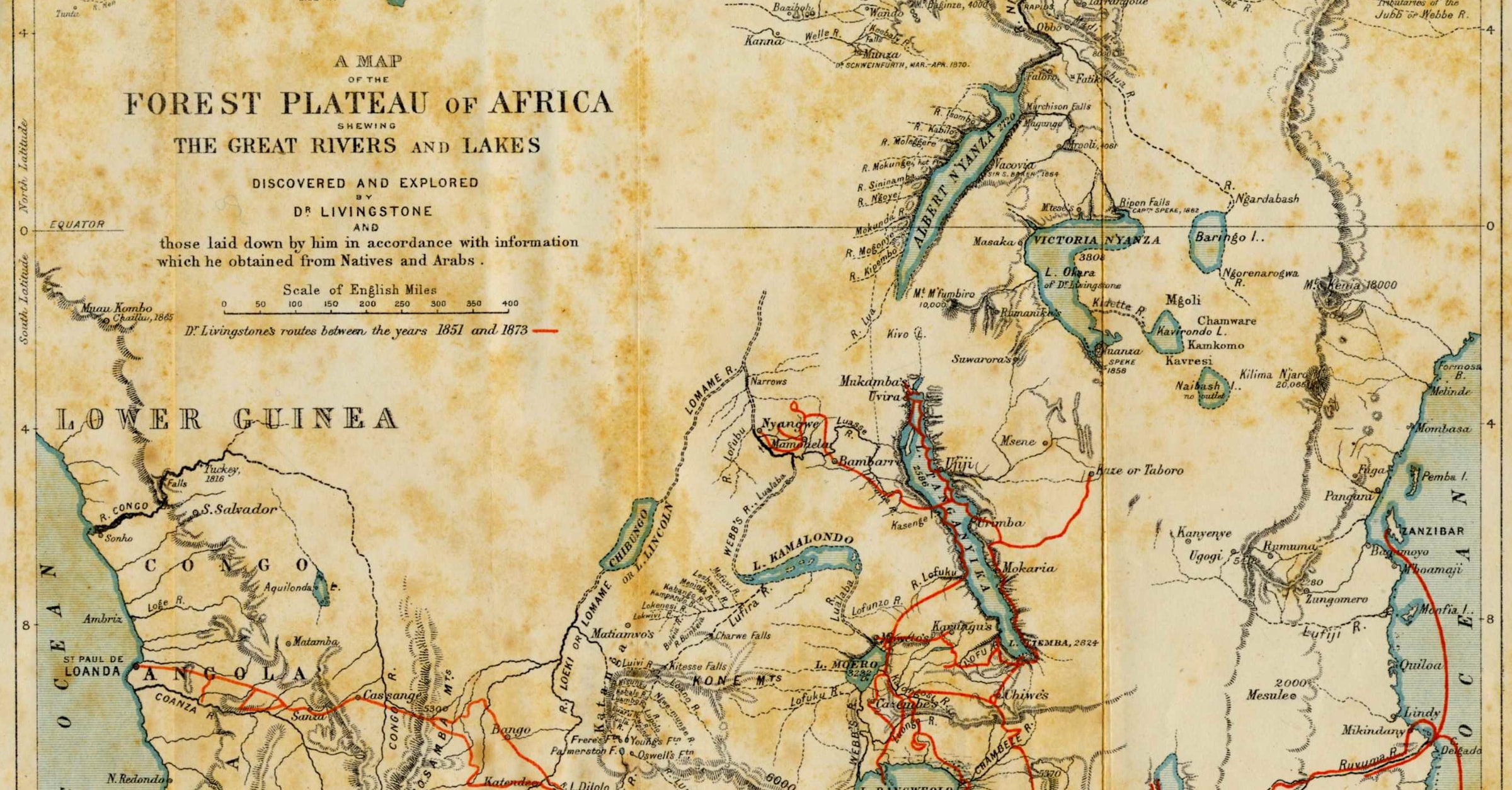
Among the most celebrated figures of this era was the Scottish missionary David Livingstone (1813-1873). His philosophy, encapsulated in the "three Cs"—Christianity, Civilization, and Commerce—posited that by opening Africa to European influence, both the continent’s spiritual darkness and the abhorrent slave trade could be overcome. Livingstone believed that mapping Africa’s interior and fostering legitimate trade would naturally lead to the spread of Christian values and civilizing influences, thereby eradicating slavery.
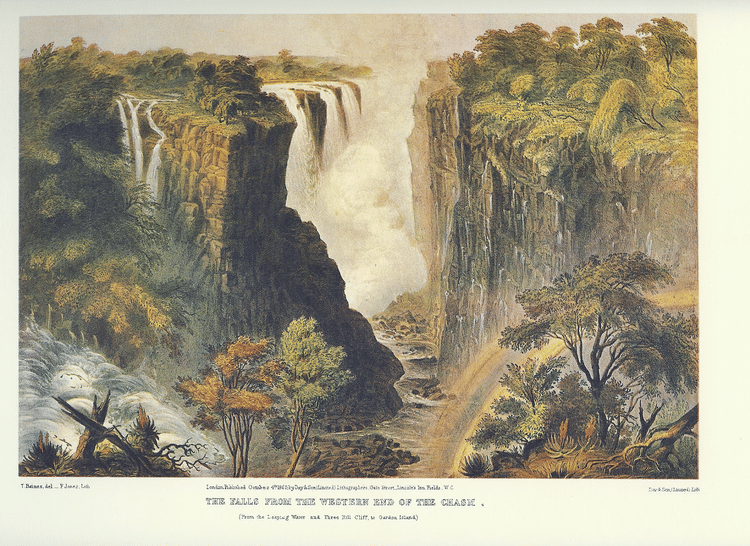
Livingstone’s early career was marked by extraordinary feats of exploration. From 1855 to 1856, he embarked on an epic trans-continental journey, tracing the Zambezi River from Angola on the west coast to Mozambique on the east. It was during this expedition, in November 1855, that he became the first European to witness the breathtaking grandeur of what he named Victoria Falls, after the reigning British monarch. His vivid descriptions, published in his bestseller Missionary Travels (1857), ignited the public’s imagination and cemented his status as a national hero.
Buoyed by public adulation and government funding, Livingstone undertook another major expedition in 1858, becoming the first European to explore Lake Nyasa (now Lake Malawi). He revisited Victoria Falls, providing an even more detailed and poetic account of its majesty:
"We reached, on the 4th of August, Moachemba…and could see distinctly with the naked eye, in the great valley spread out before us, the columns of vapour rising from the Victoria Falls, though upwards of 20 miles distant…We proceeded…9th August, 1860, to see the Victoria Falls. Mosi-oa-tunya is the Makololo name and means smoke sounding; Seongo or Chongwé, meaning the Rainbow, or the place of the Rainbow, was the more ancient term they bore. We embarked in canoes…for some miles the river was smooth and tranquil, and we glided pleasantly over water clear as crystal, and past lovely islands densely covered with a tropical vegetation…Many flowers peeped out near the water’s edge…But our attention was quickly called from the charming islands to the dangerous rapids… To confess the truth, the very ugly aspect of these roaring rapids could scarcely fail to cause some uneasiness in the minds of new-comers….Into this chasm, of twice the depth of Niagara-fall, the river, a full mile wide, rolls with a deafening roar….The whole body of water rolls clear over, quite unbroken; but, after a descent of ten or more feet, the entire mass suddenly becomes like a huge sheet of driven snow. Pieces of water leap off it in the form of comets with tails streaming behind, till the whole snowy sheet becomes myriads of rushing, leaping, aqueous comets….every drop of Zambesi water appears to possess a sort of individuality….racing down till lost in clouds of spray….The morning sun gilds these columns of watery smoke with all the glowing colours of double or treble rainbows."
(Livingstone, Ch. VI)
Livingstone understood the public’s hunger for tales of the exotic. He often traveled with artists like Thomas Baines, whose landscape paintings provided visual confirmation of his written accounts. As historian L. James notes, "The new wave of explorers captured the public imagination with colourful and sometimes lurid accounts of whom and what they had discovered. Europeans were fascinated by the revelation of a primordial world full of natural marvels, strange races such as the pygmies and exotic animals, in particular the gorillas of the Congo forests. Many readers wondered whether they were being transported back in time, if not to the Garden of Eden then to the world in its infancy. In terms of stirring the imagination, mid-Victorian exploration in Africa was similar to space travel a century later" (63). These explorers, through their books, lectures, and exhibitions of curiosities, became international celebrities, and the Nile quest offered the greatest stage of all.
Burton and Speke: Rivalry and Discovery
The late 1850s marked a new, more aggressive phase in African exploration, fueled by public enthusiasm and entrepreneurial ambitions. The British government, alongside the Royal Geographical Society, sponsored two highly contrasting but equally determined individuals: Richard Francis Burton (1821-1890) and John Hanning Speke (1827-1864). Burton, a renowned linguist fluent in 35 languages and famous for his covert pilgrimage to Mecca, was an intellectual and a provocateur. Speke, a younger army officer, was an avid hunter and adventurer.
Their joint expedition from 1857-1859 followed established Arab slave trade routes from Zanzibar into the interior. The journey was arduous, highlighting the absolute necessity of local cooperation and the challenges of logistics. Speke’s diary entries reveal the delicate dance of negotiation with local chiefs, where European goods and novelties served as currency and persuasion:
"The present was then opened, and everything in turn placed upon the red blanket. The googles created some mirth; so did the scissors…but the king [Kamrasi] was scarcely moved or uttered any remarks till all was over, when, at the instigation of the courtiers, my chronometer was asked for and shown. This wonderful instrument, said the officers (mistaking it for my compass), as the magic horn by which the white men found their way everywhere…The chronometer, however, I said, was the only one left, and could not possibly be parted with; though if Kamrasi liked to send men to Gani, a new one could be obtained for him."
Speke’s attempts to refuse were met with stubborn insistence, even threats to their passage:
"I can get nothing out of him until he has got it – the road to the lake, the road to Gani, everything seemed risked on his getting my watch – a chronometer worth £50, which would be spoilt in his hands in one day…When I told him that to purchase another would cost five hundred cows, the whole party were more confirmed than ever as to its magical powers."
(Fleming, 84-5)
Ultimately, Speke conceded, illustrating the constant compromises required to navigate the African political landscape.
In 1858, Burton and Speke became the first Europeans to reach Lake Tanganyika. However, their triumph was overshadowed by a burgeoning rivalry. Speke, observing the lake, was not convinced it was the Nile’s ultimate source. Leaving a malaria-stricken Burton behind, he pressed northward and, in a moment of independent discovery, sighted Africa’s largest lake, which he promptly renamed Lake Victoria Nyanza. Speke returned convinced he had found the Nile’s source, a claim Burton vehemently disputed, leading to a bitter and public feud that would define their legacies. Despite their disagreements, the region around Lake Victoria immediately struck them as ideal for European settlement and cash-crop plantations, an early harbinger of future colonial ambitions.
Samuel Baker: Another Contender, Another Lake
Undeterred by Burton’s skepticism, Speke, accompanied by James Grant, returned to Lake Victoria in 1860. There, he discovered and named Ripon Falls, confidently declaring it the definitive source of the Nile. His claim, however, was soon challenged by another prominent explorer, Samuel Baker (1821-1893). Traveling with his Hungarian partner, Flóra Sass (whom he had famously bought from a slave market), Baker set off to verify Speke’s findings.
In 1864, Baker discovered another significant body of water, which he named Lake Albert, in honor of Queen Victoria’s consort. Baker, too, believed his discovery to be the true source of the Nile, adding another layer of complexity to the already contentious debate. Baker’s expedition was exceptionally well-equipped, yet his wife Flóra’s letter to his daughter vividly illustrates the brutal realities of navigating the Nile’s upper reaches:
"At last we have arrived here – after a fearful struggle and weary journey in dragging a flotilla of 59 vessels including a steamer of thirty two horsepower over high grass and marshes…It would be quite impossible by any description to give you an idea of the obstacles to navigation through which we have toiled with the fleet, but you can imagine the trouble when you hear that we were thirty two days with 1,500 men in accomplishing a distance of only 2 miles…Our vessels drew four feet of water but in many places the depth of the river was only two feet."
(Fleming, 88)
The immense physical and logistical challenges underscored the heroic, almost superhuman, efforts required for these expeditions. Speke, however, remained steadfast in his conviction that Lake Victoria was the source. His definitive work, Journal of the Discovery of the Source of the Nile, was published in 1863. Tragically, Speke died the following year in a hunting accident, just hours before he was scheduled to publicly debate his rival, Burton, at the British Association, leaving the ultimate resolution of the Nile’s source hanging in the balance.
By 1864, three distinct claims existed: Burton advocated for Lake Tanganyika, Speke for Lake Victoria, and Baker for Lake Albert. The riddle, far from solved, had only deepened, necessitating further, even more arduous, exploration.
The Lost Explorer and the Journalist: Livingstone and Stanley
The stage was set for the final act of the Nile quest, with Livingstone returning to Africa in 1866. His goal was to settle the debate, moving from Lake Nyasa towards Lake Tanganyika. However, after years of sporadic communication, Livingstone vanished, swallowed by the vastness of the continent. Five years passed with no news, sparking intense public concern and speculation.
It was an American journalist, Henry Morton Stanley (1841-1904), commissioned by the New York Herald, who took up the challenge of finding the lost icon. Stanley, a man driven by ambition and a craving for fame, launched a massive expedition in 1871. His relentless search culminated in the iconic meeting with Livingstone in Ujiji in November 1871, marked by the immortalized, if perhaps embellished, greeting: "Dr Livingstone, I presume?"
Livingstone, despite his weakened state, continued his explorations, convinced, like Burton, that Lake Tanganyika, and specifically the Lualaba River flowing from it, was the Nile’s source. However, his long and arduous journeys ultimately took their toll. He died in the upper Lualaba basin on May 1, 1873. In a testament to their loyalty, Livingstone’s devoted African companions, Susi and Chuma, buried his heart in Africa but meticulously preserved his body, undertaking an epic journey to transport his remains back to Zanzibar and then to Britain. Livingstone received a state funeral and was interred in Westminster Abbey, with Stanley serving as one of the pallbearers. Susi and Chuma also saved his invaluable diaries, which were published in 1874, offering profound insights into his final years and thoughts—ironically, including an entry from 1868 expressing a wish to be buried in the quiet solitude of the African forest.
Livingstone’s legacy was complex. Unlike many contemporaries, he often expressed a belief in the inherent equality of Africans, advocating for their dignity and respect. He became a Victorian martyr, a symbol of Christian virtue battling slavery and ignorance. Yet, his expeditions, and the narratives surrounding them, inadvertently paved the way for the very forces of exploitation he sought to counteract.
Stanley, eager to surpass Livingstone’s fame, returned to Africa from 1874-1877. With a steel boat named Lady Alice, he embarked on a grueling circumnavigation of Lake Victoria, meticulously charting its vast perimeter and searching for its outflows. His exhaustive efforts confirmed the immense scale of the lake and, critically, identified its connection to the Nile. He then proceeded to follow the Lualaba River, definitively proving, alongside a separate expedition by Verney Lovett Cameron in 1875, that it was, in fact, the headwaters of the Congo River, not the Nile.
This monumental discovery finally settled the long-standing debate: Lake Victoria, as Speke had correctly surmised, was indeed the primary source of the Nile River. Stanley’s epic journeys, chronicled in books like How I Found Livingstone (1872), Through the Dark Continent (1878), and In Darkest Africa (1890), solidified his reputation as an explorer of unparalleled determination, though his methods were often criticized for their brutality and disregard for African lives. Unlike Livingstone, Stanley was denied burial in Westminster Abbey, largely due to his documented racism and cruelty towards Africans.
The Fourth ‘C’: Colonisation and its Enduring Implications
The mapping of East Africa’s great waterways—the Nile, Congo, Zambezi, and Niger—marked a critical turning point. The initial trickle of missionaries, explorers, and individual traders soon became a flood. African leaders, initially viewing these Europeans as sources of knowledge and valuable trade goods, gradually found themselves confronted by a far more organized and predatory force. The explorers’ romanticized accounts often minimized the agency and complex societies of the African peoples, reducing them to mere exotic backdrops in their tales of adventure.
From around 1885, the European powers moved from exploration to formal annexation. The "Scramble for Africa" saw European governments dispatching technologically superior armies to establish protectorates and colonies. The dream of trade and civilization rapidly devolved into widespread exploitation. The vast natural resources, once merely speculated upon, were now systematically extracted, and African societies were brutally subjugated. By the turn of the 20th century, the transformation was complete: almost the entire continent, with the notable exceptions of Ethiopia and Liberia, fell under direct European colonial rule.
The quest for the Nile’s source, initially a beacon of scientific inquiry and a symbol of man’s desire to conquer the unknown, ultimately served as a powerful catalyst for a much darker chapter in history. The maps meticulously drawn by these intrepid, and often ruthless, explorers became blueprints for conquest, transforming blank spaces into territories to be carved up and exploited. The legacy of the 19th-century Nile explorers remains a complex tapestry—one woven with threads of incredible bravery and geographical triumph, but also with the bitter consequences of imperial ambition and the enduring scars of colonialism.
Cairo, Egypt – Often heralded as ancient Egypt’s Classical Age, the Middle Kingdom (circa 2040-1782 BCE) stands as a monumental period of cultural renaissance, administrative innovation, and art
Pucklechurch, Gloucestershire – In the annals of early English monarchy, King Edmund I, who reigned from 939 to 946, stands as a pivotal, if often overshadowed, figure. Inheriting a nascent kingdom st
London, UK – In a world increasingly defined by the digital and the ephemeral, a quiet revolution is beckoning, one rooted in the ancient rhythms of human experience. Folklore, often relegated to the






Leave a Comment