The Enigma of Henry J. Kostkos: An Engineer’s Brief Sojourn into the Pulp Cosmos
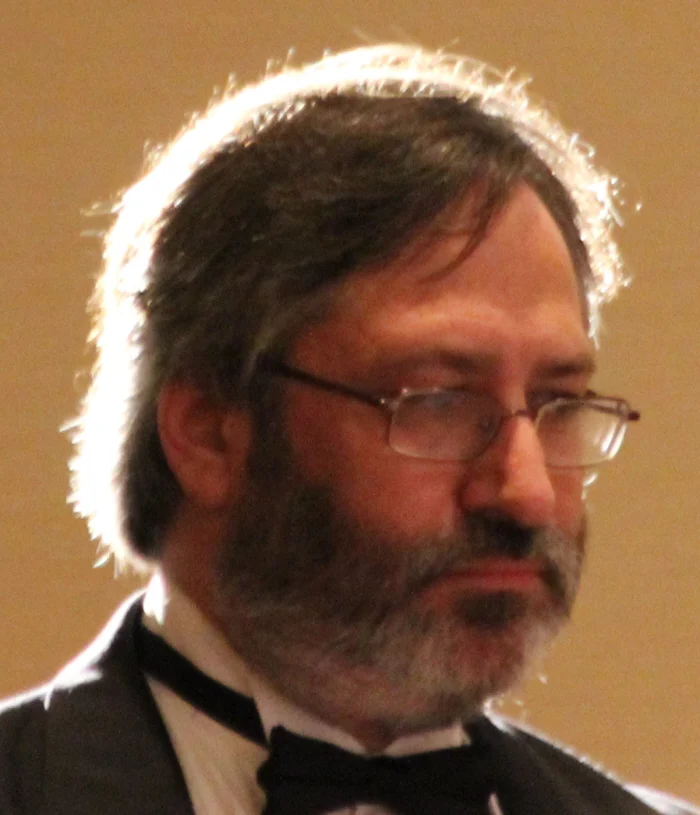
In the sprawling, often-forgotten annals of early 20th-century science fiction, countless names flicker briefly before receding into obscurity. Among them is Henry J. Kostkos, an electrical engineer whose professional life was dedicated to the intricate workings of Western Electric and Bell Labs, yet who, for a short period, lent his imagination to the nascent genre of speculative fiction. His story is not just a biographical sketch but a poignant exploration of fleeting literary recognition, the intersection of scientific rigor and creative impulse, and the vast, often unacknowledged contributions of individuals who helped shape the foundations of modern genre literature.
Kostkos’s journey from the demanding world of electrical engineering to the pages of Amazing Stories and Astounding Stories offers a unique lens through which to examine the cultural landscape of the 1930s—a decade marked by both profound economic hardship and an unbridled optimism for technological advancement. His narrative, brought to light in part by Damon Knight’s reflective essay "Goodbye, Henry J. Kostkos, Goodbye," serves as a powerful reminder of the ephemeral nature of fame, particularly within the fast-paced, high-volume environment of the pulp magazines. Knight’s observation, made decades after Kostkos’s brief literary stint, underscores a recurring theme in the history of genre fiction: the rich tapestry woven by a multitude of authors, many of whom, despite their imaginative contributions, ultimately fade from collective memory.
This article delves into the life and work of Henry J. Kostkos, piecing together the available fragments to construct a more complete picture of an individual who traversed the demanding worlds of scientific innovation and speculative storytelling. We will explore the professional environment that shaped him, the vibrant pulp scene he briefly inhabited, and the broader implications of his almost-forgotten legacy, illuminating not only Kostkos himself but also the fascinating era in which he lived and created.
Main Facts: A Dual Life of Wires and Worlds
Henry J. Kostkos (born June 11, 1900; died December 1977) led a life characterized by a fascinating duality: a grounded career as a professional electrical engineer and a brief, but impactful, foray into science fiction writing during the 1930s. Professionally, Kostkos was a dedicated electrical engineer, making significant contributions to telecommunications giants Western Electric and Bell Labs, primarily in Chicago and Ohio. His work involved developing display mechanisms for Bell Labs’ associated telephone companies, showcasing his expertise in cutting-edge electrical systems. Beyond his corporate roles, he also operated his own contracting business in both New York and Chicago at various times, demonstrating an entrepreneurial spirit.
In his literary life, Kostkos emerged as a science fiction author in 1933, publishing his debut story, "The Meteor-Men of Plaa," in the August-September issue of Amazing Stories. This marked the beginning of a prolific, albeit short-lived, period where he contributed seven stories in 1934 across Amazing Stories, Astounding Stories, and Wonder Stories. His notable works include the two-part serial "Earth Rehabilitators, Consolidated" in Amazing in 1935. His output continued with two more stories in 1936, one in 1937, and a final story in Science Fiction in 1940, totaling over a dozen published pieces.
Kostkos’s eventual obscurity was famously highlighted by science fiction critic and author Damon Knight in his 1972 anthology Clarion II. Knight’s essay, "Goodbye, Henry J. Kostkos, Goodbye," used Kostkos, alongside J. Harvey Haggard, as a prime example of an author once read and appreciated, yet whose name had become meaningless to subsequent generations of readers. This critical reflection on literary ephemerality underscores Kostkos’s unique position as both a contributing voice to early science fiction and a symbol of the vast, often-unremembered talent of the pulp era. Kostkos was married to Mary, and together they had two daughters, Miriam and Maureen. He passed away in December 1977, five years after Knight’s essay brought his name back into a critical spotlight, and is interred in Evergreen Memorial Gardens in Finksburg, Maryland.
Chronology: Tracing a Path Through the 20th Century
The life of Henry J. Kostkos unfolded against the backdrop of significant technological and societal shifts in the United States, from the dawn of the new century through the turbulent interwar years and into the latter half of the 20th century.
Early Life and Education (1900 – c. 1920s):
Born on June 11, 1900, Kostkos came of age during a period of rapid industrialization and technological advancement in America. While specific details about his early education are not available, his later career as an electrical engineer at prestigious institutions like Western Electric and Bell Labs strongly suggests a rigorous academic background, likely culminating in a degree in electrical engineering or a related scientific field. This would have provided him with a foundational understanding of the principles of electricity, mechanics, and emerging communication technologies that would define his professional life.
Professional Ascent and Family Life (c. 1920s – 1930s):
By the late 1920s and early 1930s, Kostkos was firmly established in his engineering career. He worked for Western Electric, a manufacturing arm of the Bell System, and for Bell Labs, the renowned research and development subsidiary. His roles, particularly in Chicago and Ohio, involved the development of display mechanisms for associated telephone companies—a task that would have required innovative thinking and a deep understanding of electrical systems. This period also saw him serving as secretary for the Western Electric Keany Plant, a position that included coordinating the plant’s annual gala in Newark, New Jersey, indicating a degree of organizational skill and community involvement beyond his technical duties. At some point, he also ventured into entrepreneurship, running his own contracting business in New York and Chicago. It was during these formative years that he married Mary, and together they started their family, welcoming two daughters, Miriam and Maureen.
The Literary Interlude (1933 – 1940):
Kostkos’s most notable public period, outside of his engineering contributions, began in 1933 with his entry into the burgeoning world of science fiction pulp magazines.
- 1933: His debut story, "The Meteor-Men of Plaa," appeared in the August-September issue of Amazing Stories, edited by T. O’Conor Sloane. This marked his arrival on the genre scene.
- 1934: This was his most prolific year, with six additional stories published across the leading magazines of the era: Amazing Stories, Astounding Stories (then edited by F. Orlin Tremaine), and Wonder Stories (edited by Hugo Gernsback). This rapid succession of publications suggests a period of intense creative output and acceptance by multiple prominent editors.
- 1935: He continued his presence in Amazing Stories with the two-part serial "Earth Rehabilitators, Consolidated," a longer work that allowed for more extensive world-building and character development.
- 1936: Two more stories were published, maintaining his steady, if not dominant, presence in the genre.
- 1937: One additional story appeared, indicating a slight tapering off of his output.
- 1940: His final known fictional publication appeared in Science Fiction, bringing an end to his relatively brief literary career. The reasons for this cessation are not explicitly stated but could range from increased professional demands to changing personal interests, or even the evolving landscape of the pulp market itself.
Later Life and Posthumous Recognition (1940 – 1977):
Following his final publication, Kostkos presumably refocused entirely on his engineering career or his contracting business. The world entered World War II shortly after his last story, a period that would have placed immense demand on engineers and technical professionals. His family life continued, though details remain private. His wife, Mary, passed away in 1975. Two years later, in December 1977, Henry J. Kostkos himself died at the age of 77. He was laid to rest in Evergreen Memorial Gardens in Finksburg, Maryland.
A crucial moment in his posthumous, or near-posthumous, literary recognition occurred in 1972, when Damon Knight’s essay in Clarion II brought Kostkos’s name back into discussion, albeit as an example of an author whose once-familiar name had faded into obscurity. This ironic "resurrection" by Knight’s critical observation ensured that Kostkos, even in his fading, would be remembered as a touchstone for the study of literary legacy.
Supporting Data: Contextualizing a Life of Science and Imagination
To fully appreciate the narrative of Henry J. Kostkos, it is essential to contextualize his professional and creative endeavors within the vibrant and rapidly evolving landscapes of early 20th-century electrical engineering and pulp science fiction.
The Engineer in the Age of Innovation: Western Electric and Bell Labs
Kostkos’s career as an electrical engineer placed him at the heart of America’s technological revolution. Western Electric, founded in 1869, was the primary manufacturer and supplier for the Bell System, producing everything from telephones and switching equipment to cables and power systems. By the 1920s and 30s, it was a colossal industrial entity, pivotal to establishing the nation’s telecommunications infrastructure. Bell Labs, established in 1925 as the research and development arm of the Bell System, was a hotbed of innovation, responsible for groundbreaking advancements in electronics, physics, and communication technology. Working for these organizations meant being at the forefront of electrical engineering.
Kostkos’s focus on "display mechanisms developed by Bell Labs for their associated telephone companies" points to his involvement in the sophisticated interface technologies of the era. This could have ranged from the design of early electro-mechanical displays for switchboards, indicating line status or call routing, to more complex visual indicators for testing equipment or even rudimentary forms of data visualization in a pre-computer age. Such work demanded a blend of theoretical knowledge, practical design skills, and an understanding of the evolving needs of the telecommunications network. The corporate culture of Western Electric and Bell Labs during this period was characterized by rigorous scientific inquiry, collaboration among brilliant minds, and a strong emphasis on practical application, a fertile ground for an inquisitive mind like Kostkos’s. His entrepreneurial ventures, running his own contracting business, further underscore his technical acumen and ability to apply his engineering skills independently.
His role as secretary for the Western Electric Keany Plant in Newark, New Jersey, coordinating its annual gala, offers a glimpse into the social fabric of corporate life during the Great Depression. These events were not merely social gatherings but often served as morale boosters, community outreach efforts, and opportunities to foster a sense of belonging within large industrial complexes during challenging economic times. This administrative and social responsibility suggests Kostkos possessed a well-rounded skill set beyond purely technical expertise, including organizational and interpersonal capabilities.
The Pulp Era: A Breeding Ground for Speculative Dreams
Kostkos’s literary career unfolded during the golden age of pulp science fiction, a vibrant and often chaotic period that laid the groundwork for the genre as we know it today. The 1930s saw the rise of dedicated science fiction magazines, spearheaded by Hugo Gernsback’s Amazing Stories (launched in 1926). These magazines, printed on cheap pulp paper, offered affordable escapism and intellectual stimulation to a wide audience, often blending scientific speculation with adventure, mystery, and nascent social commentary.
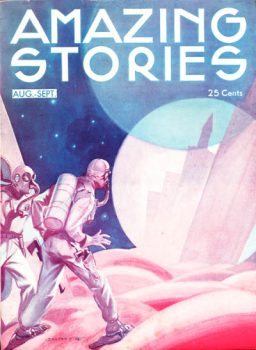
- Amazing Stories: The pioneer, Amazing was known for its "scientifiction" ethos, emphasizing scientific accuracy (or at least plausibility) alongside imaginative narratives. Leo Morey’s iconic cover art for the August-September 1933 issue featuring "The Meteor-Men of Plaa" exemplifies the visual style of the era, promising cosmic adventure and technological marvels.
- Astounding Stories: Under the editorship of F. Orlin Tremaine and later, most famously, John W. Campbell Jr., Astounding quickly became a leading force, pushing for more sophisticated plotting, characterization, and scientific rigor. Its pages featured foundational works by authors like Robert A. Heinlein, Isaac Asimov, and A.E. van Vogt, even if Kostkos predated their most famous contributions.
- Wonder Stories: Another Gernsback venture, Wonder Stories often focused on more fantastical elements while still retaining a core of scientific speculation.
- Science Fiction: A later entrant, appearing towards the end of Kostkos’s publishing run, these magazines provided additional avenues for authors to publish their work.
The themes prevalent in 1930s pulp science fiction often reflected the anxieties and aspirations of the time: space exploration, alien encounters (both benevolent and hostile), technological utopias and dystopias, societal collapse and rebuilding, and the impact of scientific advancement on humanity. For an electrical engineer like Kostkos, this genre offered a natural outlet. His professional life involved pushing the boundaries of what was technologically possible, and science fiction provided a canvas to imagine those boundaries stretched even further, or applied in fantastical ways. The leap from designing "display mechanisms" to conceiving "meteor-men" or "earth rehabilitators" is not as vast as it might seem; both require a systematic approach to problem-solving and an imaginative leap into functional design.
The short duration of Kostkos’s publishing career (1933-1940) was not uncommon in the pulp era. Many authors, often hobbyists or those with demanding day jobs, would contribute a flurry of stories before moving on. The sheer volume of material published and the constant demand for new content meant that authors could get published relatively easily, but also that sustained fame was difficult to achieve unless one dedicated their entire career to it.
Damon Knight and the Elegy for the Forgotten
Damon Knight’s 1972 essay, "Goodbye, Henry J. Kostkos, Goodbye," is arguably the most significant piece of "supporting data" for understanding Kostkos’s legacy. Knight (1922-2002) was a highly respected science fiction author, editor, and critic, known for his incisive analysis and his role in shaping the field’s critical discourse. His observation about Kostkos and J. Harvey Haggard was not a critique of their quality but a lament for the vast number of authors who, despite contributing to the genre, are ultimately forgotten by subsequent generations.
Knight’s essay speaks to several truths about literary history:
- The Ephemeral Nature of Pulp Fiction: Designed for rapid consumption and disposal, pulp magazines rarely aimed for literary permanence.
- The Sheer Volume of Authors: The pulp era was a boom time for writers, leading to an incredibly crowded field where only a select few could achieve lasting recognition.
- The Subjectivity of Memory: What one generation cherishes, another might entirely overlook. Knight himself, a voracious reader of the pulps, recognized this fading memory.
- The Importance of Critical Preservation: By naming Kostkos, Knight inadvertently pulled him from the brink of total obscurity, ensuring his name would at least be a footnote in critical discussions about forgotten authors.
Kostkos’s story, therefore, becomes a metonym for the countless imaginative minds that fueled the early days of science fiction, contributing to its rich heritage even if their individual stars did not burn brightly for long.
Critical Reception and Legacy: The Echo of a Fading Name
In the absence of direct "official responses" in the governmental or corporate sense, the "official response" to Henry J. Kostkos’s literary contributions primarily emanates from the critical sphere, specifically through the lens of science fiction scholarship and remembrance. The most significant "response" to Kostkos’s work and existence comes, paradoxically, from its absence in collective memory, a phenomenon poignantly articulated by Damon Knight.
The Silence of Time
For most of his post-1940 life, and for decades after his death, Kostkos’s name largely remained unmentioned in mainstream literary circles or even in the burgeoning field of science fiction criticism. His stories, while published in leading magazines, did not appear to generate sustained discussion, reprints, or critical analysis that would secure his place in the pantheon of science fiction greats. This silence is the most telling "response" of all. It reflects the harsh reality of the pulp era: a prodigious output of stories, many of which were enjoyed by readers at the time but lacked the unique voice, thematic depth, or stylistic innovation to transcend their initial publication.
The titles of his stories—"The Meteor-Men of Plaa," "Earth Rehabilitators, Consolidated"—suggest narratives aligned with the prevalent tropes of the time: extraterrestrial encounters, grand-scale engineering projects, and futuristic problem-solving. While undoubtedly entertaining for their contemporary audience, they likely fit within the established patterns of adventure-oriented science fiction, rather than breaking new ground or challenging genre conventions in a way that would attract enduring critical attention.
Damon Knight’s Elegy as a "Response"
Damon Knight’s 1972 essay "Goodbye, Henry J. Kostkos, Goodbye" stands as the singular, most impactful "official response" to Kostkos’s literary existence. Knight, a foundational figure in science fiction criticism, did not aim to critically re-evaluate Kostkos’s literary merit. Instead, his essay served as a melancholic reflection on the fleeting nature of literary fame within the genre. By naming Kostkos as an example of an author "whose name no longer meant anything to modern readers" despite once being "invested in" by readers like himself, Knight provided a vital, if somber, form of recognition.
Knight’s piece is less a review and more a meta-commentary on the history of science fiction itself. It highlights:
- The Vastness of the Pulp Reservoir: The sheer number of authors who contributed to the early magazines, many of whom have since been forgotten.
- The Shifting Sands of Literary Taste: What resonates with one generation may not with the next, especially in a rapidly evolving genre like science fiction.
- The Unfairness of Memory: Talented individuals contribute to a field’s development, but only a fraction are remembered.
In this sense, Knight’s essay functions as a literary epitaph, ensuring that Kostkos’s name, even if attached to the concept of forgotten authors, is not entirely lost. It is a critical "response" that acknowledges his contribution by highlighting the very challenge of remembering it. Without Knight’s intervention, Kostkos would likely be known only to a handful of dedicated pulp researchers.
The Broader Legacy: A Representative Figure
While Kostkos may not have received direct critical acclaim, his existence and Knight’s commentary confer upon him a different kind of legacy. He represents the unsung heroes of the early genre—the engineers, scientists, hobbyists, and dreamers who, in their spare time, populated the pages of the pulp magazines with their visions of the future. His stories, alongside those of countless others, formed the fertile ground from which later, more celebrated authors would draw inspiration and expand the genre’s horizons.
Therefore, the "official response" to Henry J. Kostkos is not one of laudatory critique, but rather a quiet acknowledgment of his role as a representative figure of the pulp era: a skilled professional who, for a brief, creative interlude, contributed his unique perspective to the foundational texts of science fiction, only to be largely absorbed back into the professional world from which he emerged. His legacy is less about individual masterpieces and more about being a vital thread in the vast, intricate tapestry of early speculative fiction, whose quiet contributions allowed the genre to flourish.
Implications: Lessons from a Forgotten Future
The story of Henry J. Kostkos, an electrical engineer who briefly illuminated the pages of pulp science fiction, carries profound implications for understanding the history of genre literature, the nature of creative endeavor, and the often-unpredictable currents of fame and obscurity. His life serves as a compelling case study that transcends mere biography, offering insights into broader cultural and historical phenomena.
The Intersecting Worlds of Science and Fiction
Kostkos’s dual career path highlights a crucial, foundational aspect of science fiction: its deep roots in scientific and technological progress. As an electrical engineer at Western Electric and Bell Labs, he was immersed in the cutting edge of his time. This direct engagement with innovation likely fueled his imagination, providing a wellspring of plausible (and implausible) technological marvels and scientific concepts for his stories. His ability to seamlessly transition from designing "display mechanisms" to crafting narratives about "meteor-men" underscores the symbiotic relationship between scientific understanding and speculative storytelling. The implication here is that many early science fiction authors were not merely dreamers but often had practical, hands-on experience with the very scientific principles they extrapolated into fictional futures. This grounding in reality often lent a unique texture and credibility to their imaginative worlds, distinguishing science fiction from pure fantasy.
The Ephemeral Nature of Pulp Fame
Damon Knight’s poignant essay about Kostkos serves as a powerful reminder of the transient nature of literary recognition, particularly within the high-volume, disposable culture of the pulp magazines. The implication is that for every Isaac Asimov or Robert A. Heinlein who achieved lasting fame, there were hundreds of equally imaginative writers like Kostkos whose contributions, while significant at the time, were ultimately lost to the relentless march of time. This phenomenon speaks to:
- The Economics of Publishing: Pulps were designed for quick consumption, not canonical preservation.
- The Sheer Volume of Output: The constant demand for new stories meant a crowded field where few could stand out permanently.
- The Shifting Tastes of Readers: What captivated an audience in the 1930s might not resonate with later generations.
- The Lack of Critical Infrastructure: Early genre fiction often lacked the robust critical and academic apparatus that helps preserve literary legacies.
Kostkos’s obscurity implies that the history of science fiction, as it is commonly taught and understood, represents only a fraction of the creative output that truly shaped the genre. It prompts a re-evaluation of how we define and preserve literary heritage, and the criteria by which authors are deemed "important" enough to remember.
The Unsung Architects of Genre
The story of Henry J. Kostkos implies that the foundational blocks of science fiction were not laid by a few titans alone, but by a vast, anonymous workforce of writers. Each story, however brief its moment in the sun, contributed to the genre’s evolving tropes, its lexicon, and its imaginative scope. These "minor" authors, often with demanding day jobs, were essential in creating the diverse and fertile ground from which later masterpieces would spring. Without their collective efforts, the genre might not have developed the breadth and depth it enjoys today. Kostkos, therefore, stands as a representative figure for these unsung architects, whose cumulative efforts forged a literary movement.
A Challenge to Historical Narratives
Finally, Kostkos’s story poses a challenge to simplified historical narratives that often focus exclusively on the "great men" and "great works." It encourages a more nuanced and inclusive understanding of literary history, one that acknowledges the complex interplay of individual contributions, market forces, and the vagaries of memory. The implication is that true historical inquiry requires digging deeper than the most prominent names, to unearth the myriad voices that collectively shaped a cultural phenomenon. In doing so, we gain a richer, more accurate picture of the past, appreciating the full spectrum of creativity that pulsed through the pulp era.
In essence, Henry J. Kostkos, the engineer who wrote about meteor-men and earth rehabilitators, serves as a quiet but powerful testament to the forgotten majority—those whose contributions, while not immortalized, were nonetheless indispensable in building the imaginative worlds we continue to explore. His legacy is not one of individual fame, but of collective contribution, reminding us that even in obscurity, there is profound historical value.