
The Feral Heart of the Imperium: Unveiling the Mysteries of the Space Wolves’ Canis Helix
Fenris, Segmentum Obscurus – Deep within the frost-bitten heart of the Imperium, where sagas are forged in blood and ice, stand the Vlka Fenryka – the Space Wolves. Renowned for their ferocity, their unbreakable bonds, and their often-strained relationship with the wider Imperium, these Adeptus Astartes are as gifted as they are cursed. At the core of their unique physiology and combative spirit lies one of the Imperium’s most perplexing genetic mysteries: the Canis Helix, a potent, yet perilous, deviation of the standard Space Marine gene-seed.
Today, we delve into the genetic labyrinth that defines the Sons of Russ, examining the very essence of their being, the ancient origins of their mutation, the trials that forge them, and the unending struggle against the beast within – the dreaded Curse of the Wulfen.
The Cornerstone of the Astartes: Gene-Seed Explained
To truly comprehend the Space Wolves’ peculiar nature, one must first understand the foundational element of all Adeptus Astartes: the gene-seed. This miraculous biological material is the very essence of a Space Marine Chapter, containing the genetic blueprints for the nineteen specialized organs that transform a mere human recruit into a superhuman warrior. Each of these organs, from the secondary heart and ossmodula to the omophagea and progenoid glands, confers distinct biological enhancements, enabling the Astartes to survive the most hostile environments and perform feats of combat beyond mortal imagining.
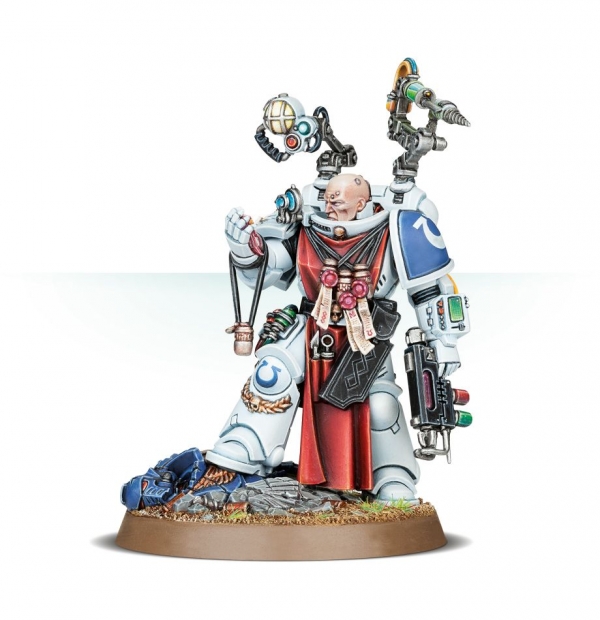
Gene-seed is not merely a biological blueprint; it is a Chapter’s most precious and jealously guarded resource. Its conservation is paramount, facilitated by the progenoid glands. Every Space Marine carries two such glands – one in the neck and one in the chest – which mature over time, absorbing genetic information from the other implanted organs. Upon a Battle-Brother’s demise, these glands are carefully extracted by Apothecaries and returned to the Chapter’s fortress-monastery, where they are cultured and processed to create new gene-seed, perpetuating the Chapter’s existence. This cyclical process ensures the continuity of the Adeptus Astartes, making the gene-seed a literal lifeline for the Emperor’s Angels of Death.
While the core principles of gene-seed are universal, variations exist. Many Chapters exhibit unique gene-seed flaws, leading to physiological and behavioural differences among their Marines. Some of these are purely cosmetic, such as the albinism of the Death Spectres. Others, however, possess far more profound implications, acting as both a boon and a bane. The Space Wolves, with their Canis Helix, stand as a prime example of such a dramatic divergence, their very existence intertwined with its volatile nature. The stability of gene-seed also varies significantly across Chapters; the Ultramarines, descended from the most genetically pure lineage, are widely regarded as having the most stable gene-seed, making them the preferred source for founding new Space Marine Chapters, a stark contrast to the Vlka Fenryka.
The Fenrisian Enigma: History and Properties of the Canis Helix
The Canis Helix is not merely a flaw; it is an intrinsic part of the Space Wolves’ identity, a mutation of their primarch, Leman Russ’, unique genetic heritage. It grants them abilities that surpass even those of other Space Marines, yet constantly threatens to drag them down into bestial madness.
Origins of the Feral Gift
The exact origins of the Canis Helix are shrouded in myth and the mists of Fenris, the Space Wolves’ brutal homeworld. It is believed to be a direct manifestation of Leman Russ’s own feral nature and the untamed spirit of Fenris itself, a planet whose native fauna are legendary for their savagery. Unlike the controlled, sterile implantation procedures of most Chapters, the Canis Helix’s integration into an Aspirant is a violent, transformative ordeal, designed to embrace and channel the primordial essence of their lineage.
The Test of Morkai and the Initial Transformation
The journey to becoming a Space Wolf begins with the gruelling "Test of Morkai." Unlike other Chapters where aspirants might undergo a series of surgical implants, the Fenrisian initiation is a primal rite of passage. Aspirants, young warriors chosen from the tribes of Fenris, are made to drink a potent concoction from the "Cup of Wulfen," a formula infused with the Canis Helix. This initiates a horrifying and rapid transformation. Bones crack and buckle, thick hair erupts across their bodies, and their senses sharpen to an impossible degree. Their minds are assaulted by primal urges, a ravenous hunger for raw meat and blood, and an overwhelming instinct to revert to a bestial state.
During this violent metamorphosis, the Aspirants are cast into the unforgiving Fenrisian wilderness. The Test of Morkai is not merely about survival in harsh conditions; it is a brutal trial of self-control. The Aspirant must prove their ability to master the burgeoning beast within, to navigate the frozen wastes while battling the overwhelming urge to succumb to their feral side. Those who fail, whose minds are consumed by the primal urges of the Helix, become "Wulfen" – monstrous, wolf-like creatures lost to their humanity, forever banished to roam the wilds of Fenris, hunted and sometimes even revered as grim omens. Only those who return to the Fang, the Space Wolves’ colossal fortress-monastery, having demonstrated mastery over the nascent beast, are deemed worthy to receive the remaining, stabilizing gene-seed implants. Without the initial, hazardous implantation of the Canis Helix, these subsequent components are utterly ineffective.
Manifestations of the Helix: From Aspirant to Long Fang
The Canis Helix continues to shape a Space Wolf throughout their life, driving a series of ongoing transformations. Beyond the initial hyper-acute senses of smell and hearing, the Helix gifts them with elongated, razor-sharp canines capable of denting plasteel armour, and their skin gradually thickens, becoming leathery and resilient. Their ferocity in battle is legendary, a direct consequence of the Helix’s influence, allowing them to tap into a primal rage that amplifies their strength and aggression.
As a Space Wolf gains experience and ages, these transformations become more pronounced. Their hair turns grey, their fangs grow even longer, and their skin becomes increasingly hardened. A warrior reaching this stage, having survived countless battles and matured into a seasoned veteran, is typically elevated to the rank of Grey Hunter, embodying the balanced ferocity and control characteristic of the Space Wolves.
The Helix’s influence extends to other paths as well. In some Wolves, it fosters a brooding, solitary demeanour, making them ill-suited for the close camaraderie of a standard Wolf Pack. These individuals often become Wolf Scouts, operating as elite recon units, their heightened senses and independent nature perfectly suited to isolated operations behind enemy lines. By the time a Wolf is considered fully mature, their fangs have reached their maximum length, and their hair is long and grey, signifying their ascension to the ranks of the Long Fangs – the Chapter’s venerable heavy weapons specialists, whose experience and calm under fire are as legendary as their strength.
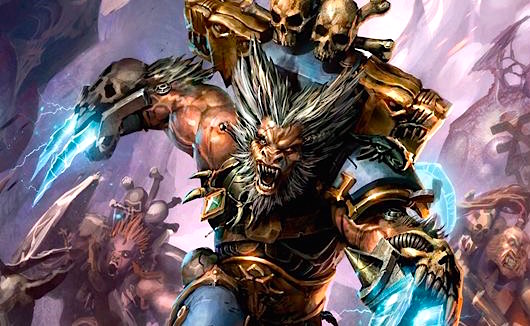
The Shadow of the Beast: The Curse of the Wulfen
Despite their immense power and the rigorous training, no Space Wolf is ever truly free from the risk of the Curse of the Wulfen. The beast within constantly lurks, ever-present, ready to surface in moments of extreme stress, terror, or bloodlust. A Battle-Brother can, in the throes of a brutal engagement, suddenly feel the primal urges resurface, their human mind threatening to collapse under the weight of the Helix’s untamed power.
This ever-present threat highlights the crucial role of the Wolf Priests. These unique Chapter officers combine the duties of an Apothecary and a Chaplain, serving as both healers and spiritual guardians. It is their solemn duty to watch over their Battle-Brothers, particularly during the intensity of combat, reminding them of their humanity and guiding them away from the precipice of the Curse. They administer rites and chants, physically intervene if necessary, and are the only ones permitted to deliver the Emperor’s Mercy to a brother who has fully succumbed, seeing it as a necessary evil to preserve the Chapter’s honour and prevent the spread of uncontrolled savagery.
Whispers of the Warp: The Rune Priests
Curiously, the Canis Helix is also speculated to be linked to the unique psychic abilities found within the Space Wolves, manifesting in their enigmatic Rune Priests. Unlike the Librarians of other Chapters, who channel the raw energies of the Warp through disciplined psychic techniques, Rune Priests draw their power from the "spirits of Fenris" – the elemental forces of their homeworld, the frozen winds, and the grinding ice. It is theorized that a latent, subtle irregularity within the Canis Helix, perhaps a side effect of its inherent instability, predisposes certain Space Wolves to this unique form of psychic attunement, further distinguishing them from their brethren across the Imperium. This connection reinforces the idea that the Helix is not merely a genetic flaw, but a fundamental aspect of the Fenrisian identity, shaping both body and soul.
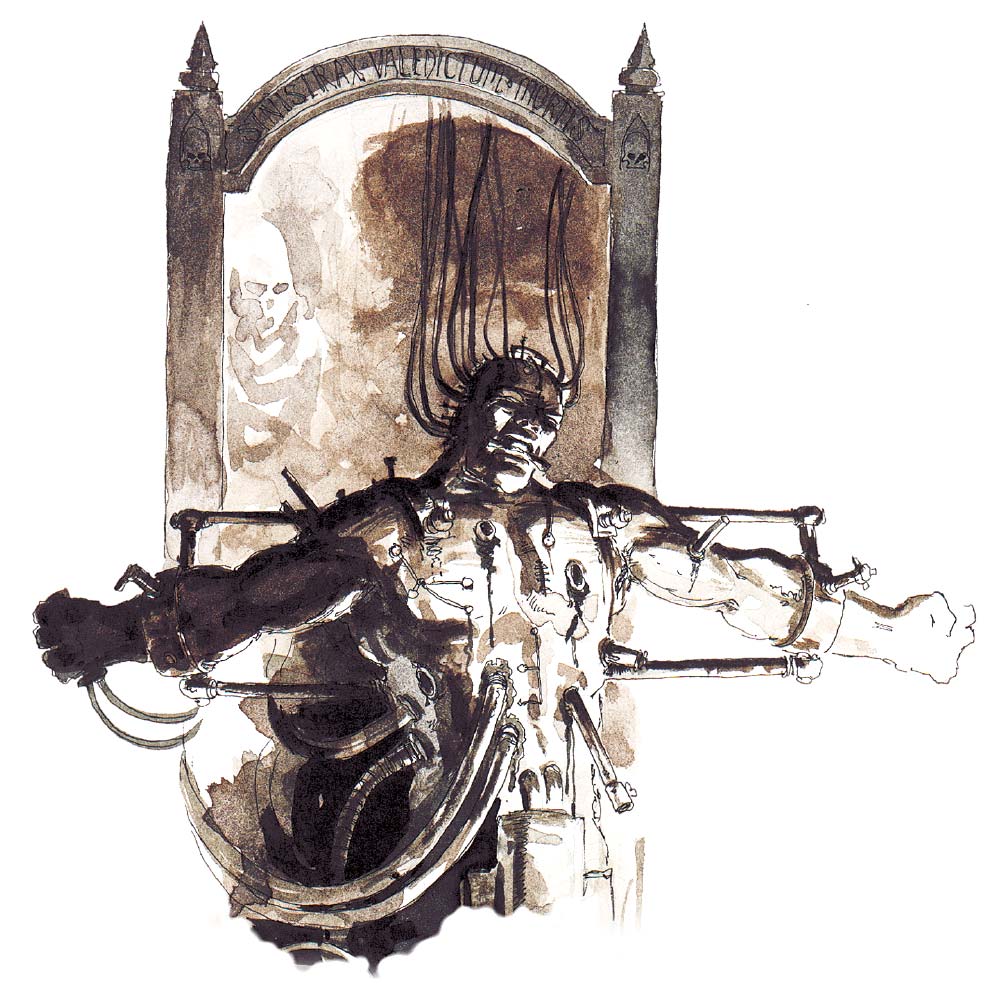
A Failed Experiment: The Tempering and the Wolf Brothers
The inherent instability of the Canis Helix has always been the Space Wolves’ greatest strength and their most significant vulnerability. This duality has profoundly impacted their history, particularly their attempts to create Successor Chapters.
The Aftermath of Heresy: A Need for Successors
Following the cataclysmic events of the Horus Heresy, the Imperium was left reeling. In an effort to prevent any single Legion from ever again wielding such devastating power, Roboute Guilliman, the Primarch of the Ultramarines, codified the Codex Astartes. This monumental doctrine mandated the division of the monolithic Legions into smaller, more manageable Chapters. The intent was clear: to create a vast network of Space Marine Chapters, each capable of defending the Imperium, but none possessing the numbers or centralized authority to challenge the Imperial Throne.
The Tragedy of the Wolf Brothers
In compliance with these new dictates, the Space Wolves, like their brethren Legions, made their first and, as it transpired, only attempt to create a Successor Chapter. The "Wolf Brothers" were formed, intended to be the vanguard of a new lineage, propagating the unique spirit and martial prowess of the Vlka Fenryka across the stars. However, the experiment proved to be a catastrophic failure. Lacking the careful oversight and unique environmental influences of Fenris, or perhaps simply unable to cope with the raw, untamed power of their progenitor’s gene-seed, the Wolf Brothers swiftly succumbed to the Curse of the Wulfen. Their Chapter dissolved into a scattered host of bestial monsters, a horrifying testament to the Canis Helix’s untameable nature. This disaster instilled a deep-seated distrust and reluctance within the Space Wolves regarding the creation of any further Successor Chapters, effectively isolating their genetic line for millennia.
Thar Hraldir’s Ambition: The Tempering Project
Millennia later, in M32, a radical project known as "The Tempering" emerged from the secretive depths of the Fang. Initiated by Thar Ariak Hraldir, the then Wolf High Priest of the Space Wolves, the project aimed to finally control the instability of the Canis Helix, to mitigate the Curse of the Wulfen, and perhaps, pave the way for stable Successor Chapters. Hraldir, a brilliant if controversial figure, believed he was on the cusp of a breakthrough, developing techniques and genetic alterations to stabilize the volatile gene-seed. The project was shrouded in absolute secrecy, deemed too sensitive and potentially heretical to be openly discussed, lest it provoke outrage from within the Chapter or scrutiny from the wider Imperium. It held the approval of both Wolf Lord Vaer Greyloc and the Great Wolf, Harek Ironhelm, who, despite the historical failures, recognized the strategic benefits of a more stable gene-seed.
Magnus’s Intervention and Bjorn’s Fury
The fate of The Tempering, however, was sealed by an external, malevolent force. During the infamous Battle of the Fang, a monumental siege of the Space Wolves’ homeworld, Magnus the Red, Primarch of the Thousand Sons and ancient rival of Leman Russ, led a devastating assault. Magnus, acutely aware of the Space Wolves’ genetic peculiarities and perhaps fearing the proliferation of a stabilized, potent lineage, made a deliberate point of targeting and destroying Hraldir’s laboratory. He not only razed the facility but also personally slew Thar Hraldir, ensuring that the secrets of The Tempering would die with him, before proceeding to assault the very heart of the fortress.
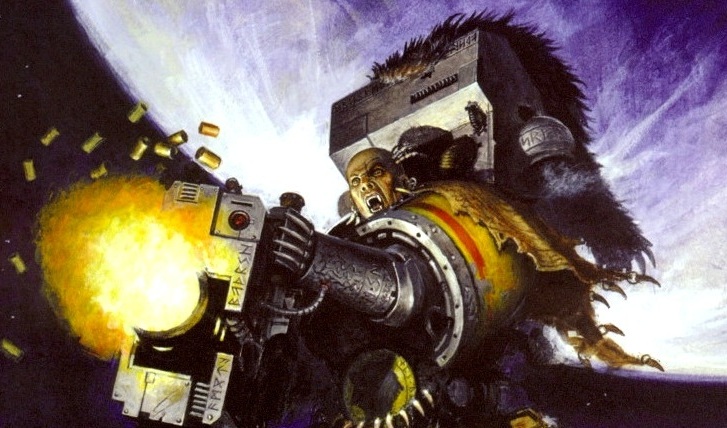
The destruction was absolute, yet the project’s existence ignited fierce debate even within the Chapter. Bjorn the Fell-Handed, the ancient, venerated Dreadnought and last living member of Russ’s original retinue, was incandescent with rage upon learning of The Tempering. He condemned it as a profound betrayal of their Primarch, Leman Russ, and the very essence of the Vlka Fenryka. Bjorn famously declared that had Magnus not destroyed the laboratory, he would have done so himself, believing that to tamper with the Canis Helix was to diminish their spirit and deny the unique, albeit dangerous, gift of their progenitor.
Uncertain Legacy
The ultimate success of The Tempering remains an unanswered question. Even a mortal "kaerl" (a human retainer) of the Space Wolves, Morek Karekborn, who witnessed some of Hraldir’s prototype Space Marines, found them terribly unnatural. He observed that they lacked the feral potency and primal aura he was accustomed to sensing from true Space Wolves, perceiving them as somehow diminished. Hraldir himself admitted that he had not yet fully stabilized his test subjects to the point where they could survive independently, though he maintained he was close. Thus, whether The Tempering would have truly succeeded in its ambitious goal, even without Magnus’s devastating intervention, is a matter of profound historical speculation.
The New Era: Primaris Marines and the Enduring Curse
In the 41st Millennium, the Imperium faced its gravest threats yet. The return of Roboute Guilliman, Lord Commander of the Imperium, heralded a new age of martial resurgence and genetic innovation. Guilliman, recognizing the slow genetic degradation and logistical challenges facing the existing Space Marine Chapters, initiated the "Primaris Project," a monumental undertaking by the Archmagos Dominus Belisarius Cawl.
Guilliman’s Return and Cawl’s Innovation
The Primaris Marines represent a new breed of Adeptus Astartes, genetically engineered to be larger, stronger, and possess an even greater level of genetic stability than their "Firstborn" cousins. Cawl’s work, utilizing the ancient and potent genetic material preserved within the "Sangprimus Portum," aimed to create Space Marines largely free from the defects and flaws that had plagued many Chapters for millennia. The chance of genetic deviancy for Primaris Marines was an astonishingly low 0.001%, a testament to Cawl’s genius and the advanced nature of the genetic material. This breakthrough offered the tantalizing possibility of overcoming some of the most enduring and debilitating flaws across the Astartes Chapters.
Hopes for the Vlka Fenryka
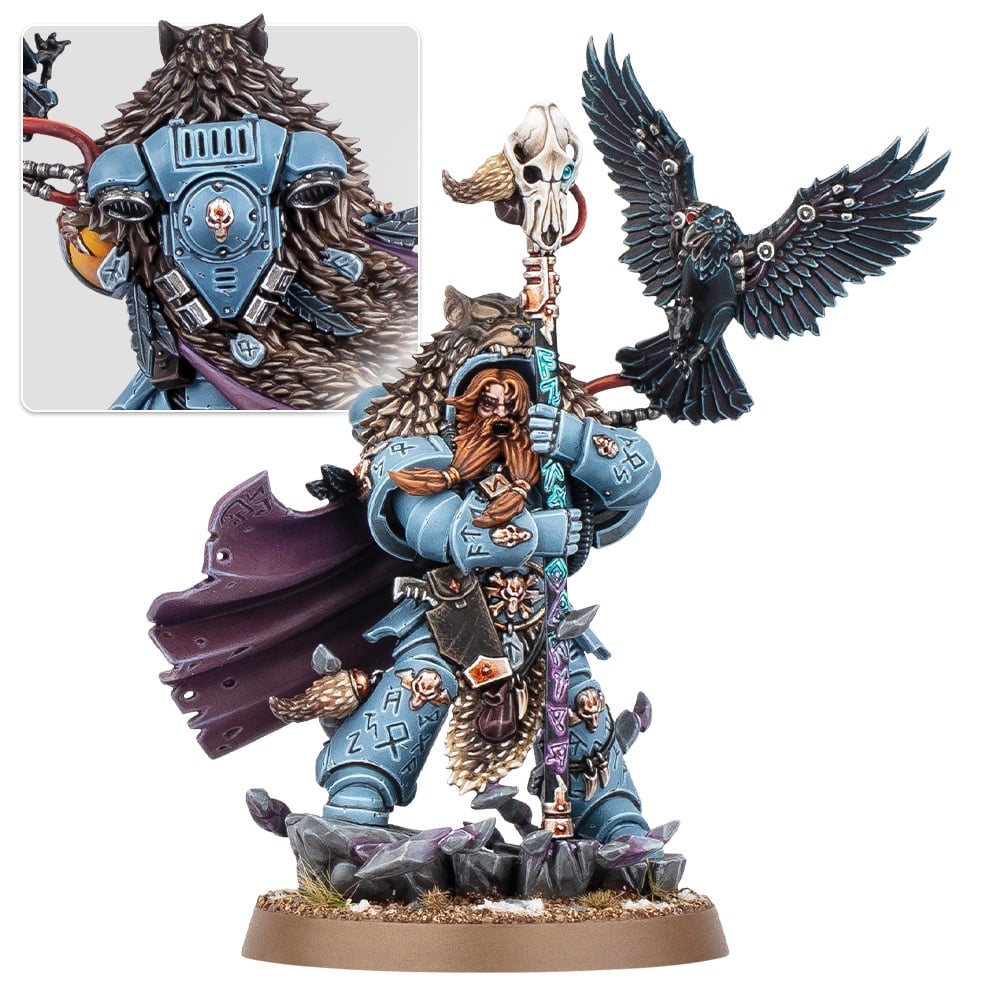
For the Space Wolves, the advent of Primaris technology presented a glimmer of hope. Could this new, highly stable gene-seed finally mitigate the relentless grip of the Canis Helix? Could the Primaris form provide a pathway to a future where the Curse of the Wulfen was no longer an ever-present threat, allowing the Vlka Fenryka to expand their numbers without the tragic consequence of creating more Wulfen or doomed Successor Chapters? The potential implications were profound, promising a new era of strength and genetic purity for the Sons of Russ.
The Inescapable Truth
However, the unique and deeply ingrained nature of the Canis Helix proved to be more resilient than even Cawl’s prodigious intellect or the Sangprimus Portum’s potency could overcome. After extensive trials conducted by the vigilant Wolf Priests, the inescapable truth emerged: even the new Primaris scions of Leman Russ would ultimately suffer the Curse of the Wulfen. While the Primaris enhancements might offer a slightly different manifestation or perhaps a reduced incidence of the Curse, the underlying genetic imperative remained. The beast within could not be entirely purged. The Canis Helix, intertwined with the very soul of their Primarch, proved immutable. This revelation solidified the Space Wolves’ enduring struggle, confirming that their unique heritage, with its inherent dangers, would continue to define them, regardless of technological advancement.
Conclusion: The Enduring Saga of the Space Wolves
The Canis Helix stands as a testament to the complex and often dangerous nature of genetic manipulation in the Warhammer 40,000 universe. For the Space Wolves, it is not merely a genetic quirk but the very core of their identity – a fierce, untamed power that fuels their legendary prowess in battle, sharpens their senses to unnatural degrees, and binds them irrevocably to the spirit of their feral homeworld, Fenris.
Yet, it is also a perpetual curse, a shadow that haunts every Son of Russ, threatening to drag them into a horrifying, bestial transformation. From the brutal "Test of Morkai" that initiates their journey to the constant vigilance of the Wolf Priests, the Vlka Fenryka live a life defined by this duality. The tragic failure of the Wolf Brothers and the ultimately thwarted ambition of "The Tempering" underscore the deep-seated, almost sacred, resistance of their gene-seed to external modification. Even the revolutionary advancements of the Primaris Marines, designed to stabilize and enhance, have found themselves unable to fully tame the wild spirit of the Canis Helix.
The Space Wolves remain an anomaly, a Chapter both revered and feared, their existence a testament to their Primarch’s untamed legacy. As Magnus the Red once famously, and derisively, declared, "There are no wolves on Fenris." Perhaps not in the literal sense, but within the hearts and blood of the Vlka Fenryka, the spirit of the wolf – wild, powerful, and ever-dangerous – undeniably thrives. Their saga is one of constant struggle, a balance between the superhuman and the bestial, making them one of the Imperium’s most compelling and enduring forces.

Leave a Comment