The Final Curtain Falls for a Cinematic Powerhouse: Remembering Michael Wright (1954–2024)
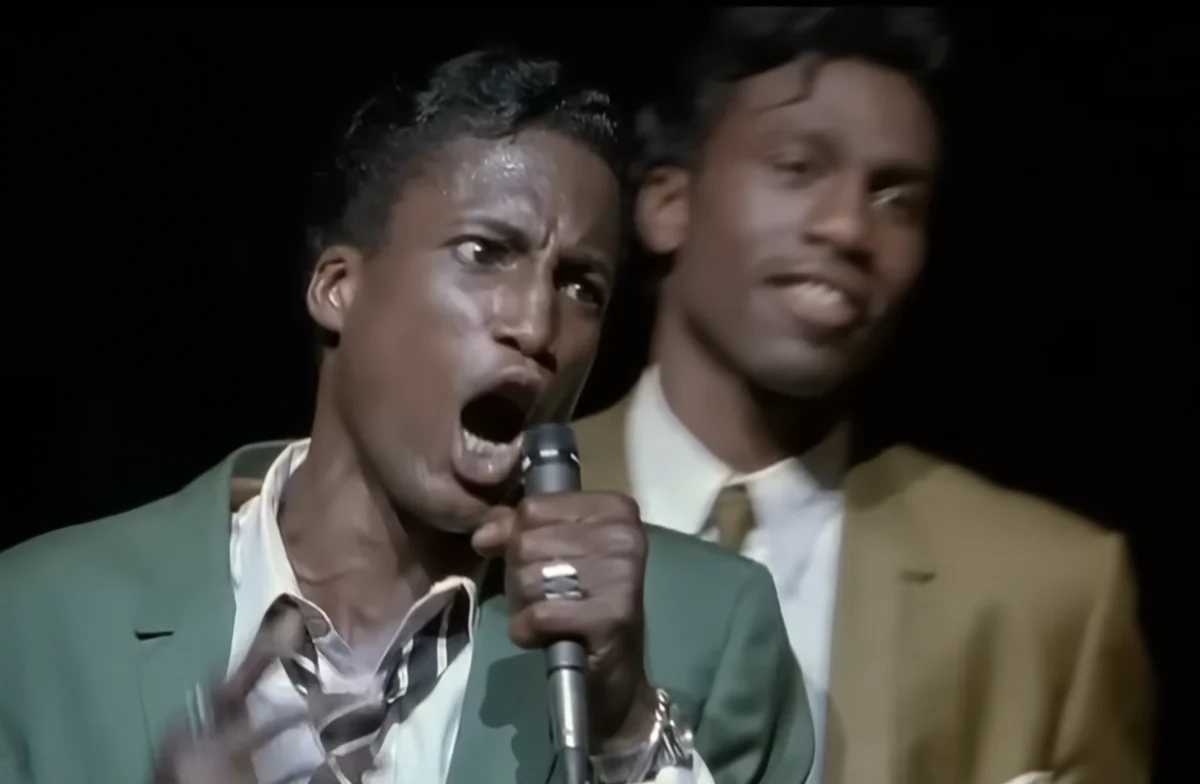
The world of cinema and television is mourning the loss of Michael Wright, a transformative actor whose career spanned over four decades and left an indelible mark on the landscape of American drama. Wright, perhaps best known for his hauntingly visceral portrayal of Eddie King Jr. in the 1991 musical drama The Five Heartbeats, passed away on August 17, 2024, at the age of 70. His death, confirmed by his family, was attributed to heart failure.
In an industry often defined by fleeting stardom, Wright was a "performer’s performer"—an actor who prioritized the psychological depth of his characters over the glitz of celebrity. From the gritty streets of the Bronx in The Wanderers to the high-stakes tension of HBO’s Oz, Wright possessed a mercurial talent that could shift from quiet vulnerability to explosive rage in a single heartbeat.
Main Facts: The Passing of a Legend
The announcement of Michael Wright’s passing came through a poignant social media tribute from his wife, Susan Wright. In an Instagram post that resonated with fans and colleagues alike, she expressed the gravity of the loss: “It is with profound sadness and an unimaginable heaviness in my heart that I share the passing of my beloved husband, Michael Wright.”
Wright died on August 17, leaving behind a legacy as an "extraordinary artist whose work touched generations." He was 70 years old, a milestone that saw him still revered as a cult icon within the Black cinema community and a respected veteran among his peers in Hollywood. He is survived by his wife, Susan, and a large family, including children Manon Wright, Byron Barr, Brittney Briggs, Brianna Barr, and Sir Barr, as well as his grandchild, Yoko.
The cause of death, heart failure, marks the end of a life dedicated to the craft of storytelling. Wright was a man who lived through his characters, often disappearing so completely into a role that audiences struggled to separate the man from the screen persona.
Chronology: A Career Defined by Depth and Versatility
Michael Wright’s journey through the entertainment industry was marked by a series of high-water marks that demonstrated his range across various genres, including coming-of-age dramas, science fiction, war films, and gritty television procedurals.
The Formative Years (1979–1983)
Wright’s cinematic debut came in 1979 with The Wanderers, Philip Kaufman’s cult classic about street gangs in the 1960s Bronx. Playing the character Clinton, Wright showcased an early ability to hold his own in an ensemble cast, bringing a sense of realism to the stylized urban drama.
However, it was the 1983 film Streamers, directed by Robert Altman, that solidified Wright’s status as a serious dramatic force. Set in a paratrooper shack during the Vietnam War, the film explored themes of racial tension, masculinity, and the existential dread of impending combat. Wright’s performance was part of an ensemble that achieved a rare feat: the entire lead cast was collectively awarded the Volpi Cup for Best Actor at the Venice Film Festival. This early recognition placed him in the upper echelon of character actors.

The Rise of a Sci-Fi Icon (1983–1985)
In the mid-1980s, Wright transitioned to television, becoming a household name through the groundbreaking sci-fi franchise V. Playing Elias Taylor, a former criminal turned resistance fighter, Wright provided the emotional and moral groundedness for a series centered on an alien invasion. He reprised this role in V: The Final Battle and V: The Series, earning a dedicated fan base within the science fiction community.
The Career Zenith: The Five Heartbeats (1991)
The 1990s brought what would become Wright’s most enduring contribution to pop culture. In Robert Townsend’s The Five Heartbeats, Wright portrayed Eddie King Jr., the lead singer of a rising R&B group. The role was a tour de force, requiring Wright to navigate the dizzying highs of musical stardom and the devastating lows of drug addiction and professional betrayal. His performance of the song "A Heart Is a House for Love" (dubbed by singer Charles Linton) remains one of the most emotionally charged moments in musical cinema.
The HBO Era and Beyond (2001–2020)
In the latter stages of his career, Wright found a new home in the "Golden Age of Television." From 2001 to 2003, he starred in HBO’s Oz as Omar White, a volatile and musically gifted inmate. The role allowed Wright to tap back into the "tortured artist" archetype he had mastered a decade earlier, providing a tragic and complex arc in the notoriously brutal prison drama.
His later years included guest spots and recurring roles in series such as Black Lightning, where he continued to bring a sense of gravitas to the screen, and roles in films like The Interpreter (2005) alongside Nicole Kidman and Sean Penn.
Supporting Data: The "Denzel" Connection and the Craft
One of the most fascinating anecdotes of Wright’s career involves the casting of The Five Heartbeats. In a 2021 interview with Sheen Magazine, Wright revealed that the iconic role of Eddie King Jr. was originally intended for future Academy Award winner Denzel Washington.
The shift occurred due to a serendipitous meeting at a restaurant called "Jezebel," owned by Wright’s mother. Director Robert Townsend was dining there when Wright invited him back to his apartment to view a screening of a film he had shot in Japan titled Bedtime Lies.
Townsend was so mesmerized by Wright’s performance that he immediately reconsidered his casting choice. "Mike, Mike, Mike… this is the most amazing acting that I have ever seen," Townsend reportedly said. He told Wright that while the role was written for Denzel, Wright was the character. Six months later, Townsend called Wright with a simple question: "Are you ready?" Wright’s response—“I’m an actor, I’m always ready”—became a testament to his professional ethos.
Filmography Highlights
- The Wanderers (1979): Clinton
- Streamers (1983): Carlyle (Venice Film Festival Volpi Cup Winner)
- V (1983-1985): Elias Taylor
- The Principal (1987): Victor Duncan
- The Five Heartbeats (1991): Eddie King Jr.
- Sugar Hill (1993): Raynathan Skuggs
- Oz (2001-2003): Omar White
- The Interpreter (2005): Marcus
Official Responses and Industry Tributes
The news of Wright’s death triggered a wave of tributes from those who worked alongside him. While Hollywood often moves at a breakneck pace, the silence following Wright’s passing was filled with respect for his technical proficiency.

Susan Wright’s concluding remarks in her announcement served as a fitting eulogy: “Michael, your work will live forever, but your love will live even longer in the hearts of those who knew you best. Rest peacefully, my love. You will be missed beyond words.”
Robert Townsend, who arguably gave Wright his most significant platform, has frequently spoken of Wright’s "lightning in a bottle" energy. Colleagues from Oz and The Five Heartbeats have often described him as a "generous" scene partner who pushed everyone around him to be more authentic. Fans on social media have spent the days following his passing sharing clips of his "Eddie King Jr." monologues, noting how his performance captured the soul of the 1960s music scene with haunting accuracy.
Implications: The Legacy of a Character Actor
The death of Michael Wright highlights a specific type of loss in the acting world. He was a "bridge" actor—someone who connected the gritty, Method-influenced cinema of the 1970s with the high-concept television of the 21st century.
Impact on Black Cinema
Wright’s portrayal of Eddie King Jr. remains a cornerstone of Black cinematic history. At a time when roles for Black actors were often relegated to two-dimensional tropes, Wright insisted on complexity. He portrayed addiction not as a character flaw, but as a tragic consequence of a predatory industry and personal demons. For many young Black actors, Wright’s performance in The Five Heartbeats served as a masterclass in how to command the screen with dignity, even when playing a character at their lowest point.
The "Oz" Effect
By joining the cast of Oz, Wright participated in the revolution of cable television. His role as Omar White helped set the stage for the morally ambiguous anti-heroes that would later define shows like The Wire and Breaking Bad. He proved that an actor could be both terrifying and sympathetic, a duality that is now a staple of modern drama but was rare at the time.
Final Reflections
Michael Wright was never a "blockbuster" star in the traditional sense, but his influence was perhaps more profound because of it. He was a craftsman who valued the integrity of the scene over the size of the paycheck. As the industry reflects on his passing, the consensus is clear: Wright was a titan of the screen whose intensity was matched only by his dedication to the truth.
His body of work stands as a permanent archive of a man who was "always ready" to give everything to his art. While the actor has left the stage, the echoes of his performances—the desperate plea of a singer in the rain, the defiant stare of a soldier, the chaotic energy of an inmate—will continue to resonate for as long as stories are told on film.