
The Great Divide: Norakuro, the Manga Shūdan, and the Construction of Modern Manga History
The history of Japanese manga is often viewed through the lens of a single, transformative figure: Tezuka Osamu. Known as the "God of Manga," Tezuka is frequently credited with inventing the cinematic style and narrative depth that define the medium today. However, as contemporary manga scholar and critic Natsume Fusanosuke argues, this "Tezuka-centric" narrative often obscures a much richer, more contentious landscape that existed in the prewar and interwar years.
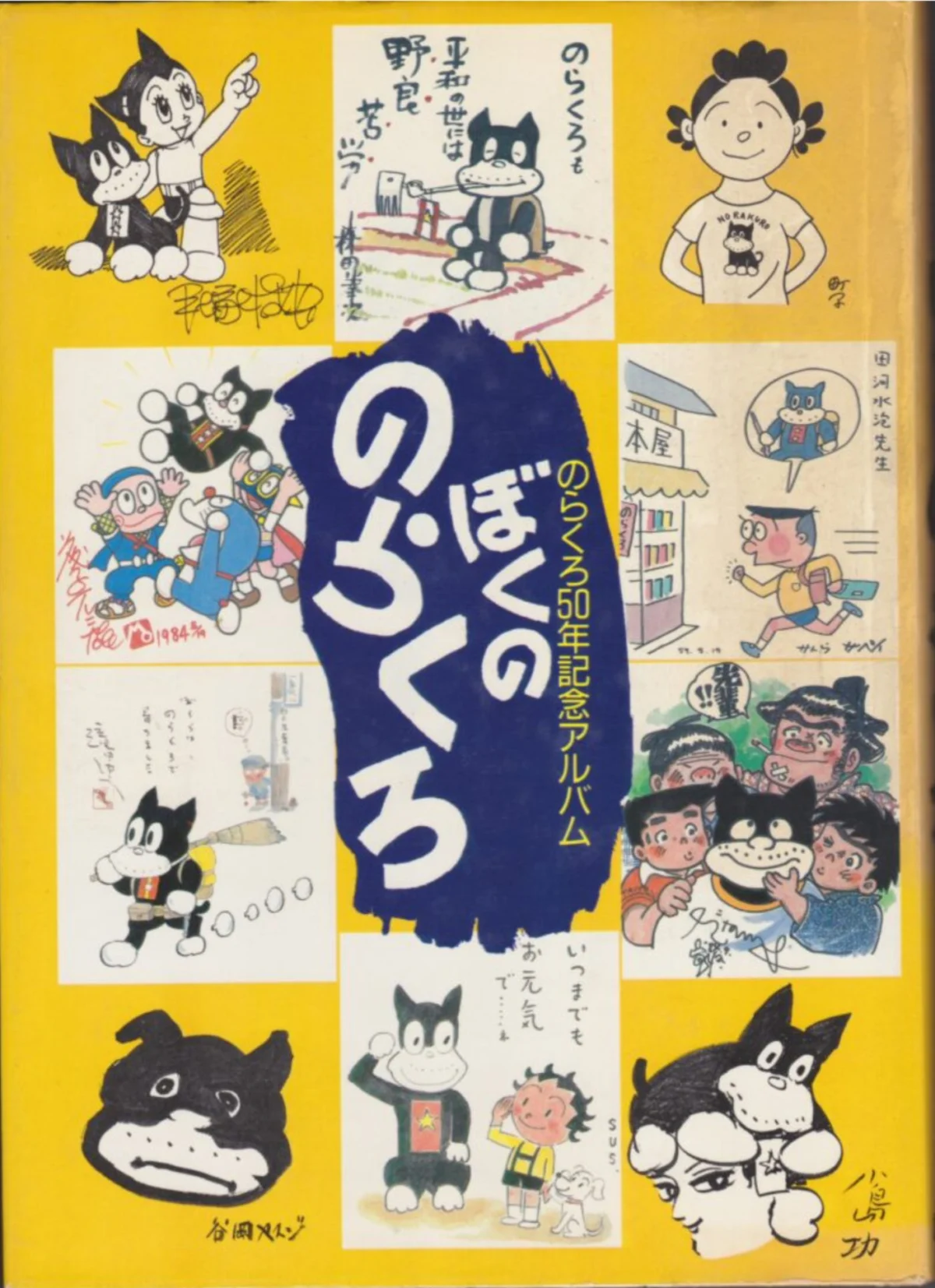
In a profound re-examination of the 1984 commemorative volume, My Norakuro: 50th Anniversary Norakuro Album, Natsume delves into the ideological and aesthetic bifurcations of the 1930s. By analyzing a historic "crosstalk" between the titans of the era, Natsume reveals a hidden friction between the creators of "children’s manga" and the sophisticated "Manga Shūdan" (Manga Group). This exploration serves as a vital piece of historiography, reminding us that the road to modern manga was paved with professional rivalries, cultural snobbery, and a deep-seated divide between homegrown sensibilities and Western-influenced modernism.
The Main Facts: A Landmark Commemoration
The catalyst for this historical inquiry is a B5-sized hardcover book published by Kodansha in 1984. Entitled My Norakuro, the volume celebrated the 50th anniversary of one of Japan’s most iconic prewar characters: Norakuro, or "Black Stray." Created by the pioneer Tagawa Suihō, Norakuro followed the adventures of an anthropomorphic black dog in the imperial army. It was serialized in Shōnen Club (Boy’s Club) from 1931 to 1941, becoming a commercial juggernaut that defined the childhood of an entire generation.
The 1984 album was a rare convergence of eras. At the time of publication, Tagawa Suihō was still alive at 85 years old. The book featured contributions from a "Who’s Who" of the manga world, including Hasegawa Machiko (creator of Sazae-san), Fujiko Fujio (Doraemon), and Tezuka Osamu himself.
Tezuka’s contribution to the volume was particularly noteworthy. While other artists drew Norakuro in their own signature styles, Tezuka chose to perform a perfect mosha (imitation), recreating Tagawa’s style with startling precision. This act was more than a tribute; it was a nod to Tezuka’s own origins as a boy who grew up mesmerized by the "earthy" charm of Tagawa’s work, even as the professional circles he would later join looked down upon it.
Chronology: From the New Manga-School to Postwar Dominance
To understand the tension within the 1984 volume, one must look back to 1932, the year the Shin Manga-ha Shūdan (New Manga-School Group) was formed.
The Rise of the New Manga-School Group (1932)
The group was founded by a collection of ambitious newcomers, including Sugiura Yukio, Kondō Hidezō, and Yokoyama Ryūichi. They positioned themselves as the "edgy," modern alternative to the established guard like Okamoto Ippei. The name itself was a calculated choice; the suffix -ha (school or branch) and the word shūdan (group) were borrowed from the sociological and political jargon of the left-wing and proletarian art movements.
While many of these artists began with Marxist leanings, their primary aesthetic was "nonsense manga"—a genre of adult-oriented, satirical, and often absurd cartoons heavily influenced by American and European traditions. They represented the "buttery" smell of Westernized urban culture, distinct from the traditional "earthy" smell of rural, family-oriented Japan.
The War Years and the Postwar Transition
During World War II, the political edges of the Shin Manga-ha Shūdan were blunted as many members were drafted into creating state propaganda. However, following Japan’s defeat in 1945, the group proved remarkably resilient—or, as Natsume suggests, "irresponsible"—quickly pivoting back to populist and left-leaning themes. After the war, they dropped the "New" from their name, becoming simply the Manga Shūdan.
By the 1950s and 60s, these artists were the gatekeepers of the manga industry. Yet, they remained distinct from the exploding world of story manga being pioneered by Tezuka and his followers. This created a long-standing cultural gap between the "cartoonists" of the Manga Shūdan and the "storytellers" of the new era.
Supporting Data: The 1984 Crosstalk Analysis
The heart of Natsume’s critique lies in a panel interview (or crosstalk) included in the My Norakuro album. The participants included Onozawa San’ichi, Katō Yoshirō, Satō Sanpei, Sugiura Yukio, and Takita Yū, with Nagata Takemaru moderating.
Professional Rivalry and Snobbery
As the veterans discussed Norakuro, a striking honesty emerged regarding their prewar feelings. Sugiura Yukio admitted that as a member of the rising Manga Shūdan, he resented Tagawa Suihō’s massive success. He viewed Tagawa not as a peer, but as a "Kodansha artist"—a term that implied a lack of sophistication.
"As his rival, I didn’t want to recognize Tagawa getting to be so famous," Sugiura noted. This sentiment was echoed by Katō Yoshirō, who admitted that he felt a similar disdain toward Tezuka Osamu during the early postwar years. Katō noted that he and his peers were aiming for "modern American nonsense manga," associated with sophisticated urban magazines like New Youth (Shinseinen). To them, children’s manga was a lesser form of art, one they rarely deigned to read.
The Aesthetic Divide
The divide was categorized by the "smell" of the work. The Manga Shūdan artists prided themselves on the "buttery" (Westernized) scent of their cartoons, which were designed for adult males in the city. Conversely, Norakuro and the offerings of Shōnen Club were "earthy," rooted in domestic sensibilities that appealed to families and rural populations.
Natsume highlights that this wasn’t just a difference in audience, but a fundamental disagreement on what manga should be. The Manga Shūdan prioritized style, satire, and international trends, while the "Kodansha school" focused on narrative, emotional resonance, and mass appeal.
Official Responses and Academic Context
Natsume’s observations align with recent academic shifts in manga studies. In 2025, two major competing histories of the medium were released by scholars Eike Exner and Andrea Horbinski. These works further illuminate the bifurcation that Natsume identifies.
The Internationalist vs. The Domestic
Exner’s work, in particular, emphasizes the degree to which 1930s Japanese comics were influenced by international comic strips. The Manga Shūdan were the primary conduits for this influence. However, as Horbinski notes, the "domestic" stream of manga—the one that eventually led to the global success of modern manga—was largely cultivated in children’s magazines like those published by Kodansha.
The "official" response from the manga establishment of the 1980s, as seen in the commemorative album, was one of polite inclusion. But Natsume’s reading of the text uncovers the subtext: the elite cartoonists of the mid-century were only just beginning to reckon with the fact that the "children’s manga" they once ignored had become the dominant cultural force, while their "nonsense" style was fading into niche territory.
Implications: The Trap of Oversimplification
The primary implication of Natsume’s essay is a warning against simplified historical narratives. When we view manga history as a straight line from Hokusai to Tezuka, we miss the "gap" that existed between the prewar and postwar periods.
The Three-Dimensional View
Natsume argues that to understand manga, one must acknowledge the coexistence of these two popular streams. The Manga Shūdan artists saw children’s manga as indispensable, yet they maintained a distance from it. This tension influenced the postwar scene, creating a environment where Tezuka had to fight for legitimacy among "serious" cartoonists even as he captured the hearts of millions of children.
The Role of Katō Yoshirō
The focus on Katō Yoshirō is particularly poignant. Though largely unknown to North American readers due to a lack of translations, Katō was a ubiquitous figure in Japan, known for works like Mappira-kun and Onboro Jinsei. He served as a bridge, maintaining the traditions of the Manga Shūdan while acknowledging the shifting tides of the industry. His death in 2006 marked the end of an era of artists who had lived through the transition from the "buttery" nonsense of the 30s to the narrative complexity of the modern age.
Conclusion: Approaching History with Care
Natsume concludes that while binary oppositions (Buttery vs. Earthy, Adult vs. Child, Prewar vs. Postwar) make history easier to grasp, they are also a "trap that swallows up the important details." The true history of manga lies in the friction between these groups. By examining the candid, sometimes petty, and often contradictory statements of artists in retrospectives like My Norakuro, scholars can construct a more accurate, three-dimensional view of how Japanese visual culture evolved.
As manga continues to dominate the global stage, understanding these internal divisions is crucial. It reminds us that the medium was never a monolith, but a vibrant, clashing ecosystem of ideas, where the "earthy" smell of a black stray dog eventually mingled with the "buttery" dreams of modernism to create a global phenomenon.


Leave a Comment