The Group Chat Graveyard: How Kayak is Using Public Shaming to Rescue Stalled Holiday Plans
The modern traveler is all too familiar with the "group chat graveyard"—that digital purgatory where ambitious vacation ideas, meticulously shared Airbnb links, and optimistic "let’s do it!" messages go to die. Despite the global surge in travel demand, the transition from a WhatsApp notification to a boarding pass remains one of the most significant friction points in the tourism industry.
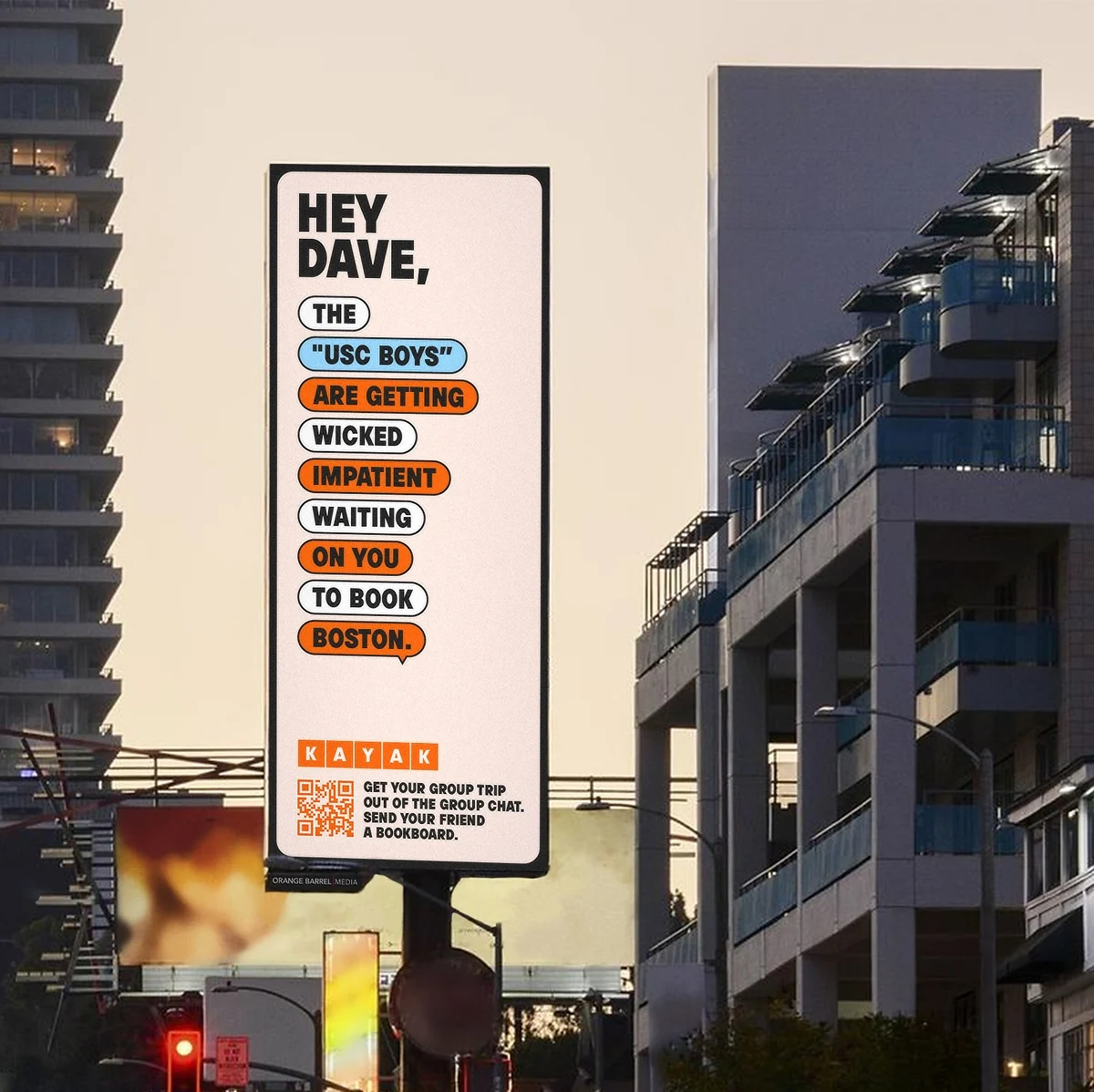
In a bold move to bridge this gap, the travel search engine Kayak has unveiled "BookBoards," a provocative and highly personalized Out-of-Home (OOH) advertising campaign. Created in collaboration with the creative agency Rethink, the initiative utilizes giant digital billboards in major American metropolises to publicly "call out" the one friend in every group who is holding up the booking process. By turning private digital frustration into public accountability, Kayak is betting that a little bit of lighthearted social pressure is the key to converting stalled conversations into confirmed itineraries.
Main Facts: Moving from the Chat to the Departure Gate
The BookBoards campaign is a multi-city experiential marketing push centered in New York, Chicago, and Los Angeles. The core concept is simple yet disruptive: Kayak is inviting users to submit screenshots of their stalled group chats or nominate their most "flaky" friends. Selected nominees then find themselves featured on towering digital billboards in their own neighborhoods or near their places of work, with personalized messages urging them to stop procrastinating and finally book the trip.
This campaign targets the "bottleneck friend"—the individual identified by 90% of travelers as the primary reason group plans fail to materialize. By utilizing hyper-local targeting, Kayak ensures that the reminders are impossible to ignore. A friend in Brooklyn might see their name in lights while walking to their local coffee shop, while a procrastinator in Chicago might be greeted by a digital plea on their morning commute.
To support the physical billboards, Kayak has released a hero film starring comedian and content creator Grace Reiter and her real-life friend, actor Julia Dicesare. The film serves as a comedic manifesto for the campaign, illustrating the lengths to which a frustrated traveler might go to get their friend to commit. Beyond billboards, the campaign features surreal, personalized interventions, including a latte with a friend’s face in the foam and even a trained dog wearing a "Book the Trip" vest.
Chronology: From Digital Stagnation to August Rollout
The genesis of the BookBoards campaign lies in Kayak’s deep dive into consumer pain points. Throughout late 2023 and early 2024, the travel industry noted a peculiar trend: while travel intent was at an all-time high, the "conversion gap" for group travel remained stubbornly wide. Research conducted by Kayak identified that the barrier wasn’t necessarily financial or logistical, but psychological—a phenomenon now referred to as "booking paralysis."
Phase 1: Research and Identification (Early 2024)
Kayak’s data scientists and marketing teams analyzed the lifespan of travel-related queries. They discovered that while individual bookings were streamlined, group-related searches often saw a massive drop-off rate. This led to the commissioning of a study that revealed the staggering "84% failure rate" of group chats, providing the statistical foundation for the campaign.
Phase 2: Creative Partnership with Rethink (Spring 2024)
Recognizing that a standard "low prices" message would not solve the group chat problem, Kayak partnered with Rethink. The agency’s strategy shifted from traditional advertising to "interventional" advertising. The concept of BookBoards was born from the idea of taking a private, digital annoyance and making it a public, physical reality.

Phase 3: Production and Talent Acquisition (June 2024)
The production of the hero film was handled by Drunk Llama, with VFX support from ARC Creative. The choice of Grace Reiter was intentional; her background in relatable, short-form digital comedy mirrored the exact environment (social media and group chats) where the problem exists.
Phase 4: The August Launch (Current)
The campaign officially launched in late July, with the submission portal opening for the public. Throughout August, the billboards in New York, Chicago, and Los Angeles are being updated in real-time with selected user submissions. This "live" element ensures the campaign remains culturally relevant and encourages continuous social media engagement.
Supporting Data: The Psychology of the "Flaky Friend"
The BookBoards campaign is anchored by sobering statistics that reflect the current state of social coordination in the digital age. Kayak’s research provides a roadmap of why this campaign is necessary:
- The 84% Failure Rate: Perhaps the most striking find is that 84% of group trips never make it past the initial chat stage. This suggests that the "group chat" has become a place for aspirational dreaming rather than actual planning.
- The Minority Rule: 90% of travelers surveyed stated that the failure of a trip is usually the fault of a single person. This "bottleneck effect" creates a ripple of frustration that can strain friendships and lead to "vacation envy" when other groups successfully depart.
- The Impact of Social Accountability: Behavioral economics suggests that people are more likely to complete a task when they are held publicly accountable. By moving the "shaming" from a private chat (where it can be ignored or muted) to a 50-foot billboard (which cannot), Kayak is leveraging the "Spotlight Effect"—the psychological phenomenon where individuals believe they are being noticed more than they actually are.
Furthermore, the travel industry is currently navigating the "Paradox of Choice." With thousands of destinations and flight combinations available on Kayak, the sheer volume of options can lead to decision fatigue. For a group of four or five people, this fatigue is multiplied, often leading to the "I don’t care, you decide" loop that eventually kills the momentum of the trip.
Official Responses: Turning Procrastination into Participation
The leadership behind the campaign views BookBoards not just as an advertisement, but as a community service for frustrated travelers.
Tara Lawall, Chief Creative Officer at Rethink New York, emphasized the transition from digital to physical space as the campaign’s core strength. "We loved the idea of turning digital procrastination into a real-world experience that people could participate in, creating a campaign that’s as interactive as it is entertaining," Lawall stated. She noted that the goal was to capture the specific "vibe" of modern friendship—where "calling someone out" is often a sign of affection and a shared desire for adventure.
Representatives from Kayak have also highlighted that the campaign aligns with their mission to make travel planning easier. While their technology simplifies the search for flights and hotels, the BookBoards campaign addresses the "human element" of travel that software cannot always solve. By providing a platform for users to nudge their friends, Kayak positions itself as the "wingman" of the travel world.
The agency partners, including Drunk Llama and ARC Creative, focused on ensuring the tone remained lighthearted. The visual effects and production quality of the hero film were designed to feel cinematic yet grounded in the reality of urban life, making the "surreal" interventions like the trained dog feel like a natural (if absurd) extension of a friend’s desperation.

Implications: The Future of OOH and Social Engineering in Ads
The BookBoards campaign carries significant implications for the future of the advertising and travel industries.
1. The Evolution of Hyper-Personalized OOH
For decades, billboards were the ultimate "mass media" tool—one message for millions of people. Kayak is flipping this script. By using digital screens to display user-generated content (UGC) that targets specific individuals in specific neighborhoods, they are demonstrating the future of "Hyper-Local OOH." This level of personalization increases the "shareability" of the ad; the person being called out is almost guaranteed to post a photo of the billboard to their own social media, giving Kayak free earned media and extending the campaign’s reach far beyond the physical location of the sign.
2. Advertising as "Social Engineering"
Kayak is moving beyond the role of a service provider and into the role of a social facilitator. In an era where digital fatigue is high, brands that can help consumers solve social friction—like a stalled group plan—gain a deeper level of brand loyalty. This suggests a shift in marketing strategy where brands no longer just sell a product (a flight) but solve a behavioral hurdle (procrastination).
3. The "Post-Pandemic" Group Travel Boom
The timing of the campaign is crucial. Following years of restricted travel, there is a "revenge travel" sentiment that favors large group gatherings and "milestone" trips. However, the administrative burden of these trips is higher than ever due to fluctuating prices and changing travel norms. Kayak’s campaign taps into the collective exhaustion of trying to coordinate these complex events, offering a humorous release valve for that tension.
4. The Gamification of Booking
By allowing users to "nominate" friends, Kayak has effectively gamified the booking process. It turns the act of nagging a friend into a potential "viral moment." If this model proves successful, we may see other industries—such as event ticketing or restaurant reservations—adopt similar "call-out" tactics to drive conversions in group-based activities.
Conclusion
Kayak’s BookBoards campaign is a savvy recognition of the fact that in 2024, the greatest obstacle to travel isn’t the price of a ticket or the availability of a hotel—it’s the "Seen" notification in a group chat that goes unanswered for three days. By blending high-tech digital OOH with the low-tech human emotion of "friendly shaming," Kayak and Rethink have created a cultural moment that resonates with anyone who has ever dreamed of a beach in Tulum while staring at a spreadsheet in a cubicle. Whether or not these billboards actually result in more bookings remains to be seen, but they have certainly succeeded in one thing: making sure that the "flaky friend" has nowhere left to hide.