
The Hammer of Justice: Unpacking the Enduring Legacy of Hammurabi’s Code

Paris, France – In the hallowed halls of the Louvre Museum, a towering black diorite stele stands as a silent sentinel to one of humanity’s earliest and most profound attempts at establishing universal justice. This is the Code of Hammurabi, a monumental collection of 282 laws meticulously carved into stone over 3,700 years ago by the Babylonian king Hammurabi (reigned 1792-1750 BCE). While not the very first written legal system, its unparalleled clarity, comprehensive scope, and enduring influence on subsequent civilizations have cemented its status as a cornerstone of legal history, shaping the very concept of "an eye for an eye."
Main Facts: A Glimpse into Ancient Justice
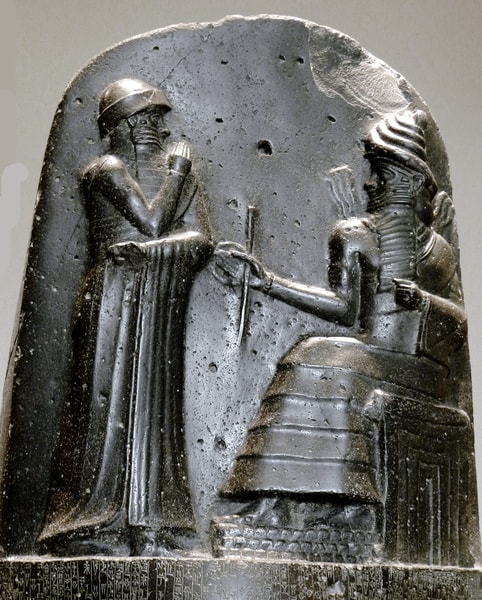
The Code of Hammurabi is far more than a simple list of rules; it is a meticulously structured legal document that provides an extraordinary window into the social, economic, and moral fabric of ancient Mesopotamia. Standing over seven feet tall, the stele is crowned with a striking bas-relief depicting Hammurabi receiving the laws directly from Shamash, the Babylonian god of justice. This iconic imagery immediately establishes the divine provenance of the code, asserting that these were not arbitrary decrees of a mortal king but rather sacred edicts handed down from the heavens.
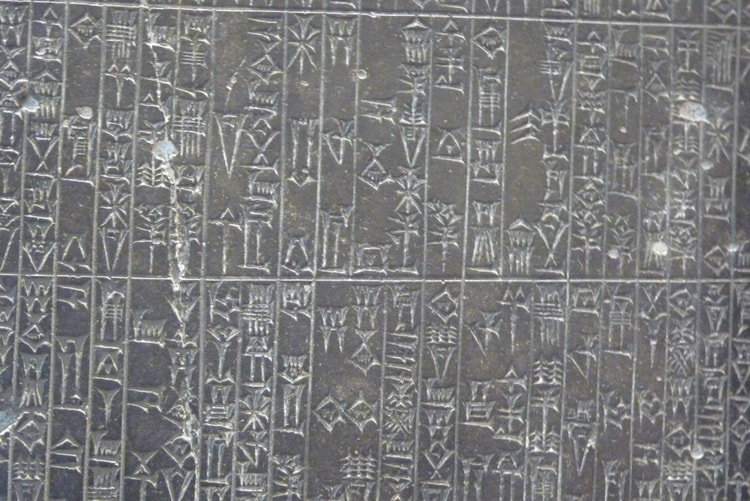
The 282 laws themselves cover a vast array of topics, from intricate business contracts and property disputes to agricultural regulations, family law, and a wide spectrum of criminal offenses. Each law is presented in a conditional, "if-then" format, clearly outlining the crime and its corresponding punishment. This methodical approach aimed to leave no room for ambiguity, ensuring that all subjects, regardless of their station, understood precisely what was expected of them and the consequences of transgression. The public erection of the stele in prominent locations across Hammurabi’s vast empire underscored this intent, making ignorance of the law an untenable defense.
A Chronology of Mesopotamian Law: From Ur-Nammu to Hammurabi
To truly appreciate the revolutionary nature of Hammurabi’s Code, it is essential to contextualize it within the broader evolution of Mesopotamian legal thought. His laws did not emerge in a vacuum but built upon earlier, albeit less comprehensive, legal traditions.
The Dawn of Written Law: The Code of Ur-Nammu
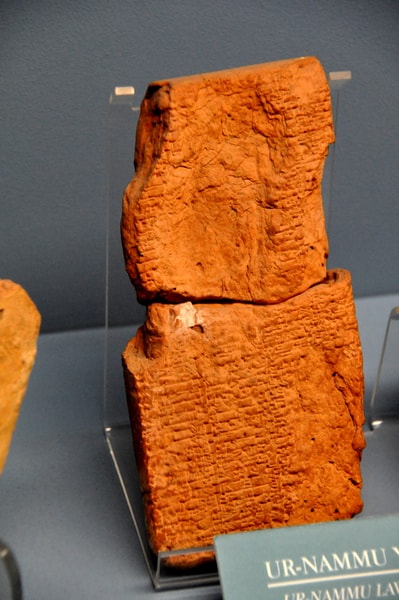
The earliest extant set of laws from ancient Mesopotamia is the Code of Ur-Nammu, dating from approximately 2100-2050 BCE. Attributed to King Ur-Nammu (reigned circa 2112-2094 BCE) or his son Shulgi of Ur, these laws were inscribed in cuneiform on clay tablets. Their emergence followed a period of profound upheaval in Mesopotamia. The glorious Akkadian Empire, established by Sargon of Akkad, had fallen to the invading Gutians around 2154 BCE, plunging the region into an era of instability and cultural decline, as the Gutians reportedly disregarded local customs and gods.

It was in this chaotic aftermath that Ur-Nammu, after successfully expelling the Gutians, rose to power, ushering in the Third Dynasty of Ur and what is often termed the "Sumerian Renaissance." Ur-Nammu strategically presented himself not as an oppressor, but as a benevolent "father figure," consciously evoking the revered (and often romanticized) Akkadian kings who, in retrospect, were seen as golden-age heroes. To solidify his rule and gain the "consent of the governed," Ur-Nammu instituted a patrimonial state, where subjects were encouraged to view themselves as members of a unified family under the king’s care.
Crucially, Ur-Nammu claimed divine inspiration for his laws, asserting that he was merely the administrator of the gods’ will. His code reflected the relatively homogeneous society of his time, where shared cultural and religious values meant disputes could often be resolved through restitution rather than harsh retribution. Punishments typically involved monetary fines, such as five shekels of silver for deflowering a virgin slave-woman, or fifteen shekels for perjury. This emphasis on compensation over severe physical penalties speaks to a society where communal bonds and restorative justice were prioritized. The stability fostered by Ur-Nammu’s code was instrumental in allowing the Sumerian Renaissance to flourish, witnessing significant advancements in art, literature, and architecture.
Adapting to Complexity: The Code of Lipit-Ishtar
The stability provided by Ur-Nammu’s code persisted through the Third Dynasty of Ur, but eventually waned, leading to the collapse of the dynasty under Ibbi-Sin. It was succeeded by the Dynasty of Isin, founded by Ishbi-Erra. By the time of Lipit-Ishtar, the fifth king of this dynasty (died circa 1924 BCE), Mesopotamian society had grown considerably more complex and diverse. Internal migrations, the rise of private land ownership, and more varied economic activities meant that the shared understanding of proper behavior that characterized Ur-Nammu’s era could no longer be assumed.
Consequently, Lipit-Ishtar’s code, while still employing monetary fines, introduced more detailed and precise regulations, particularly concerning family law and commercial contracts. For instance, laws addressed issues like land taxes, the rights of children born to a harlot (ensuring their inheritance and support), and penalties for damaging property, such as cutting down a tree in another man’s garden. This increasing legal specificity was a direct response to the burgeoning social intricacies, laying the groundwork for the even greater precision that would characterize Hammurabi’s later efforts.
The Rise of Babylon and Hammurabi’s Ascendancy
Hammurabi inherited a kingdom facing formidable challenges. His father, Sin-Muballit, had been defeated by Rim-Sin I of Larsa, a rival power that controlled lucrative trade routes. Forced to abdicate, Sin-Muballit passed the throne to Hammurabi. Initially, Hammurabi pursued a policy of quiet domestic consolidation, focusing on building programs, raising temples, and improving irrigation systems around Babylon. This period of apparent tranquility, however, was a masterstroke of strategic deception. Unbeknownst to his neighbors, Hammurabi was simultaneously and clandestinely enlarging and equipping a formidable army, meticulously planning the military campaigns that would redefine Mesopotamia’s political landscape.
The Code of Hammurabi: Justice in an Empire
It is believed that Hammurabi instituted his famous law code around 1722 BCE, possibly to create the internal stability essential for launching his ambitious military expansions. A strong, unified home front, bound by clear and enforceable laws, was paramount for any ruler hoping to project power and enlarge territory. The Code of Hammurabi served this purpose, articulating a rigid framework for societal conduct that left little to interpretation.
Lex Talionis: The Principle of Retributive Justice
Perhaps the most distinctive and widely recognized feature of Hammurabi’s Code is its adherence to Lex Talionis, the principle of retributive justice often encapsulated by the phrase "an eye for an eye and a tooth for a tooth." This marked a significant departure from the earlier, restitution-focused codes of Ur-Nammu and Lipit-Ishtar. While earlier codes often prescribed fines for infractions, Hammurabi’s punishments were dramatically more severe, frequently involving direct physical retaliation or even death.
Consider these stark examples:
- "If a man put out the eye of another man, his eye shall be put out."
- "If he break another man’s bone, his bone shall be broken."
- "If a man knock out the teeth of his equal, his teeth shall be knocked out."
- "If a builder build a house for someone, and does not construct it properly, and the house which he built fall in and kill its owner, then that builder shall be put to death. If it kill the son of the owner of the house, the son of that builder shall be put to death."
This severity was not arbitrary but a calculated response to the unique societal conditions of Hammurabi’s burgeoning empire. Unlike the relatively homogeneous communities of earlier eras, Babylonian society under Hammurabi was a vibrant, yet volatile, melting pot of diverse ethnic groups, tribes, and linguistic backgrounds. Urban dwellers rubbed shoulders with nomadic pastoralists; speakers of various West Semitic Amurru languages mingled with Akkadians. In such a multi-cultural environment, traditional, collectively accepted value systems that favored restitution over revenge were insufficient to prevent disputes from escalating into destructive vendettas and blood feuds.
To maintain cohesion and prevent the disintegration of his empire, Hammurabi deemed it necessary to establish laws that were absolute, unmistakable, and enforced with uncompromising severity. The threat of Lex Talionis served as a powerful deterrent, aiming to instill a universal understanding of justice and order across his disparate dominion.
Official Responses: The Divine Mandate and Benevolent King
Central to the Code’s authority was its claim of divine origin, a sophisticated piece of "official response" or propaganda that legitimized Hammurabi’s rule. The stele’s iconic image of Shamash handing the laws to Hammurabi was more than mere decoration; it was a potent visual declaration that these laws were sanctioned by the gods themselves. This made defiance of the code an act of impiety, not just civil disobedience.
The prologue and epilogue of the Code further elaborate on this divine mandate. In the prologue, Hammurabi explicitly states:
"When the lofty Anu, King of the Annunaki and Bel, Lord of Heaven and Earth, he who determines the destiny of the land, committed the rule of all mankind to Marduk, when they pronounced the lofty name of Babylon, when they made it famous among the quarters of the world and in its midst established an everlasting kingdom whose foundations were firm as heaven and earth – at that time Anu and Bel called me, Hammurabi, the exalted prince, the worshipper of the gods, to cause justice to prevail in the land, to destroy the wicked and the evil, to prevent the strong from oppressing the weak, to enlighten the land and to further the welfare of the people. Hammurabi, the governor named by Bel, am I, who brought about plenty and abundance."
This declaration paints Hammurabi as a divinely appointed protector, a bani matim ("builder of the land") dedicated to the welfare of his people. He emphasized his role in building majestic temples, constructing vital canals for irrigation, and ensuring the prosperity of the land. By framing his laws as a benevolent act from the gods, administered by a just king for the good of all, Hammurabi skillfully cultivated respect and admiration, fostering a sense of shared civic identity and loyalty within his newly forged empire.
Conquest, Consolidation, and the Empire of Law
Hammurabi’s internal policies and the promulgation of his code were inextricably linked to his military ambitions. Having secured a stable home front through his laws and policies, he was ready to expand his reach. His military campaigns were characterized by shrewd diplomacy and ruthless pragmatism. When the Elamites invaded southern Mesopotamia, Hammurabi allied with Larsa to defeat them. However, once the threat was neutralized, he swiftly broke the alliance, seizing the cities of Uruk and Isin, which were under Larsa’s control, and utilizing their resources for further conquests.
Hammurabi’s military tactics were innovative and devastating. He often employed hydraulic warfare, either damming up rivers to deprive besieged cities of water until they surrendered or, conversely, releasing dammed waters to flood cities, creating chaos just before an attack. His most startling display of strategic betrayal came when he turned on Zimri-Lim, the king of Mari, an Amorite kingdom that had been his staunch ally from the outset of his expansion. After conquering Mari, Hammurabi completely destroyed the city, leaving it in ruins, ensuring no rival power could rise from its ashes. By 1755 BCE, through a combination of military might and cunning diplomacy, Hammurabi had consolidated control over virtually all of Mesopotamia.
The Code of Hammurabi played a critical role in this consolidation. Unlike the earlier Akkadian Empire, which often relied on placing handpicked officials in conquered cities, Hammurabi leveraged his comprehensive legal system to unify his diverse empire. The law became a universal directive, an overarching framework that transcended local customs and tribal affiliations. It instilled a common understanding of justice and order, fostering loyalty not just through fear of military reprisal, but through the perceived fairness and divine sanction of the laws themselves. This "empire of laws" proved remarkably effective in reducing dissent; historical records indicate a period of relative peace and stability during the last five years of Hammurabi’s reign, a testament to the code’s success in garnering the consent of the governed.
The Code’s Journey Through Time and Its Enduring Influence
Despite its initial success, Hammurabi’s grand empire of laws proved fragile after his death. His son and successor, Samsu-Iluna, was unable to maintain the unity his father had forged. City-states that had remained quiescent under Hammurabi’s strong rule revolted, and the empire fragmented. This lack of unity rendered the region vulnerable to external threats. The Hittites invaded in 1595 BCE, followed by the Kassites, and then the Elamites around 1150 BCE under King Shutruk Nakhunte. It was during this Elamite invasion that the stele of Hammurabi’s Code, along with the statue of the god Marduk, was taken as spoils of war back to Elam. For centuries, it lay hidden in the ruins of the Elamite city of Susa, until its rediscovery in 1901 by French archaeologists. Today, after its dramatic re-emergence, it is proudly displayed at the Louvre Museum in Paris.
The journey of the Code of Hammurabi from ancient Babylon to a modern Parisian museum is a testament to its enduring historical significance. Its direct influence can be seen in subsequent Mesopotamian legal traditions, such as the Middle Assyrian Laws and the Neo-Babylonian Laws, which adopted its structure and many of its principles. More broadly, Hammurabi’s Code established fundamental concepts that would echo through millennia of legal development. The idea of a publicly proclaimed, comprehensive body of law applicable to all subjects, the clear delineation of crime and punishment, and the assertion of divine authority for legal precepts, all became recurring themes in the history of law.
Perhaps its most notable legacy lies in its perceived influence on the Mosaic Law found in the Bible. While direct textual borrowing is debated, the structural similarities and the underlying concept of divine law, as well as the principle of "an eye for an eye," suggest a profound cultural and legal cross-pollination across ancient Near Eastern civilizations.
In conclusion, the Code of Hammurabi remains a towering achievement in human history. It represents a critical step in the evolution of legal thought, moving beyond tribal customs to establish a formalized, state-enforced system of justice. Its principles, its structure, and its very existence as a public declaration of legal authority laid down foundations that continue to resonate, reminding us that the quest for justice, order, and the rule of law is a timeless human endeavor.




Leave a Comment