
Unveiling the Spectral Cavalry: A Deep Dive into Claude Lecouteux’s "Phantom Armies of the Night"
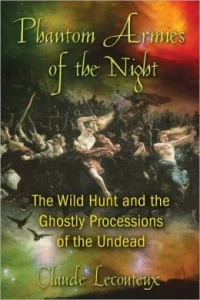
Main Facts
Claude Lecouteux’s Phantom Armies of the Night: The Wild Hunt and the Ghostly Processions of the Undead stands as a monumental work in the field of folklore studies, offering an unparalleled compilation of data on one of Europe’s most enduring and terrifying myths. Published in recent decades, this extensive volume has quickly become an essential resource for scholars and enthusiasts alike, delving into the pervasive phenomenon of the Wild Hunt and its myriad related spectral processions.
At its core, the Wild Hunt is a staple of European folklore, particularly prominent in northern regions. Across ancient, medieval, and early modern periods, countless accounts describe a chilling nocturnal cavalcade of spectral hunters or warriors. These ethereal figures, often riding atop sinister horses and accompanied by a chorus of baying hounds, were said to sweep through the howling winds of midwinter. Their passage typically brought mischief, misfortune, or outright woe upon any unfortunate soul who crossed their path. While regional variations abound, the leader of this terrifying horde was most commonly, though not exclusively, identified as the Germanic god Odin, known in various guises across the Germanic-speaking world.
Lecouteux’s primary contribution lies in his meticulous compilation of a "treasure trove" of information, meticulously gathering accounts of the Wild Hunt and related spectral phenomena from across the vast expanse of Europe. His research underscores the profound difficulty, perhaps even the impossibility, of cleanly separating the classic Wild Hunt narrative from numerous other nocturnal processions recorded during the same historical periods. Many of these related phenomena, while sharing certain commonalities, often possessed strikingly different characteristics—some even benign—from the more malevolent northern European Wild Hunt. The book’s strength in cataloguing these diverse traditions is widely acknowledged, providing a rich foundation for understanding the complex tapestry of European folk beliefs surrounding the dead and the supernatural.
The Phenomenon of the Wild Hunt: A Chronological Overview
The Wild Hunt is not a monolithic entity but rather a complex, evolving tapestry of beliefs woven through millennia of European cultural history. Its manifestations and interpretations shifted dramatically with societal changes, religious conversions, and the passage of time.
Ancient Origins and Early Beliefs
The roots of the Wild Hunt stretch deep into Europe’s pre-Christian past, particularly within Germanic paganism. Many scholars trace its origins to the veneration of deities associated with storms, death, and ecstatic states. Odin (Woden, Wotan), the supreme god of the Norse and Germanic pantheon, is widely considered the archetypal leader of the Wild Hunt. His multifaceted nature as a god of war, poetry, magic, and the dead aligns perfectly with the characteristics attributed to the spectral leader. He was often depicted as leading fallen warriors (the Einherjar) in a ghostly procession, especially during the darkest days of winter, such as the Yule season, a liminal period when the veil between worlds was believed to thin.
These early beliefs were intrinsically linked to animistic worldviews, where spirits inhabited the natural world and the dead maintained a tangible presence among the living. The howling winds, the rustling leaves, and the sudden, unexplained sounds of the night were often interpreted as the passage of these spectral riders. The Hunt served as a potent expression of humanity’s primal fears: the fear of death, the unknown, and the chaotic forces of nature. It also reflected a spiritual understanding of the afterlife, where the dead might not always rest peacefully but could return, sometimes benevolently, sometimes malevolently, to interact with the living. This period saw the Wild Hunt as a direct manifestation of divine or ancestral power, albeit one that could inspire awe and terror in equal measure.
Medieval Manifestations and Christian Reinterpretation
With the advent and gradual consolidation of Christianity across Europe, pagan deities and traditions faced systematic suppression and reinterpretation. The Church, in its efforts to eradicate older belief systems, often demonized pre-Christian gods, casting them as devils or malevolent spirits. Odin, once a revered deity, was frequently transformed into a demonic figure leading his infernal legions. This reinterpretation allowed the Wild Hunt to persist within a Christian framework, albeit stripped of its divine legitimacy and imbued with new, sinister connotations.
During the medieval period, the Wild Hunt continued to be reported across various regions, often adapting its leader and narrative to local lore and Christian morality. In some areas, the leader became a cursed figure, such as Herne the Hunter in England, or a historical figure condemned to lead the ghostly chase for a past transgression. In France, tales of Mesnie Hellequin (Hellequin’s Household) described a band of tormented souls. In other regions, it was led by figures like Dietrich of Bern, King Arthur, or even specific local noblemen. The procession itself evolved, sometimes described as a host of the unbaptized, suicides, or those who died violent deaths, forever condemned to ride the night winds.
The social context of the Middle Ages, marked by widespread superstition, limited scientific understanding, and a pervasive fear of divine judgment, provided fertile ground for the Wild Hunt’s endurance. It served as a moralistic tale, a warning against impiety, and a reminder of the ever-present spiritual dangers lurking beyond the village walls. Chroniclers and theologians sometimes documented these accounts, often framing them within a Christian narrative of sin and damnation, further cementing their place in the collective consciousness.
Early Modern Period and Fading Beliefs
As Europe transitioned into the early modern period, the Wild Hunt, while still a potent belief, began to shift its character. The rise of rationalism, the Scientific Revolution, and the Protestant Reformation gradually eroded the literal belief in such supernatural phenomena among the educated elite. However, among the common populace, particularly in rural areas, the tradition continued to thrive, passed down through oral tradition and local legends.
During this era, the Wild Hunt often became more associated with localized folklore, tales told around hearths, and the lingering echoes of animistic worldviews that resisted complete Christianization. While fear remained, there was also an element of cultural preservation, as communities clung to stories that defined their identity and connected them to their ancestral past. Scholars and folklorists began to document these narratives with a nascent academic interest, recognizing their cultural significance even if they no longer held widespread literal belief. These documentations, often collected from older generations, provide invaluable insights into the enduring power of these myths and their regional variations. The Wild Hunt, by this point, had transformed from a directly experienced terrifying reality for some to a powerful, cautionary, and often romanticized legend.
Supporting Data and Lecouteux’s Contribution
Lecouteux’s Phantom Armies of the Night distinguishes itself through its rigorous and expansive collection of primary and secondary sources, making it an indispensable reference point for anyone studying European folklore.
A Treasure Trove of European Lore
Lecouteux’s most significant achievement is undoubtedly the sheer volume and geographical breadth of the material he presents. He meticulously compiles an astonishing array of accounts of the Wild Hunt and analogous spectral processions from across Europe. This isn’t merely a collection of Norse or Germanic tales; it encompasses narratives from France, Germany, the British Isles, Scandinavia, and beyond, demonstrating the pan-European prevalence of such beliefs.
This "treasure trove" allows readers to grasp the incredible diversity within the overarching theme. From the fearsome Oskoreia (Asgard-riders) of Scandinavia to the French Mesnie Hellequin, the German Wilde Heer, and the English Wild Hunt, Lecouteux illustrates how local cultures adapted and personalized the core myth. He brings to light obscure regional variations, local names for the spectral leader (e.g., Perchta, Frau Holle, Gargantua, King Herla), and specific customs or taboos associated with encountering these nocturnal processions. This comprehensive approach highlights that while the central motif of a ghostly cavalcade endures, its specific details—the leader’s identity, the nature of the riders (ancestors, fairies, demons, the unbaptized), and their intentions (mischief, warning, blessing)—are highly fluid and culturally determined.
The Psychopomp and Ancestor Worship Thesis
Amidst this vast sea of data, Lecouteux offers several compelling analytical insights that are widely praised. His strongest arguments revolve around the Wild Hunt’s original leadership and its profound connection to ancient religious practices.
Lecouteux posits that the original leader of these spectral processions was often a psychopomp deity. In ancient religions, a psychopomp (from Greek psuchopompos, "guide of souls") is a deity or spirit whose primary role is to escort newly deceased souls from the realm of the living to the afterlife. Such figures act as mediators between the mundane world and the sacred, the living and the dead. This role is crucial, as it explains why these processions are fundamentally about the boundary between life and death. Figures like Odin, with his halls for the slain (Valhalla) and his association with the dead, fit this psychopomp role perfectly in his original pagan context. Lecouteux insightfully observes that, like virtually all pre-Christian gods, these psychopomp deities were subsequently demonized by the burgeoning Christian Church, transforming revered guides of souls into malevolent leaders of demonic hordes. This transformation was a common strategy employed by the Church to assimilate and suppress pagan traditions, re-framing them as evil rather than merely different.
Furthermore, Lecouteux profoundly connects the Wild Hunt to the vast complex of ancestor worship and the cult of the dead. He argues that these spectral processions were not merely arbitrary supernatural occurrences but were deeply rooted in ancient veneration of ancestors. In many pre-Christian societies, ancestors were not simply forgotten; they were believed to remain active participants in the lives of their descendants, acting as "go-betweens between men and the gods." They could offer protection, guidance, or warnings, and their spirits might appear in various forms, including as part of these nocturnal rides. The Wild Hunt, in this interpretation, becomes a dynamic manifestation of the continued presence and power of the ancestral dead, highlighting how deeply these beliefs were interwoven with the fabric of everyday life and spiritual practice in early Europe. This thesis provides a powerful lens through which to understand the enduring resonance of these myths, even as their overt religious context faded.
Critical Analysis and Scholarly Debates
While Lecouteux’s contributions to data collection are universally lauded, his analytical framework has drawn significant scholarly scrutiny and criticism, particularly concerning his interpretation of the Wild Hunt’s leadership and its broader implications.
The Odin Controversy: A Challenge to Established Views
One of the most contentious aspects of Lecouteux’s analysis is his assertion that Odin was not the original leader of the Wild Hunt but rather a later addition, grafted onto an older, more generalized phenomenon. This position directly challenges a widely accepted view among mythologists and folklorists, making it a difficult argument to sustain on both mythological and etymological grounds.
From a mythological perspective, Odin’s attributes align remarkably well with the traditional leader of the Wild Hunt. He is the god of ecstatic frenzy (óðr), often associated with storms, gales, and the furious host. He collects the slain warriors for Valhalla and is depicted as a wanderer, a shamanic figure capable of traversing realms. The very name Wodan (the Proto-Germanic root of Odin) is linked to concepts of fury, rage, and inspiration—qualities inherently tied to the wild, unrestrained nature of the spectral chase. The Oskoreia (Asgard-riders) in Scandinavian folklore directly links the hunt to Asgard, Odin’s realm. To argue that such a deeply embedded and etymologically resonant connection is a later accretion requires compelling evidence that Lecouteux, in the eyes of many critics, struggles to provide. Other prominent scholars, such as Jan de Vries, have extensively detailed Odin’s ancient and integral role in such phenomena, making Lecouteux’s counter-argument a significant deviation from established scholarship.
Dumézil’s Influence and its Application
A significant portion of Lecouteux’s argument regarding Odin’s perceived later inclusion stems from an application of the theories of the eminent Indo-European scholar Georges Dumézil. Dumézil’s trifunctional hypothesis posits that ancient Indo-European societies structured their ideology, including their pantheons, around three distinct social functions: the sacred/sovereignty (priestly), the martial (warrior), and the productive/fertility (common people/herders/farmers).
Lecouteux, in what is seen as an "overly rigid application" of Dumézil’s framework, argues that since Odin was predominantly associated with the ruling classes—the priestly and warrior functions—he could not have originally led a phenomenon like the Wild Hunt, which Lecouteux connects more closely with the concerns of the common people, particularly ancestor worship and fertility rites (which fall under Dumézil’s third function). The argument suggests that the Wild Hunt, being a widespread folk belief, must have originated with a leader more representative of the populace, and Odin was only later superimposed onto it by an elite who sought to connect popular beliefs with their own dominant deities.
However, critics point out that this application is problematic for several reasons. Firstly, ancient religious practices were rarely as rigidly stratified as such an interpretation suggests. Deities often held sway across different social strata, and common people certainly worshipped and feared gods associated with sovereignty and war. Odin, for instance, was also a god of magic, poetry, and ecstatic wisdom, attributes accessible to all. Secondly, the Wild Hunt, while a folk phenomenon, also embodies themes of death, battle, and divine wrath, which align perfectly with Odin’s domain as a sovereign and warrior god. To separate these elements so definitively overlooks the complex interplay of religious belief in pre-Christian societies, where sacred, martial, and productive aspects often intertwined within the same deity or ritual. Such a strict adherence to Dumézil’s model, without acknowledging its inherent limitations and the fluid nature of ancient religion, leads Lecouteux to a conclusion that many find unconvincing.
The Analytical Gap: Data vs. Interpretation
Beyond the specific critique of the Odin hypothesis, a more general disappointment voiced by reviewers concerns the perceived imbalance between the vast quantity of data Lecouteux presents and the depth of his interpretive analysis. While the book is an undeniable goldmine of primary sources and regional accounts, the analytical sections are, for some, "rather sparse relative to the sheer amount of information."
Lecouteux, despite his masterly knowledge of the data, frequently employs what critics describe as "scholarly cop-out" phrases when it comes to offering definitive conclusions. Expressions such as "we cannot reach a conclusion," "many points remain to be explored more deeply," and acknowledgements that the complexity of the subject "makes us conscious of the limits of our knowledge" are used repeatedly. While humility and an awareness of the limitations of one’s research are vital academic virtues, particularly in complex fields like folklore, their pervasive use in place of more substantial synthesis can be frustrating for the reader. These statements, critics argue, are perfectly valid as qualifications to a conclusion, serving to temper certainty or suggest avenues for future research. However, when offered instead of a robust conclusion or a more comprehensive interpretive framework, they can feel like hollow platitudes, leaving the reader with an encyclopedic collection of facts but a less satisfying overarching understanding of the phenomenon’s fundamental nature and evolution. Given the immense scope of the data and Lecouteux’s obvious expertise, a deeper, more daring interpretive synthesis would have significantly enhanced the book’s analytical impact.
Broader Implications and Enduring Relevance
Despite the aforementioned analytical criticisms, Phantom Armies of the Night remains an exceptionally valuable and highly recommended work, shedding light on profound aspects of European cultural and religious history.
The Persistence of Pre-Christian Animism
One of the book’s most significant contributions is its powerful demonstration of just how long elements of pre-Christian animism remained an integral part of everyday life and belief, well after the official Christianization of Europe. The Wild Hunt, in its various forms, serves as a compelling case study of cultural resilience. It illustrates that the conversion to Christianity was rarely a clean break from older traditions but often a complex process of adaptation, syncretism, and subterranean survival.
Lecouteux’s extensive data shows how local populations continued to interpret natural phenomena, dreams, and unusual events through an animistic lens, even as they simultaneously adhered to Christian dogma. The spectral processions of the dead, whether feared or revered, represent a continuous thread connecting ancient reverence for ancestors and nature spirits with later medieval and early modern superstitions. This phenomenon highlights the concept of "folk Christianity," where official doctrines were often blended with older, deeply ingrained folk beliefs, creating a rich and often contradictory spiritual landscape. The Wild Hunt, therefore, is not merely a quaint legend but a living testament to the tenacity of ancient worldviews and the gradual, often incomplete, nature of religious conversion.
Contribution to Folklore Studies and Mythology
As a meticulously researched compendium of primary sources, Phantom Armies of the Night is an indispensable resource for comparative folklore studies. It provides an unparalleled foundation for scholars to analyze regional variations, trace linguistic connections, and explore the psychological and sociological underpinnings of these pervasive myths. The book encourages further research into how these narratives evolved, how they were used to explain the inexplicable, and what they reveal about human anxieties surrounding death, the afterlife, and the chaotic forces of nature.
For those interested in mythology, the book offers a crucial lens through which to understand the transformation of deities and spiritual entities over time. It underscores the fluidity of mythological figures and how their roles and perceptions can shift dramatically under the influence of new religious paradigms. By presenting such a comprehensive dataset, Lecouteux allows future generations of scholars to build upon his work, refining existing theories and developing new interpretations of this complex and enduring mythological motif.
Modern Interpretations and Cultural Echoes
Beyond its academic significance, the myth of the Wild Hunt continues to resonate deeply in contemporary culture. Its archetypal imagery—spectral riders, howling winds, menacing hounds—has inspired countless works of art, literature, film, and video games. From fantasy novels (such as those incorporating figures like the Nächtlicher Jäger or the Gjallarbru) to popular culture references in television series and role-playing games, the Wild Hunt remains a potent symbol of the unknown, the terrifying, and the irresistible forces of chaos and death.
The enduring psychological power of the myth lies in its tapping into universal human fears: the fear of the wild, untamed aspects of nature, the fear of the dead returning, and the fear of a chaotic force beyond human control. It speaks to a primal sense of vulnerability and the thin veil between order and disorder. Lecouteux’s work, by meticulously detailing the historical and geographical spread of this myth, provides a crucial framework for understanding why these stories continue to captivate and terrify audiences even in a highly secularized and technologically advanced world.
Conclusion: A Flawed Gem
In summation, Claude Lecouteux’s Phantom Armies of the Night: The Wild Hunt and the Ghostly Processions of the Undead is undeniably a landmark achievement in folklore scholarship. Its immense strength lies in its meticulous and exhaustive collection of accounts pertaining to the Wild Hunt and related nocturnal processions across Europe, providing a "treasure trove" of primary data that is invaluable to researchers. The book offers compelling insights into the psychopomp origins of the Wild Hunt’s leadership and its profound connection to ancient ancestor worship and the cult of the dead, effectively demonstrating the resilience of pre-Christian animistic beliefs far into the Christian era.
However, the book is not without its analytical shortcomings. Lecouteux’s challenging stance on Odin’s original leadership of the Wild Hunt, often relying on a rigid application of Dumézil’s trifunctional theory, has faced significant criticism for its perceived lack of robust mythological and etymological support. Furthermore, despite the vastness of the data presented, some readers may find the analytical conclusions sparse, with Lecouteux occasionally deferring to the complexity of the subject rather than offering more definitive hypotheses.
Despite these criticisms, Phantom Armies of the Night remains an absolutely essential read for anyone with a serious interest in the Wild Hunt, European folklore, or the history of animistic beliefs. It serves as a monumental reference work, opening up new avenues for understanding the intricate relationship between ancient religious practices and their enduring echoes in popular superstition. While its analytical framework may invite scholarly debate, its unparalleled compilation of source material makes it an indispensable, albeit a flawed, gem in the study of supernatural traditions. Highly recommended for its unparalleled data and significant contribution to our understanding of Europe’s spectral past.

Leave a Comment