
The Invisible Storefront: Why a Billion Windows Users Ignored ‘Nowhere Prophet’
Introduction: The Statistical Paradox of the Microsoft Store
In the digital economy, the "reach" of a platform is often touted as its most valuable asset. For developers, the logic is simple: the more eyes on a storefront, the higher the probability of conversion. However, a startling revelation from independent game developer Martin Nerurkar has cast a long shadow over the efficacy of the Microsoft Store as a retail destination.
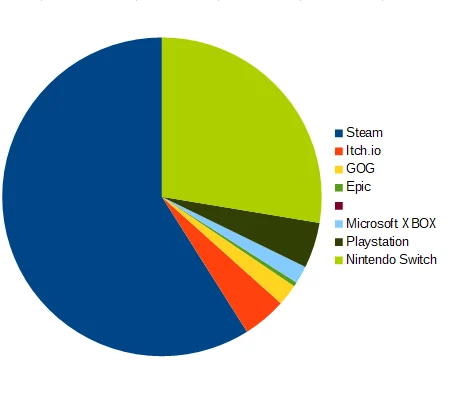
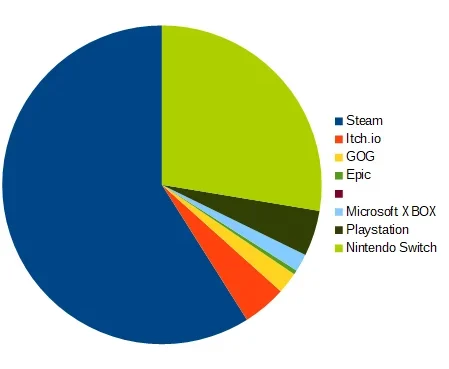
In August 2022, Nerurkar, the creator of the critically acclaimed deck-building roguelike Nowhere Prophet, shared a revenue breakdown of his game’s performance across various platforms. While the title found a sustainable audience on traditional PC platforms and consoles, one specific data point stood out for its sheer improbability: despite being available on the Microsoft Store—a marketplace pre-installed on over 1.4 billion active Windows devices—the game had recorded exactly zero sales on that specific storefront.
This statistical anomaly serves as a piercing critique of Microsoft’s long-standing struggle to integrate its dominant operating system with its retail ambitions. It raises a fundamental question for the industry: How can a platform with a footprint of over a billion users fail to generate a single transaction for a successful indie title?
Main Facts: The Zero-Sale Phenomenon
The data provided by Martin Nerurkar, founder of Sharkbomb Studios, outlines a narrative of platform disparity. Nowhere Prophet, which launched to positive reviews (averaging "Very Positive" on Steam), followed a typical successful indie trajectory. Nerurkar estimated that the game had sold approximately 20,000 copies across all platforms at the time of his report.
The revenue distribution chart showed healthy engagement from Steam, GOG, and console storefronts. Yet, the Microsoft Store was conspicuously absent from the visualization. Nerurkar clarified the omission in a follow-up statement: "And if you’re wondering why the Microsoft Store isn’t on this graph, that’s because we haven’t made a single sale there in this entire time."
The implications of this "zero" are profound. It suggests that for certain genres of software, the Microsoft Store is not merely underperforming; it is functionally invisible. This occurs despite Microsoft’s aggressive efforts to brand Windows as the "best place to play" and the store’s status as a native, non-removable component of the Windows 10 and 11 ecosystems.
Chronology: The Evolution of a Storefront Identity Crisis
To understand how the Microsoft Store arrived at this point of irrelevance for indie developers, one must look at the erratic history of Microsoft’s digital distribution strategy on PC.
The Games for Windows Live Era (2007–2014)
Microsoft’s first major attempt to capture the PC gaming market was "Games for Windows Live" (GFWL). It was widely detested by the community due to its intrusive DRM, clunky interface, and frequent connectivity issues. Its eventual shuttering left a legacy of distrust among PC gamers, many of whom migrated permanently to Valve’s Steam platform.
The Windows 8 Pivot and the Birth of UWP (2012–2015)
With the launch of Windows 8, Microsoft introduced the Windows Store. It was built around the Universal Windows Platform (UWP) architecture, designed to create apps that worked across phones, tablets, and PCs. However, UWP imposed strict limitations on games, such as preventing the use of overlays (like Discord or Fraps) and making modding nearly impossible. Gamers and developers alike shunned the store, viewing it as a "walled garden" that contradicted the open nature of PC gaming.
The Windows 10/11 Rebrand (2015–Present)
Microsoft eventually relaxed UWP requirements, allowing standard Win32 apps and games onto the store. They also rebranded the "Windows Store" to the "Microsoft Store" and integrated it heavily with the Xbox ecosystem. Despite these technical improvements, the store struggled to shed its reputation as a repository for mobile-style "crapware" and utility apps rather than a premium gaming destination.
The Game Pass Integration (2019–Present)
The introduction of Xbox Game Pass for PC changed the store’s utility. While it drove millions of users to the app, it shifted the focus from purchasing games to subscribing to them. For a game like Nowhere Prophet, which was available via Game Pass, the "Buy" button became an afterthought for the vast majority of the store’s visitors.
Supporting Data: Conversion Rates and Platform Dominance
The "zero sales" figure is particularly jarring when contrasted with the sheer scale of the Windows user base. According to Microsoft’s own "By the Numbers" data from 2022, Windows 10 and 11 reached over 1.4 billion monthly active users (MAU).
In a healthy retail environment, even a microscopic conversion rate would yield results. For example:

- Total Windows MAU: 1,400,000,000
- Hypothetical 0.001% conversion: 14,000 sales
- Actual Conversion for Nowhere Prophet: 0.000000%
In contrast, Steam, which had approximately 132 million monthly active users in 2022—less than 10% of the Windows install base—accounted for the vast majority of the game’s revenue. This indicates that "active users" on an operating system do not equate to "active shoppers" in an integrated store.
Industry analysts point to the "Intent to Purchase" gap. Users open Steam with the specific intent of browsing or buying games. Users open Windows to work, browse the web, or launch other applications. The Microsoft Store sits in an awkward middle ground; it is often used for system updates or downloading basic utilities (like Calculator or Photos extensions), but rarely as a destination for high-fidelity entertainment discovery.
Official Responses and Industry Sentiment
While Microsoft has not commented specifically on the Nowhere Prophet case, the company has historically acknowledged that the store experience needed a radical overhaul. In 2021, prior to the launch of Windows 11, Panos Panay, Microsoft’s Chief Product Officer, stated that the new Microsoft Store was built to be "more open," allowing third-party storefronts like the Epic Games Store to be integrated within it.
However, the sentiment among indie developers remains skeptical. Many developers report that the process of submitting to the Microsoft Store is more arduous than Steam, involving stricter certification processes that often mirror console requirements. Nicholas Lovell, the founder of Gamesbrief, noted that the store suffers from a fundamental identity crisis: "It can’t work out whether it is a retail store for $59.99 games or an app store offering safe, free, quality-of-life apps for Windows. It’s trying to be both and failing at both."
Furthermore, the "Game Pass Effect" cannot be ignored. When a game is included in a subscription service, the incentive for a user to purchase a standalone copy on that same platform drops to near zero. While Microsoft compensates developers for Game Pass inclusion, the lack of "long-tail" sales on the storefront suggests that the Microsoft Store has become a "library" for subscribers rather than a "shop" for consumers.
Implications: The Future of Digital Distribution
The failure of Nowhere Prophet to secure a single sale on the Microsoft Store has several long-term implications for the gaming industry and Microsoft’s corporate strategy.
1. The Erosion of the "Default" Advantage
Being the "default" option is usually a massive competitive advantage (as seen with Google Search or Apple’s App Store). However, Microsoft’s failure suggests that on open platforms like the PC, user experience and brand trust trump pre-installation. If Microsoft cannot convert its billion-user lead into sales, the store remains a liability rather than an asset.
2. The Subscription Trap
For indie developers, the Microsoft Store may no longer be a viable retail channel, but rather a "subscription-only" portal. This creates a dependency on Microsoft’s editorial team to greenlight Game Pass deals. If a game is not selected for Game Pass, the data suggests there is almost no point in listing it on the Microsoft Store at all, as the organic discovery is non-existent.
3. The Need for Niche Curation
Steam succeeds because it is a "walled garden" of enthusiasts. The Microsoft Store’s attempt to house everything from Halo to Adobe Acrobat to Candy Crush dilutes its brand. To compete, Microsoft may need to decouple the "Xbox" gaming experience entirely from the "Windows" app experience, creating a dedicated, high-performance gaming client that mimics the focus of Steam or Battle.net.
4. Developer Resource Allocation
For small teams, every port costs time and money. If the expected revenue from the Microsoft Store is zero, developers will eventually stop supporting it. This could lead to a death spiral where a lack of content leads to fewer users, which in turn leads to even less content.
Conclusion: A Billion-User Ghost Town
The case of Martin Nerurkar and Nowhere Prophet is a cautionary tale of missed opportunities. Microsoft sits atop one of the most powerful distribution engines in human history, yet it has managed to build a storefront that gamers actively avoid or simply do not notice.
For the Microsoft Store to become a relevant player in the industry, it must move beyond being a pre-installed utility. It requires a fundamental shift in user psychology—moving the needle from a place where people have to go for updates, to a place where they want to go for entertainment. Until then, it remains a billion-user ghost town, where even successful games can disappear without a trace.

Leave a Comment