"The Mandalorian & Grogu": A Critical Examination of a Franchise Entry Lacking Narrative Gravitas
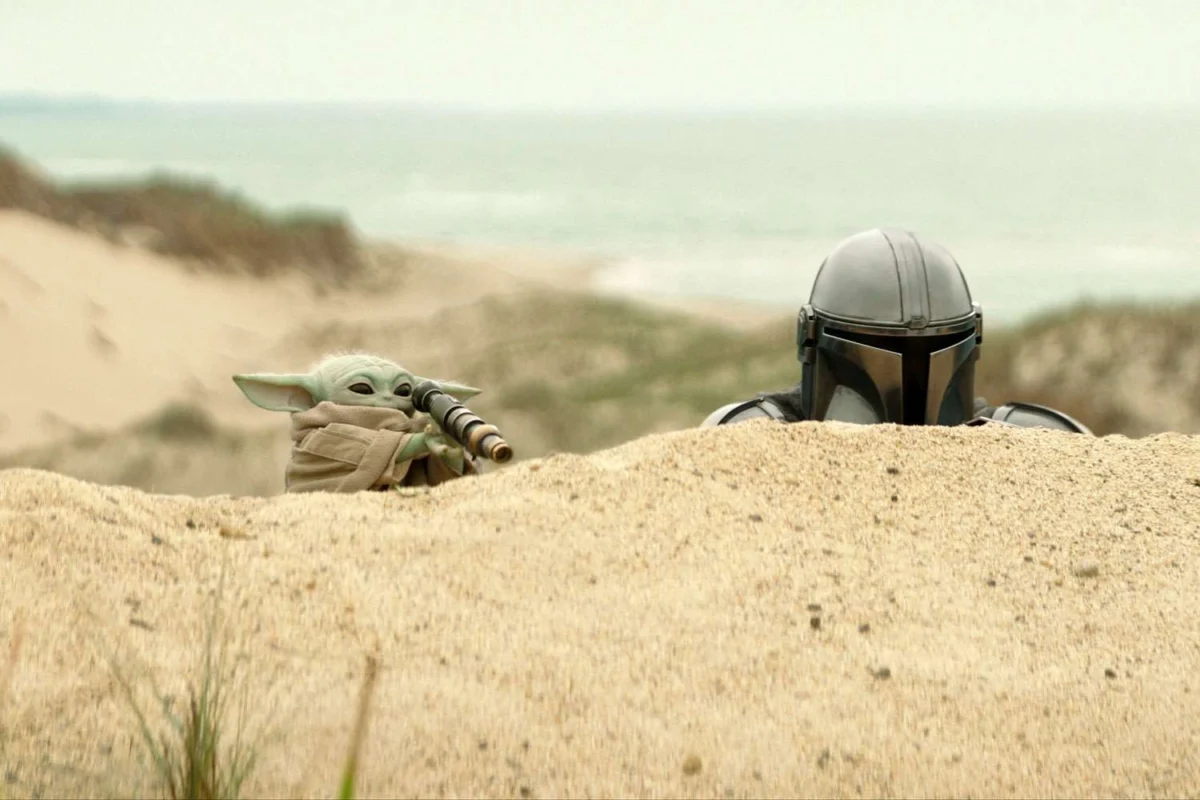
The highly anticipated cinematic debut of "The Mandalorian & Grogu" has arrived, promising to expand the beloved Star Wars universe with a feature-length adventure. However, early critical reception suggests a film that, while technically proficient and visually appealing, struggles to deliver the narrative depth and emotional resonance that have come to define its television counterpart. This analysis delves into the core criticisms, exploring the film’s structural shortcomings, character deficiencies, and the fundamental absence of compelling stakes and tension.
The Perils of Predictability: A "Straight Line" Narrative
The overwhelming sentiment from initial viewers and critics alike centers on a perceived lack of narrative complexity. As one observer poignantly put it, "It was all just a straight line." This observation, while perhaps simplistic, captures a prevailing feeling that the film eschews traditional storytelling arcs in favor of a linear progression of events. The absence of significant twists, turns, or genuine peril for its protagonists leaves the audience feeling detached, akin to observers of a meticulously crafted but ultimately unengaging tram ride.
The film’s opening sequence, intended to immediately immerse the audience in action, is cited as a prime example of this issue. While many iconic action films, like "Die Hard" or "John Wick," build their tension through character introduction and consequence before unleashing explosive set pieces, "The Mandalorian & Grogu" opts for an immediate, albeit somewhat superficial, barrage of action. This approach, the argument goes, fails to establish meaningful stakes or a sense of vulnerability for the characters. Unlike heroes who are immediately tested and put through the wringer – think John McClane’s disheveled state or John Wick’s profound loss – Din Djarin and Grogu navigate the opening conflict with relative ease. This sets a precedent for the rest of the film, where action sequences, while visually impressive, often feel consequence-free and lack the weight necessary to truly grip the audience.
Character as Commodity: The "Action Figure" Dilemma
A significant point of contention lies in the portrayal of characters, or rather, the perceived lack thereof. Critics argue that "The Mandalorian & Grogu" features less in the way of fully realized characters and more in the way of "action figures" – entities designed for visual appeal and plot function rather than possessing genuine internal struggles or developmental arcs.
Din Djarin, the stoic bounty hunter, is presented as already highly competent and nearly invulnerable. His armor deflects all harm, and his fighting prowess is consistently superior. This near-superhuman status, while fitting for a legendary warrior, robs him of the relatable underdog quality that makes many heroes compelling. His missions, often dictated by external forces, rarely seem to carry personal stakes that are intrinsically tied to his character development. Grogu, while undeniably the emotional heart of the series, is often relegated to a "cute puppet" or a convenient plot device, his immense power with the Force frequently employed as a deus ex machina to resolve challenging situations.
The supporting cast fares even worse. Many characters are described as appearing "mostly just there," lacking names, motivations, or any discernible impact on the narrative beyond fulfilling a functional role. Even established characters, like Zeb from "Star Wars Rebels," are reduced to mere cameos, their presence feeling more like fan service than organic integration into the story. This superficial treatment of characters prevents the audience from forming genuine emotional connections, leaving the action sequences feeling hollow and detached.
The Erosion of Stakes and the Absence of Tension
At the heart of narrative engagement lies the concept of stakes – what can be won or lost. "The Mandalorian & Grogu" is repeatedly criticized for its nebulous and underwhelming stakes. The film rarely presents situations where the audience genuinely fears for the safety of its protagonists. The inherent knowledge that the main characters are unlikely to be killed off – a common trope in blockbuster filmmaking – is amplified by the lack of any real threat to their well-being.
The film attempts to establish stakes through various avenues: world-building threats, emotional entanglements, and life-threatening dangers to secondary characters. However, these efforts are largely undermined. The "galactic struggle" feels distant, and personal or emotional stakes are virtually non-existent. When secondary characters are placed in peril, their lack of development makes their potential demise inconsequential to the audience.
This absence of compelling stakes directly leads to a critical deficit in narrative tension. Tension, defined as the feeling that the desired outcome is in danger of not happening, or the undesired outcome is in danger of happening, is largely absent. The film’s action sequences, while frequent, are described as "breezy, consequence-free, tension-free." The near-constant, effortless action, coupled with Mando’s near-invincibility and Grogu’s Force abilities, creates a feeling of narrative complacency. The audience is not invited to invest in the struggle; they are merely spectators to a series of events that unfold with predictable ease.
A Technically Sound, Yet Emotionally Vacant Experience
It is important to acknowledge the technical merits of "The Mandalorian & Grogu." The soundtrack is lauded, with the iconic Mandalorian theme receiving particular praise. The visual effects are generally "rock solid," with most CGI being "impeccable," save for a curiously uncanny portrayal of Rotta the Hutt. Jon Favreau’s direction is recognized as "rock solid," delivering well-framed, visually pleasing sequences that can evoke artistic imagery. The film excels in its aesthetic presentation and production values, creating a polished and often beautiful cinematic product.
However, these technical strengths are insufficient to mask the underlying narrative weaknesses. The film’s adherence to a "straight line" trajectory, its reliance on underdeveloped characters, and its fundamental lack of stakes and tension combine to create an experience that, while perhaps enjoyable on a superficial level, fails to resonate on a deeper emotional or intellectual plane. The film is described as feeling "like AI" in its construction – technically proficient but lacking the organic structure and emotional core that defines compelling storytelling.
Official Responses and Industry Implications
While specific official statements from Lucasfilm or Disney regarding critical reception are not yet widely available, the underlying narrative of "The Mandalorian & Grogu" reflects a broader trend within large-scale franchise filmmaking. The pressure to deliver consistent, crowd-pleasing content can sometimes lead to a prioritization of spectacle and familiarity over genuine narrative innovation. The film’s reliance on established characters and the familiar cadence of the Star Wars universe suggests a cautious approach, aiming to satisfy existing fans without necessarily pushing creative boundaries.
The critical response raises important questions about the future direction of the Star Wars franchise. While "The Mandalorian" television series found success by focusing on a more intimate, character-driven narrative, its cinematic leap appears to have traded that intimacy for a more generalized, action-heavy approach. The film’s perceived lack of interesting narrative choices and its inability to leave a lasting impression could signal a need for a re-evaluation of how these beloved characters and universes are translated to the big screen. The implication is that even technically brilliant films can falter if they fail to engage audiences on an emotional and thematic level, leaving them feeling as though "nothing really happens" despite the on-screen action.
Conclusion: A Missed Opportunity for Deeper Engagement
"The Mandalorian & Grogu" presents a paradox: a visually stunning and technically accomplished film that, for many, falls short of delivering a truly engaging cinematic experience. The critique is not that the film is overtly bad, but rather that it is a "worse movie" than it could have been, not because of its technical failings, but because of its narrative shortcomings. The absence of meaningful stakes, the underdeveloped characters, and the predictable plot trajectory culminate in a story that feels emotionally distant and ultimately forgettable.
The film’s struggle to ignite genuine tension or emotional resonance leaves audiences questioning the purpose and impact of its existence. While it may succeed in selling merchandise and providing a fleeting sense of familiarity for fans, it fails to achieve the more ambitious goal of creating something truly interesting and impactful within the vast Star Wars tapestry. As one critic observed, the film leaves "no footprint on the universe, or in my mind, or on my heart." In a franchise built on grand narratives and profound emotional journeys, "The Mandalorian & Grogu" appears to have taken a safe, linear path, ultimately missing the opportunity to explore the rich narrative potential that lies beyond the immediate spectacle.