
The Open-Source Revolution in 3D Animation: Mesh2Motion Challenges Industry Norms
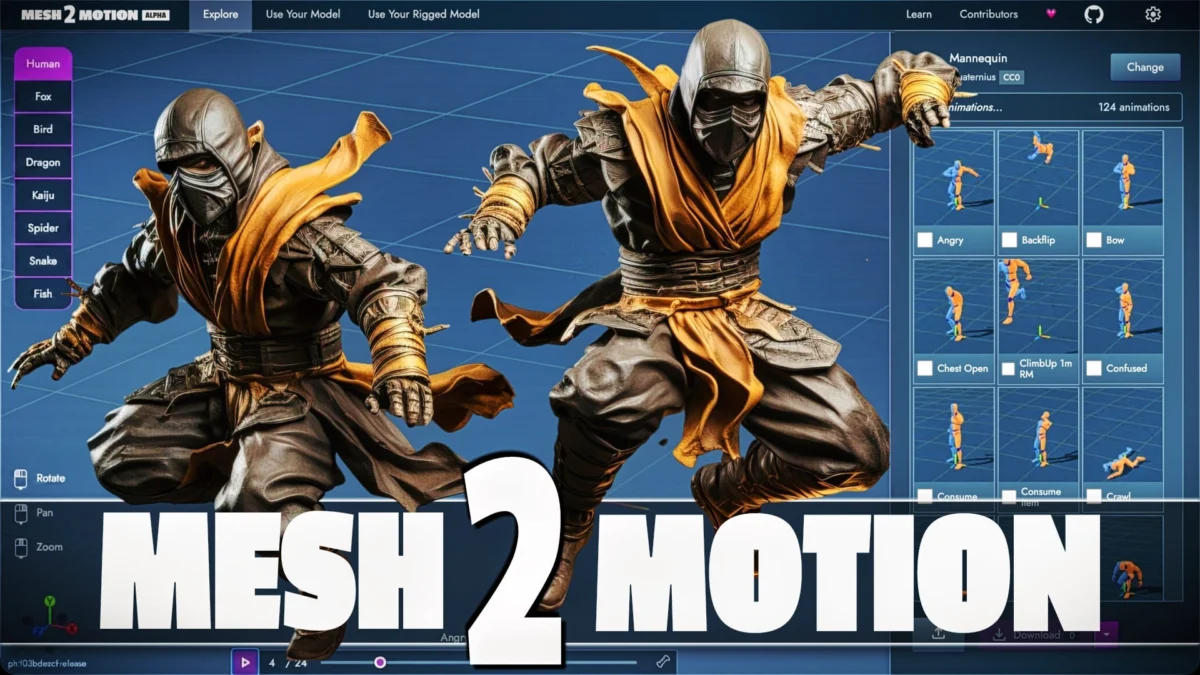
In the rapidly evolving landscape of game development and 3D digital content creation, the barrier to entry has historically been highest in the realm of character animation. While tools like Blender and Unreal Engine have made modeling and rendering more accessible, the intricate process of rigging—the digital equivalent of creating a skeleton for a mesh—and applying fluid animations has remained a specialized, time-consuming, and often expensive bottleneck. For years, Adobe’s Mixamo served as the primary sanctuary for indie developers, offering automated rigging and a library of animations for free. However, as industry trends shift toward open-source sovereignty and decentralized workflows, a new contender has emerged.
Mesh2Motion, an ambitious open-source project, is positioning itself as a robust, free alternative to proprietary rigging services. Following a year of intensive development and community feedback, the platform has recently expanded its capabilities far beyond its initial bipedal scope, introducing support for exotic rigs including birds, snakes, and dragons. This expansion marks a significant milestone in the democratizing of 3D animation tools.
Main Facts: What is Mesh2Motion?
Mesh2Motion is a browser-based and standalone application designed to streamline the pipeline of turning a static 3D mesh into a fully animated character. At its core, it addresses the "auto-rigging" problem—taking a character model and automatically generating a skeletal structure that can be manipulated to create movement.
Key Capabilities and Features:
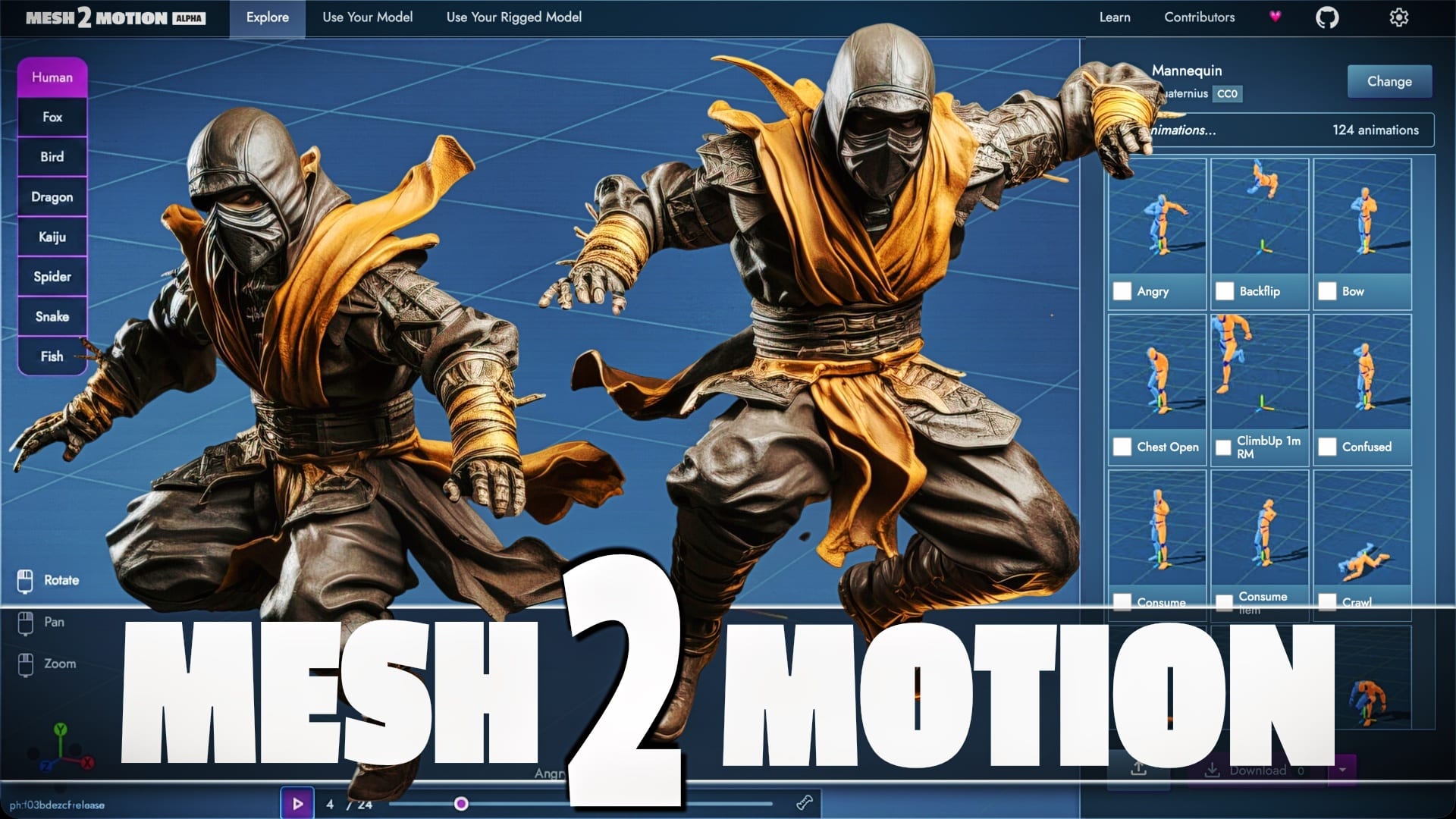
- Multi-Rig Support: Unlike many automated tools that are limited to humanoids, Mesh2Motion now supports a variety of archetypes, including quadrupeds, avians, and serpents.
- Open-Source Philosophy: The entire project is hosted on GitHub, allowing developers to inspect the code, contribute to its growth, and host their own instances of the tool.
- Blender Integration: The project provides all source Blender model and animation files. This transparency allows professional animators to study the underlying logic and customize the rigs for more complex projects.
- GLB-Centric Pipeline: The tool prioritizes the GLB (glTF Binary) format. This is a strategic choice, as GLB has become the "JPEG of 3D," natively supported by modern engines like Godot, Three.js, and Babylon.js.
- Bundled Exporting: Users can export a single file containing a mesh and multiple animation clips (e.g., walk, run, idle), significantly reducing the friction of asset management in game engines.
Chronology: From Bipedal Basics to Exotic Ecosystems
The trajectory of Mesh2Motion reflects the broader "indie-first" movement in software development. To understand its current impact, one must look at its rapid evolution over the past eighteen months.
Phase I: The Bipedal Foundation (2023)
When Mesh2Motion first garnered attention in the game development community a year ago, it was primarily seen as a "Mixamo Clone." Its goal was simple: provide a web interface where a user could upload an OBJ or FBX file, place markers on the joints (knees, elbows, groin), and receive a rigged character back. While successful, it was limited to the standard human skeleton, which, while useful, left a gap for developers working on fantasy or nature-themed projects.
Phase II: Community Feedback and Engine Optimization (Early 2024)
As the Godot Engine surged in popularity following the Unity pricing controversy, the Mesh2Motion team pivoted to ensure seamless compatibility with the glTF 2.0 standard. During this period, the developers focused on the "undo/redo" history and the stability of the rigging markers. They also began releasing the source Blender files, acknowledging that professional developers needed more than just a "black box" tool; they needed an editable pipeline.
Phase III: The "Exotic" Update (Present Day)
The most recent update, which prompted the current industry buzz, represents the largest leap in the tool’s functionality. By adding rigs for birds, snakes, and dragons, Mesh2Motion has moved into territory that Adobe’s Mixamo has largely ignored. This update includes not just the skeletons but the associated procedural animations—wing flaps for birds, slithering motions for snakes, and predatory strikes for dragons.
Supporting Data: Technical Specifications and Performance
The technical prowess of Mesh2Motion lies in its use of modern web technologies and the glTF format. According to the project’s GitHub repository, the application is built to be lightweight, yet it handles complex mesh deformations with high fidelity.
Format Compatibility
| Feature | Mesh2Motion Support |
|---|---|
| Input Formats | OBJ, FBX, GLB |
| Output Formats | GLB (Single or Bundled) |
| Target Engines | Godot, Unity, Unreal, Three.js, Babylon.js |
| Rig Types | Biped, Quadruped, Avian, Serpent, Dragon |
The Power of the Bundled GLB
One of the most significant technical advantages of Mesh2Motion is its handling of animation tracks. In traditional workflows, exporting five different animations often results in five different files, which must then be re-targeted and organized within the game engine. Mesh2Motion utilizes the glTF "animations" array to pack multiple NLA (Non-Linear Animation) tracks into a single binary file. This reduces the "draw calls" and memory overhead when loading assets into a real-time environment.
Official Responses and Philosophy: Why Open Source Matters
While there is no single "corporate" spokesperson for Mesh2Motion, the project’s lead developers and the surrounding community have been vocal on platforms like GitHub and Discord regarding their mission.
The "Anti-Subscription" Stance
The developers have framed Mesh2Motion as a response to the "SaaS-ification" of creative tools. By keeping the tool free and open-source, they ensure that a developer’s workflow is never held hostage by a changing terms-of-service agreement or a sudden price hike.
"The goal is to provide a permanent, community-owned fixture in the dev stack," one contributor noted in a recent GitHub discussion. "When tools like Mixamo remain closed-source, the industry is at the mercy of the parent company’s whims. Mesh2Motion belongs to the users."
Integration with the "Godot Stack"
The project has received significant praise from the Godot Engine community. Since Godot prioritizes the glTF format over the proprietary FBX format (which is often buggy in open-source environments), Mesh2Motion has become a recommended tool in the Godot ecosystem. This synergy has led to a virtuous cycle of bug reports and feature requests from some of the most active indie developers in the world.
Implications: Changing the Landscape for Indie Developers
The rise of Mesh2Motion carries profound implications for the future of digital content creation, specifically for small studios and solo developers.
1. Breaking the Bipedal Monopoly
For years, the "look" of indie games was often dictated by what was available on free asset stores or Mixamo. This led to a saturation of humanoid-based games because quadruped or avian animation was simply too difficult or expensive to achieve. By providing free, high-quality rigs for non-humanoids, Mesh2Motion is likely to spark a wave of more diverse creature designs in the indie space.
2. Educational Accessibility
In academic settings, teaching the nuances of 3D animation often requires expensive licenses for Maya or 3ds Max. Mesh2Motion, combined with Blender, provides a zero-cost "Pro-Level" pipeline. Students can see how a rig is constructed in Blender, use Mesh2Motion to quickly test animations, and then see the result in a game engine. This "white box" approach to learning is invaluable for the next generation of technical artists.
3. Rapid Prototyping and Game Jams
In the high-pressure environment of a 48-hour game jam, animation is usually the first thing to be cut. Mesh2Motion changes that math. A developer can model a crude creature, rig it in five minutes, and have it flying or slithering in their game before the first day is over. This speed allows for more experimental gameplay mechanics that rely on specific character movements.
4. The Future of the glTF Standard
Mesh2Motion’s success is a testament to the viability of the glTF/GLB format. As more tools move away from the aging FBX format and embrace the efficiency of glTF, the industry moves closer to a truly interoperable 3D web.
Conclusion and Resources
Mesh2Motion is more than just a utility; it is a signal of a broader shift toward open, accessible, and community-driven development tools. By expanding its reach into complex, non-humanoid animations, it has filled a void that has existed in the industry for over a decade. Whether you are a solo developer looking to add a dragon to your first RPG or a veteran animator looking for a faster way to prototype, Mesh2Motion offers a compelling, cost-free solution.
Key Links for Developers:
- Official Website: Mesh2Motion.org
- Source Code: GitHub – Mesh2Motion App
- Video Tutorial: Mesh2Motion Walkthrough on YouTube
- Demo Assets: Skeleton Model on Fab.com
As the project continues to evolve, the community expects even more rig types—potentially including arachnids and complex mechanical structures—further cementing Mesh2Motion’s place as an essential pillar of the modern game developer’s toolkit.


Leave a Comment