
The Perennial Plague of Skepticism: Tracing the Centuries-Old War Against Vaccines

Introduction
Stanley Plotkin, the 93-year-old physician often referred to as the "Godfather of Vaccines," has spent the better part of a century shielding humanity from some of its most lethal microscopic adversaries. Instrumental in the development of the rubella vaccine and dozens of others, Plotkin’s career has been a testament to the triumph of human ingenuity over biological frailty. Yet, in a recent, somber reflection, Plotkin admitted to a growing sense of existential regret. "I’m beginning to regret having lived so long," he remarked, "because we’re going downhill."
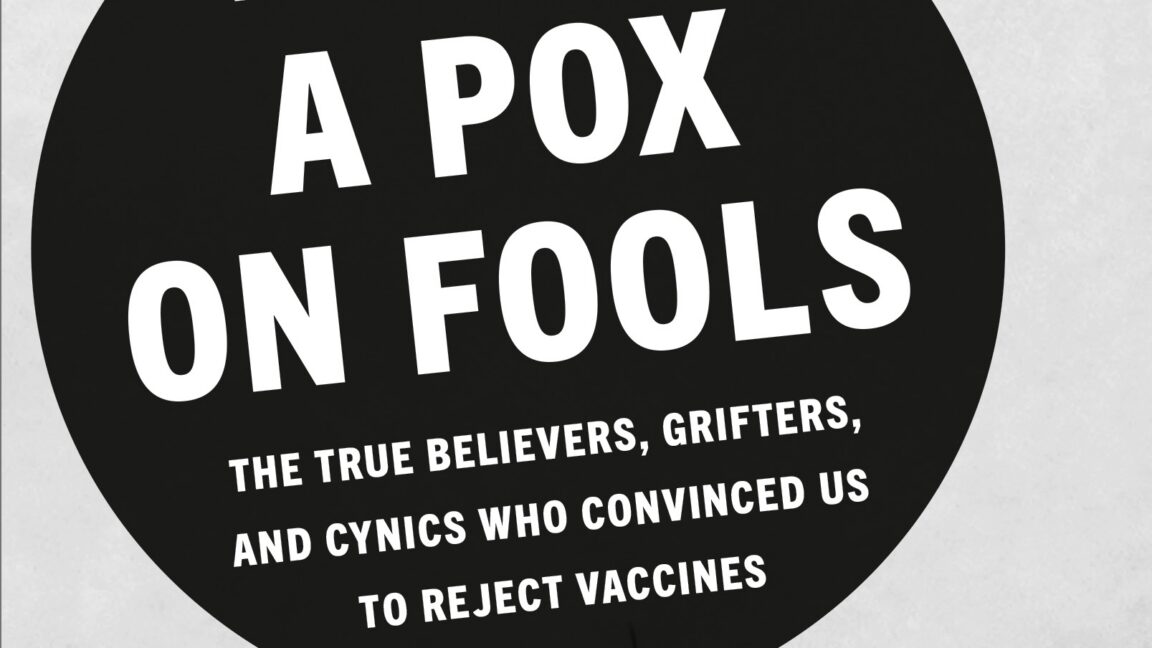
Plotkin’s disillusionment stems from a paradoxical reality: as our medical tools become more sophisticated, our collective will to use them appears to be fracturing. This regression is the central focus of Thomas Levenson’s new book, A Pox on Fools: The True Believers, Grifters, and Cynics Who Convinced Us to Reject Vaccines. Levenson, a professor of science writing at MIT, argues that the modern anti-vaccine movement is not a contemporary glitch of the social media age, but rather the latest iteration of a struggle that has persisted for over three centuries. By categorizing vaccine opposition into three distinct buckets—the "Wrong," the "Bad," and the "Intolerable"—Levenson provides a roadmap for understanding how we arrived at this precarious juncture.
Main Facts: The Anatomy of Opposition
The core thesis of Levenson’s work is that anti-vaccine rhetoric is remarkably unoriginal. The arguments flooding TikTok and X (formerly Twitter) today are almost identical in spirit, and often in phrasing, to those shouted in the town squares of the 1700s. Levenson identifies three primary pillars of this opposition:
- The "Wrong" (Moral and Natural Objections): This category encompasses the belief that vaccines interfere with a higher power or the "natural order." Whether framed through 18th-century theology or 21st-century "wellness" culture, the argument posits that health is a byproduct of purity and virtue, and that disease is a "natural" process that should not be thwarted by human intervention.
- The "Bad" (Safety and Harm Allegations): This involves the claim that vaccines are actively toxic or more dangerous than the diseases they prevent. This narrative relies on the "Success Paradox"—because vaccines have effectively erased diseases like polio and smallpox from public memory, the public begins to fear the minor side effects of the medicine more than the catastrophic effects of the illness.
- The "Intolerable" (Political and Philosophical Objections): This thread focuses on bodily autonomy and the role of the state. It argues that even if vaccines are safe and effective, government mandates represent an unacceptable infringement on individual liberty.
Chronology: Three Centuries of Resistance
The history of vaccine opposition is as old as the practice of immunization itself. To understand the current climate, one must look back to the early 18th century, long before the advent of modern germ theory.
1721: The Boston and London Smallpox Epidemics
The first major Western conflict over immunization occurred in 1721. In London, Lady Mary Wortley Montagu, having observed the practice of "variolation" (inoculation) in the Ottoman Empire, sought to protect her children. Simultaneously, in Boston, the Puritan minister Cotton Mather learned of the practice from Onesimus, an enslaved African man. Onesimus explained that he had been "bought" in Africa and had undergone a procedure where pus from a smallpox sore was rubbed into a deliberate cut on a healthy person’s arm, granting them lifelong immunity.
The backlash was immediate and violent. Critics in Boston, led by local physicians who resented a minister practicing medicine, argued that Mather was "interfering with God’s judgment." A small bomb was even thrown through Mather’s window. The moral argument of the time was simple: smallpox was a divine tool used to punish the sinful or test the faithful. To inoculate was to commit blasphemy by attempting to escape God’s will.
The 19th Century: From God to Nature
As the Enlightenment progressed, the religious argument began to evolve into a secular "naturalist" argument. The Transcendentalists and Romantics replaced "Divine Providence" with "Nature." Figures like Henry David Thoreau championed the idea that the human body, in its natural state, was sufficient to ward off illness if one lived a "pure" life.
During this era, the first organized "Anti-Vaccination Leagues" were formed in the UK and the US, following the introduction of mandatory smallpox vaccination for infants in the 1850s. These groups argued that the state was "poisoning" children and that hygiene and sanitation—rather than "morbid matter" from cows—were the only legitimate ways to combat disease.
1905: The Legal Watershed
The tension between individual rights and public health reached the U.S. Supreme Court in the case of Jacobson v. Massachusetts. During a 1901 smallpox outbreak, Henning Jacobson refused a mandatory vaccination, arguing it violated his right to care for his own body. The Court’s ruling in 1905 remains the bedrock of American public health law, establishing that individual liberty is not absolute and can be curtailed for the common good.
1998 to Present: The Era of Misinformation
The modern era of the movement was ignited by Andrew Wakefield’s now-retracted and fraudulent 1998 study linking the MMR vaccine to autism. Despite the study being debunked and Wakefield losing his medical license, the "Bad" argument—that vaccines cause neurological harm—found a permanent home in the burgeoning internet age. This paved the way for modern figures like Robert F. Kennedy Jr. to transform vaccine skepticism into a broad-based political movement.
Supporting Data: The Cost of Skepticism and the Success Paradox
To understand the weight of Levenson’s argument, one must look at the data regarding human mortality before the vaccine era. In the 19th century, roughly 40% of children died from infectious diseases before reaching the age of five. This staggering statistic is the primary reason the average human lifespan was so low; it wasn’t that adults didn’t live to old age, but that so many children died in infancy that the statistical average was dragged down.
The "Success Paradox" is a documented psychological phenomenon in public health. When a vaccine program is 100% effective, the disease disappears. When the disease disappears, the public no longer perceives it as a threat. Consequently, any rare adverse reaction to the vaccine—or even a fabricated one—becomes the primary focus of public concern.
Current data highlights a disturbing new trend: the "partisan death gap." Levenson cites data showing that from 2021 onward, following the rollout of COVID-19 vaccines, political affiliation became a measurable risk factor for mortality. In the U.S., counties with higher Republican vote shares saw significantly higher death rates from preventable illness, largely due to lower vaccine uptake. This suggests that vaccine skepticism has shifted from a fringe "naturalist" lifestyle choice to a core component of political identity.
Official Responses and the Legal Framework
The official response to vaccine skepticism has historically been rooted in the legal principle of "Salus populi suprema lex esto" (The health of the people shall be the supreme law).
Justice John Marshall Harlan, writing for the majority in Jacobson v. Massachusetts, summarized the state’s position: "Liberty itself, the greatest of all rights, is not unrestricted license to act according to one’s own will. It is only freedom from restraint under conditions essential to the equal enjoyment of the same right by others."
In recent years, however, the official response has struggled to keep pace with the speed of digital misinformation. While the CDC and WHO provide exhaustive data refuting claims of vaccine-induced autism or "turbo cancers," these institutions often lack the emotional resonance found in anti-vaccine narratives. Levenson notes that while the scientific community relies on "facts and figures," the opposition relies on "anecdotes and identity."
Governments have recently moved toward "soft mandates"—requiring vaccines for school attendance or international travel—rather than the "hard mandates" (fines or imprisonment) of the early 20th century. However, even these measures have faced significant legal challenges in a post-COVID judicial environment that is increasingly skeptical of administrative state power.
Implications: The Erosion of Solidarity
The implications of Levenson’s findings are somber. The shift in vaccine opposition from a religious or "naturalist" fringe to a mainstream political identity suggests a fundamental breakdown in social solidarity. Vaccination is, by its nature, a collective act; its success depends on herd immunity, which protects those who are too young, too old, or too immunocompromised to be vaccinated themselves.
When vaccination is reframed as a matter of "personal choice" rather than "civic duty," the concept of the "common good" begins to dissolve. Levenson argues that the current climate is not merely a "war on science," but a "war on the social contract."
The "cynics and grifters" identified in the book’s title have found a lucrative business model in this skepticism. By selling "detox" kits or alternative supplements, they profit from the fear they instill. Meanwhile, the "True Believers" are often parents acting out of a genuine, albeit misguided, desire to protect their children from perceived harms.
For pioneers like Stanley Plotkin, the tragedy lies in the fact that we are choosing to retreat from a victory already won. We possess the technology to relegate measles, mumps, and polio to the history books, yet we are allowing them to return. As Levenson concludes, the challenge of the 21st century may not be the discovery of new vaccines, but the rediscovery of the collective trust required to use them. Without a restoration of that trust, the "downhill" slide Plotkin fears may become an irreversible descent.




Leave a Comment