The Philosophy of Defiance: Guillermo del Toro and the Moral Imperative of Disobedience
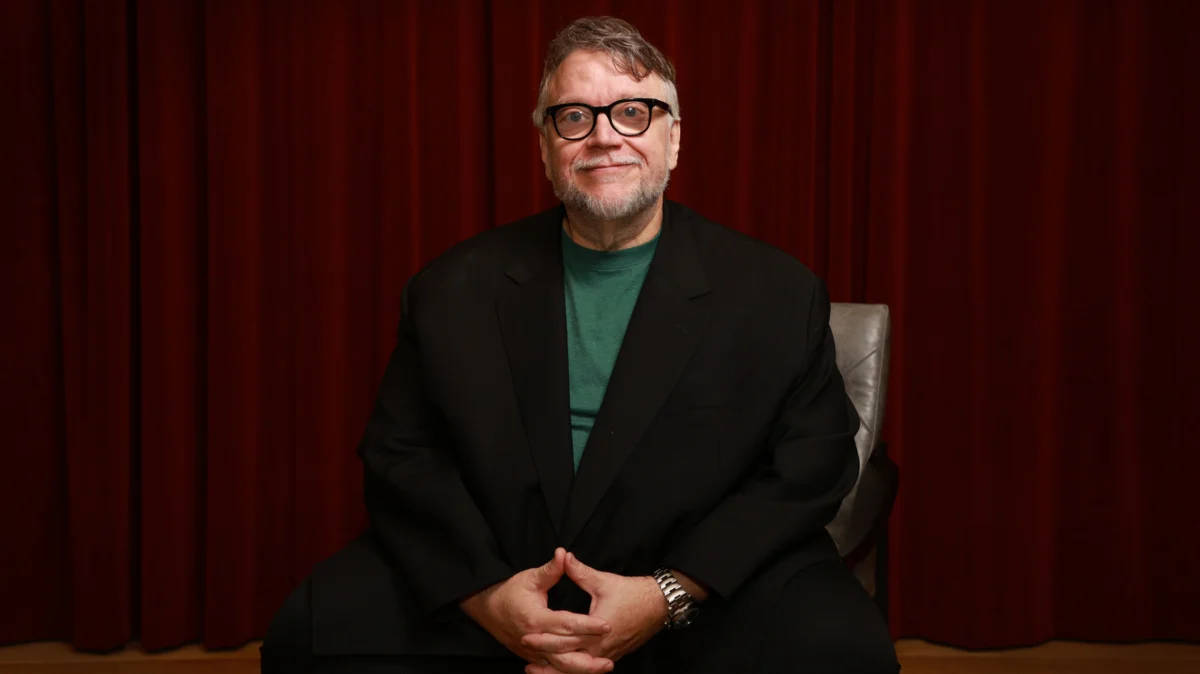
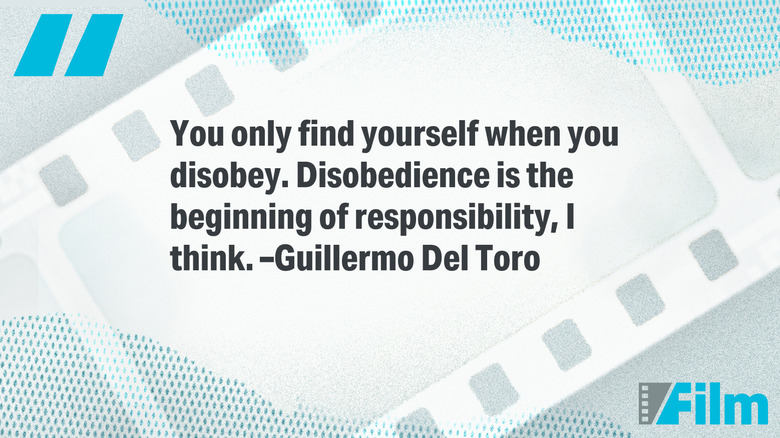
Guillermo del Toro, the Academy Award-winning visionary behind The Shape of Water and Pan’s Labyrinth, has long been regarded as the modern poet laureate of the macabre. His films are populated by clockwork mechanisms, amphibious gods, and pale-skinned monsters with eyes in their palms. However, beneath the ornate practical effects and gothic aesthetics lies a rigid, deeply personal moral framework. At the heart of this framework is a singular, provocative conviction that del Toro first articulated during the press cycle for his 2006 masterpiece: "Disobedience is the beginning of responsibility, I think."
This philosophy—that true maturity and ethical standing are found not in following the rules, but in knowing when to break them—has become the defining characteristic of del Toro’s body of work. For the Mexican filmmaker, disobedience is not merely a rebellious impulse; it is the fundamental act of "finding oneself" in a world designed to enforce conformity.
Main Facts: The Context of a Radical Quote
The quote originated in a 2007 interview with The A.V. Club, shortly after Pan’s Labyrinth had become a global cultural phenomenon. The film, set against the backdrop of post-Civil War Francoist Spain, serves as the ultimate cinematic vessel for del Toro’s views on authority. In the movie, the young protagonist, Ofelia, is caught between a world of brutal fascist reality and a dangerous, mythical underworld.
Del Toro argues that the ultimate villain is not the monster in the dark, but the "blind obedience" demanded by institutions—be they the military, the church, or the traditional family unit. In Pan’s Labyrinth, the antagonist Captain Vidal represents the terminal point of obedience: a man who follows orders to the point of psychopathy, valuing the "ticking of the watch" and the chain of command over human empathy.
By contrast, Ofelia’s "disobedience"—her refusal to hand over her infant brother to a magical creature and her refusal to yield to her stepfather’s cruelty—is her ultimate triumph. In del Toro’s eyes, by disobeying, Ofelia takes responsibility for her own soul. This theme has permeated every project he has touched, from his early Spanish-language indies to his billion-dollar Hollywood blockbusters.
Chronology: From Guadalajara to the Global Stage
The Library of Wonders (1964–1980s)
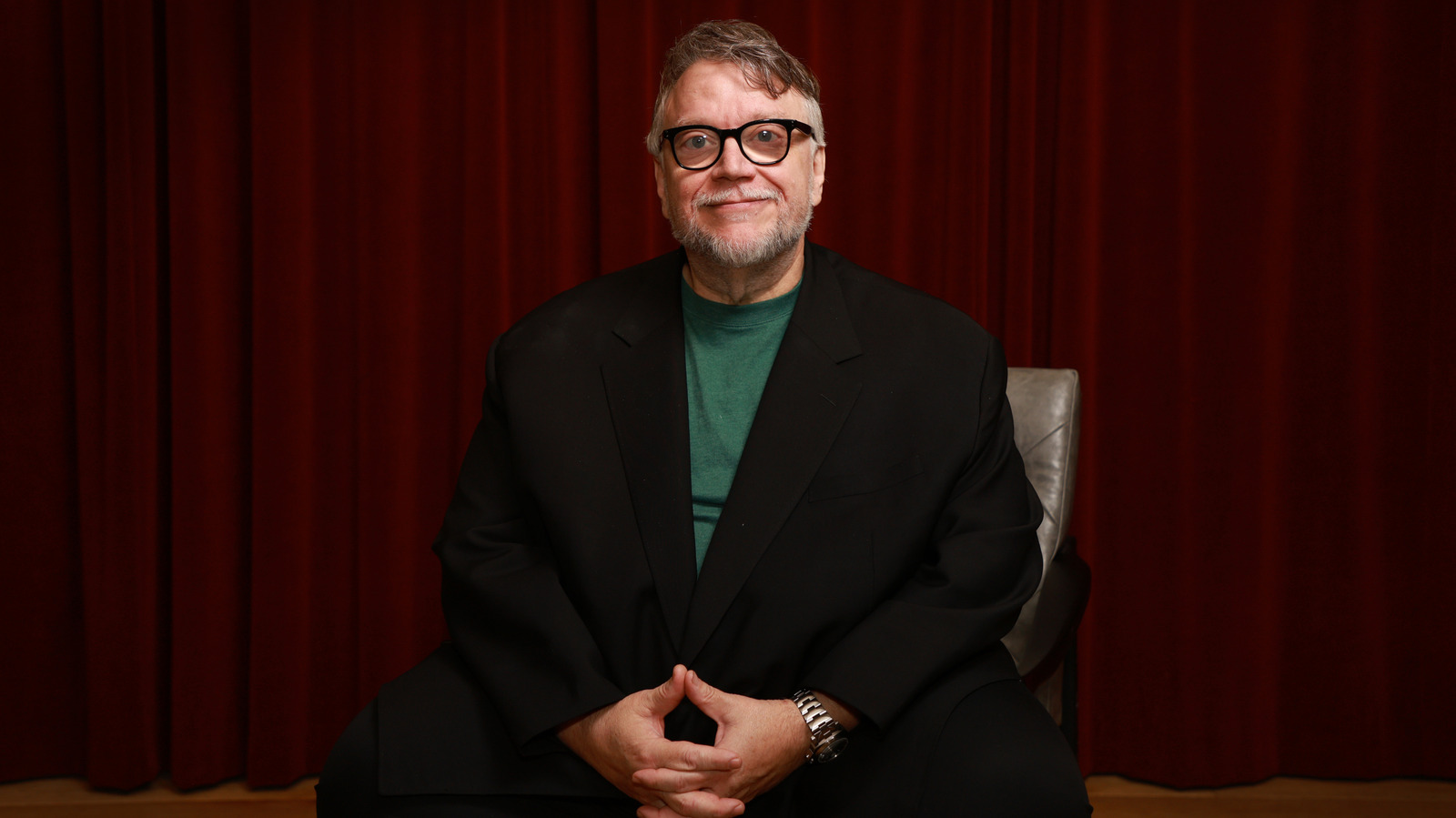
Born in Guadalajara, Jalisco, Mexico, on October 9, 1964, Guillermo del Toro was raised in a strict Catholic household. This religious upbringing instilled in him a fascination with iconography and the concept of "the soul," but it also sparked an early resistance to dogma.
In 1969, his father, Federico del Toro Torres, won a $6 million lottery, a life-altering event that moved the family into a mansion. For young Guillermo, the most important feature of this new home was an expansive library. He spent his youth consuming classic literature, biology textbooks, and art history. It was here that he purchased a Spanish edition of Mary Shelley’s Frankenstein—a book that would become his personal bible. Shelley’s creature, a "monster" rejected by its creator, became the blueprint for del Toro’s empathy for the outsider.
The Rise of the Mexican Master (1993–2006)
Del Toro’s professional journey began with special effects and makeup, leading to his 1993 feature debut, Cronos. The film, a subversion of the vampire myth, established his "anti-authoritarian" stance: the vampire is not a predator to be feared, but a victim of a mechanical curse and human greed.
His transition to Hollywood was initially rocky with Mimic (1997), a project marred by studio interference. This experience only reinforced his belief that "structure" and "institutions" (in this case, the studio system) were often the enemies of artistic truth. He returned to Spain to film The Devil’s Backbone (2001) and eventually Pan’s Labyrinth (2006), the latter of which won three Academy Awards and cemented his status as a world-class auteur.
The Best Picture Breakthrough (2017–Present)
In 2017, del Toro achieved the rare feat of winning Best Picture and Best Director for The Shape of Water. The film was a direct challenge to traditional monster movie tropes. Instead of the "Creature from the Black Lagoon" being killed by the hero, the creature is the hero, and the "disobedient" cleaning lady who saves him is the protagonist.
His recent work, including the stop-motion Pinocchio (2022) for Netflix, continues this thread. Unlike the Disney version, which focuses on a boy learning to be "good" by following rules, del Toro’s Pinocchio is a story about a puppet who learns to be "real" by questioning the fascist regime of Mussolini and the rigid expectations of his father, Geppetto.
Supporting Data: Themes of Institutional Critique
Del Toro’s filmography can be viewed as a series of "parables" rather than "pamphlets." He distinguishes between the two by noting that pamphlets seek to enact a current political agenda, while parables address timeless human struggles.
The Rejection of Fascism
In both Pan’s Labyrinth and Pinocchio, del Toro uses historical fascism as the ultimate symbol of "obedience without questioning." He often cites the myth of Mussolini keeping the "trains running on time" as a metaphor for the soul-crushing nature of efficiency over humanity. In his films, characters who value order above all else are invariably the true monsters.
The Father-Child Dynamic
A recurring "supporting data" point in his narratives is the subversion of paternal authority. In Hellboy, the titular demon chooses his adoptive human father’s morality over his biological "destiny" as a harbinger of the apocalypse. In Crimson Peak, Edith Cushing rebels against the Victorian expectations of her father and society to become an author and uncover a gothic conspiracy. For del Toro, the act of "becoming" always requires a break from the father’s shadow.
The Sanctity of the Monster
Statistically, del Toro’s films feature a higher-than-average empathy for the "other." While traditional cinema uses monsters to represent fear, del Toro uses them to represent the divine. By "disobeying" the social norm that dictates monsters must be feared, his characters find love and salvation.
Official Responses and Critical Reception
The industry’s response to del Toro’s philosophy of disobedience has been overwhelmingly positive, though it was not always so. Early in his career, his insistence on practical effects and genre-blending was seen as a commercial risk. However, the "Del Toro Aesthetic" has since become a gold standard.
- Critical Acclaim: Pan’s Labyrinth holds a 95% rating on Rotten Tomatoes, with critics frequently citing its "moral complexity" and "brave ending."
- Academic Interest: Scholars have written extensively on his work as a form of "Gothic Marxism," noting how his films critique the structures of power and capital through the lens of the supernatural.
- Peer Recognition: Fellow "Three Amigos" directors Alfonso Cuarón and Alejandro G. Iñárritu have praised del Toro for his "uncompromising vision." Cuarón once noted that Guillermo is the only filmmaker who can make a "big-budget movie with the soul of an anarchist."
In his 2018 Oscar acceptance speech, del Toro officially addressed his status as an immigrant and an outsider, stating, "The greatest thing our art does and our industry does is to erase the lines in the sand." This was seen by many as a modern application of his "disobedience" quote—a refusal to accept the geopolitical "rules" that divide people.
Implications: The Legacy of Responsibility
The implications of del Toro’s philosophy extend far beyond the cinema screen. By framing disobedience as the "beginning of responsibility," he challenges the viewer to reconsider their own relationship with authority.
In a modern world increasingly defined by algorithmic curation and social pressure to conform, del Toro’s message is one of radical individual agency. To obey blindly is to outsource your morality to an institution. To disobey—to question the "why" behind the "what"—is to take the weight of your own actions onto your shoulders.
The Future of the Auteur
As del Toro moves toward his long-gestating adaptation of Frankenstein for Netflix, the cycle of his career seems to be closing. He is returning to the book he saved up for as a child in Guadalajara. The film is expected to be the ultimate exploration of his thesis: a "monster" who is more responsible for his actions than the "creator" who abandoned him.

A Cultural Shift
Del Toro has proven that "eccentricities" and "B-movie" sensibilities are not barriers to mainstream success; they are the very things that make art resonate. His legacy will not just be the monsters he created, but the permission he gave to audiences to be "freaks," to be "outsiders," and most importantly, to be "disobedient" in the face of injustice.
Ultimately, Guillermo del Toro’s life and work suggest that we only truly find ourselves when we step off the "structured paths laid before us." Responsibility, in the Del Toro universe, is the courage to chart a path that is entirely, defiantly one’s own.