The Pivot of a Unicorn: Magic Leap Abandons Hardware Ambitions to Become AR Component Supplier
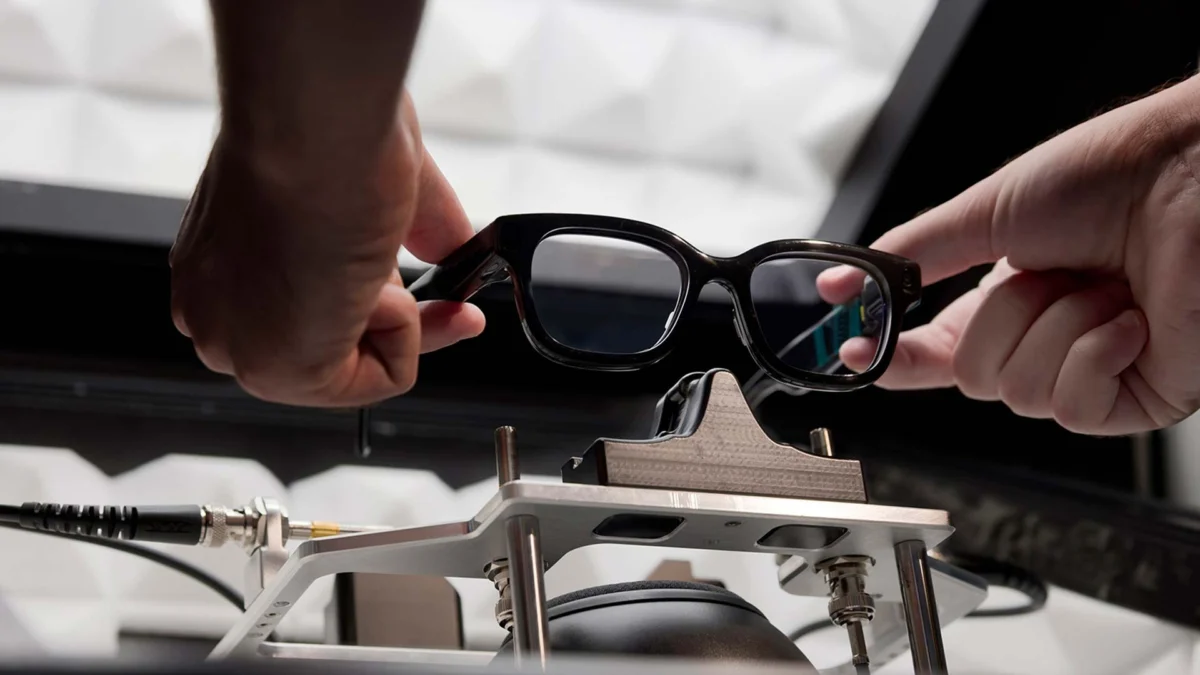
The augmented reality (AR) landscape has shifted once again, marking a somber milestone for one of the industry’s most storied and well-funded pioneers. Magic Leap, the Florida-based "unicorn" that once promised to revolutionize human-computer interaction through its proprietary spatial computing headsets, is undergoing a radical structural transformation. This shift involves a strategic retreat from manufacturing its own branded hardware in favor of becoming a specialized supplier of waveguide optics and integration services for other technology giants.
The transition, however, comes at a significant human cost. According to recent regulatory filings and internal reports, Magic Leap is laying off nearly 200 employees—a substantial portion of its remaining core engineering and product development staff—as it pivots toward a business model focused on "AI display glasses."
Main Facts: A Dramatic Downsizing and Strategic Shift
The news of Magic Leap’s downsizing surfaced through a formal Worker Adjustment and Retraining Notification (WARN) Act letter submitted to Florida government officials. The filing reveals that the company is set to terminate 193 employees at its headquarters in Plantation, Florida. The layoffs are scheduled to take effect on October 1st, 2024, signaling a rapid dismantling of the infrastructure required to design and iterate on first-party consumer or enterprise headsets.
The scope of the layoffs is comprehensive, affecting nearly every department essential to the creation of a standalone hardware product. Affected roles include:
- Engineering: Hardware, software, manufacturing, and quality assurance.
- Product & Design: UX/UI designers, product management, and technical program management.
- Leadership: Several senior engineering and executive leadership positions.
While the exact remaining headcount is not public, industry estimates suggest the company may now consist of only a few hundred employees, a far cry from the thousands it employed during its peak valuation years. This "strategic pivot," as the company describes it, marks the end of Magic Leap’s quest to be the "Apple of AR." Instead, the company is positioning itself as an "essential AR ecosystem partner," focusing on its proprietary waveguide technology—the thin, glass components that steer light into a user’s eyes to create digital overlays.
Chronology: From Stealth-Mode Darling to Component Vendor
To understand the weight of this pivot, one must look at the turbulent 14-year history of Magic Leap, a company that has arguably defined the "hype cycle" of the AR industry.
2010–2017: The Era of Infinite Hype
Founded in 2010 by Rony Abovitz, Magic Leap operated in total secrecy for years. It captured the imagination of Silicon Valley by releasing "shot on Magic Leap" concept videos—such as a whale jumping through a gymnasium floor—that many later criticized as being misleadingly cinematic. Despite the lack of a public product, the company raised billions from blue-chip investors, including Google, Alibaba, and Qualcomm.
2018–2019: The Magic Leap 1 and Market Reality
In 2018, the company finally released its first device, the Magic Leap 1 (formerly the "One Creator Edition"). Priced at $2,300, the device was cumbersome, required a tethered waist-mounted computer pack, and suffered from a limited field of view. Sales were reportedly abysmal, failing to reach even the low end of internal projections. The device struggled to find a home between the consumer market (where it was too expensive) and the enterprise market (where it lacked software support).
2020–2021: The First Pivot and Leadership Change
By early 2020, the company faced a liquidity crisis. It laid off roughly 1,000 employees and announced its first major pivot: moving away from the consumer market to focus exclusively on enterprise sectors like healthcare and manufacturing. Founder Rony Abovitz stepped down as CEO and was replaced by former Microsoft executive Peggy Johnson. Under Johnson, the company secured a $500 million investment and focused on refining its optics for a second-generation device.
2022–2023: Magic Leap 2 and the Saudi Acquisition
The Magic Leap 2 launched in late 2022, featuring industry-leading "dynamic dimming" technology and a significantly wider field of view. While technically superior to its predecessor, it faced stiff competition from Microsoft’s HoloLens 2 and a burgeoning market of "smart glasses." During this period, Saudi Arabia’s Public Investment Fund (PIF) took a majority stake in the company, eventually investing over $1 billion to keep the lights on.
2024: The Final Transition
By mid-2024, reports from Bloomberg and Road to VR suggested that the company’s focus was shifting again. With the Apple Vision Pro and Meta’s Quest 3 dominating the spatial computing conversation, Magic Leap’s path to becoming a primary platform holder seemed increasingly narrow. The October layoffs and the announcement of the "waveguide supplier" model represent the final surrender of its hardware-brand ambitions.
Supporting Data: The Cost of the AR Dream
The financial figures surrounding Magic Leap are staggering. To date, the company has raised over $4 billion in venture capital and sovereign wealth funding. This makes it one of the most well-funded startups in history to have never achieved mass-market success or profitability.
The company’s survival has become increasingly dependent on the Saudi PIF, which transitioned from a minority investor to the majority owner. This relationship has provided a lifeline, but it also reflects the reality that Western venture capitalists have largely soured on the high-burn, low-return nature of standalone AR hardware.
Data from the recent pivot suggests a shift in where the value lies:
- IP Portfolio: Magic Leap holds over 4,000 patents, many of which relate to "nanostructure" waveguide manufacturing. This IP is likely the company’s most valuable asset.
- Partnerships: Over the last 24 months, Magic Leap has signed a manufacturing deal with Pegatron (a major Apple supplier) and a technology licensing partnership with Google. These deals were the "canary in the coal mine," indicating that Magic Leap was moving toward a licensing model long before the official announcement.
Official Responses: Putting a Brave Face on the Pivot
In public statements, Magic Leap leadership has framed the layoffs and the shift in focus as a proactive move to capture the growing "AI glasses" market. Rather than competing with Meta or Apple, Magic Leap wants to be the company that provides the "eyes" for their future devices.
Scott Carden, Senior Vice President of Display Engineering and Manufacturing at Magic Leap, highlighted the company’s expertise in solving the manufacturing hurdles of AR.
"Magic Leap is seizing the moment where our AR innovation and manufacturing expertise create the greatest market impact," Carden stated. "We’re solving the toughest challenges of scaling waveguide production, from industry-leading waveguide performance to manufacturing and full-device integration. Now, we’re using our unmatched expertise to help partners bring AI display glasses to millions of consumers in the fastest way possible through our waveguide technology."
The company’s marketing language has notably shifted from "Spatial Computing" to "AI Display Glasses." This reflects a broader industry trend where companies are moving away from bulky, immersive headsets in favor of lighter frames that use AI to provide contextual information to the user.
Implications: The End of the Independent AR Era?
The pivot of Magic Leap has profound implications for the future of the augmented reality industry and the broader tech landscape.
1. The Consolidation of the AR Ecosystem
Magic Leap’s retreat suggests that the cost of developing a full-stack AR platform—including hardware, an operating system, and a developer ecosystem—is simply too high for anyone but the "Big Tech" giants. With Apple, Meta, and Google now firmly entrenched, the "independent unicorn" model for hardware appears to be dead. Future innovations in AR are more likely to come from specialized component makers or through acquisitions by the titans.
2. The Rise of "AI Glasses" vs. "Full AR"
Magic Leap’s specific mention of "AI display glasses" is telling. The industry is currently divided between high-end "Mixed Reality" (like the Vision Pro) and lightweight "Smart Glasses" (like the Ray-Ban Meta glasses). By focusing on waveguides for AI glasses, Magic Leap is betting that the near-term future of the medium lies in stylish, lightweight eyewear that prioritizes AI-driven utility over complex 3D gaming or immersive spatial environments.
3. The Value of Specialized IP
While the layoffs are a blow to the Florida tech scene, Magic Leap’s shift to a supplier model could actually be its most profitable path. If Magic Leap’s waveguides are truly "unmatched," as Carden claims, the company could become the "Intel" or "Qualcomm" of the AR world. By providing the essential optical components to every other manufacturer, they could theoretically reach more users than they ever would have with a proprietary headset.
4. Impact on the Florida Tech Hub
The loss of nearly 200 high-paying engineering and executive roles is a setback for the South Florida technology corridor. Magic Leap was the crown jewel of the "Silicon Beach" movement. As the company shrinks its footprint, the local ecosystem loses a significant driver of talent and innovation, though many of the laid-off engineers will likely be snatched up by competitors like Meta and Apple, who maintain offices in the region.
Conclusion
Magic Leap’s journey from a secretive startup with a $4 billion war chest to a specialized component supplier is a cautionary tale of the "hardware is hard" adage. While the dream of the Magic Leap headset may be fading, the company’s technology may yet live on in the glasses worn by millions—just without the Magic Leap logo on the frame. The October 1st layoffs mark the end of an ambitious chapter, but for the survivors at the company, the race to power the next generation of AI eyewear is only just beginning.