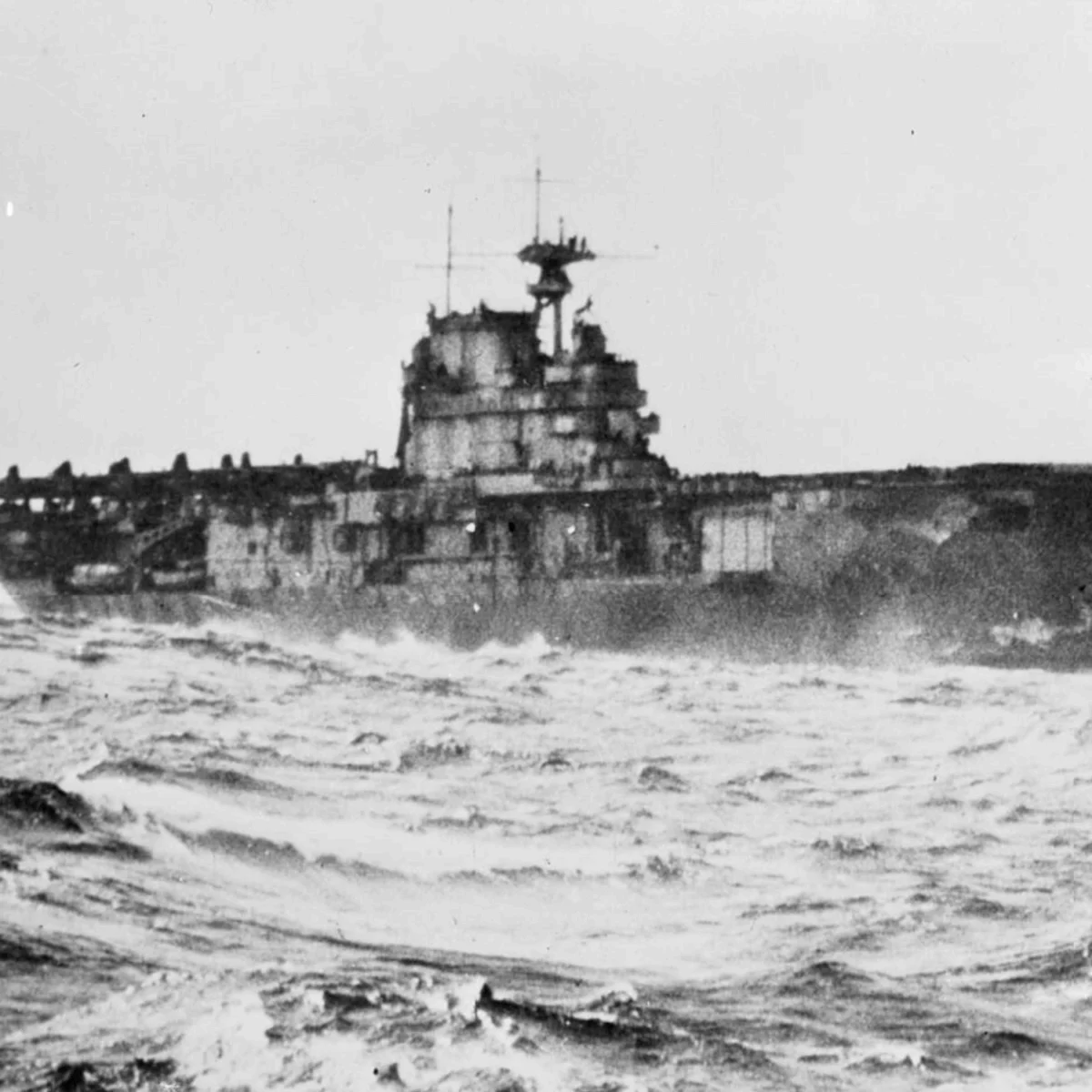
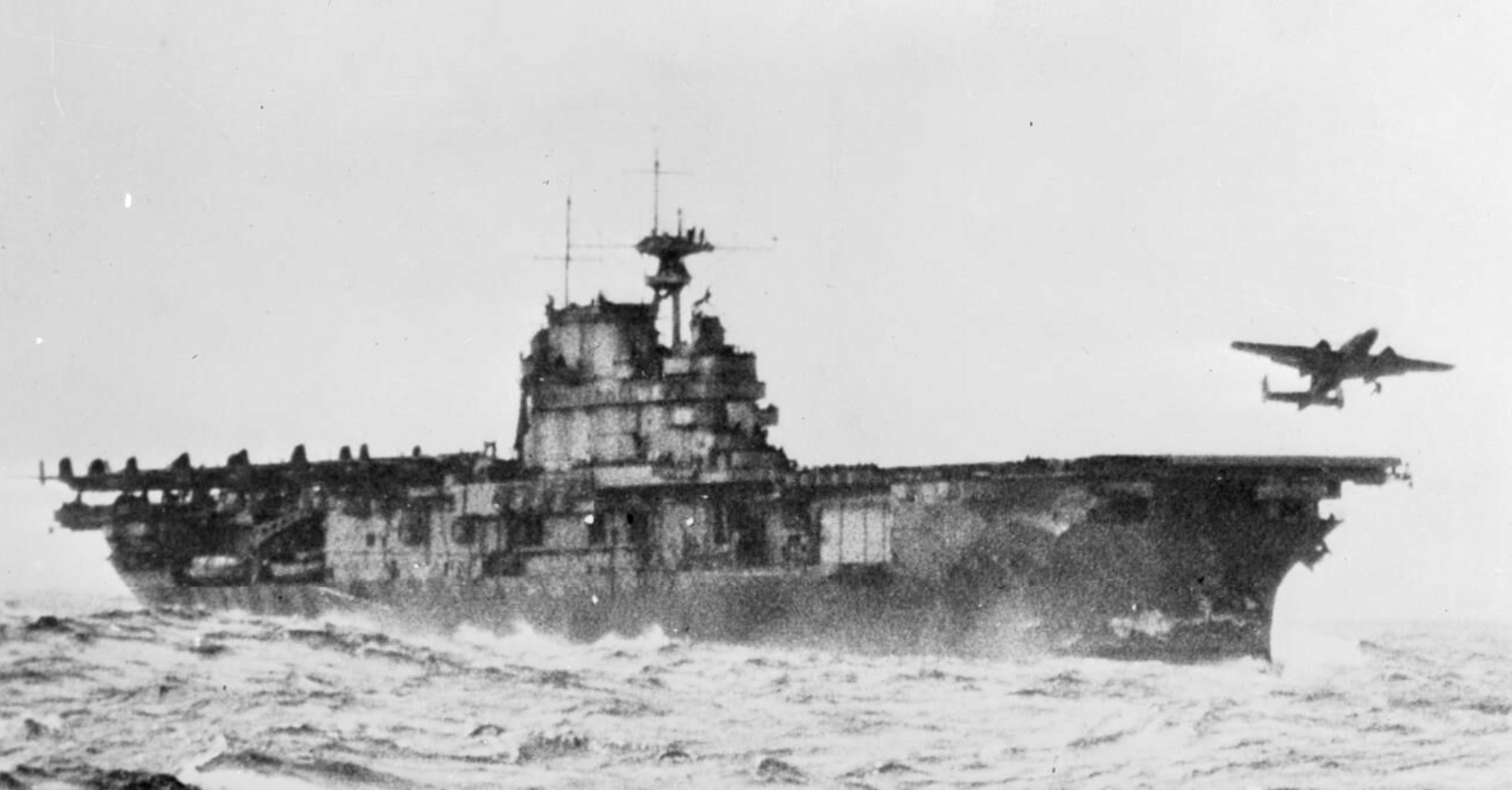
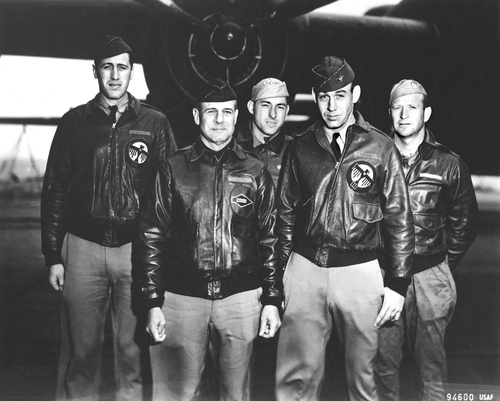
TOKYO, Japan – April 18, 1942 – In a daring and audacious strike that reverberated across the globe, 16 US B-25 Mitchell bombers, launched from the aircraft carrier USS Hornet, delivered a shocking blow to the Japanese home islands, targeting Tokyo and other key cities. This audacious daylight raid, led by Lieutenant Colonel James H. Doolittle, marked the first time Japan’s sacred homeland had been bombed since its infamous surprise attack on Pearl Harbor just four months prior, on December 7, 1941. That act of aggression had irrevocably drawn the United States into the brutal theatre of the Second World War (1939-45).
While the material damage inflicted by the Doolittle Raid was, in the grand strategic calculus of the Pacific War, relatively slight, its psychological impact was immeasurable. It served as a stark demonstration of a harsh reality that would define the global conflict: no cities, no populations, anywhere, were truly safe from the escalating threat of aerial bombardment. For the United States, reeling from the devastation at Pearl Harbor, the raid was a desperately needed morale booster. For Japan, it shattered the illusion of invulnerability and ignited a profound shift in military strategy, inadvertently setting the stage for one of the war’s most decisive naval engagements.
The Genesis of a Daring Plan: Revenge for Pearl Harbor
The devastating Japanese surprise attack on the US Pacific Fleet at Pearl Harbor on December 7, 1941, followed swiftly by Japan’s formal declaration of war, plunged the United States into a global conflict it had long sought to avoid. The immediate aftermath was dire; within hours of Pearl Harbor, another Japanese raid decimated the majority of the 35 B-17 Flying Fortress aircraft belonging to the USAAF on Luzon Island in the Philippines. With its Pacific Fleet crippled, a direct counterattack against Japan seemed an impossible dream.
However, President Franklin D. Roosevelt (1882-1945), acutely aware of the urgent need to restore national morale and demonstrate American resolve, pressed his military leaders for a retaliatory strike. The Joint Chiefs of Staff were tasked with conceiving a plan to hit Japan directly. While Roosevelt would later be widely credited with the raid’s inception, the true genesis of the Doolittle Raid, initially dubbed "Special Aviation Project No. 1," is attributed to Captain Francis S. ‘Frog’ Low, an operations officer under Admiral Ernest J. King (1878-1956), Commander-in-Chief of the US Navy. Low’s innovative idea was to launch medium bombers from an aircraft carrier – a feat previously deemed impossible – to strike Japan, then fly on to land in Allied China.
This audacious concept addressed a critical strategic dilemma: how to strike Japan without exposing precious aircraft carriers to unacceptable risks by bringing them too close to the enemy’s heavily defended home waters. The solution lay in using specially adapted bombers with extended range, launched from a distance that would keep the carrier task force relatively safe. Lieutenant Colonel James H. Doolittle (1896-1993), a legendary aviator and aeronautical engineer, was chosen to lead the mission, which would later bear his name. The plan involved 16 North American B-25 Mitchell medium bombers, tasked with taking off from the USS Hornet and striking Tokyo, then the world’s third-largest city, as well as other strategic targets. The immediate strategic value, given the small number of aircraft, was acknowledged to be limited. However, its immense psychological significance was paramount: it would unequivocally demonstrate to both the Japanese leadership and the American public that the US armed forces were capable of striking at the very heart of the enemy. The shock value, much like that of the attack on Pearl Harbor, was intended to far outweigh any potential material damage.
Preparations: Training and Modifications for an Impossible Mission
The secrecy surrounding Special Aviation Project No. 1 was absolute. In February 1942, volunteers from the 17th Bombardment Group, based at Pendleton Field, Oregon, were assembled for a mission of undisclosed danger and importance. These were the men Doolittle would train for an unprecedented task. The core challenge was teaching bomber pilots, accustomed to long runways, to take off from a simulated carrier deck – a mere 300 feet (91.4 m) strip. Doolittle meticulously trained the crews in a new, unfamiliar technique: keeping the aircraft’s tail down during takeoff to maximize lift in the incredibly short distance available. The intensive training also included precision low-altitude flying, navigating without visual aids or radio references, and night-flying, skills crucial for the planned covert approach and escape. Critically, there was no opportunity to practice actual carrier take-offs at sea; the first time these pilots would attempt this perilous maneuver from a moving ship would be on the actual mission.
Aircraft carriers were designed to launch and recover short-range fighter planes, not heavy, twin-engined bombers. This fundamental incompatibility meant that landing the B-25s back on the Hornet was impossible. Thus, after hitting their targets in Japan, the bombers were to continue westward, flying approximately 1,000 miles (1,600 km) to land at the Chuchow airfield in Allied China. This one-way trip further underscored the mission’s inherent risks and the commitment required from every volunteer.
The B-25 Mitchell itself underwent significant modifications for the raid. A robust, two-engined medium bomber, it typically featured defensive machine guns in the nose, tail, dorsal, and underbelly. For the Doolittle Raid, several key adaptations were made:
Autopilot: Added for increased stability and precision during the long flight.
Ventral Gun Turret: Removed to save weight and space, deemed unnecessary for the low-altitude, high-speed nature of the mission.
Norden Bombsight: The standard, highly accurate Norden bombsight was replaced. It was unreliable at the extremely low altitudes at which the B-25s would be bombing. In its place, a simpler, custom-made device was installed, designed by Captain C. Ross Greening. This "Mark Twain" bombsight allowed the bombardier to send light signals to the pilot, maintaining critical radio silence throughout the approach and attack.
Fuel Capacity: The most crucial modification was the installation of auxiliary fuel tanks, increasing the B-25s’ fuel capacity by approximately 60% to a staggering 1,141 gallons (4,319 litres). This extended range was absolutely essential for the planned flight to China after bombing Japan.
Ordnance: Each bomber carried a payload of four 500 lb (225 kg) bombs, or a combination of three such bombs and a cluster of smaller incendiary bombs, designed to maximize damage and create widespread fires.
The intensity of the desire for revenge for Pearl Harbor was palpable among the crews. Many US servicemen, civilians, and even high-ranking officials sent their war medals to Doolittle’s team, with explicit instructions for them to be tied to the bombs dropped on Japan, a powerful symbolic act of retribution.
The Perilous Journey and Early Launch
On April 1, 1942, the USS Hornet, carrying the 16 B-25s securely lashed to its flight deck, sailed from San Francisco. Days later, it rendezvoused with a formidable protective task force from Pearl Harbor, commanded by the formidable Admiral William ‘Bull’ Halsey (1882-1959). This task force, designated Task Force 16, included another aircraft carrier, the USS Enterprise, along with cruisers and destroyers, providing a vital screen against enemy detection. The group of US ships steamed westward towards Japan, maintaining strict radio silence and an unwavering course.
The mission was predicated on surprise. The original plan called for the B-25s to launch under the cover of darkness, allowing them to approach and fly over Japan at night, maximizing the element of surprise and reducing exposure to enemy defenses. However, fate intervened on April 18. At 7:38 a.m., while still 700 miles (1,100 km) from Tokyo – approximately 170 miles (273 km) further than the planned takeoff point – radar operators detected a line of Japanese patrol boats. Despite Halsey’s immediate evasive maneuvers, one of the boats, the Nitto Maru, managed to relay a sighting report to Tokyo before being attacked and sunk by USS Nashville. The element of complete secrecy was compromised.
The decision was instantaneous and fraught with risk. If the raid was to succeed at all, the bombers had to launch immediately. Doolittle, recognizing the critical window was closing, gave the order to launch in broad daylight, hours ahead of schedule and significantly further from Japan than planned. This meant an even longer flight for the already heavily laden bombers and a daylight approach over enemy territory. "To hell with the plans," Doolittle reportedly declared, "We’re going now!"
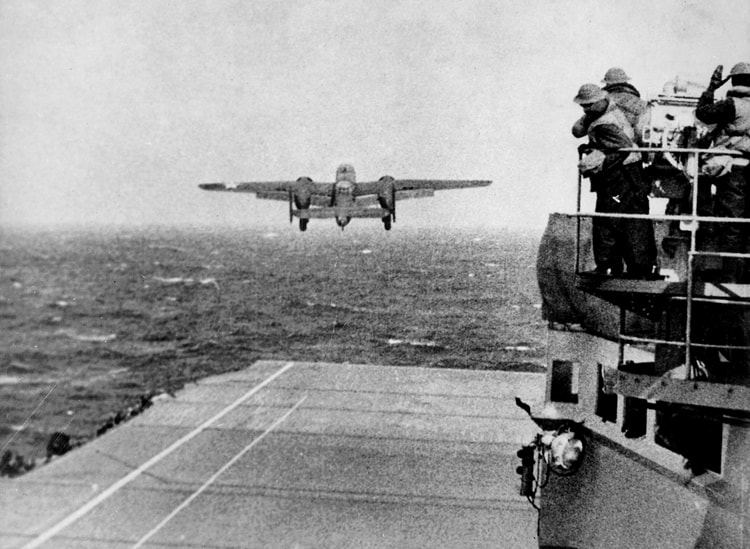
Getting off the Hornet‘s flight deck was undeniably the first and perhaps the greatest challenge of the entire operation. The B-25s, loaded with fuel and bombs, barely fit on the deck. Fortunately, the weather, despite the early launch, offered a crucial advantage: a strong headwind. As Doolittle himself later recounted:
"We had only one real worry and that would have been a dead calm. The carrier would have been able to make perhaps thirty knots; under those conditions taking off from the carrier deck would have been, at best, precarious. In the event there was a thirty knot wind, the carrier was able to make twenty knots into this wind so we had an effective wind of fifty knots across the deck."
(Holmes, 208)
This combined wind speed provided the necessary lift. Starting at 8:24 a.m., Doolittle’s bomber, "Ruptured Duck," led the way. Each subsequent aircraft followed at four-minute intervals, a testament to the rigorous training. Against all odds, every single B-25 successfully completed the hair-raising takeoff from the pitching deck of the Hornet. The planes initially grouped around 9:20 a.m., flying in formation before breaking off to head towards their respective targets. One bomber targeted Kobe, another Nagoya, and one Osaka. The remaining 13 bombers were assigned targets within the sprawling metropolis of Tokyo. The primary objectives were industrial and military sites vital to Japan’s war effort, including oil refineries, ironworks, shipyards, and factories. Crucially, cultural sites like the Imperial Palace were strictly off-limits, a directive reflecting the US’s attempt to avoid indiscriminate destruction, at least in official policy.
Striking the Heart of Japan: The Attack
The bombers pressed on, flying low to avoid radar detection and minimize exposure to anti-aircraft fire. Nagoya and Kobe were hit effectively. The bomber assigned to Osaka, encountering difficulties, instead struck the vital Yokosuka naval yard and then Yokohama, Japan’s most important port. The 13 bombers targeting Tokyo arrived just after noon on April 18. Remarkably, they met with little to no fighter resistance. This unexpected lack of opposition was partly due to a serendipitous coincidence: just one hour before the raid, Tokyo had completed a comprehensive air raid drill, which included actual Japanese aircraft flying over the city. This drill, ironically, "lessened the psychological impact of the raid on the local population but helped the bombers escape" (Dear, 240). Many residents initially mistook the American planes for part of the ongoing exercise.
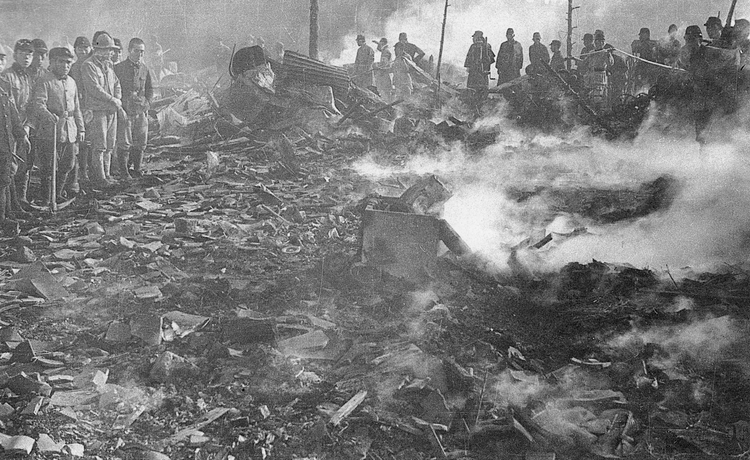
All 13 bombers successfully dropped their loads over Tokyo. Despite encountering hostile fire from ground-based anti-aircraft defenses, the low-altitude, high-speed runs allowed the bombers to escape largely unscathed. The raid achieved a degree of success exceeding expectations for such a small force, especially given the state of bombing accuracy at that stage of the war. Approximately 50 people were killed across the targeted cities, including women and children, and around 100 buildings were damaged. A significant hit was scored on the submarine tender Taigei, causing serious damage. While one or two 500-lb bombs would not obliterate a factory, the cumulative effect was noticeable. It was hoped the incendiary bombs would spark uncontrollable conflagrations, but here again, the earlier air-raid drill proved beneficial to the Japanese. Most of the Tokyo Fire Department was still on high alert and was able to respond quickly to extinguish any fires that did break out.
The Aftermath: Fates of the Raiders
With their mission accomplished, the crews faced the perilous journey to China. Exhausted and low on fuel after flying well beyond their original planned range, many were forced to make emergency landings or bail out. Four of the bombers managed to crash-land in China, their crews parachuting to safety or surviving the rough landings. One aircraft, experiencing severe technical problems, was obliged to land at the Russian port of Vladivostok, a neutral territory at the time. The remaining crews, their B-25s finally running out of fuel over unfamiliar Chinese terrain, were forced to abandon their aircraft, parachuting into the darkness.
The experiences of the downed airmen varied dramatically. In China, many were aided by sympathetic Chinese civilians and soldiers, who risked their own lives to guide the Americans to safety. However, not all were so fortunate. Three servicemen were captured after ditching their plane near Ningpo, and five more were apprehended after parachuting out near Nanchang. These eight men were subjected to brutal treatment, including torture, by the Japanese authorities.
The Japanese military, humiliated by the raid and desperate to maintain their propaganda of invulnerability, subjected the captured airmen to a show trial for alleged war crimes. The charges stemmed from the raid having (albeit unintentionally) hit civilian targets, despite the official US directive to focus on military and industrial objectives. This trial, widely condemned by international bodies, resulted in severe sentences. Three airmen – Lieutenants Dean E. Hallmark, William G. Farrow, and Harold A. Spatz – were executed by firing squad on October 15, 1942. A fourth airman, Lieutenant Robert J. Meder, succumbed to the horrific conditions of his imprisonment, dying from disease and malnutrition. The remaining four airmen, interned in Shanghai, endured nearly three and a half years of terrible prison conditions, only to be released at the end of the war in August 1945.
The crew that landed in Vladivostok faced a different fate. Since the USSR was not formally at war with Japan and sought to avoid antagonizing Tokyo, the crew was interned. However, they ingeniously managed to escape 13 months later, making their way through Soviet territory and eventually reaching Persia (modern-day Iran), where they were repatriated. In total, 71 of the 80 US servicemen involved in the Doolittle Raid, including Lieutenant Colonel Doolittle himself, survived the harrowing ordeal. The US fleet, with the Hornet and Enterprise, returned to Pearl Harbor unscathed on April 25, having successfully launched and supported the historic mission.
Reverberations: Official Responses and Strategic Shifts
The Doolittle Raid was a monumental boost to morale for the United States, then reeling from a string of defeats in the Pacific. For the American public, it was a tangible act of retaliation, a sign that the nation was striking back. President Roosevelt publicly acknowledged the raid, though he famously joked that the bombers had come from a secret base called "Shangri-La" (a fictional paradise from James Hilton’s novel Lost Horizon), further fueling the mystique of the mission and concealing the carrier’s involvement. Doolittle was immediately promoted to Brigadier General and awarded the Medal of Honor, the nation’s highest military decoration, for his leadership and bravery.
On the Japanese side, the raid caused profound consternation and disbelief within the military and political establishment. The Japanese military government had repeatedly assured its populace that the home islands were impregnable. The Doolittle Raid shattered this carefully constructed illusion. As Toshikazu Kase, Principal Secretary to the Foreign Minister, observed:
"When the Doolittle raid was conducted that produced a consternation because the military repeatedly assured the public that the Japanese sky was impenetrable. When this alleged impenetrability failed it naturally produced a reaction of discrediting the capability of the military command."
(Holmes, 208)
This public and internal discrediting of the military command had immediate and far-reaching consequences. Doolittle himself astutely identified a key strategic implication:
"Most important of all, it caused the retention of aircraft for the protection of the home islands that would have been much more effective had they been able to go south, where the fighting was going on."
(Holmes, 209)
The raid forced the Japanese to divert valuable air assets and resources to homeland defense, weakening their offensive capabilities in other critical theaters.
Furthermore, the Doolittle Raid galvanized the faction within the Japanese Navy that advocated for a decisive engagement with the US Pacific Fleet. Admiral Isoroku Yamamoto, Commander-in-Chief of the Combined Fleet, had long sought to lure the American carriers into a climactic battle to destroy them before the US industrial might could fully mobilize. The Doolittle Raid provided him with the political leverage he needed to push his audacious plan for the capture of Midway Atoll, a remote island strategically located in the central Pacific. Yamamoto argued that capturing Midway would extend Japan’s defensive perimeter and create a forward base from which to intercept and destroy any future American carrier raids against the homeland. This urgent need to prevent a repeat of the Doolittle Raid became a primary justification for the Midway operation.
In addition to the Midway plan, Japanese forces swiftly reacted by attacking and occupying the Chuchow airfield and other airfields in China that were potential landing sites for future American raids. An unsuccessful attempt was also made to capture the Aleutian Islands, aiming to establish an outer defensive screen to prevent US carriers from getting close enough to launch further attacks.
Implications: A Turning Point in the Pacific
The Doolittle Raid, though small in scale, acted as a catalyst that profoundly influenced the course of the Pacific War. Its most significant long-term implication was its direct contribution to the Battle of Midway. The two navies did indeed clash the next month in the Battle of the Coral Sea (May 1942), where the Japanese expansion towards Port Moresby was checked. Then, in June 1942, came the much more significant Battle of Midway. Driven by the imperative to secure their home islands against further attacks, the Japanese committed the bulk of their carrier fleet to Midway. In a stunning reversal of fortune, the US Navy inflicted Japan’s first major defeat in the Pacific, destroying four of its irreplaceable aircraft carriers and hundreds of skilled aviators. This engagement fundamentally shifted the strategic balance in the Pacific, effectively marking the turning point of the war.
While the Doolittle Raid was a shock, for the ordinary citizens of Tokyo, US bombers would not darken their skies again for another 31 months. When the US bombers did finally return in force, it would be as part of an intensive and devastating strategic bombing campaign. Direct, sustained attacks on Japan only became feasible once the US armed forces captured the Mariana Islands in June 1944, providing bases for the long-range B-29 Superfortress bombers, aircraft specifically designed for such missions. The Doolittle Raid, however, had demonstrated the vulnerability, paving the way for the eventual systematic destruction of Japanese cities.
The Doolittle Raid remains a powerful symbol of courage, ingenuity, and the indomitable spirit of retaliation. Its legacy endures not only in military history but also in popular culture. The story of the raid, vividly recounted by one of its pilots, Ted W. Lawson, in his 1943 book Thirty Seconds over Tokyo, was adapted into a critically acclaimed 1944 film of the same name, starring Spencer Tracy as Doolittle. The raid also features prominently in the 2001 film Pearl Harbor, ensuring its dramatic narrative continues to captivate audiences and inspire reflections on a pivotal moment in the Second World War.
In the annals of ancient Mesopotamia, few deities command as much fascination and complexity as Inanna, the Sumerian goddess whose influence permeated every facet of life, from the tender embrace of l
Main Facts Helen Nde, an emerging voice in contemporary African literature, is poised to release her highly anticipated book, "The Runaway Princess and Other Stories." This collection delves
FOR IMMEDIATE RELEASE SCOTLAND – Step into a captivating exploration of history, folklore, and botanical science with Amanda Edmiston, the acclaimed herbal storyteller behind Botanica Fabula, as she i