The Post-Search Era: Moburst Unveils Integrated Growth Framework to Navigate the AI-Driven App Economy
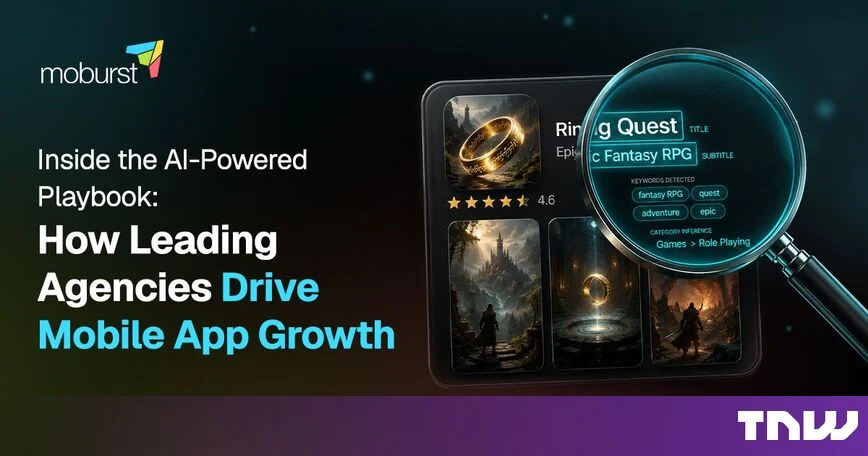
NEW YORK & TEL AVIV — As the global mobile ecosystem undergoes its most significant transformation since the launch of the App Store, Moburst, a leading global mobile marketing agency, has announced a definitive integrated framework designed to redefine application growth in the age of artificial intelligence.
The announcement, made on August 10, 2026, comes at a pivotal moment. With traditional user acquisition (UA) models facing systemic diminishing returns, Moburst’s new methodology seeks to move beyond the superficial application of AI tools, instead restructuring the entire marketing funnel around machine evaluation and synthesized consumer intent.
Main Facts: A New Paradigm for Mobile Growth
Moburst’s newly unveiled framework is not merely a collection of software updates but a fundamental reimagining of how mobile applications are discovered, evaluated, and installed. The core of the announcement rests on the transition from "Search" to "Answers." As search engines like Google and social platforms like TikTok evolve into AI-mediated discovery hubs, the traditional "keyword-first" approach is becoming obsolete.
The framework is built upon four strategic pillars:
- App Store Optimization (ASO) for Dual Audiences: Balancing human psychology with machine indexing requirements.
- Answer Engine Optimization (AEO): Ensuring apps are cited as primary recommendations by conversational AI like ChatGPT, Gemini, and Claude.
- Abbreviated Paid Acquisition: Leveraging AI-qualified leads to shorten the conversion journey and increase capital efficiency.
- Empirical Creative Testing: Using AI to iterate and validate creative assets through rigorous A/B performance data.
The effectiveness of this approach is backed by recent performance metrics. In collaboration with technology partner Sprout Social, Moburst reported campaign goal overachievements of up to 200%. Furthermore, the agency has successfully reduced creator sourcing time by 33% and eliminated over 30 hours of manual administrative work per week through the use of advanced social intelligence and semantic search tooling.
Chronology: The Evolution Toward AI-Native Marketing
To understand the necessity of Moburst’s new framework, one must look at the trajectory of the mobile marketing industry over the last decade.
The Early Era (2010–2018): The Keyword Gold Rush
In the early days of the App Store and Google Play, growth was largely a game of volume and keyword density. Marketers focused on "stuffing" metadata with high-traffic terms. Discovery was linear: a user searched for a term, viewed a list, and clicked an icon.
The Algorithmic Shift (2019–2023): The Rise of Personalization
Platforms began moving toward black-box algorithms. Apple introduced "Search Ads," and Google Play shifted toward "Guided Search." Success became less about specific keywords and more about "app quality" signals, retention rates, and conversion velocity. During this period, Moburst established itself as a leader by focusing on data science and creative strategy to feed these increasingly complex algorithms.
The AI Disruption (2024–Present): The Collapse of the Traditional Funnel
By 2025, the rise of Large Language Models (LLMs) fundamentally altered user behavior. Consumers began bypassing search bars in favor of asking AI assistants for recommendations ("What is the best budget-tracking app for a freelancer?"). This shift rendered traditional SEO and ASO insufficient. Moburst recognized that if an app does not exist within the "latent space" of an AI’s training data or its real-time web-crawling index, it effectively does not exist for the modern consumer.
The August 2026 announcement marks the culmination of two years of research and development into how marketing agencies must pivot to remain relevant in a world where the "middleman" is an AI agent.
Supporting Data: Efficiency and Scalability via Social Intelligence
The framework’s launch is supported by empirical evidence gathered through Moburst’s partnership with Sprout Social. As marketing shifts toward natural language, the ability to parse "social sentiment" at scale has become the new competitive moat.
Quantifiable Performance Lifts
In key account trials, Moburst utilized Sprout Social’s semantic search capabilities to identify high-intent creator partners. The results were stark:
- Goal Overachievement: Campaigns reached 200% of their projected KPIs, particularly in high-competition verticals like Fintech and Health & Fitness.
- Resource Allocation: By removing manual keyword filtering and utilizing AI-driven discovery, the agency saved an average of 30 hours per week in administrative tasks.
- Time-to-Market: The sourcing time for User-Generated Content (UGC) and influencer partnerships was slashed by 33%, allowing for real-time pivots based on trending social conversations.
The Shift in Acquisition Cost
Moburst’s data indicates that users who arrive at an app store page via an AI recommendation (AEO) have a 45% higher conversion rate than those arriving via generic search. This "pre-qualification" allows for a more aggressive but efficient bidding strategy in paid media, as the "education" phase of the marketing funnel has already been completed by the AI assistant.
Deep Dive: The Four Pillars of the Framework
Moburst’s framework is designed to address the "machine-human" duality of modern marketing.
Pillar One: ASO for Dual Audiences
Modern App Store Optimization must now satisfy two masters. The first is the human user, who relies on visual cues, screenshots, and social proof. The second is the machine indexer—specifically Apple’s automated App Store Tags and Google Play’s Guided Search.
Moburst’s approach utilizes "semantic clustering," ensuring that an app’s metadata communicates intent to the machine while maintaining a natural, persuasive tone for the human. This prevents the "uncanny valley" effect of AI-generated copy while maximizing visibility in automated suggestions.
Pillar Two: Answer Engine Optimization (AEO)
AEO is perhaps the most revolutionary aspect of the framework. It involves establishing "structured entity authority." Moburst works to ensure that a client’s app is cited across independent web sources, authoritative review platforms, and community discussions (such as Reddit and specialized forums). When an AI engine like ChatGPT or Gemini crawls the web to provide an answer, it identifies the app as a consensus leader, leading to a direct recommendation.
Pillar Three: Shorter, AI-Mediated Paid Acquisition
Traditional paid media often involves a long journey: Awareness -> Consideration -> Conversion. In the AI era, this path is abbreviated. Moburst aligns creative assets and bidding strategies with the "synthesized comparison" phase. If a user has already been told by an AI that "App X is the best for Y," the paid ad serves merely as the final frictionless gateway. This increases capital efficiency by reducing the need for repetitive "top-of-funnel" messaging.
Pillar Four: Empirical Creative Testing
The final pillar addresses the "creative fatigue" that plagues modern campaigns. Leveraging AI for rapid production, Moburst can generate hundreds of variants of screenshots, preview videos, and icons. However, the framework enforces a "strict testing protocol." Decisions are never made based on aesthetic preference; instead, every creative iteration is validated using real-time A/B performance data. This ensures that the AI’s generative power is harnessed by human strategic oversight.
Official Responses: Insights from Moburst Leadership
The launch of the framework reflects a broader philosophy within Moburst: that AI should be used to eliminate "operational friction" rather than just to generate content.
Julia Salume, Head of Influencer and UGC at Moburst, emphasized the strategic shift during the announcement:
“The mobile marketing landscape has moved beyond generic AI adoption claims. It is no longer enough to say you use AI; you must prove how it changes the outcome for the client. By eliminating operational friction and manual workarounds, our teams can focus on high-level strategic execution. Integrating data integrity across ASO, AEO, paid media, and creative testing delivers measurable scalability without compromising the baseline accuracy that brands depend on.”
Salume’s comments highlight a critical industry tension: the fear that AI will lead to a "race to the bottom" in terms of content quality. Moburst’s framework counters this by placing "data integrity" and "empirical testing" at the center of the process, ensuring that while the volume of marketing assets increases, the relevance and accuracy remain high.
Implications: The Future of the App Economy
The introduction of this framework by Moburst signals a "changing of the guard" in the digital marketing agency world. There are several long-term implications for brands and developers:
1. The Death of the Legacy Playbook
Agencies that continue to rely on manual keyword bidding and static ASO strategies will likely see their clients’ ROAS (Return on Ad Spend) crater. As AI agents become the primary interface for digital discovery, the "old ways" of gaming search engines will become a liability.
2. The Premium on "Entity Authority"
Brand reputation is becoming more technical. In the AEO world, what people say about an app on a niche forum may be more important for its "search" ranking than the actual text on its website. Brands will need to invest heavily in community management and third-party validation to influence the training sets and real-time indices of LLMs.
3. The Collapse of the Marketing Funnel
As AI provides users with pre-vetted recommendations, the traditional multi-step marketing funnel is collapsing into a single point of intent. This will lead to a more "winner-takes-all" dynamic in the app stores, where the top-recommended apps by AI assistants capture the vast majority of organic traffic.
4. Creative as a Variable, Strategy as the Constant
With AI handling the "production" of creative assets, the value of a marketing agency shifts from "execution" to "curation and strategy." The competitive advantage will go to those who can best interpret the data generated by AI testing and turn it into a long-term brand narrative.
About Moburst
Moburst is a full-service global mobile marketing agency dedicated to helping brands achieve hyper-growth. By specializing in the intersection of ASO, user acquisition, creative strategy, influencer marketing, and data science, Moburst has become the partner of choice for Fortune 500 companies and high-growth startups looking to navigate the complexities of the digital landscape. With offices in New York, Tel Aviv, and London, the agency continues to lead the industry in performance-driven results.
Contact Information:
Moburst Press Office
Email: [email protected]
Website: www.moburst.com