
The Queen’s Gambit: How Isabella of France Invaded England and Toppled a King
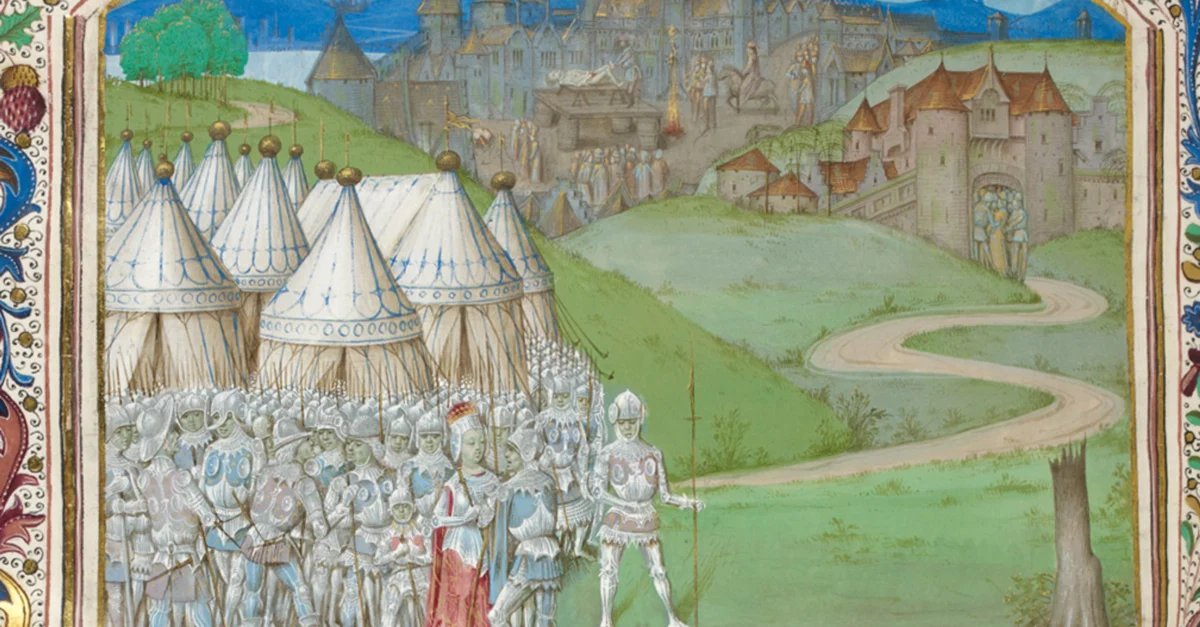
Suffolk, England – September 24, 1326 – A chilling wind swept across the North Sea, pushing a formidable fleet of 95 ships towards the English coast. What began on September 22nd as a voyage from Flanders under fair skies quickly transformed into a tempestuous ordeal, as dark, seething clouds unleashed a vengeful storm. The vessels were scattered and blown off course, yet by noon on the 24th, they had made landfall, likely in Suffolk. From their holds emerged approximately 1,500 men – a diverse force of English exiles, German mercenaries, and Dutch soldiers – unloading crates of provisions, arms, and armour. Their murmurs in various tongues carried a singular, revolutionary intent: to liberate England from the grip of "evil forces" that had bewitched King Edward II and plunged the kingdom into ruin.
At the vanguard of this audacious invasion stood Queen Isabella of France, a resolute 31-year-old monarch who, after years of perceived slights and genuine threats, had become the architect of her husband’s downfall. Aided ashore by her loyal knights and attendants, a makeshift shelter of four carpets was quickly erected for her, where a great fire was kindled against the coastal chill. Initially disoriented, Isabella swiftly dispatched riders to ascertain her location. Upon learning she had landed in the territory of a staunch ally, the Earl of Norfolk, a palpable sigh of relief escaped her. Wasting no time, even as her men secured the landing site, Isabella began drafting urgent letters. Addressed to the citizens of London and other pivotal towns, these missives declared her purpose: not as a conqueror, but as a liberator. She proclaimed her intent to avenge the recent murder of the Earl of Lancaster and to permanently expel the hated Despensers – those "enemies of the realm" – from power. Her plea was clear: she entreated all good and loyal Englishmen to rally to her "most noble and righteous cause."
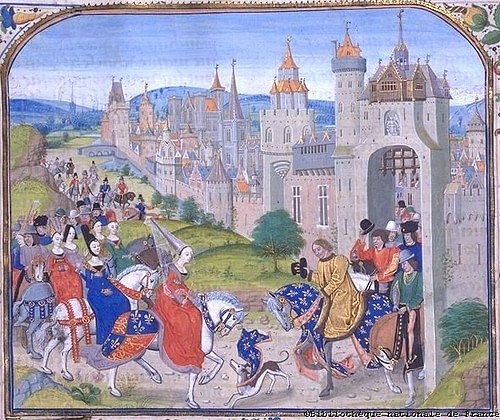
The following morning, the Earl of Norfolk formally greeted the Queen, escorting her to his castle at Walton-on-the-Naze. Here, a steady stream of earls, barons, and knights flocked to her banner, pledging their allegiance and their swords. Dressed symbolically in widow’s clothes, Isabella led her burgeoning army from the castle "as if on a pilgrimage," beginning their march inland. At her side rode Roger Mortimer, a tall and handsome man with whom she shared not only a battlefield alliance but also a passionate, scandalous affair. Mortimer, three years an exile due to his fierce opposition to the Despensers, harboured an unyielding thirst for vengeance. Behind the two lovers rode Prince Edward, Isabella’s 14-year-old son and the rightful heir to the English throne. A reluctant pawn in his mother’s grand scheme, the young prince had little choice but to accompany the army as it advanced through the English countryside. News of the invasion spread like wildfire across the kingdom, compelling every man, highborn and low, to choose a side. The die was cast; England’s fate hung precariously in the balance.
The Seeds of Discontent: A Queen’s Unraveling Marriage
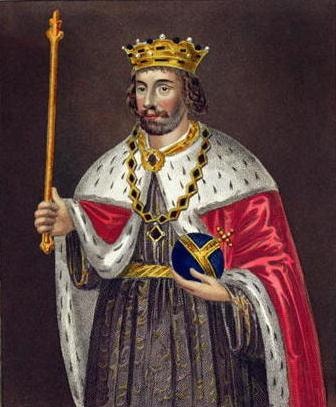
Isabella’s journey to this revolutionary act was long and fraught with personal humiliation and political intrigue. Her first arrival on English soil in February 1308 had been under vastly different circumstances. A mere 12-year-old bride, she was wed to King Edward II of England. Eleven years her senior, Edward possessed the outward appearance of a storybook monarch: over six feet tall, handsome, muscular, and with flowing, curly hair. However, appearances proved deeply deceptive. Rumours of Edward’s unconventional preferences and his disinterest in traditional kingly pursuits had already reached Isabella. He reportedly favoured the company of actors and fishermen over knights and earls, and found more joy in rustic crafts like thatching and swimming than in noble pastimes such as jousting and hunting.
The King’s Favorite and Royal Snubs
This proclivity for the unconventional manifested starkly at her own coronation, where Edward spent the entire night engrossed in conversation and laughter with his favourite, Piers Gaveston, pointedly ignoring his new bride. This egregious snub was not lost on Isabella, nor on her powerful father, King Philip IV of France, igniting a minor diplomatic scandal between the two royal houses.
As the years progressed, Isabella found herself increasingly isolated at court. Her husband’s devotion to Gaveston was absolute, extending even to the shocking act of bestowing some of Isabella’s own jewels upon his favourite, which Gaveston brazenly wore in public. While some historians suggest Edward II, a man of his time, might be excused for preferring the company of a contemporary over a child bride, Isabella felt the insult keenly. Her letters to her father painted a picture of deep distress, blaming Gaveston for "all her troubles" and lamenting that the king had become "an entire stranger to my bed."
While Isabella, perhaps out of a sense of royal decorum or strategic caution, never openly confronted Gaveston, the English nobility harboured no such reservations. The established earls and barons viewed Gaveston, a relatively lowborn Gascon knight, with contempt and fear, resenting the undue influence he wielded over the king. Gaveston’s own haughty and dismissive attitude towards them only exacerbated tensions. This simmering animosity boiled over in 1312, culminating in the capture and execution of Gaveston by the powerful Thomas, Earl of Lancaster. Edward II’s fury was immense, and he swore vengeance, though for the moment, his options were limited. In the immediate aftermath of Gaveston’s death, a brief rapprochement occurred between Edward and Isabella. Their first child, Prince Edward, was born in 1312, followed by three more children in subsequent years, offering a fleeting glimpse of royal domesticity.
The Rise of the Despensers: A Kingdom Under Tyranny
Gaveston’s demise, far from healing the rift between the Crown and the barons, merely created a vacuum. By the late 1310s, Edward II had found a new favourite, one who would prove even more rapacious and dangerous than his predecessor: Hugh Despenser the Younger. A man of formidable ambition and cunning, Despenser secured the king’s favour after becoming royal chamberlain in 1318. From that point, he and his father, Hugh the Elder, were showered with lands, titles, and unprecedented power, quickly becoming the two most influential figures in the realm. Much of their newly acquired wealth and estates lay in the Welsh Marches, the volatile borderlands between England and Wales. This blatant encroachment inflamed the powerful Marcher lords, a fiercely independent group of noblemen who fiercely guarded their territorial rights.
Mortimer’s Defiance and the Tower’s Shadow
Among the most prominent of these Marcher lords was Roger Mortimer, the young Baron of Wigmore. Mortimer, who had served the king loyally for much of his youth and recently distinguished himself by defeating a Scottish incursion into Ireland, soon grew disillusioned by Edward’s excessive favouritism towards the Despensers. Compounding his animosity was a historical grievance: Mortimer’s grandfather had slain Despenser’s grandfather in battle, fueling a deep-seated fear that the Despensers would seek a generational vengeance if not checked.
In 1321, the Marcher lords, led by Mortimer, decided to strike preemptively. They launched a devastating raid on the Despensers’ lands, leaving a trail of death, burning, and pillage. Mortimer then marched a force to the gates of London, where he was joined by the Earl of Lancaster. Together, they presented Edward II with an ultimatum: exile the hated Despensers. With little choice, the king conceded. However, no sooner had Mortimer and Lancaster disbanded their forces than Edward, emboldened, recalled the Despensers and laid siege to the rebellious Leeds Castle. This swift counter-move instilled fear among many rebels, leading to defections. Caught off-guard, Mortimer was forced to surrender at Shrewsbury in January 1322 and was subsequently imprisoned in the formidable Tower of London. Lancaster fared worse; captured after the Battle of Boroughbridge, he was executed in a manner mirroring the fate he had inflicted upon Gaveston a decade earlier. Edward II, having crushed the rebellion, showed no mercy. Scores of rebellious barons were executed, their mangled bodies displayed publicly as a grim warning. For a time, it seemed baronial power in England had been extinguished. Then, in August 1323, an unthinkable event occurred: Roger Mortimer, against all odds, escaped from the Tower of London and fled to France.
Exile and Alliance: The Queen’s Calculated Return
Mortimer’s escape led him to Paris, where he found refuge and welcome at the court of King Charles IV, Isabella’s brother. For several years, he lived as an exile, his gaze fixed across the Channel, patiently awaiting the opportune moment to return and dismantle the Despensers’ power. Back in England, Isabella too was consumed by the desire for the Despensers’ downfall. While she had grudgingly tolerated Gaveston, the Despensers exerted a far more comprehensive and sinister influence over her husband. They convinced Edward to appropriate estates rightfully belonging to Isabella, severely curtailing her income. They took custody of her younger children and, most terrifyingly, placed her in direct physical danger. In 1322, Edward and the Despensers, fleeing an invading Scottish army, abandoned Isabella at Tynemouth to fend for herself. Though she escaped unharmed, she never forgave their treachery.
A Diplomatic Mission Turns to Deception
Isabella’s suspicions deepened, eventually convincing her that the Despensers sought her permanent removal, perhaps even her assassination. In 1325, a diplomatic mission to France provided her with a strategic escape. She travelled with her eldest son, Prince Edward, ostensibly to negotiate peace between England and France. Once safely under her brother’s protection, she adamantly refused to return to England as long as the Despensers retained their power.
Forging an Unholy Alliance
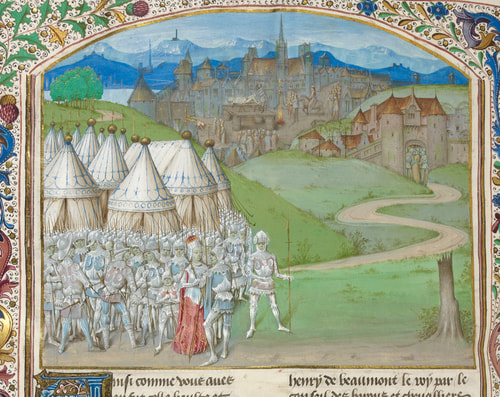
During her extended stay in Paris, Isabella cultivated a network of disgruntled English exiles and maintained covert correspondence with powerful contacts back home. She secured the crucial support of the Earl of Norfolk and the new Earl of Lancaster, who sought vengeance for his murdered brother. But it was among the numerous exiles that she encountered Roger Mortimer. They likely knew each other from before Mortimer’s imprisonment, but their shared grievances and political ambitions forged a powerful alliance that swiftly blossomed into a passionate love affair. By December 1325, whispers of their scandalous liaison had spread across Europe. They began to live openly together, seemingly flaunting their adultery before the world, a brazen act of defiance.
Within months, they had meticulously formulated a plan to invade England and permanently depose the Despensers. They secured the vital backing of the Count of Hainault by arranging a betrothal between his daughter Philippa and Prince Edward, thereby gaining a crucial base of operations in Flanders. Here, they gathered and supplied their army, a diverse force of mercenaries and English exiles. It was not until September 1326, with all preparations complete, that the rebels raised their sails, embarking on a voyage that would irrevocably alter the course of English history.
The Invasion: A Storm Brews on the North Sea
The journey itself was a testament to the precarious nature of medieval sea travel and the sheer determination of the invaders.
From Flanders to Suffolk: The Winds of Change
On September 22nd, 1326, the fleet, numbering 95 ships, departed from the Flemish shores. Initially, the weather held fair, promising a smooth crossing. However, the benign morning skies soon gave way to a dramatic shift, as dark, ominous clouds gathered, unleashing a violent storm upon the North Sea. The fleet was momentarily scattered, blown off course by the tempest’s fury. Yet, the resilience of the crews and the leadership of Isabella and Mortimer saw them through. By the afternoon of September 24th, the disparate vessels had regrouped and made safe landfall, most likely on the beaches of Suffolk. From the ships, approximately 1,500 men disembarked, a motley crew united by their opposition to Edward II and the Despensers. Crates of provisions, weapons, and armour were unloaded, preparing the ground for the impending campaign.
Rallying the Realm: Isabella’s Proclamations
Isabella’s immediate priority upon landing was to secure her position and rally popular support. Her initial disorientation quickly gave way to decisive action. Learning she was in the friendly territory of the Earl of Norfolk, she wasted no time in penning crucial letters. These proclamations, addressed to the citizens of London and other key towns, were masterpieces of medieval propaganda. Isabella carefully framed her invasion not as a usurpation of royal authority, but as a righteous mission of liberation. She positioned herself as a saviour, come to avenge the injustices committed by Edward II’s favourites, specifically citing the murder of the Earl of Lancaster and the tyrannical rule of the Despensers. She appealed directly to the loyalty of "good and loyal Englishmen," calling them to join her in this "noble and righteous cause." This strategic communication laid the groundwork for the widespread popular support she would soon receive.
England Ablaze: The Overthrow of Edward II
After departing Norfolk’s castle, Isabella’s army began its purposeful march westward, setting its sights on London, the heart of the kingdom. The news of the invasion, already spreading rapidly, soon reached Edward II and the younger Despenser, who were dining in the perceived security of the Tower of London. "Alas, alas," the king reportedly cried, "We are all betrayed!" On October 2nd, panic-stricken, Edward and Despenser fled the city, abandoning it to the whims of its increasingly agitated populace.
London’s Fury and the Despensers’ Downfall
Their flight ignited a ferocious revolt in London. The enraged citizens seized John Marshal, a staunch Despenser ally, and brutally killed him. When the Bishop of Exeter attempted to restore order, the rioters dragged him from his horse, decapitated him with a bread knife, and sent his head to Isabella as a grisly, yet unequivocal, demonstration of their support. With London’s mobs firmly on her side, Isabella pressed on to Bristol Castle, where Hugh Despenser the Elder had sought refuge. The castle fell quickly to Isabella’s forces after a brief siege, and the elder Despenser was taken prisoner. Isabella, in a calculated act of poetic justice, handed her captive over to the Earl of Lancaster, who exacted his vengeance by having Despenser chopped into pieces and fed to the hounds. The brutality was a stark warning to any who dared oppose the Queen.
The King Dethroned: A New Era Dawns
While Bristol was under siege, Edward II and Hugh Despenser the Younger attempted to escape by ship to Ireland. However, unfavourable winds thwarted their plans, forcing them to seek refuge in Wales. Isabella and Mortimer seized this crucial opportunity, issuing a public statement that argued Edward II’s attempted abandonment of the realm rendered him unfit to rule. They declared that young Prince Edward should therefore assume control of the government. This declaration was powerfully endorsed, signed by Norfolk, Lancaster, and many of the kingdom’s most influential earls, signaling a profound shift in the rebellion’s objective. It was no longer merely about removing the Despensers; it was a direct referendum on Edward II’s fitness to govern.
On October 26th, Edward II was officially stripped of his authority, and his powers were formally transferred to his 14-year-old son. In November, Isabella and Mortimer reached Hereford on the Welsh border. From there, Lancaster was dispatched to track down the fugitive king. He succeeded, capturing both Edward II and the younger Despenser near the Welsh town of Llantrisant on November 16th. Lancaster took custody of the former king, while Despenser was hauled back to Hereford, where he met a horrific end, being hanged, drawn, and quartered. The rebellion had triumphed; a new, uncertain day was about to dawn in England.
The Regency: Power, Corruption, and a King’s Demise
With the rebellion decisively won and the Despensers brutally dispatched, Isabella and Mortimer faced a pressing and uncomfortable question: what was to become of the deposed king? Despite his confinement and the transfer of his authority to his son, Edward II technically remained the reigning monarch. Yet, two decades of unpopular and tumultuous rule had alienated most of his barons, making his continued existence a dangerous liability.
On January 24th, 1327, Edward II was pressured into formally abdicating his throne. The crown passed to his son, who was proclaimed King Edward III of England. However, as Edward III was still underage, true power devolved into the hands of Isabella and Mortimer, who began to rule as regents. Their initial months in power were characterized by a blatant pursuit of personal enrichment and the rewarding of their allies. Mortimer rapidly accumulated vast lands and titles in the Welsh Marches, generously distributing patronage to his fellow Marcher lords. Isabella, too, consolidated her control over significant estates and, astonishingly, helped herself to the royal treasury, once withdrawing £20,000 under the dubious pretext of settling foreign debts. This conspicuous corruption and self-serving governance deeply alienated many of their former supporters, who had hoped for a just and stable royal administration.
The Shadow of Berkeley Castle: Edward II’s Mysterious End
In September 1327, Edward II died while under house arrest at Berkeley Castle. The official report attributed his death to natural causes, with some contemporary accounts suggesting he died of a broken heart after losing his throne. However, rumours quickly began to circulate that Isabella and Mortimer were complicit in the former king’s suspiciously timely demise. While no concrete evidence unequivocally links them to his murder, their significant political gains from his death make their involvement a persistent subject of debate among historians to this day.
Following Edward II’s death, Mortimer’s ambitions became even more overt and unchecked. During banquets and tournaments, he would conspicuously preside over Edward III, a clear signal to the realm that he, not the young king, was the true power behind the throne. Furthermore, in 1328, he arrogantly appointed himself Earl of March, a title that only further fueled consternation and resentment throughout the kingdom. Henry, Earl of Lancaster, became the first prominent lord to openly break with Mortimer and Isabella. Feeling marginalized from power, he accused the regents of breaching both the Magna Carta and Edward III’s coronation oath by adhering to Mortimer’s "sinister counsel." Throughout 1329, the ominous specter of a new round of civil wars loomed large over England.
The Fall of the ‘She-Wolf’ and Her Lover: A Son’s Revenge
Mortimer’s unchecked power and the growing opposition from the nobility led to increasing paranoia. He harboured particular suspicions about the loyalties of Edmund, Earl of Kent, who, despite having sided with Isabella and him during the rebellion, was also Edward II’s half-brother. In March 1330, whispers reached Mortimer that Kent was embroiled in a conspiracy against him. Rather than conducting a thorough investigation, Mortimer, in a chilling display of arbitrary power, simply had Kent arrested for treason and summarily beheaded.
Nottingham Castle: The Secret Passage to Power
This final act of tyranny proved to be the breaking point for many within the realm, including the young Edward III himself. Now 17 years old, the new king was determined to cast off the shackles of his regency and assert his own authority. On the night of October 19th, 1330, Edward III, along with 22 trusted companions, executed a daring plan. They gained entry to Nottingham Castle, where Mortimer and Isabella were residing, through a secret tunnel known only to a few. They seized Mortimer, hauling him away as Isabella reportedly pleaded with her son to "have pity on the good Mortimer!" But Edward III showed no such mercy, though he spared Mortimer the drawing and quartering reserved for traitors. On November 29th, 1330, Roger Mortimer was hanged at Tyburn.
With Mortimer’s execution, Edward III began to rule in his own right, marking the true end of the regency. Isabella, stripped of her power and influence, retreated from public life to live the remainder of her days in retirement, primarily at Hertford Castle, where she died in August 1358. Her demise brought to a close one of the most dramatic and scandalous narratives in medieval English history – a tale of betrayal, love, and an insatiable quest for power.
Legacy and Implications: A Defining Chapter in English History
The tumultuous events surrounding Isabella’s invasion and the deposition of Edward II left an indelible mark on the English monarchy and its political landscape. The precedent of deposing a reigning monarch, even one as unpopular as Edward II, was a significant and dangerous development, highlighting the precariousness of royal authority when faced with a unified baronial and popular opposition.
Shifting Dynasties and the Power of the Crown
The rise of Edward III, liberated from his mother’s and Mortimer’s regency, ushered in a new era of strong, effective monarchy. Edward III would go on to become one of England’s most celebrated warrior kings, initiating the Hundred Years’ War and shaping the nation’s identity. His decisive action in overthrowing Mortimer demonstrated a monarch willing to assert his power, learned perhaps from the very excesses of his predecessors. The episode also reinforced the ongoing tension between the Crown and the nobility, a recurring theme in English history, yet showcased that a king’s power was not absolute and could be challenged, even by his own family.
Isabella’s Enduring Enigma
Isabella herself remains a complex and controversial figure in history. Once dubbed the "She-Wolf of France" by later chroniclers, her motivations were a blend of personal slight, political ambition, and genuine fear for her life and the future of her children. Her transformation from a scorned queen to a ruthless political mastermind underscores the limited avenues available to women, even those of royal birth, to exert influence and agency in a male-dominated medieval world. Her story is a testament to how personal grievances could escalate into national crises, profoundly impacting the course of a kingdom.
The events of 1326-1330 were not merely a dynastic struggle; they represented a seismic shift in English governance, paving the way for a new political order under Edward III and leaving a lasting legacy of royal power challenged and ultimately redefined. The Queen’s Gambit was a gamble that paid off, albeit temporarily, for Isabella, but it forever changed the game of English kingship.



Leave a Comment