The Art of the Narrative: Celebrating the Winners of the 2026 V&A Illustration Awards
The Victoria and Albert Museum (V&A) has once again solidified its position as the global arbiter of excellence in the graphic arts with the announcement of the 2026 V&A Illustration Awards. Established over half a century ago, these awards have grown from a modest recognition of book design into a prestigious, biennial celebration of the diverse and evolving ways in which we visualize stories, information, and commercial identities.
In a ceremony that highlighted the intersection of traditional craft and cutting-edge digital technique, the 2026 awards recognized a wide array of talent, ranging from seasoned professionals to burgeoning students. This year’s competition was particularly fierce, reflecting a post-digital era where illustration must compete with—and often integrate—AI, animation, and immersive media.
Main Facts: A Landmark Year for Visual Storytelling
The 2026 V&A Illustration Awards witnessed an unprecedented level of participation, receiving over 1,600 entries from across the globe. To be eligible, artworks must have been created for the UK market or produced by UK-based illustrators during the 2024–2025 period. The sheer volume of submissions underscores the health of the illustration industry, despite the technological shifts currently reshaping the creative landscape.
The ultimate accolade, the Moira Gemmill Illustrator of the Year, was awarded to Annabel Wright. Wright also secured the top spot in the Advertising and Commercial category for her evocative "A Window into Communities" campaign for Glasgow’s Hunterian Art Gallery. Other category winners included Julie Pereira (Adult Factual), Stephen Smith (Adult Fiction), Baljinder Kaur (Illustration for Children), and Vannysha Chang (Emerging Illustrator).
The diversity of the medium was the defining characteristic of this cycle. Entries spanned a vast spectrum of formats, including traditional exhibition posters, complex animations, surreal book cover designs, and 3D installations. This breadth confirms that the V&A’s definition of illustration remains fluid, encompassing any visual work that serves a narrative or communicative purpose.

Chronology: Fifty Years of Evolution (1972–2026)
The V&A Illustration Awards were first established in 1972. At their inception, the awards were primarily focused on the burgeoning field of book illustration and cover design within the British publishing industry. Over the decades, the museum expanded the scope of the competition to mirror the changing roles of illustrators in society.
- 1970s–1980s: Focus on print media, editorial work, and the "Golden Age" of British book jackets.
- 1990s–2000s: The introduction of digital tools began to appear in submissions, leading to the creation of categories that recognized the technical shift from pen and ink to pixels.
- 2010s: The awards became a biennial event, allowing for a more comprehensive two-year review of the industry. The "Emerging Illustrator" category was strengthened to support the pipeline of talent coming out of art schools.
- 2024–2025: The submission window for the current awards saw a surge in hybrid works—pieces that blend physical drawing with digital collage and motion graphics.
- 2026: The official announcement of the winners marks the 54th year of the museum’s commitment to the medium.
The judging process for the 2026 cohort took place over several months, led by a panel of distinguished experts. The panel included celebrated artist and writer Lauren Child; Dr. Tristram Hunt, Director of the V&A; artist and lecturer Mick Peter; and artist/writer Benjamin Phillips. Their task was to distill 1,600 entries into a shortlist that represented the absolute pinnacle of contemporary craft.
Supporting Data: Analysis of the Winning Works
The 2026 winners represent a masterclass in how to balance technical skill with emotional resonance. Each winner utilized a unique methodology to solve specific communication challenges.
Annabel Wright: The Intersection of Heritage and Community
Winning both the Advertising and Commercial category and the overall Illustrator of the Year, Annabel Wright’s work for the Hunterian Art Gallery is a study in accessibility. Her campaign, "A Window into Communities," was designed to dismantle the "ivory tower" perception of art galleries. Wright used a sophisticated collage technique, painting individual elements of Glasgow’s cityscape and community members separately before layering them. This method created a sense of depth and "busyness" that mirrors the vibrant, lived experience of the city.
Julie Pereira: Humanizing the Law
In the Adult Factual category, Julie Pereira’s animation for the International Criminal Court (ICC) tackled one of the most difficult subjects possible: war crimes and crimes against humanity. Her success lay in her use of "universal characters." By stripping away specific ethnic or national identifiers, she focused the viewer’s attention on the roles of the aggressor, the judge, and the civilian, making the complex legal processes of the ICC understandable to a global audience.

Stephen Smith: Visualizing the Surreal
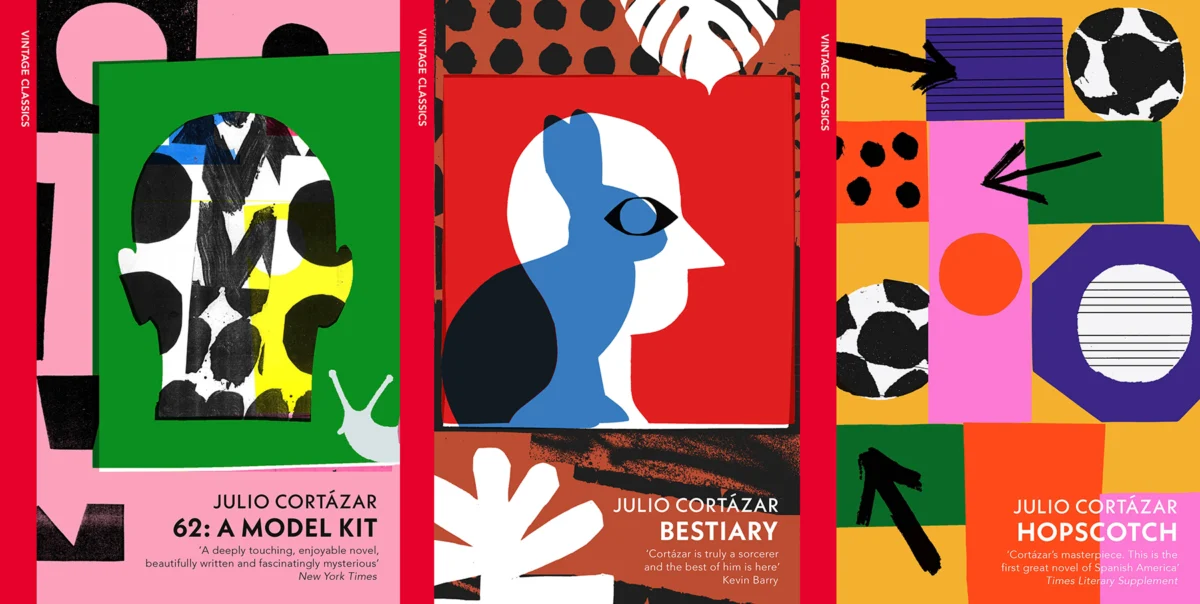
Stephen Smith’s winning entry for Adult Fiction involved designing covers for six works by Julio Cortázar. Cortázar’s writing is famously non-linear and surreal; Smith’s challenge was to evoke this "playfulness" without falling into total abstraction. His use of digital collage—rooted in initial sketchbook drawings—allowed him to include subtle figurative details that act as Easter eggs for readers familiar with Cortázar’s themes of labyrinths and existential games.
Baljinder Kaur: Identity and Memory
Winner of the Illustration for Children category, Baljinder Kaur’s "The Sleeper Train" is a deeply personal project. The story follows a young girl traveling through India, but it serves a larger purpose of celebrating Sikh Punjabi identity. Kaur’s "hybrid process"—sketching by hand to maintain a tactile, human quality, then coloring digitally for vibrancy—represents a growing trend in the industry where technology is used to enhance, rather than replace, the artist’s hand.
Vannysha Chang: The Voice of the New Generation
The Emerging Illustrator award went to Vannysha Chang for "Process." Her work, inspired by her teenage years in Java, Indonesia, uses the aesthetic of vinyl record covers to tell the story of making music. Her focus on composition and the "afternoon light" of her memories highlights the trend of "nostalgic modernism" prevalent among Gen Z illustrators.
Official Responses: The Judges’ Verdict
The judging panel was unanimous in their praise for the level of technical proficiency displayed this year. Dr. Tristram Hunt, Director of the V&A, noted that the awards serve as a vital pulse-check for the creative industries. "Illustration is often the first way we engage with a story or a brand," Hunt stated during the review. "The 2026 winners demonstrate that even in an age of AI, the human eye and the human hand remain irreplaceable in their ability to convey nuance and empathy."
Lauren Child, a former Waterstones Children’s Laureate and a judge for this cycle, emphasized the importance of the "Emerging Illustrator" category. "Seeing the work of artists like Vannysha Chang gives us a glimpse into the future of the medium. It’s about more than just drawing; it’s about having a unique perspective on the world and the courage to share it through a specific visual language."

The museum also highlighted the legacy of Moira Gemmill, the former Director of Design at the V&A, for whom the Illustrator of the Year prize is named. Her commitment to design excellence continues to be the North Star for the competition.
Implications: The Future of the Illustrative Arts
The results of the 2026 V&A Illustration Awards carry significant implications for the future of the profession. Several key trends emerged that will likely define the next decade of graphic arts:
- The Rise of the Hybrid Artist: Almost all the winners utilized a "hybrid" workflow. The binary distinction between "traditional" and "digital" is disappearing. The most successful illustrators are those who can leverage the soul of a pencil sketch with the flexibility of digital manipulation.
- Cultural Specificity as Universal Appeal: Both Baljinder Kaur and Vannysha Chang focused on specific cultural identities (Sikh Punjabi and Javanese, respectively). Their wins suggest that the UK market is increasingly hungry for authentic, culturally specific narratives that offer a "window" into different worlds, rather than homogenized, "globalized" styles.
- Illustration as Social Tool: Julie Pereira’s work for the ICC and Annabel Wright’s work for the Hunterian Gallery prove that illustration is a powerful tool for social change and education. It can simplify the complex and make the exclusive feel inclusive.
- The Persistence of Print: Despite the rise of animation and digital platforms, the Adult Fiction category (book covers) remains one of the most prestigious. This suggests that the physical book continues to be a primary "canvas" for high-stakes illustrative art.
As the V&A prepares to archive these winning works into its permanent collection, the 2026 awards stand as a testament to the enduring power of the image. In a world saturated with fleeting digital content, the work of these five illustrators offers something more permanent: a thoughtful, hand-crafted reflection of our shared human experience.