The Resurgence of the Vigilante: Justice, Vengeance, and the Evolving Narrative in Popular Culture
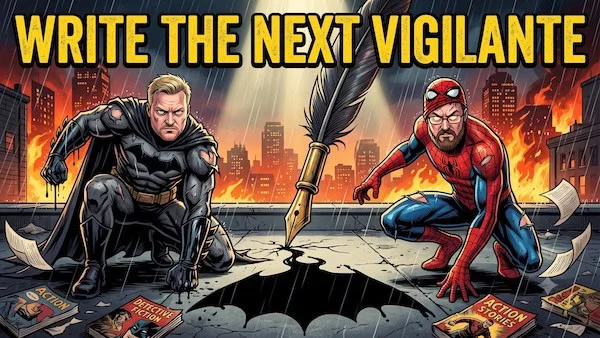
A palpable shift is underway in the cultural landscape, moving away from the familiar narratives of caped crusaders battling intergalactic threats. Instead, a more primal and grounded form of justice is capturing the public’s imagination: vigilante fiction. Stories centered on individuals who take matters into their own hands when the established systems of justice falter are simultaneously climbing bestseller lists and dominating streaming charts, signaling a deep-seated yearning for decisive action in an era perceived as rife with systemic failures.
This surge is not a fleeting trend. It’s a robust signal, amplified by recent successes that underscore its growing influence. In June 2026, Larry Correia’s novel American Paladin ascended to the top of Amazon’s urban fantasy charts, unseating established "romantasy" titles. This literary triumph followed a remarkably successful $300,000 Kickstarter campaign, demonstrating a powerful direct-to-fan engagement. In parallel, the low-budget film Citizen Vigilante, starring Armie Hammer, defied conventional Hollywood wisdom by achieving a top-10 placement on iTunes despite a lack of theatrical release and a reported production budget as low as $5 million. The film has since gone on to gross an estimated $65 million, a testament to its compelling, albeit controversial, narrative. These are not isolated incidents; they are indicators of a cultural zeitgeist that finds resonance in characters who operate outside the law to deliver their brand of justice.
The Vigilante Surge: Market Indicators and Cultural Resonance
The market data paints a clear picture of this burgeoning trend. According to Apple TV chart trackers from FlixPatrol, Uwe Boll’s Citizen Vigilante rapidly entered the top 10 films on iTunes in the United States shortly after its June 19, 2026, release. The film’s premise, featuring Armie Hammer as an American driven to vigilantism against criminals within a broken justice system, clearly struck a chord.
The "low budget" descriptor for Citizen Vigilante is significant, placing it firmly in the independent film territory with a reported budget of around $5 million. Its subsequent gross of approximately $65 million, achieved without the traditional boost of a theatrical release, is a remarkable feat and a compelling data point for anyone observing the entertainment industry. This financial success, coupled with its chart performance, highlights a potent audience demand for narratives that address perceived injustices.
Adding another layer to the film’s reception is its de facto ban by German film authorities, who refused to assign it an age rating. This censorship, despite the film’s violence level being comparable to readily available titles like John Wick or The Equalizer, has inadvertently fueled its appeal in American markets. The film reportedly draws inspiration from real German cases where violent offenders received suspended sentences, a scenario that understandably frustrates those who feel justice has been denied. The American response to this perceived censorship has been to propel the film further up the charts, suggesting a shared sentiment of frustration with judicial leniency.
Concurrently, Larry Correia’s American Paladin achieved similar market dominance. The novel not only claimed the number one spot in urban fantasy categories but also secured strong positions across hardcover, e-book, and hot new release lists. These figures do not even account for the dedicated fanbase that contributed $300,000 to its Kickstarter campaign, demonstrating a pre-existing and enthusiastic audience eager for Correia’s latest offering. The novel itself centers on Mike Spears, a drifter vigilante who hunts monstrous incursions from "thin places" in the modern American West. Operating with a personal code and a firearm, Spears answers to no official authority, embodying the independent dispenser of justice.
The thematic overlap between these two prominent works is striking. As one observer noted, American Paladin functions as much as a vigilante story as it does an urban fantasy. The protagonist, Mike Spears, is depicted as a vigilante confronting human "monsters" while simultaneously pursuing supernatural ones. This duality, where the mundane and the extraordinary converge in the pursuit of justice, resonates deeply. The comparison drawn to Citizen Vigilante suggests a nascent archetype that, while appearing novel, is in fact a re-emergence of a time-tested narrative structure that has captivated American readers for centuries.
The Ancient Roots of the Vigilante Archetype
The concept of individuals taking justice into their own hands is far from new; its roots stretch back to ancient times and are woven into the fabric of religious and historical narratives. The Bible itself offers early examples, with figures appointed by God to dispense justice when earthly systems failed. Samson, for instance, operated outside the established legal framework, fighting against prevailing powers, and Shamgar, armed with little more than a sharp stick, similarly acted as an agent of justice in times of need.
In the American context, the lineage of vigilante action can be traced back to the Revolutionary War. In 1782, Colonel Charles Lynch was indemnified by the legislature for conducting extrajudicial tribunals against Loyalist plotters. His methods, which included whippings, fines, and property seizures, operated entirely outside the legal system. This historical precedent is echoed in earlier, more visceral acts of public justice, such as tarring and feathering. As depicted in the HBO series John Adams, the brutal punishment of a tax collector in 1774 Boston, involving boiling pitch and feathers, resulted in severe burns and, in some instances, death.
This practice of the populace taking justice into their own hands became known as "Lynch’s Law." When formal judicial channels failed to deliver satisfaction, citizens would appeal to Lynch’s Law, which could culminate in severe punishments, including hanging. While later tragically associated with racial violence, the original application of Lynchings was broader, targeting individuals perceived to have escaped the clutches of justice, regardless of race. Colonel Lynch himself was known to have ordered the hanging of Loyalists, demonstrating an early form of extrajudicial enforcement.
The Literary Ancestry: From Nick of the Woods to Modern Icons
The archetype of the masked vigilante, a cornerstone of modern comic books and action fiction, finds its literary progenitor in Robert Montgomery Bird’s 1837 novel, Nick of the Woods. The protagonist, Nick, a Quaker pacifist, is driven to extreme measures after his family is massacred by Native Americans and the government offers no recourse. Lacking specialized skills, he cultivates his own, becoming "Nick of the Woods" and dispensing his brand of justice through violent retribution. His story is a direct precursor to iconic figures like Zorro, Batman, and The Punisher, all of whom trace their literary lineage back to Bird’s creation.
The enduring appeal of Nick of the Woods lies in its exploration of a primal response to systemic failure. Nick’s plight embodies the rage and desperation of those left unprotected by the law. This narrative thread is powerfully present in contemporary vigilante fiction. The characters in Citizen Vigilante and American Paladin echo Nick’s struggle, acting as avatars for the audience’s own frustrations with perceived inadequacies in the justice system.
This connection is not merely academic. As observed, Batman’s character evolution often reflects the prevailing cultural mood, shifting from campy to dark and brooding in response to the zeitgeist. Recent iterations of the character have seen him embracing more lethal methods, a shift that mirrors the audience’s growing demand for unvarnished, brutal justice. This suggests that the appetite for such narratives stems from a genuine feeling of disillusionment with the efficacy of real-world justice.
The Shifting Landscape: From "Can’t" to "Won’t"
A crucial distinction separates modern vigilante narratives from earlier iterations, most notably those involving superheroes like Spider-Man. When J. Jonah Jameson famously decried Spider-Man as a vigilante, the implication was that the hero was filling a void where the police were unable to act due to the extraordinary nature of the threats – gods, aliens, or advanced scientific phenomena. Spider-Man often collaborated with law enforcement, his message being one of capability: "I can fight this alien; you can’t. Let me do what you can’t do."
The current wave of vigilante fiction, however, operates on a fundamentally different premise. The core issue is no longer one of inability but of unwillingness. Both American Paladin and Citizen Vigilante share a central theme: the failure of the justice system to investigate, prosecute, or adequately punish perpetrators. The antagonists in these stories are often individuals who have been convicted and subsequently released, leaving victims and their advocates without redress. The vigilante’s intervention, in this context, is framed as a corrective measure, a delivery of justice when the official channels have abdicated their responsibility.
This is starkly illustrated in Citizen Vigilante, where the protagonist directly confronts a victim of sexual assault. When asked if she feels she received justice, her negative response prompts the vigilante to take lethal action against her assailant. This narrative choice, directly addressing the perceived failure of the legal system to protect its citizens, is precisely what has led to its controversial reception and censorship in some international markets. The film’s purported thematic focus on punishing certain offenders while seemingly overlooking others has also ignited debate.
The thematic resonance of Citizen Vigilante is further echoed in films like Law Abiding Citizen (2009), which featured Gerard Butler as a man whose family is murdered and whose perpetrator is granted a lenient plea deal. This protagonist, a former CIA assassin, systematically targets all those complicit in the miscarriage of justice, blurring the lines between righteous retribution and criminal action. The audience is left to grapple with the protagonist’s motives, questioning whether his extreme actions are justified by the system’s failings.
The Nuance Between Revenge and Vigilante Justice
Distinguishing between a simple revenge narrative and a true vigilante story often hinges on the presence of a broader, protective impulse. While both often stem from personal harm to the protagonist or their family, the vigilante extends their protective fatherly instincts outward. This is evident when a vigilante character encounters another vulnerable individual – perhaps a young woman mirroring his own daughter’s plight – and seeks justice for her as well. This action signifies a willingness to assume the role of a societal protector, offering justice where the state has failed, and embodying a paternalistic duty that predates formal government structures.

This distinguishes vigilante narratives from pure revenge tales. John Wick, for example, while adhering to a strict code and targeting only those he deems deserving, is primarily driven by personal vengeance for the death of his dog, a surrogate for his deceased wife. His actions, while precise, are rooted in his own grief and desire for satisfaction, rather than a broader commitment to rectifying systemic injustices. His narrative arc, while compelling, is more accurately characterized as a survival or vengeance story, focused on personal retribution rather than the broader pursuit of justice for others.
The key differentiator lies in the vigilante’s perceived role as a neutral arbiter, acting with a code and an objective standard of justice, much like a fictionalized Judge Dredd. This adherence to a higher, almost transcendent, moral framework allows audiences to accept their actions, seeing them as a necessary replacement for a faltering judicial system. This contrasts with traditional Western narratives where sheriffs and judges work to restore order and uphold institutional processes, rather than circumventing them entirely.
Revenge is inherently personal – "I want this person to suffer." Vigilante justice, however, is fundamentally about institutional accountability. The police officers in Citizen Vigilante, who stood by and allowed an injustice to occur, are killed not out of personal animosity but because of their complicity. The judge who failed to convict the perpetrators also faces retribution. This is not merely personal revenge; it is an indictment of the institutions themselves. This distinction is crucial, separating contemporary vigilante narratives from the more visceral, victim-driven revenge stories that were prevalent in the 1970s.
The concept of vengeance and justice can be visualized through a Venn diagram, with vengeance being the immediate, often emotional, response to harm. The establishment of cities of refuge in biblical law, for instance, was not an outright prohibition of retribution but an effort to channel it into a structured process, acknowledging the need for a third party to manage all contributing factors. This structured approach, where a jury and judge preside over legal proceedings, aims to break cycles of vengeance by assigning responsibility within a defined system.
Crafting Compelling Vigilante Characters
The effectiveness of a vigilante character on the page hinges on their adherence to a strict moral code, primarily ensuring that only the guilty are punished. In both American Paladin and Citizen Vigilante, the protagonists are depicted as meticulously executing this principle. The Paladin, in particular, operates under a defined code, and this carefulness is paramount to maintaining reader buy-in. Without it, the narrative risks devolving into a mere mob mentality, eliciting visceral revulsion rather than support. The principle of "a life for a life" must be balanced; an overreaction, such as killing someone for a minor offense, breaks this delicate equilibrium.
The current narratives often reflect the adage that "hard times make hard men." American Paladin‘s world, depicted as darker and more perilous than Correia’s previous works, serves as a backdrop for the Paladin’s "beacon of light," his violent pursuit of justice. This juxtaposition of a bleak setting with a determined protagonist amplifies the narrative’s impact.
Some believe that an innate disposition towards violence, a personality "tuned to be destroyers," is essential for convincingly writing such characters. This perspective suggests that a writer must possess a certain willingness to engage with the darker aspects of human nature, finding satisfaction in dispensing justice, whether sanctioned or not. Without this intrinsic understanding, the portrayal risks becoming superficial, a mere stereotype lacking depth. The ability to comprehend the depths of human depravity, and to act decisively to prevent it, is presented as a key differentiator, separating genuine justice from mere sociopathy. This involves a clear understanding of what humans are capable of and a strong resolve to protect those under one’s care.
Opportunities for Independent Authors in the Vigilante Genre
The current cultural climate presents a fertile ground for independent authors, particularly in the vigilante genre. Traditional publishing houses and major Hollywood studios may shy away from these narratives due to their often controversial themes and challenging moral complexities. However, this creates a direct avenue for independent creators to connect with a hungry audience.
The success of American Paladin, despite its publisher’s perceived missteps in marketing and pricing, underscores the power of reader demand. The novel’s ability to climb bestseller lists at a premium price point suggests a significant audience actively seeking these kinds of stories. Independent authors have the freedom to bypass conventional gatekeepers and cater directly to this demand, crafting narratives that resonate with contemporary anxieties and desires.
Vigilante fiction is particularly well-suited to episodic storytelling, a format that has proven successful for iconic characters like Zorro and Batman. The structure is straightforward: present a transgression by an antagonist, illustrate the justice system’s failure to address it, and then introduce the vigilante who delivers justice regardless. This repeatable formula offers a consistent appeal to readers. Platforms like Patreon are already seeing success with this model, allowing authors to build a direct relationship with their audience and deliver content that meets their immediate desires.
The father-figure vigilante, exemplified by the Taken franchise and the emotional resonance of The Mandalorian, represents a particularly potent narrative. The protective drive of a father figure, fiercely defending his "child" against all threats, taps into universal themes of love, sacrifice, and the primal instinct to protect the vulnerable. This archetype, whether literal or surrogate, resonates deeply and creates a powerful "yes, go get ’em" energy that audiences embrace.
The Tragic Dimension and Its Place in Christian Fiction
The question of whether vigilante stories should conclude in tragedy is a complex one, particularly within the realm of Christian fiction. While the instinct may be to avoid outright tragedy, biblical narratives and compelling modern storytelling demonstrate the profound moral power of tragic arcs. The climax of Marvel’s Infinity War, for instance, where beloved characters dissolve into dust, left audiences stunned and contemplating the gravity of loss. This powerful emotional experience, born from tragedy, is what often solidifies a story’s impact in the minds of readers.
However, a wholly tragic narrative might not fully satisfy the current audience’s need for hope. The key lies in integrating tragic elements as a component of a larger, ultimately hopeful story. The example of Susan’s arc in Narnia’s The Last Battle serves as a cautionary tale; its tragic conclusion made it a less favored installment for many. A more nuanced approach, as seen in the successful balance of Infinity War and Endgame, involves a protagonist’s victory that is hard-won and comes at a significant cost, but ultimately leads to resolution. In the context of American Paladin, this might mean the Paladin’s ultimate demise, a sacrifice that facilitates the salvation of others, embodying a tragic but ultimately redemptive end.
Christian fiction, in particular, often struggles with portraying true tragedy. There is a tendency to lean towards a "Hallmark" moral system, where villains are not truly villainous, evil is not truly evil, and redemption lacks profound depth. C.S. Lewis’s Narnia series, in contrast, presents characters who grapple with genuine moral flaws and experience tangible consequences. The raw, visceral nature of events, such as Aslan tearing Aravis’s back open in The Horse and His Boy, serves as a stark reminder of the consequences of sin and the complexities of morality. Replicating Lewis’s depth requires a willingness to explore these darker, more challenging aspects of the human condition.
Navigating the Ethical Minefield: When Vigilante Fiction Goes Wrong
The power of vigilante narratives carries a significant responsibility. When writers misinterpret or mishandle the genre, the consequences can be far-reaching, potentially distorting readers’ worldviews and morality. There is a legitimate concern that an unchecked rise in vigilante fiction could incite real-world vigilantism, not the discerning kind, but the more destructive, revenge-driven factional violence. These stories resonate deeply with millions, particularly young men, and the societal implications are profound.
To mitigate this risk, writers must prioritize the "virtuous vigilante" narrative – one that incorporates a redeeming element and a core truth. By exploring where the path of unchecked vengeance leads, authors can offer cautionary tales that serve as warnings. Presenting protagonists who, while acting for ostensibly good reasons, engage in morally ambiguous actions, and then exploring the consequences of those actions, is crucial. This approach allows for the exploration of difficult themes in a truthful, beautiful, and morally sound manner.
The divergence between American Paladin and Citizen Vigilante highlights this ethical spectrum. Citizen Vigilante‘s explicit content and less wholesome protagonist present a different moral landscape compared to the more righteous portrayal of the American Paladin. This underscores the choice writers have: to create stories that, while dark, uphold a core moral system, or to delve into narratives that could inadvertently promote a more dangerous and unexamined form of retribution. The potential for a truly divinely directed paladin, a character operating with a secular appeal to higher justice, represents an untapped narrative opportunity that could offer a more profound exploration of faith and justice.
Ultimately, the key lies in nuance. Writers must understand what audiences desire while also recognizing what they truly need. Tragedy can be incorporated without sacrificing hope, and difficult themes can be explored without succumbing to anxiety or fear. By fearlessly addressing these complex issues and delivering stories that meet a genuine human need, writers can harness the power of vigilante narratives for meaningful and impactful storytelling. The call to action is clear: explore these themes with integrity, and craft stories that reflect both the darkness of the world and the enduring light of justice.