
The Silent King Returns: Szarekh and the Shadow of Necron Destiny
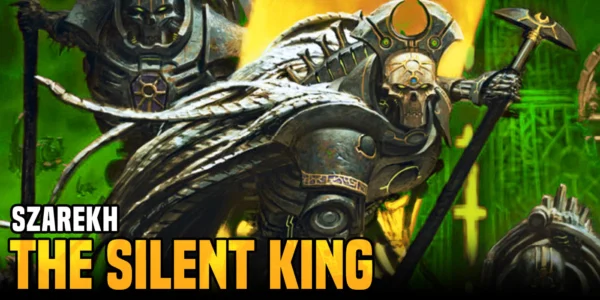
The ancient galaxy trembles as Szarekh, the enigmatic Silent King of the Necrons, concludes his aeons-long exile, reasserting his claim over a cosmos vastly changed by his absence. Once the architect of his race’s soulless immortality, Szarekh now returns as a figure of immense power and profound regret, poised to reshape the very fabric of galactic conflict against a burgeoning tide of existential threats, chief among them the ravenous Tyranid swarms.
Main Facts
Szarekh, known reverently and fearfully as the Silent King, stands as the last and most pivotal ruler of the Necrontyr Triarch, and subsequently, the Necron race. His reign spans epochs, marked by decisions that forever altered the destiny of his people and cast a long shadow over the galaxy. It was Szarekh who, in a desperate bid to save his race from genetic decay and civil war, forged the catastrophic alliance with the C’tan, leading to the infamous Biotransference that stripped the Necrontyr of their flesh and souls, transforming them into the metallic Necrons.
Following the War in Heaven, a galactic conflict that saw the C’tan betrayed and shattered, Szarekh initiated the Great Sleep, a sixty-million-year slumber designed to allow the nascent, weaker races of the galaxy to flourish and then wither, paving the way for Necron re-dominance. Uniquely, Szarekh did not join his people in this long slumber. Plagued by immense guilt for the fate he had wrought upon his kind, he destroyed the command protocols that granted him absolute authority over the Necrons and embarked on a solitary, self-imposed exile into the intergalactic void.
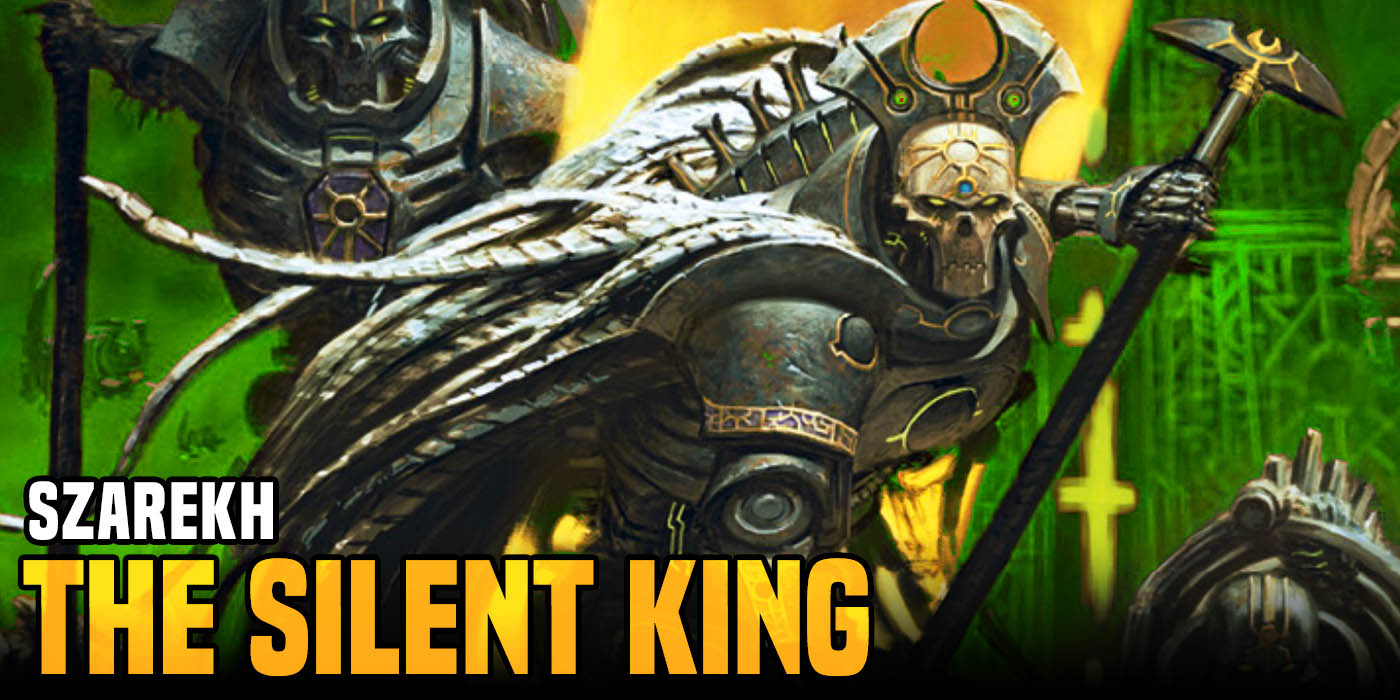
His return in 744.M41 was not one of triumphal re-conquest but of grim necessity. Encountering the Tyranids in the void, Szarekh recognized them as an existential threat not only to the galaxy’s diverse lifeforms but, crucially, to the Necrons’ ultimate goal of reversing Biotransference. Now, the Silent King endeavors to unite the fragmented Necron dynasties, even those hostile to his authority, to combat the Tyranid menace. Yet, his motivations remain complex: a blend of penance for his past sins, a strategic imperative to preserve the galaxy’s biomass, and a ruthless ambition to ultimately re-establish Necron supremacy, often through the manipulation of lesser species. His re-emergence has ignited a new era of galactic intrigue and conflict, intertwining the ancient grudges of the Necrons with the desperate struggles of the 41st Millennium.
Chronology
The saga of Szarekh is a narrative woven through the deepest history of the Warhammer 40,000 galaxy, a tale of ancient empires, cosmic betrayal, and a long-awaited reckoning.
The Necrontyr Empire and the Triarch
Millions of years before the Imperium of Man, the Necrontyr thrived as a technologically advanced, yet tragically short-lived, species. Their existence was a perpetual struggle against their own fleeting mortality, compounded by rampant genetic diseases and endemic civil strife, epitomized by the devastating Wars of Secession. To maintain order and seek a solution to their inherent fragility, the Necrontyr established the Triarch, a ruling council of three Phaerons. At its head was the Silent King, a figure whose pronouncements were relayed through the other two, hence his title. This position, though nominally hereditary, frequently rotated between royal dynasties due to the Necrontyr’s brief lifespans. Szarekh emerged as the last to hold this revered, yet ultimately doomed, title. Under his leadership, the Triarch desperately sought to unify their fractured people, initially through a common enemy in the ancient and powerful Old Ones, and later, through the false promises of immortality offered by the enigmatic C’tan.

The Pact with the C’tan and Biotransference
Driven by their physiological vulnerabilities and fueled by an escalating war with the Old Ones, the Necrontyr under Szarekh’s command made a fateful decision. They allied with the C’tan, god-like entities of pure energy who masqueraded as star-gods, promising eternal life and an end to their suffering. This alliance culminated in the Biotransference, a horrific process where the Necrontyr transferred their consciousnesses into bodies of living metal. While it granted them immortality, unparalleled resilience, and the power to finally defeat the Old Ones in the cataclysmic War in Heaven, it came at an unbearable cost: their souls, their emotions, and their very organic essence were stripped away, leaving behind soulless, emotionless automatons. Szarekh, uniquely, retained a flicker of his former self, enough to grasp the profound horror of what he had unleashed. Even before the War in Heaven concluded, he harbored a simmering resentment and a burning desire for vengeance against the C’tan.
The C’tan Revolt and the Great Sleep
Szarekh’s strategic genius and patience were put to the ultimate test. He bided his time, allowing the Necrons to achieve total victory over the Old Ones. Once their common foe was vanquished, he unleashed the full might of the Necron legions against their former masters. This monumental undertaking, known as the C’tan Revolt, saw the star-gods defeated, broken, and ultimately shattered into countless shards, forever imprisoned within Tesseract Labyrinths or repurposed as power sources.
Despite this monumental victory, the Necrons were left exhausted by aeons of continuous warfare. Moreover, Szarekh observed the burgeoning strength of the younger races, particularly the swift ascension of the Eldar, creations of the Old Ones. Recognizing that his war-weary people could not immediately dominate this new galactic landscape, Szarekh decreed the Great Sleep. Millions of Necrons withdrew into their Tomb Worlds, entering stasis to await a distant future when the galaxy would be ripe for their re-conquest.
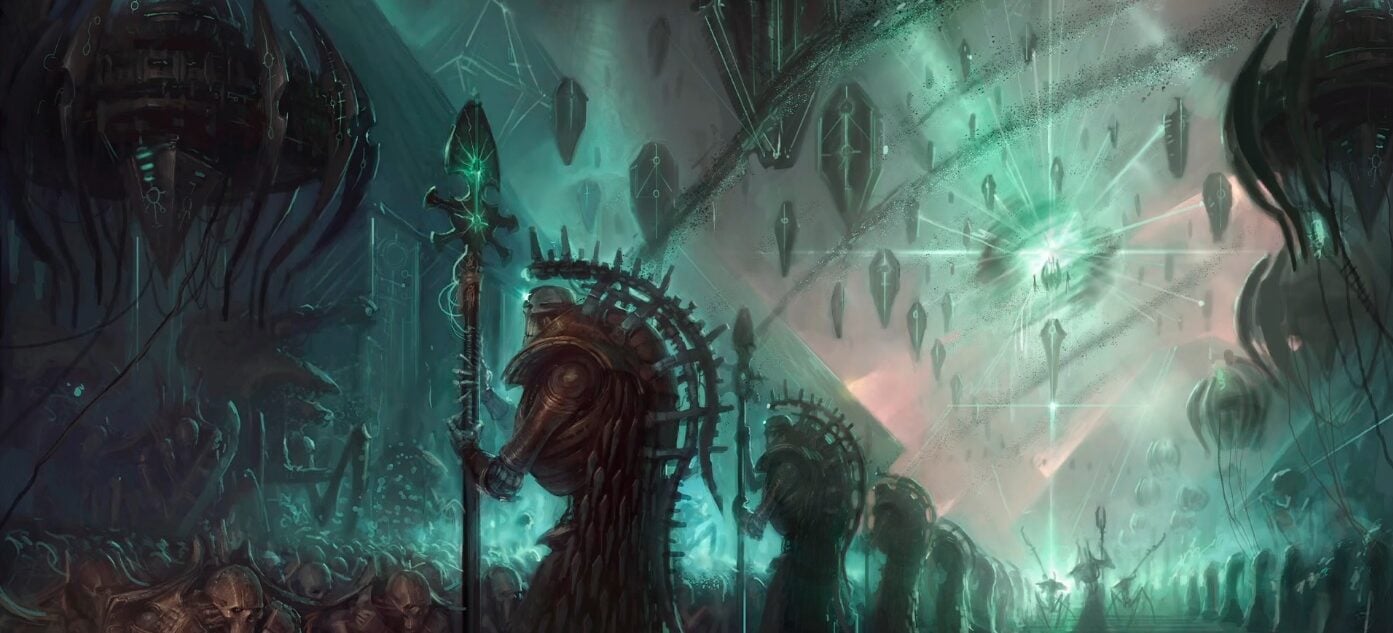
Yet, Szarekh himself did not join them. Burdened by an unimaginable guilt for condemning his people to a soulless existence, he shattered the command protocols that granted him ultimate authority over the Necron race. This act of self-abnegation was a deliberate choice, a penance for his hubris. He then embarked on a solitary odyssey into the intergalactic void, seeking not only solace but also, perhaps, a way to redeem his race.
Aeons of Exile and the Tyranid Threat
For sixty million years, Szarekh traversed the cosmic abyss aboard a colossal, planet-sized sepulchral engine. He was not entirely alone, as legions of his loyal Szarekhan Dynasty accompanied him in stasis-crypts, a silent entourage befitting his station. This exile was unique in its torment; Szarekh was the only Necron to fully retain the memories of his organic past, of the vibrant Necrontyr he had led to their metallic doom. The aeons of grief and self-recrimination would have shattered any lesser mind.
His exile was not without purpose. Szarekh sought a method to reverse Biotransference, to restore his people’s souls, and planned for their eventual return to a galaxy where younger races would have consumed themselves in conflict and decline. However, this grand plan was catastrophically interrupted by a new, horrifying discovery: the Tyranids. These alien swarms, encountered in the dark intergalactic void, represented an existential threat of unprecedented scale. If the Tyranids consumed all biomass in the galaxy, Szarekh’s dream of reversing Biotransference would become utterly impossible. His duty to his people, even in their soulless state, compelled him to act.
The Return and Reawakening
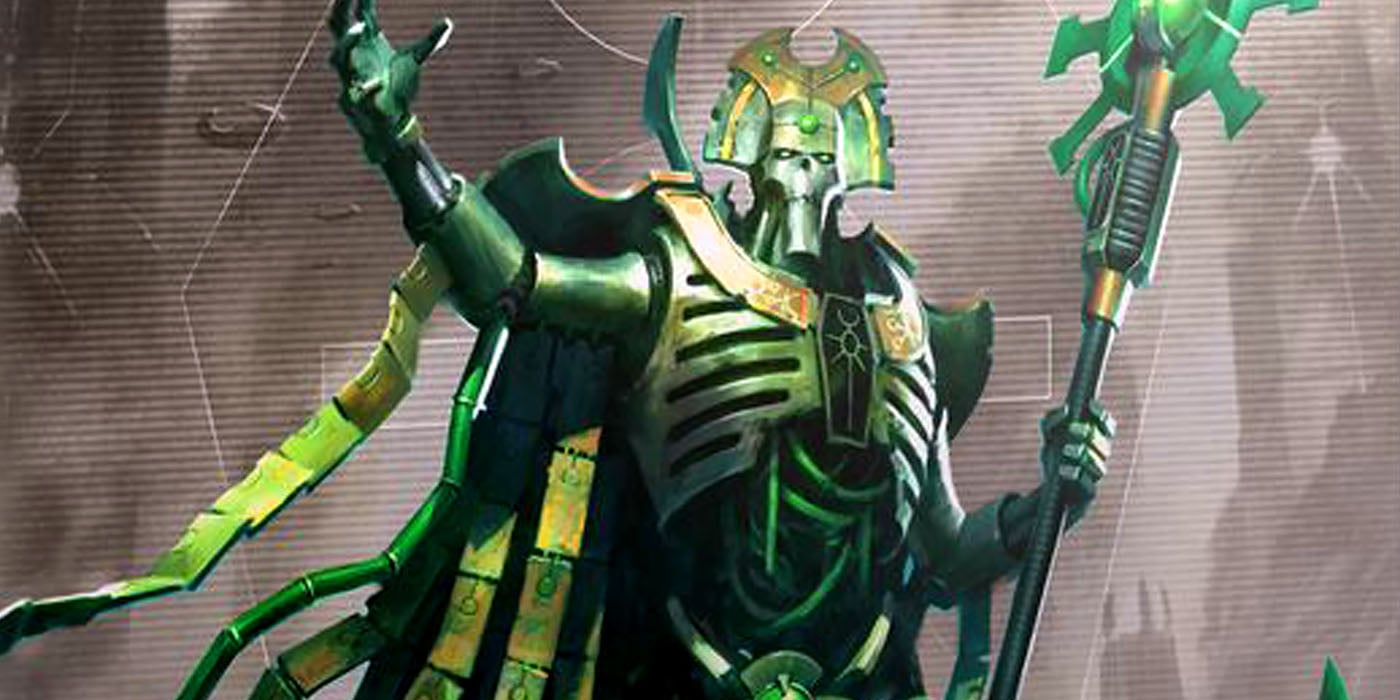
In 744.M41, the Silent King’s self-imposed exile concluded. He returned to a galaxy far more chaotic and perilous than the one he had left. Tyranids were not the only threat; other alien empires had risen, and the Warp’s insidious influence now seeped across the stars. Initially, Szarekh operated from the shadows, traveling with his elite Triarch Praetorians. He carefully avoided revealing his true identity, even to many Necrons, preferring to work through unwitting Crypteks and Overlords. His immediate objective was to reawaken slumbering Tomb Worlds and unite them against the Tyranid menace, while subtly manipulating the younger races to serve his inscrutable ends. Intruigingly, Szarekh has even alluded to a past encounter with the Primarch Sanguinius, suggesting a fleeting, almost unbelievable, possibility of alliance.
Re-establishing Authority and the New Triarch
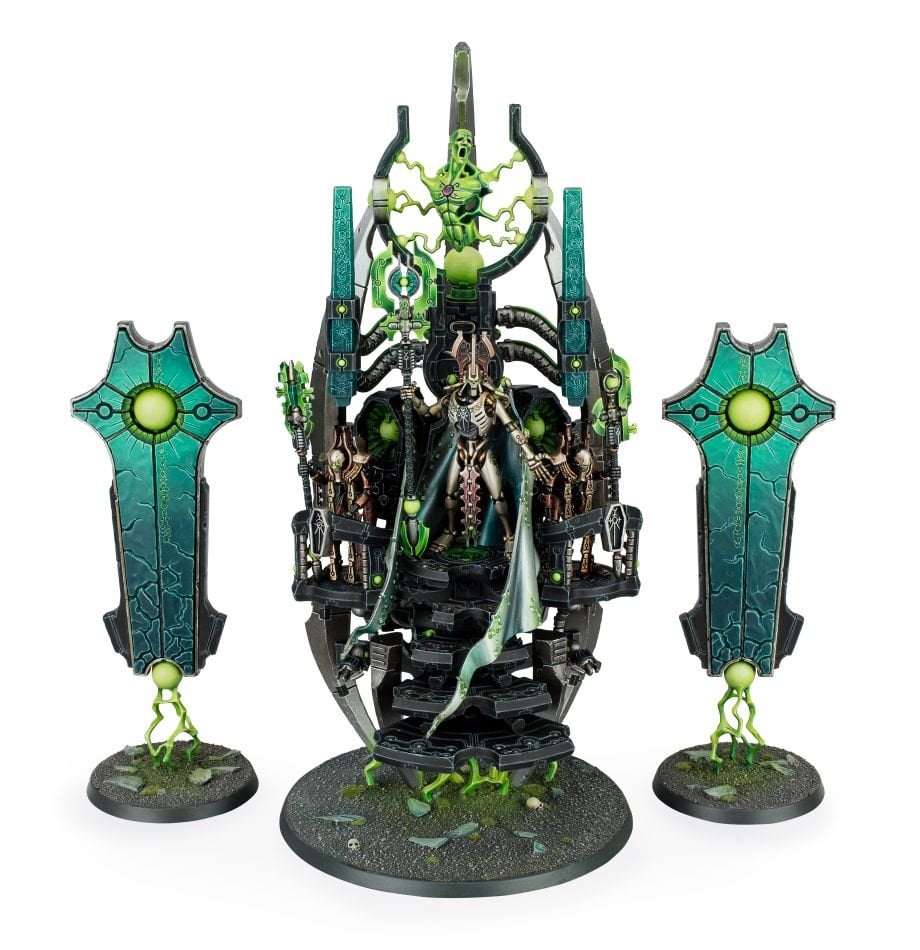
With the situation in the galaxy deteriorating, Szarekh eventually shed his clandestine approach. He openly returned to the Tomb World of Antrakh, summoning his followers and re-establishing his authority. To reform the Triarch, he selected two Phaerons of lesser dynasties, Hapthatra the Radiant and Mesophet the Shadowed Hand. These two were integrated into the Dias of Dominion, a powerful platform animated by a captured shard of the C’tan Nyadra’zatha. From this dais, they spoke with a unified voice, acting as Szarekh’s direct conduits and never daring to overrule his commands, symbolizing his renewed and absolute control.
Interactions with Imperial Forces
Szarekh’s return brought the Necrons into direct, often brutal, contact with the Imperium of Man. In 955.M41, during the Gehenna Campaign, a shared Tyranid threat forced an uneasy, temporary alliance between the Silent King’s Necron forces and the Blood Angels Space Marine Chapter. This pragmatic cooperation, born of desperation, hinted at the complexities of the new galactic order.
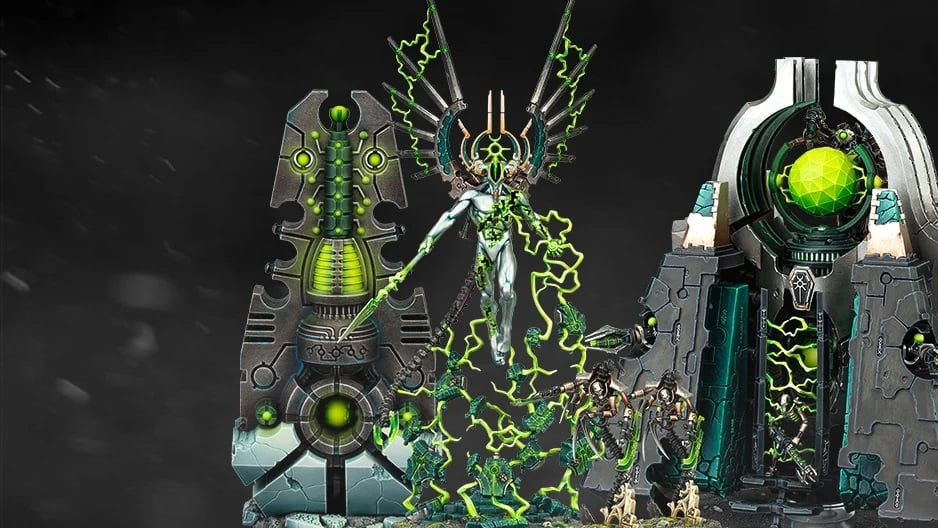
More recently, during the devastating Pariah Crusade, Szarekh initially allowed his vassals, such as the infamous Cryptek Szeras, to defend the critical Pariah Nexus. However, as the Imperial invasion intensified, he personally intervened, leading a massive counteroffensive that inflicted severe defeats upon the Imperium. At the climactic Battle of Mesmoch, Szarekh directly addressed Roboute Guilliman, the Primarch Regent of the Imperium, through his proxy Hapthatra. He demanded the Imperials’ surrender and expressed a keen interest in capturing the Primarch. Guilliman’s refusal led to a direct confrontation where Szarekh disabled Guilliman’s flagship, the Dawn of Fire, and boarded it. However, through the timely intervention of Illiyanne Natasé, Guilliman was able to escape, denying the Silent King his prize.
While Szarekh’s initial counterattacks in the Pariah Nexus achieved significant success, his plans faced considerable setbacks. The arrival of Archmagos Dominus Belisarius Cawl and Battle Group Hephaestus introduced new tactical challenges. More critically, the machinations of Imotekh the Stormlord, a powerful Necron Overlord who vehemently opposes Szarekh’s goal of reversing Biotransference, caused significant internal dissent. Imotekh’s revolt and the destruction of several Pylons within the Nexus weakened Szarekh’s political standing. Further complications arose with the arrival of Vashtorr’s dark mechanoid forces, adding another unpredictable element to the already volatile region. Despite these challenges, the Silent King remains patient, his intricate plans unfolding across the canvas of eternity.
Supporting Data
Szarekh’s long and tortured existence is defined by several key elements that underpin his power, his motivations, and the complex challenges he faces.
The Weight of Command
The unique burden carried by Szarekh is almost incomprehensible. As the sole Necron to retain a full, unclouded memory of his organic Necrontyr past, he alone understands the profound tragedy of Biotransference. This memory is not merely historical data; it is an enduring source of profound guilt and regret that fuels his every action. His quest for penance is deeply personal, manifesting in his tireless efforts to find a way to reverse the transformation, to restore the souls of his people. This inner conflict makes him a figure of immense moral ambiguity – a villain responsible for unimaginable suffering, yet also a tragic leader striving for redemption, even if his methods are ruthless and often horrifying to other races. His actions are not driven by simple malice, but by the weight of a past he cannot escape and a future he feels compelled to shape.
Technological Prowess
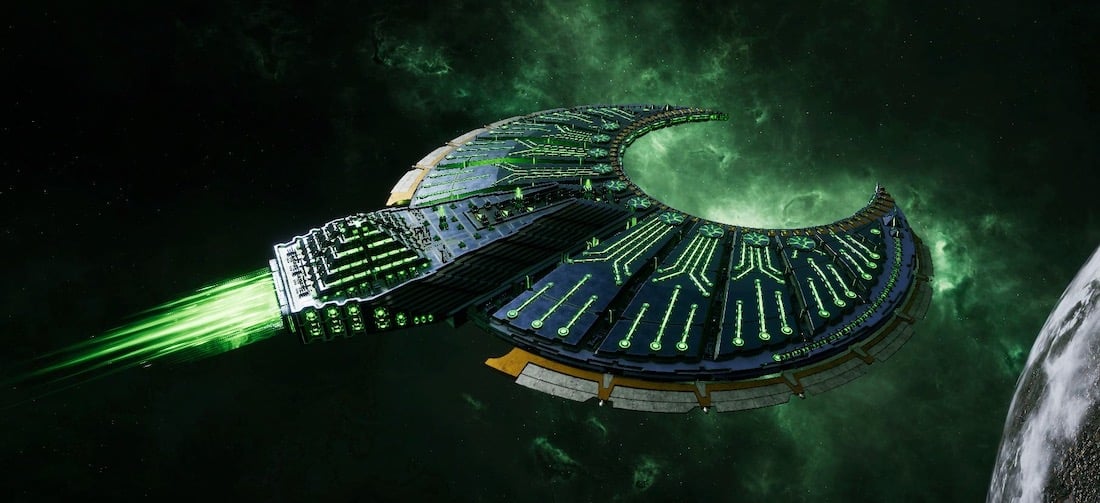
The Necrons, under Szarekh’s leadership, command technology that borders on the fantastical, far surpassing that of most other races. Their bodies of living metal, capable of self-repair and adaptation, grant them incredible durability. Stasis-crypts allow them to endure millions of years of slumber, emerging largely unchanged. The harnessing of C’tan shards, fragments of shattered star-gods, provides immense power for their weapons, ships, and the Dias of Dominion. Necron Pylons, colossal constructs, can suppress Warp energies and even act as interdimensional gates. Szarekh’s personal vessel, a planet-sized sepulchral engine, is a testament to this technological might, a mobile fortress capable of traversing intergalactic voids. These technologies are not merely tools; they are integral to his plans, enabling the long-term strategies, the manipulation of cosmic forces, and the sheer destructive power required to achieve his ultimate goals.
Political Landscape and Internal Strife
The Necron empire, despite its immense age and power, is far from unified. The long slumber led to fragmentation, with countless Tomb Worlds awakening independently, often under the command of Overlords with their own ambitions and interpretations of Necron destiny. Szarekh’s return, while potentially unifying, also exacerbates existing tensions. Figures like Imotekh the Stormlord, Phaeron of the Sautekh Dynasty, represent a significant challenge to Szarekh’s authority. Imotekh, a brilliant strategist, vehemently opposes the idea of reversing Biotransference, believing the Necrons’ metallic forms are their ultimate evolutionary state. This ideological schism creates a dangerous internal conflict, risking a Necron civil war at a time when galactic threats are at their peak. The arrival of Vashtorr’s forces, with their own arcane technologies and chaotic objectives, further complicates the political chessboard, forcing Szarekh to contend with external and internal pressures simultaneously, potentially risking more dynasties flocking to opposing banners.
Official Responses
The return of Szarekh, the Silent King, has sent ripples across the galaxy, eliciting varied and often fearful responses from the myriad factions that now inhabit it.
Imperial Perspective
For the Imperium of Man, the Necrons represent one of the most ancient and implacable xenos threats. Their soulless legions are seen as abominations, their technology horrifyingly advanced, and their ultimate goal of galactic cleansing a direct challenge to humanity’s dominion. Encounters with Szarekh have only solidified this view, even when forced into temporary alliances. During the Gehenna Campaign, the Blood Angels fought alongside the Silent King’s forces against the Tyranids, a pragmatic decision born of necessity, but one that left a bitter taste. Roboute Guilliman, the Primarch Regent, directly experienced Szarekh’s cunning during the Pariah Crusade. While recognizing the Necron leader’s strategic brilliance and even a flicker of tragic intent, Guilliman’s assessment remains rooted in Imperial doctrine: xenos are fundamentally untrustworthy and must eventually be eradicated. The Imperium, steeped in xenophobia, views any Necron presence as a grave threat, and Szarekh’s return merely signifies a more organized and dangerous iteration of that threat, regardless of his purported motives.
Tyranid Threat
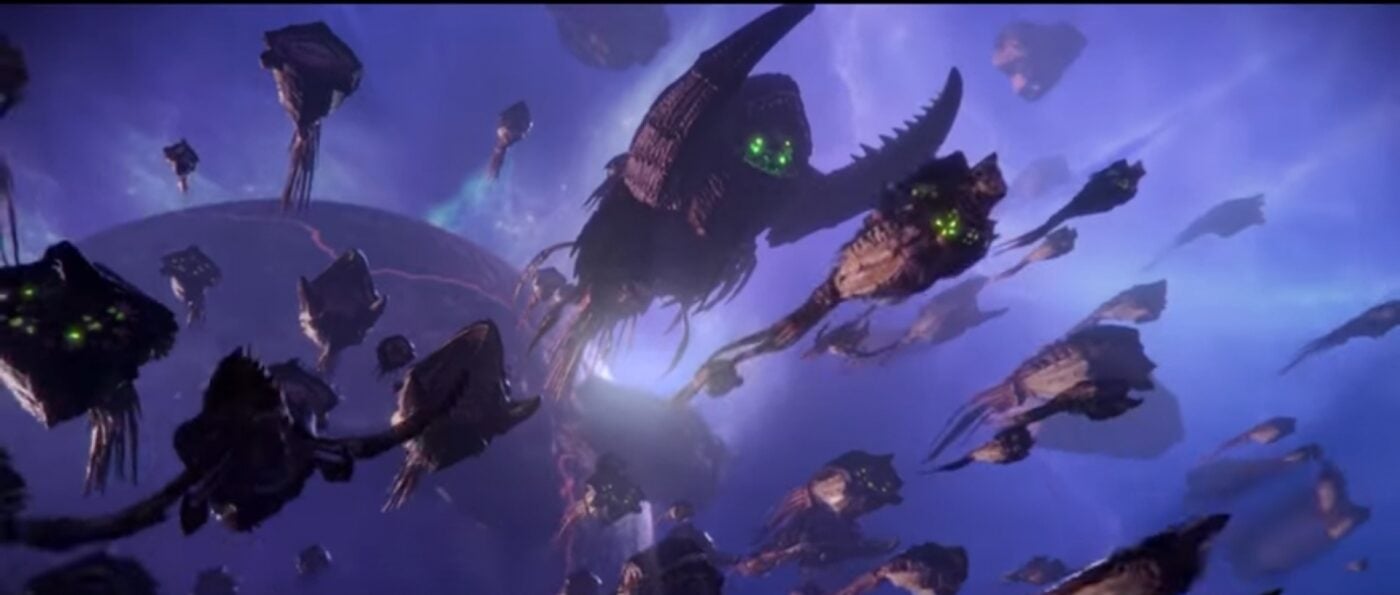
The Tyranids, as a non-sentient, galaxy-spanning superorganism, offer no "official response" in a diplomatic sense. Their interaction with Szarekh is purely biological and instinctual: the Necrons are an obstacle to be overcome, a source of potential biomass (if they were organic), or simply a threat to be neutralized. However, it is the Tyranids’ very nature that makes them so uniquely terrifying to Szarekh. Their insatiable hunger for biomass directly jeopardizes his long-term plan to reverse Biotransference. They represent a fundamental, indiscriminate force of nature that cannot be reasoned with, negotiated with, or manipulated in the same way as other races. This makes the Tyranids the ultimate, existential foe for the Silent King, forcing his hand and compelling his return to a galaxy he otherwise might have continued to observe from afar.
Eldar View
The Eldar, a race burdened by ancient memories and prophetic visions, hold a particularly bitter view of the Necrons and Szarekh. They remember the Necrontyr as the aggressors in the War in Heaven, a conflict that devastated their own nascent civilization and left scars that persist to this day. To the Eldar, the Necrons are not merely a soulless horror but a cosmic mistake, a testament to the destructive folly of unchecked ambition. They see Szarekh as the ultimate perpetrator of this crime, the one who doomed his people and unleashed metallic terror upon the galaxy. Their long-term memory ensures that the ancient animosity remains potent, and while they too face the Tyranid threat, any alliance with the Necrons would be seen as a deeply pragmatic, almost heretical, necessity rather than a true partnership.
Implications
The re-emergence of Szarekh, the Silent King, is not merely a historical footnote but a seismic event that reverberates throughout the 41st Millennium, with profound implications for the Necron race and the galaxy at large.
The Future of the Necrons
Szarekh’s return offers the Necrons a chance at unification under a supreme, ancient leader, potentially ending the internecine conflicts that plague many Tomb Worlds. However, his vision of reversing Biotransference is a deeply divisive issue. If he succeeds, it would fundamentally redefine what it means to be Necron, potentially restoring their lost souls and emotions, but also reintroducing the very vulnerabilities that drove them to Biotransference in the first place. This could lead to a golden age or a renewed, horrific decline. If he fails, or if the opposition from figures like Imotekh gains traction, the Necrons could descend into a devastating civil war, fragmenting their power and leaving them vulnerable to external threats. The fate of countless Necron dynasties hangs in the balance, caught between the Silent King’s quest for redemption and the pragmatic, often ruthless, realities of their metallic existence.
Impact on the Galaxy
The Silent King’s presence reshapes galactic power dynamics entirely. His strategic brilliance and immense resources mean that any conflict he engages in, or any alliance he forms, carries immense weight. The concept of "the enemy of my enemy" has been invoked in temporary alliances against the Tyranids, creating uneasy truces between ancient foes like the Necrons and the Imperium. However, these are fleeting moments of shared desperation. Szarekh’s ultimate goal remains Necron supremacy, and his manipulation of younger races is a clear testament to this. The long-term consequences of these manipulations are yet to be fully realized, but they promise further instability and conflict. The galaxy, already a theatre of endless war, now faces an even more complex and ancient player, whose moves are calculated across timescales that dwarf mortal understanding. His actions could inadvertently save entire civilizations from the Tyranids, only to then subject them to a new, metallic overlordship.
The Moral Ambiguity of Szarekh
At the core of Szarekh’s narrative lies a deep moral ambiguity. Is he a villain, the architect of a cosmic horror that stripped his people of their essence and unleashed metallic terror? Or is he a tragic figure, seeking penance for a desperate choice made in a time of existential crisis, now striving to undo his greatest mistake? His actions, while often ruthless and destructive, are driven by a complex blend of guilt, duty, and a long-term vision for his people’s survival and potential restoration. He embodies the grim darkness of the 41st Millennium, where even the most "heroic" or "redemptive" intentions can lead to horrific outcomes, and where the line between savior and destroyer is eternally blurred. His story forces a contemplation of the ultimate costs of power, survival, and the enduring quest for redemption in a galaxy that offers little solace.
The Silent King is patient beyond mortal understanding, and his plans are in motion. The galaxy holds its breath, for when Szarekh speaks, even if through proxies, the very stars may listen.


Leave a Comment