
The Silent Siege: Iranian Cyber Operations Target Global Maritime Infrastructure
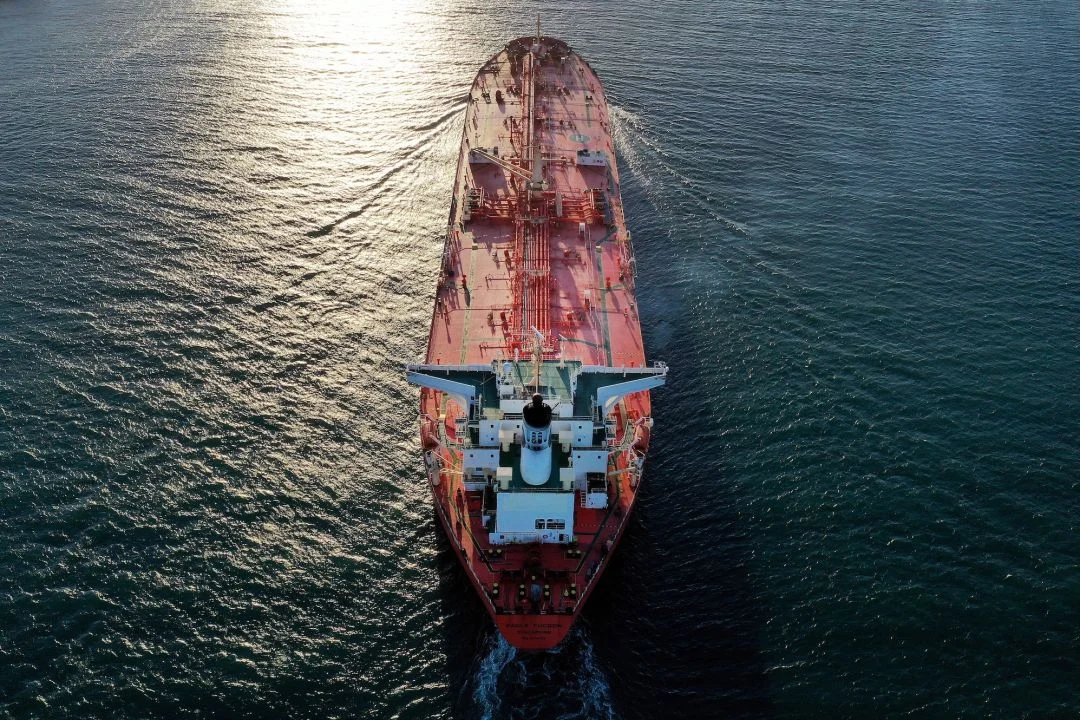
WASHINGTON D.C. — In a significant escalation of shadow warfare in the Middle East, U.S. national security officials are sounding the alarm over a sophisticated and persistent cyber campaign targeting the global shipping industry. According to recent intelligence reports and investigations by the FBI and the U.S. Coast Guard, Iranian-backed threat actors are suspected of orchestrating as many as 50 cyberattacks against commercial vessels in recent weeks, specifically targeting tankers carrying volatile cargo such as crude oil, liquefied natural gas (LNG), and industrial chemicals.
The campaign, which has spanned maritime routes across Asia and Europe, represents a shift in Tehran’s asymmetric strategy. By targeting the "circulatory system" of global commerce, officials believe Iran aims to demonstrate its ability to project power far beyond its borders, potentially causing catastrophic environmental damage or economic paralysis without firing a single kinetic shot.
Main Facts: A Digital Assault on High-Stakes Logistics
The wave of cyber intrusions has primarily focused on the navigation and operational technology (OT) systems of large-scale transport vessels. Unlike traditional data breaches that seek to steal intellectual property or financial records, these attacks appear designed for sabotage and psychological operations.
According to a report initially detailed by The Wall Street Journal, the hackers have successfully breached the networks of ships traveling through some of the world’s most congested and strategically sensitive waterways. The primary concern for U.S. officials is not merely the loss of data, but the potential for "cyber-kinetic" events—incidents where a digital breach leads to physical destruction.
The targeted vessels include:
- Very Large Crude Carriers (VLCCs): Capable of carrying millions of barrels of oil.
- LNG Tankers: Highly pressurized vessels where a navigation error or system failure could lead to catastrophic explosions.
- Chemical Tankers: Carrying hazardous materials that, if spilled, could cause decades of environmental trauma to coastal ecosystems.
U.S. investigators are currently focused on determining whether these hacks were intended to cause mid-sea collisions, groundings, or—most disturbingly—explosions within major Western ports. While most modern ships maintain manual overrides and analog backup controls, the stress placed on a crew during a total system blackout in a narrow channel like the Strait of Malacca or the English Channel cannot be overstated.
Chronology: The Escalation of the 2026 Cyber Conflict
The current maritime crisis is the latest chapter in a year defined by unprecedented digital aggression following the death of Iran’s Supreme Leader earlier in 2026. The ensuing power vacuum and the intensified conflict involving the U.S. and Israel have pushed the Iranian Revolutionary Guard Corps (IRGC) to deploy its cyber capabilities with increased frequency.
June 2026: The Discovery of FortiBleed
Security researchers identified a critical vulnerability in Fortinet-made routers and firewalls, dubbed "FortiBleed." The bug allowed remote attackers to bypass authentication and gain deep access to corporate and industrial networks. While patches were issued, the decentralized nature of maritime IT meant thousands of vessels remained vulnerable.
July 2026: The Domestic Prelude
Before taking to the seas, Iranian hackers targeted U.S. domestic infrastructure. CISA (the Cybersecurity and Infrastructure Security Agency) confirmed that over 100 American water providers were compromised. While no water supplies were poisoned, the "proof of concept" was clear: Iran could penetrate the systems managing essential life services.
August 2026: The First Maritime Interventions
The crisis moved into the physical realm when the FBI and U.S. Coast Guard took the extraordinary step of boarding several oil tankers heading toward the U.S. Atlantic coast. Intelligence suggested that these vessels’ navigation systems had been compromised while in transit. These boardings were a desperate measure to ensure that "ghost-controlled" tankers did not enter busy American ports like New York or Savannah.
November 2026: The Global Surge
By mid-November, the frequency of attacks spiked. Reports emerged of ships across the Indian Ocean and the Mediterranean experiencing "phantom" navigation commands and sudden lockouts from engine monitoring software. This led to the current estimate of 50 targeted vessels, signaling a move from targeted harassment to a systemic campaign.
Supporting Data: The Anatomy of the Breach
The technical backbone of this campaign relies on the exploitation of the "FortiBleed" vulnerability. Modern shipping vessels are increasingly reliant on "always-on" satellite connectivity to manage logistics, fuel efficiency, and crew welfare. This connectivity often passes through edge security devices like Fortinet routers.
The Vulnerability Gap
Maritime cybersecurity has historically lagged behind land-based corporate security. Ships often remain at sea for months, making regular software patching difficult. Furthermore, many vessels use a mix of legacy hardware and modern IoT (Internet of Things) sensors. Once an attacker gains access to the ship’s local area network (LAN) via a router vulnerability, they can move laterally into the Industrial Control Systems (ICS) that govern:

- GPS and ECDIS (Electronic Chart Display and Information System): Altering coordinates to lead a ship off-course.
- Ballast Water Management: Unbalancing a ship to cause it to list or capsize.
- Engine Performance Monitoring: Overheating components to cause mechanical failure.
Geographic Spread
Data indicates that the attacks are not localized to the Persian Gulf. Of the 50 suspected incidents:
- 30% occurred in the South China Sea and the Malacca Strait.
- 25% occurred in the Mediterranean and near the Suez Canal.
- 20% were identified in vessels approaching North American ports.
- 25% were scattered across the Atlantic and Indian Oceans.
This distribution suggests that the hackers are not just targeting ships near Iranian waters, but are tracking global assets to maximize the visibility of their disruption.
Official Responses: A Coalition on High Alert
The U.S. government’s response has been a mix of tactical intervention and public warning. The joint FBI-Coast Guard security alert issued in September was a rare public admission of the vulnerability of the global supply chain.
"The maritime transportation system is the backbone of our economy," said a senior official from the Coast Guard’s Cyber Command, speaking on the condition of anonymity. "When you compromise a tanker carrying 500,000 barrels of oil, you aren’t just hacking a computer; you are potentially creating an environmental and economic weapon."
The FBI has remained tight-lipped regarding the specific identities of the hacking groups, though the "fingerprints" of the attacks—the code structure, the command-and-control servers used, and the timing—point directly to groups associated with the IRGC.
Meanwhile, the International Maritime Organization (IMO) has called for an emergency session to discuss new mandatory cybersecurity protocols for all commercial vessels. However, critics argue that international policy moves too slowly to counter the rapid evolution of state-sponsored hacking.
Strategic Implications: The Future of Grey Zone Warfare
The targeting of shipping vessels marks a definitive shift into "Grey Zone" warfare—hostile actions that remain below the threshold of open conventional war but cause significant damage to a nation’s interests.
1. Economic Fragility
The global economy is hyper-efficient and relies on "just-in-time" delivery. If insurance companies begin to view major shipping lanes as "cyber-high-risk zones," premiums will skyrocket. This cost will inevitably be passed down to consumers, fueling inflation and global instability.
2. Environmental Terrorism
The most harrowing implication is the potential for a "digital Exxon Valdez." By hacking a ship’s steering in a narrow, rocky strait, a state actor could cause a massive spill without ever launching a missile. The deniability offered by cyberattacks makes this an attractive option for a regime looking to lash out while avoiding a direct military retaliation from the U.S. Navy.
3. The Collapse of Trust in Automation
As the shipping industry moves toward autonomous and semi-autonomous vessels, this wave of hacks serves as a stark warning. If 2026-era manned ships can be compromised so easily, the future of unmanned "drone ships" appears increasingly precarious. The industry may be forced to revert to more expensive, labor-intensive manual processes to ensure safety, reversing decades of technological progress.
4. Geopolitical Leverage
For Iran, these attacks serve as a bargaining chip. By demonstrating the ability to harass global trade at will, Tehran hopes to force the international community to the negotiating table on more favorable terms, particularly regarding sanctions and regional security arrangements.
Conclusion
As the FBI and international partners continue to investigate the 50-ship surge, the message from the digital frontlines is clear: the oceans are no longer a buffer against the reach of state-sponsored cyber actors. The "Silent Siege" of the global shipping industry is a testament to the evolving nature of 21st-century conflict, where a bug in a router in the middle of the ocean can have repercussions that felt in every port and gas station across the globe.
For now, the world watches the horizons, not just for the silhouettes of tankers, but for the invisible code that may be steering them toward disaster. The maritime industry, once governed by the stars and the wind, must now learn to navigate the much more treacherous waters of the global silicon landscape.