Beyond the "Bane" Mask: How PNOĒ is Democratizing Metabolic Testing for the Longevity Era
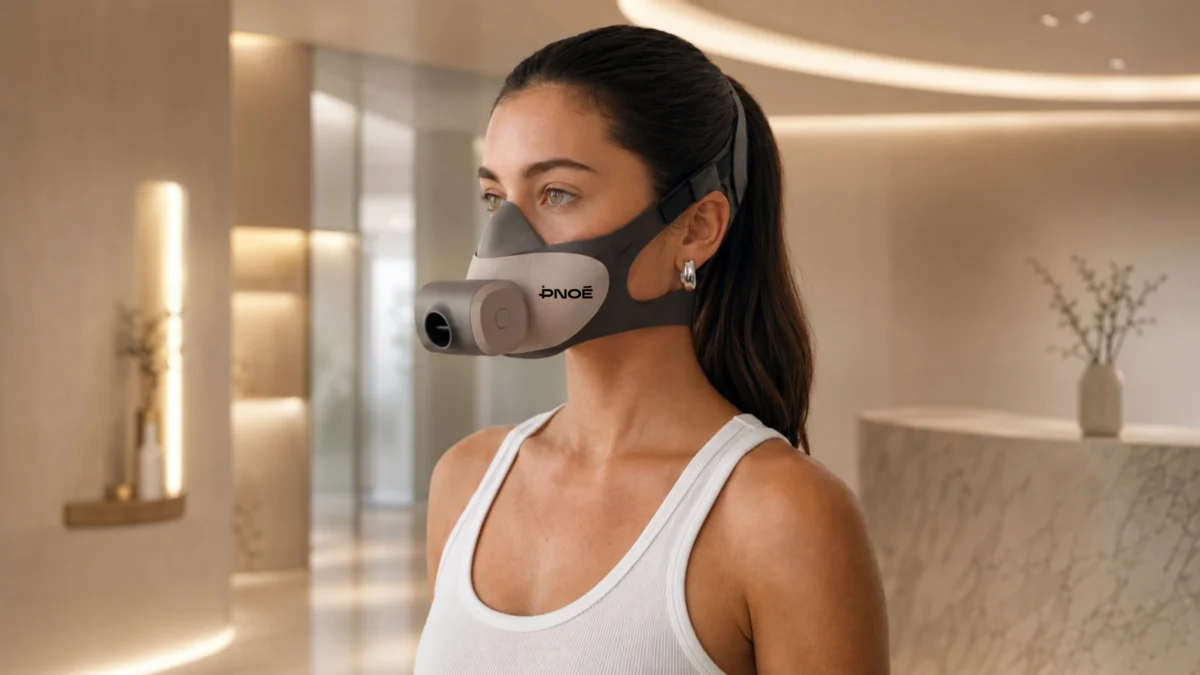
At first glance, the newest hardware from PNOĒ looks less like a medical breakthrough and more like the gear of a cinematic antagonist. The mask, designed to fit snugly over the nose and mouth with straps securing it behind the head, bears an unmistakable resemblance to the one worn by Bane, the hulking nemesis of Batman. However, the intent behind this device is far from malevolent. Instead of masking a villain, the device is designed to unmask the internal biological processes of the human body.
By measuring the precise volume of oxygen consumed and carbon dioxide exhaled, the PNOĒ system translates simple breath into a comprehensive data set. This information is then distilled into actionable advice on nutrition, athletic training, and—the company’s ultimate goal—human longevity. As the wellness industry shifts from general fitness toward high-precision "bio-hacking" and longevity science, PNOĒ is positioning itself as the bridge between elite clinical laboratories and the local neighborhood gym.
Main Facts: The Launch of PNOĒ 2.0 and the Shift to Self-Administration
Based in Malden, Massachusetts, with significant research and development operations in Athens, Greece, PNOĒ is currently finalizing the launch of its next-generation device: the PNOĒ 2.0. Scheduled for a commercial debut on October 1, the 2.0 iteration represents a fundamental shift in the company’s product philosophy.
While the original PNOĒ device brought metabolic testing out of the hospital and into the gym, it still required a trained operator to facilitate the test. The PNOĒ 2.0 eliminates this barrier. According to co-founder and CEO Apostolos Atsalakis, the new device is designed for total autonomy. In a recent interview, Atsalakis explained that the goal was to create a "plug-and-play" experience for the end user.
"The big change is that users can administer the test themselves," Atsalakis said. "You can walk into a gym, just wear the mask, push the button, sit down, and breathe for eight minutes. That’s it. It’s that easy."
This move toward self-service is a strategic pivot intended to scale the technology into environments where dedicated staff may be unavailable. By reducing the friction of the testing process, PNOĒ hopes to see its masks appearing in 24-hour fitness centers, boutique wellness studios, and potentially even retail pharmacies.
Hardware Refinement and Hygiene
The PNOĒ 2.0 is not just a software update; it is a complete physical overhaul. Developed in collaboration with the Milan-based Design Group Italia, the device is smaller, more compact, and features fewer moving parts than its predecessor. This streamlined design is intended to increase mechanical reliability—a common pain point for wearable hardware.
In a post-pandemic market, the company has also addressed the "hygiene hurdle." The electronics of the device are modular and detachable from the silicone mask and straps. This allows businesses to maintain a single set of expensive sensors while allowing individual users to purchase and keep their own personal masks, ensuring that no one has to share a "breath-catching" surface with a stranger.
Chronology: From Cambridge Research to a Global Wellness Brand
The origins of PNOĒ are rooted in the academic corridors of the University of Cambridge. Apostolos Atsalakis began exploring sensing technologies during his PhD work, at a time when the first wave of consumer wearables—like the early Fitbit and Apple Watch—was beginning to capture the public’s imagination. While most of the industry was focused on wrist-based heart rate monitoring, Atsalakis became fascinated by the "gold mine" of data contained within human breath.
The Timeline of Growth:
- 2014: Atsalakis co-founds the company with childhood friend Panos Papadiamantis, who now serves as Chief Product Officer.
- 2019: PNOĒ is accepted into the prestigious Y Combinator Winter batch. At the time, "longevity" was still a niche interest rather than the multi-billion-dollar industry it is today.
- 2020–2023: The company secures partnerships with elite athletic organizations and high-end fitness chains, including the NBA, Red Bull, and Equinox.
- 2024: PNOĒ closes an $11 million funding round, bringing its total capital raised to approximately $22 million. Investors include the venture firm 50 Years and Google Maps co-founder Lars Rasmussen.
- October 1, 2024: The scheduled launch of PNOĒ 2.0, marking the transition to self-administered metabolic testing.
Today, PNOĒ employs 110 people and reports that it has recently reached profitability, a significant milestone for a hardware-intensive startup. With an annual growth rate exceeding 100%, the company is currently preparing for a Series B funding round within the next six to twelve months.
Supporting Data: The Science of Metabolic Testing
To understand why PNOĒ is gaining traction, one must understand the science of metabolic testing—a field that has existed for over a century but has remained largely inaccessible to the general public.
The VO2 Max Gold Standard
For decades, the "gold standard" for cardiorespiratory fitness has been VO2 max—the maximum amount of oxygen an individual can utilize during intense exercise. Traditionally, measuring this required a "metabolic cart," a bulky, expensive piece of equipment found in sports science labs or hospitals. PNOĒ has miniaturized this technology, claiming to offer the same level of accuracy in a portable, wearable format.
The importance of VO2 max has transcended the world of elite cycling and marathons. Recent longitudinal studies have identified VO2 max as one of the strongest predictors of all-cause mortality. Atsalakis refers to it as the "strongest predictor of human longevity," noting that improving one’s VO2 max can have a more significant impact on lifespan than almost any other lifestyle intervention.
Beyond the Lungs: 23 Biomarkers
The PNOĒ test captures 23 distinct biomarkers during an eight-minute session. Key metrics include:
- Resting Metabolic Rate (RMR): The exact number of calories the body burns at rest, allowing for precision-engineered nutrition plans.
- Metabolic Flexibility: The body’s ability to efficiently switch between burning fats and carbohydrates. Poor metabolic flexibility is often a precursor to insulin resistance and Type 2 diabetes.
- Respiratory Lead: Identifying breathing patterns that may contribute to anxiety or poor sleep quality.
While consumer wearables like the Apple Watch, Whoop, and Garmin provide estimates of VO2 max based on heart rate and movement algorithms, PNOĒ argues that these are "educated guesses." By actually analyzing the gas exchange in the breath, PNOĒ provides a direct measurement that captures the nuances of an individual’s unique metabolism.
Official Responses and Business Strategy
Despite its clinical-grade data, PNOĒ is navigating a complex regulatory landscape. The device is not cleared by the U.S. Food and Drug Administration (FDA), a distinction that Atsalakis is careful to maintain.
The "Wellness Device" Distinction
"We do not provide medical recommendations," Atsalakis stated clearly. He likens the device to a high-end body composition scale. "It’s a wellness device. A doctor cannot prescribe medication based on our results."
This positioning allows PNOĒ to bypass the lengthy and restrictive FDA approval process required for diagnostic medical devices, enabling them to iterate on their hardware and software more rapidly. However, the company does not rule out a clinical future. Atsalakis acknowledged that while the data could eventually be used to flag serious health issues, a full diagnostic version of the product is "definitely a couple of years away."
The "Business in a Box" Model
PNOĒ does not sell directly to consumers. Instead, it operates on a B2B (business-to-business) model. Gyms, spas, and wellness centers pay a monthly subscription ranging from $400 to over $1,000. This fee covers the hardware, software, training, and marketing materials—a package Atsalakis calls a "business in a box."
This model has proven successful in the United States, which accounts for 85% of PNOĒ’s revenue. High-profile clients include Equinox, the Mount Sinai Health System, and Restore Hyper Wellness. By integrating the test into the "onboarding" process for new gym members, these businesses can sell personalized training and nutrition packages based on the member’s specific metabolic profile.
Implications: The Future of Proactive Health
The rise of PNOĒ signals a broader shift in how society views health. We are moving away from a "reactive" model—where we only seek data when we are sick—toward a "proactive" model, where data is used to optimize performance and delay the onset of chronic disease.
The "Breathomics" Frontier
The long-term implications of PNOĒ’s technology extend far beyond fitness. There is an emerging field of science known as "breathomics," which explores how specific compounds in human breath can signal the presence of diseases like lung cancer or liver failure long before physical symptoms appear. As PNOĒ collects a massive, global database of metabolic profiles, it is building a "trove of data" that could eventually contribute to early-detection algorithms.
Global Expansion and the Longevity Boom
As the company expands into Europe, Latin America, and Asia, it enters a "middle ground" in the market. It sits comfortably between the $200 consumer smartwatch and the $30,000 clinical metabolic cart. As the "longevity" industry continues to boom—driven by popular science figures like Dr. Peter Attia and the growing aging population—the demand for precise, accessible biological data is likely to increase.
Ultimately, PNOĒ is betting that the "Bane mask" will become as common in the gym of the future as the treadmill is today. By turning the simple act of breathing into a digital scorecard, the company is attempting to provide the one thing every longevity enthusiast craves: a roadmap to a longer, healthier life, backed by the hard data of their own metabolism.