Unearthing the Dawn of Egypt: A Deep Dive into the Predynastic Period
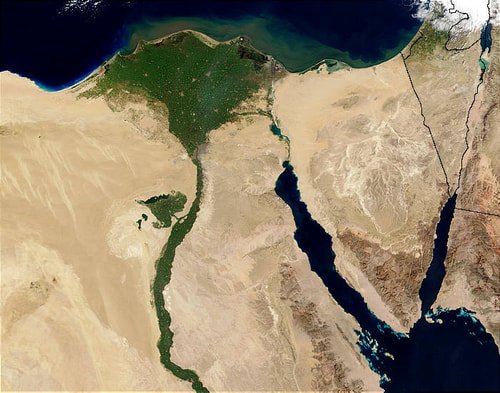
Cairo, Egypt – Before the towering pyramids pierced the sky and pharaohs ruled a unified land, an extraordinary era of development laid the bedrock for one of the world’s most enduring civilizations. This largely pre-literate epoch, known as the Predynastic Period, spans millennia, from the earliest human settlements in the Nile River Valley through to the rise of the First Dynasty. While lacking written records, archaeological discoveries have meticulously pieced together a compelling narrative of cultural evolution, technological innovation, and societal consolidation that ultimately forged the ancient Egyptian state.
Main Facts: The Unseen Foundations of a Civilization
The Predynastic Period in ancient Egypt broadly encompasses the time before recorded history, typically dated from circa 6000 to 3150 BCE, though evidence suggests human activity in the region extends much further back. It represents the crucial transition from Paleolithic hunter-gatherer societies to settled agricultural communities, culminating in the complex socio-political structures that would define the Early Dynastic Period (circa 3150-2613 BCE).
Crucially, our understanding of this era is almost entirely derived from archaeological excavations. Artifacts, burial sites, and remnants of early settlements unearthed across the Nile River Valley tell a story of ingenious adaptation to the fertile riverine environment. The names given to the various Predynastic cultures — such as Faiyum A, Merimde, Badarian, Amratian (Naqada I), and Gerzean (Naqada II) — are derived from the regions or ancient city sites where their distinctive artifacts were first discovered, rather than reflecting indigenous cultural designations.
A significant point of scholarly debate revolves around the precise chronological boundaries and nomenclature for this period. Some Egyptologists propose the adoption of terms like "Protodynastic Period" or "Zero Dynasty" for the span immediately preceding the First Dynasty, recognizing the advanced state of societal organization and proto-writing that characterized its final stages. However, "Predynastic Period" remains the most widely accepted umbrella term for the millennia leading up to Egypt’s formal unification.
Chronology: Tracing the Genesis of a Civilization
The journey through the Predynastic Period is a fascinating progression of human ingenuity and adaptation along the life-giving Nile.
The Deep Roots: From Paleolithic Hunter-Gatherers to Sedentary Life
The earliest echoes of human habitation in the Nile region stretch back an astonishing 700,000 years. More concrete evidence emerges in ancient Nubia, specifically the Wadi Halfa region in modern-day Sudan, where communities of hunter-gatherers constructed mobile shelters. Polish archaeologist Waldemar Chmielewski’s 1980s discovery of ‘tent rings’ – man-made depressions with flat sandstone floors, likely supporting temporary structures of animal skins or brush – dates to the Late Paleolithic Age, around the 40th millennium BCE.

Successive hunter-gatherer cultures, including the Aterian and Khormusan, refined stone tool manufacturing. The Halfan culture flourished around 30,000 BCE, bridging Egypt and Nubia, followed by the Qadan, Sebilian, and Harifan cultures around 10,000 BCE. These societies gradually became more sedentary, driven by the increasing reliability of agriculture, marking the critical transition from Paleolithic to Neolithic life. The Fayyum depression, a natural basin southeast of the Giza Plateau, offers a particularly rich window into this transformation.
Lower Egypt’s Early Flourishing
The Faiyum A culture (circa 9000-6000 BCE) emerged in the Fayyum Oasis, centered around a large lake. These communities were pioneers in agriculture, cultivating grains while supplementing their diet through hunting and fishing. Evidence suggests a mix of seasonal migration and continuous habitation. Their settlements featured reed huts with subterranean cellars for grain storage. This period saw the domestication of cattle, sheep, and goats, alongside the development of basketry and pottery. Tribal chieftains began to assume positions of authority, hinting at nascent forms of centralized governance.
The Merimde culture (circa 5000-4000 BCE), identified at Merimde Beni Salama on the western Nile Delta, built upon Faiyum A advancements. Their dwellings evolved into pole-framed huts with windbreaks, some semi-subterranean, laid out in rows potentially forming circular patterns. Granaries consisted of clay jars or baskets buried in the ground.
Further refinements characterized the El-Omari culture (circa 4000 BCE), who constructed more sophisticated oval huts with plastered mud walls. They innovated blade tools, woven mats for floors and walls, and produced more advanced, unornamented ceramics. Contemporaneously, the Ma’adi and Tasian cultures demonstrated further architectural and technological progress, including large community buildings with underground chambers, stairs, and hearths. Notably, the Ma’adi period saw a shift from burying the deceased within or near homes to the more widespread use of dedicated cemeteries, such as those at Wadi Digla, indicating evolving funerary practices. Improvements in storage jars and weaponry were also hallmarks of this era.
Upper Egypt’s Ascendance and Unification
While Lower Egypt’s cultures developed, civilization in Upper Egypt (southern Egypt, closer to the source of the Nile) progressed along a parallel, though perhaps slightly later, trajectory.
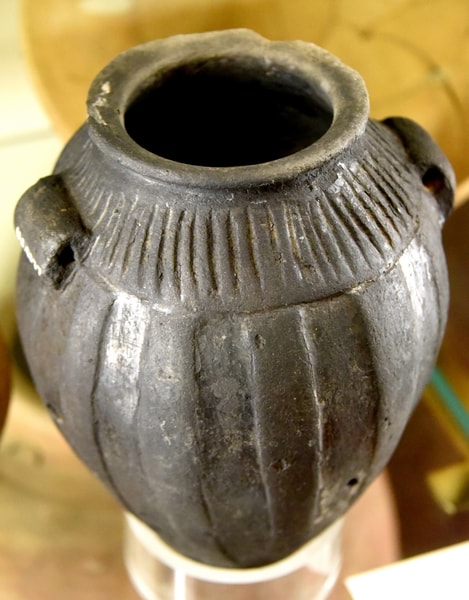
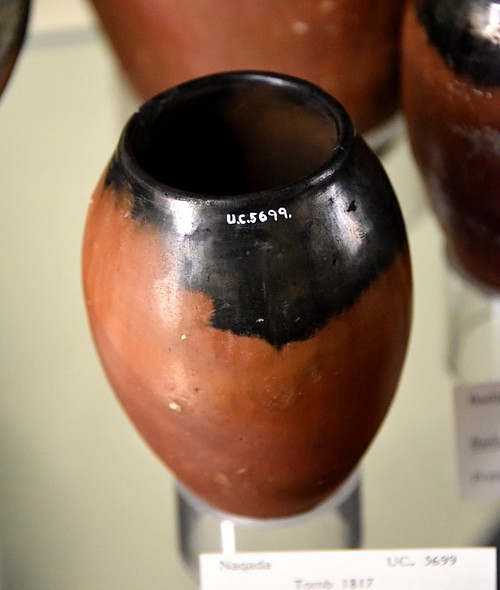
The Badarian culture (circa 4500-4000 BCE) is a pivotal marker in Upper Egypt, often seen as an outgrowth of the Tasian culture, though this connection is debated. Badarian people lived in both mobile tents and more permanent huts, practicing farming (wheat, barley, herbs) supplemented by hunting. Domesticated animals provided food, clothing, and materials for shelters. Their burial practices are particularly revealing: bodies covered in animal hides, laid on reed mats in cemeteries, accompanied by grave goods like weapons, tools, and food offerings. This signifies a distinct development in belief structures concerning the afterlife. Badarian ceramics were notably refined, producing thinner, more finely crafted pottery, including distinctive blacktopware.
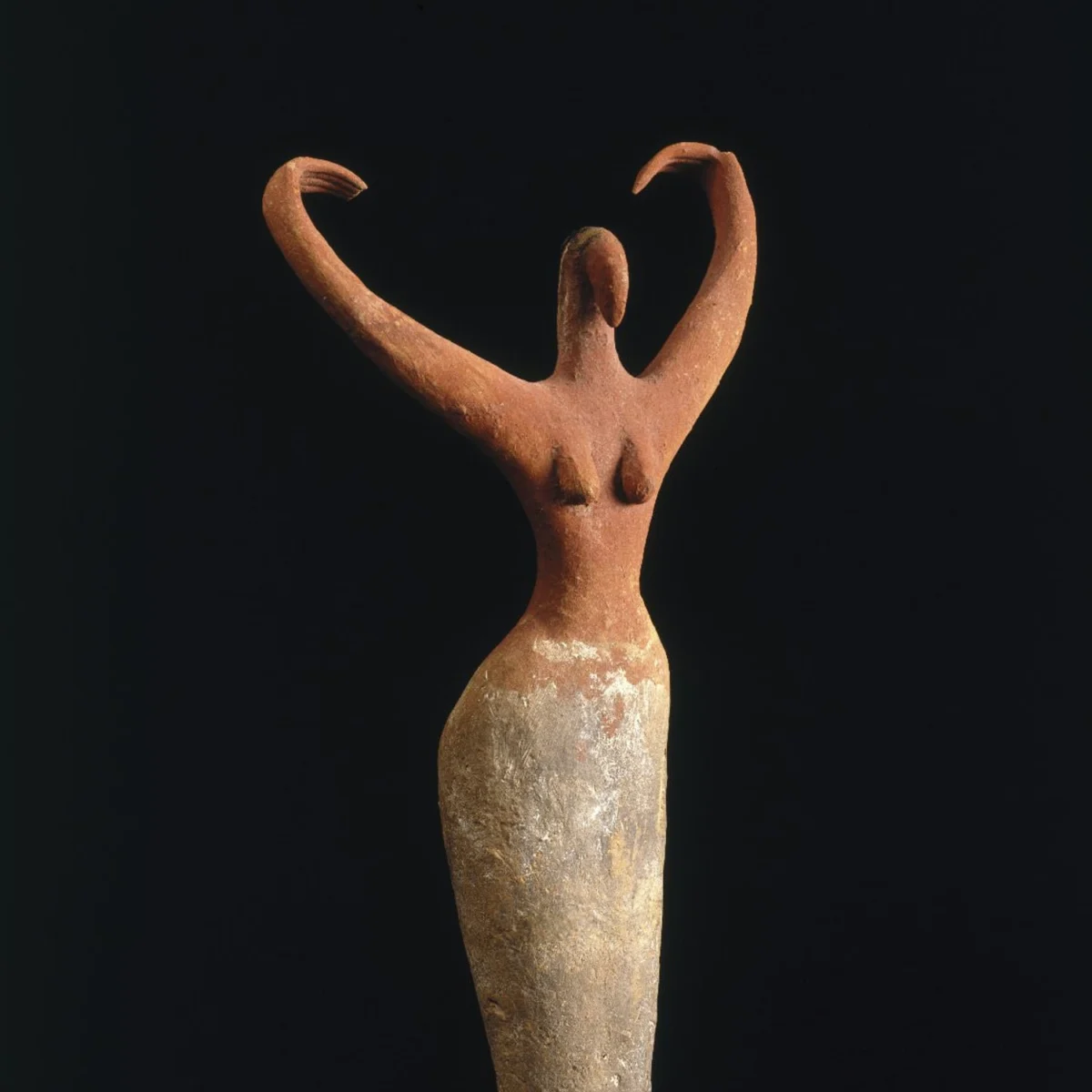
The Amratian (Naqada I) period (circa 4000-3500 BCE) built upon Badarian foundations. Dwellings became more sophisticated, possibly featuring windows, and certainly hearths, wattle-and-daub walls, and external windbreaks. Ceramic artistry flourished, with blacktopware giving way to red pottery adorned with images of people and animals. Significantly, early forms of mummification began around 3500 BCE, and grave goods continued to be an essential component of burial.
The Gerzean culture (Naqada II) (circa 3500-3200 BCE) marked a period of accelerated development, largely driven by expanding trade networks. Contacts with other regions introduced new ideas and materials. Palestinian influences are evident in pottery designs, including tilted spouts and handles, and the emergence of light-colored pottery with red patterns depicting animals, boats, trees, and herds, possibly mass-produced for trade. Copper became prevalent in weaponry and jewelry, alongside the use of gold foil and silver. Flint blades became highly sophisticated, and beads and amulets were crafted from metals and lapis lazuli.
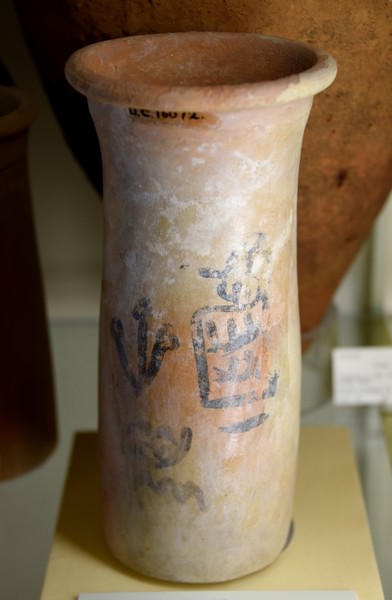
Gerzean houses were constructed from sun-baked brick, with more affluent homes featuring courtyards. Graves became increasingly ornate, utilizing wood for the wealthy and carving niches for votive offerings. The city of Abydos, north of Naqada, emerged as a crucial burial site, developing into a vast necropolis with large tombs that would eventually serve as the resting place for Egypt’s kings. Crucially, hieroglyphic script began to develop between circa 3400 and 3200 BCE, initially for record-keeping on ceramics, clay seals, and bone/ivory, though complete sentences wouldn’t appear until later.
The final stage, Naqada III (3200-3150 BCE), often termed "Zero Dynasty" or "Protodynastic Period," witnessed significant Mesopotamian influence, likely through trade. This impact is seen in brick-baking techniques, construction methods, cylinder seals, tomb symbolism, ceramic designs, and potentially even aspects of early Egyptian religion. Trade with Canaan led to Egyptian colonies in southern Israel, further enriching cultural exchange. As communities grew into larger urban centers, competition for resources and trade routes intensified, leading to conflicts. The three major Upper Egyptian city-states – Thinis, Naqada, and Nekhen – vied for dominance. Thinis appears to have conquered Naqada, then absorbed Nekhen, a process attributed to the "Scorpion Kings." This period culminated in the unification of Upper and Lower Egypt under a single ruler, setting the stage for the First Dynasty.
Supporting Data: Unearthing the Silent Narratives
Our understanding of the Predynastic Period is a testament to the power of archaeological interpretation. The absence of comprehensive written texts from this era means that every unearthed artifact, every burial site, and every architectural remnant provides invaluable "data points" for reconstructing ancient life.
Archaeological Insights: A Material Culture Speaks
- Faience and Pottery: The discovery of faience pieces as early as 5500 BCE at Abydos suggests an established industry. The evolution of pottery, from the plain ceramics of Faiyum A and El-Omari to the distinctive blacktopware of Badarian, and then to the red, ornamented, and eventually light-colored trade pottery of the Amratian and Gerzean periods, provides a tangible timeline of technological and artistic progression. These vessels reveal not only daily utility but also artistic sensibilities and, through their designs, insights into evolving iconography (animals, people, boats).
- Tools and Technology: From rudimentary stone tools of early hunter-gatherers to the refined flint blades of the Gerzean period and the emergence of copper in weaponry and jewelry, the archaeological record demonstrates a continuous improvement in material technology. The presence of grindstones in cultures like the Ma’adi indicates agricultural processing, while throwing sticks, knives, arrowheads, and planes found as grave goods speak to hunting, warfare, and craftsmanship.
- Architecture and Settlement Patterns: The progression from mobile tent rings to reed huts, pole-framed huts, oval plastered mud huts, and eventually sun-baked brick houses with courtyards illustrates a growing permanence and sophistication in settlement. The development of underground cellars for grain storage and communal granaries highlights early agricultural planning and community organization.
- Burial Practices and Beliefs: The transition from simple burials near homes to dedicated cemeteries, and the increasing inclusion of grave goods (weapons, tools, food, personal belongings) alongside the deceased, strongly suggests the development of a belief in an afterlife and the need for material provisions in that journey. The early practice of mummification in the Amratian period further underscores the evolving understanding of death and preservation. The necropolis at Abydos, with its progressively larger and more ornate tombs, provides a clear physical record of the increasing social stratification and the growing importance of the elite in the final Predynastic stages.
Manetho’s Aegyptiaca and its Legacy
While not a direct source for the Predynastic Period, the 3rd century BCE work Aegyptiaca (The History of Egypt) by the Egyptian scribe Manetho provides the foundational dynastic chronology upon which modern scholars still rely for later periods. Commissioned by Ptolemy II Philadelphus, Manetho’s history was an attempt to compile a comprehensive record of his native land for its new Greek rulers. Douglas J. Brewer notes its essence as "a chronology of events arranged from oldest to most recent, according to the reign of a particular king."
Unfortunately, Manetho’s original manuscript has been lost, surviving only through fragments cited by later historians like Flavius Josephus (37-100 CE). This reliance on secondary sources introduces controversies regarding its absolute accuracy and completeness. Nevertheless, Manetho’s framework of dynasties remains a critical reference point for Egyptologists, providing a conceptual structure for the vast sweep of Egyptian history. Its absence for the Predynastic Period itself only further highlights the singular importance of archaeology in reconstructing this earlier time.
Early Writing and Symbolic Expression
The emergence of hieroglyphic script between circa 3400 and 3200 BCE, evidenced by discoveries at Abydos on ceramics, clay seal impressions, and ivory pieces, marks a pivotal moment. While these early scripts were primarily for record-keeping and administrative purposes, not yet forming complete sentences, they represent the genesis of one of the most iconic writing systems in history. This nascent literacy in the Naqada III period underscores the growing administrative complexity of society, laying the groundwork for the fully developed writing system of the Dynastic era.
The Role of Trade and External Influences
The later Predynastic Period, particularly Naqada II and III, shows clear evidence of extensive trade networks. Contacts with Mesopotamia brought new technologies and artistic motifs to Egypt, including the use of cylinder seals, architectural styles (sun-baked brick), and certain symbolic elements found on tomb walls and ceramics. Some scholars even suggest that basic forms of ancient Egyptian religion might trace roots to Mesopotamian influences, though this remains a subject of considerable debate. Trade with Canaan led to Egyptian outposts in what is now southern Israel, further demonstrating the outward reach and influence of these developing Egyptian communities. These exchanges of goods were undoubtedly accompanied by an exchange of ideas, contributing to the rich cultural tapestry of late Predynastic Egypt.
Scholarly Debates and Designations: Interpreting the Past
The study of the Predynastic Period is rife with academic discussion, reflecting the challenges of interpreting an era devoid of direct historical accounts.
The "Predynastic" Conundrum
The initial designation "Predynastic Period" arose in the early days of Egyptology, before the full scope of archaeological finds was understood. As more sophisticated discoveries were made, particularly those from the final centuries before unification, scholars recognized a distinct phase characterized by highly organized chiefdoms, proto-writing, and monumental tombs. This led to the proposal of "Protodynastic Period" or "Zero Dynasty" for the Naqada III phase (c. 3200-3150 BCE). Proponents argue that these terms better reflect the advanced, state-forming nature of this period, differentiating it from the earlier, less complex Predynastic cultures. While these alternative designations are not universally adopted, they highlight the dynamic and evolving understanding of this critical transitional phase.
Cultural Interplay vs. Independent Development
Another area of debate concerns the relationship between successive Predynastic cultures. Were the Badarian and Tasian cultures, for instance, distinct entities or simply different developmental stages of a single cultural tradition? The original article notes the dispute over whether the Badarian culture was an outgrowth of the Tasian, with proponents citing ceramic and tool-making similarities, and detractors emphasizing Badarian advancements and independent development. Such discussions are fundamental to understanding the patterns of migration, innovation, and cultural diffusion within the Nile Valley. The idea that cultures "overlapped" rather than following a neat "chapter-like" progression is a crucial nuance often emphasized by modern scholarship.
The Unification Enigma: Narmer vs. Menes
Perhaps the most enduring and fascinating debate revolves around the identity of the king who unified Upper and Lower Egypt and established the First Dynasty. Manetho’s chronology names "Menes" as the first king. However, archaeological evidence, most famously the Narmer Palette, clearly depicts a king named Narmer conquering enemies and subjugating the land, suggesting a military unification.
The prevailing view among many scholars is that Narmer and Menes are one and the same person. The Narmer Palette, a two-foot (64 cm) inscribed ceremonial slab, is a powerful visual document of this unification, showing Narmer wearing the crowns of both Upper and Lower Egypt. His tomb and other year markers bearing his name provide concrete archaeological confirmation of his existence and reign. The discrepancy between Manetho’s account (which might suggest a peaceful unification under Menes) and the Narmer Palette’s depiction (showing military conquest) adds complexity to the narrative. Some theories even suggest that Menes might have been Hor-Aha, Narmer’s successor. Regardless of the exact identity, the figure of Narmer stands as the tangible archaeological representation of Egypt’s foundational moment.
Implications: Forging the Pharaonic Legacy
The Predynastic Period, despite its pre-literate nature, was far from a prehistoric void. It was a crucible where the essential elements of ancient Egyptian civilization were forged, laying a robust foundation for the three millennia that followed.
Foundations of Statehood
The gradual consolidation of power among the city-states of Upper Egypt, culminating in the conquests attributed to the Scorpion Kings and ultimately Narmer, established the template for the unified Egyptian state. This process of political integration, driven by competition over trade routes and resources, led to the development of a centralized government, a hierarchical society, and the concept of divine kingship – a ruler who embodied the land and its people. The administrative structures, including early record-keeping (proto-hieroglyphs), developed in Naqada III, were direct precursors to the elaborate bureaucracy of the pharaonic state.
Socio-Cultural Blueprint
Many of the core socio-cultural tenets that defined Dynastic Egypt find their origins in the Predynastic era. The strong belief in an afterlife, evidenced by increasingly elaborate burial practices and grave goods, became a cornerstone of Egyptian religion and monumental architecture. The artistic conventions, such as the depiction of human figures and animals on pottery, evolved into the distinctive styles seen in tomb paintings and reliefs. The domestication of animals, agricultural practices, and early craft industries like pottery and metallurgy became the economic engine of the future kingdom.
Technological and Artistic Innovation
The innovations of the Predynastic Period were crucial. The development of sophisticated copper tools and weaponry, advanced ceramics, and the use of precious metals like gold and silver demonstrated a mastery of materials that would be further refined in the Dynastic age. The architectural shift from temporary shelters to permanent mud-brick structures, including the monumental tombs at Abydos, foreshadowed the monumental building projects, including the pyramids and temples, that would become synonymous with ancient Egypt. The genesis of hieroglyphic script was perhaps the most profound innovation, providing the means for a complex civilization to record its history, laws, religion, and literature.
The Enduring Mystery
The Predynastic Period serves as a powerful reminder that even in the absence of written chronicles, the story of human development can be meticulously reconstructed through archaeological endeavor. It reveals a dynamic, evolving society that, over thousands of years, transitioned from scattered communities to a unified kingdom, establishing the cultural, political, and technological framework that would sustain one of history’s most fascinating and enduring civilizations. The debates surrounding its nomenclature and the identity of its final unifier only underscore the profound significance of this "dawn of Egypt," an era that continues to yield new insights into humanity’s ancient past.