The Silicon Pivot: Firebird and NVIDIA Launch the CIS Region’s Largest AI Factory in Armenia
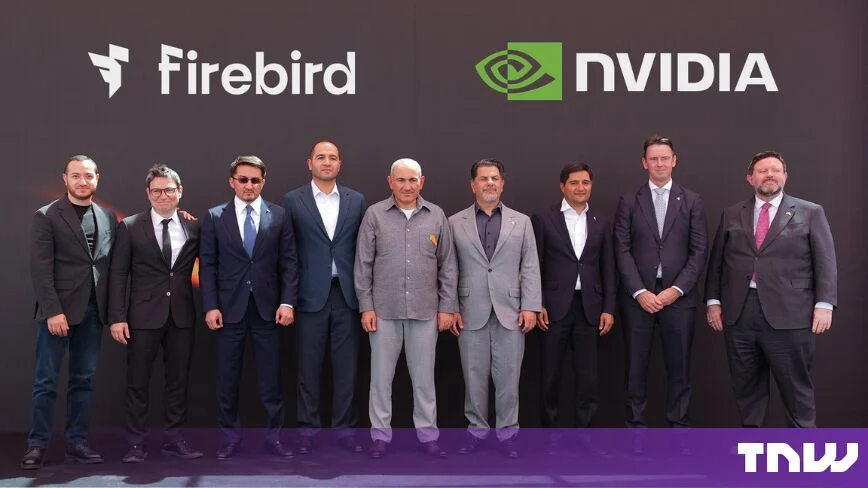
HRAZDAN, ARMENIA — In a move that signals a tectonic shift in both the global technology landscape and the geopolitical alignment of the Caucasus, US-based AI cloud provider Firebird has officially inaugurated what NVIDIA describes as the largest "AI Factory" in the Commonwealth of Independent States (CIS) region. The facility, located in the industrial hub of Hrazdan, represents a multi-billion-dollar bet on the future of sovereign compute and a strategic maneuver by the United States to embed high-tech infrastructure within a region historically dominated by Russian influence.
The grand opening on Saturday was attended by a high-profile delegation that underscored the project’s diplomatic weight. Armenian Prime Minister Nikol Pashinyan was joined by Kazakhstan’s Deputy Prime Minister Zhaslan Madiyev and David Allen, the US Chargé d’Affaires in Armenia. The presence of these officials marks a watershed moment: a US-backed technology giant establishing a critical node of the global AI economy in Russia’s traditional "near abroad," with the explicit blessing of Washington and the participation of key regional neighbors.
Main Facts: A New Benchmark for Regional Compute
The Firebird facility, designated DC-1, is not merely a data center but a specialized "AI Factory" designed specifically for the intensive requirements of large language model (LLM) training and inference. At its core, the facility utilizes NVIDIA’s most advanced hardware, much of which was previously restricted or unavailable in the region.
Key Specifications of Phase 1:
- Hardware: 6,144 NVIDIA B200 (Blackwell) GPUs.
- Power Capacity: 15 Megawatts (MW) currently operational.
- Cooling: Advanced liquid-cooling systems provided by Vertiv.
- Infrastructure: Switchgear and UPS systems designed by Schneider Electric.
- Architecture: Built on NVIDIA’s Reference Architecture and the DSX platform.
The facility’s first major tenant is Perplexity, the California-based "answer engine" and AI agent platform. Perplexity will utilize the Hrazdan cluster to power its real-time search and generative AI services, marking a significant instance of a high-growth Silicon Valley firm offshoring its primary compute workloads to the Caucasus.
Strategic Financials
Firebird’s expansion is supported by an aggressive investment strategy from NVIDIA itself. Following a pattern established with other "neocloud" providers like CoreWeave, NVIDIA has signaled its intent to take an equity position in Firebird. This "circular financing" model—where NVIDIA invests in companies that then use those funds to purchase NVIDIA hardware—has become a cornerstone of the chipmaker’s strategy to secure market dominance and accelerate the deployment of its Blackwell and Rubin architectures.
Chronology: From Export Licenses to Regional Dominance
The path to the Hrazdan opening was paved by a series of rapid-fire regulatory and diplomatic milestones, reflecting the urgency of the US-led effort to build AI capacity abroad.
November 2025: The Regulatory Breakthrough
The project’s foundation was laid in late 2025 when Firebird secured a rare and highly specific US export license. Given the sensitivity of NVIDIA’s Blackwell-class hardware, which is subject to strict export controls to prevent "leakage" to adversarial states, the license was the "load-bearing fact" of the entire enterprise. This approval signaled that the US Department of Commerce viewed Armenia as a secure and strategic partner for high-end technology transfer.
February 2026: The Vance Visit and Phase 2 Scaling
The political nature of the project was made explicit during a press conference in Yerevan in February 2026. Attended by US Vice President JD Vance, the event served as the platform for Firebird and the US government to jointly announce "Phase 2" of the project. This phase involves scaling the investment to a staggering $4 billion, with plans to deploy 50,000 GPUs by the end of 2026. Furthermore, licensing was secured for an additional 41,000 NVIDIA GB300 units, the next iteration of NVIDIA’s hardware roadmap.
June 2026: Ribbon Cutting at DC-1
Saturday’s opening of DC-1 marks the completion of Phase 1. The speed of construction was particularly notable; NVIDIA officials confirmed the site transitioned from a blueprint to an operational 15MW facility in just over six months. This rapid deployment was made possible through the use of pre-integrated systems and the NVIDIA DSX platform, which streamlines the procurement of compute, networking, and cooling.
Supporting Data: Technical Architecture and Scaling Targets
The technical ambitions of the Firebird project extend far beyond its current 15MW footprint. The roadmap for the Hrazdan site and its subsequent expansions represents one of the most aggressive infrastructure build-outs in the history of the industry.
The 2027 Roadmap
Firebird and NVIDIA have set a target of reaching 300 Megawatts of capacity by the end of 2027. This represents a twentyfold increase in power capacity in approximately 17 months. To achieve this, two additional sites are planned:
- DC-2: Projected to house 75,000 VR200 GPUs across 125 MW.
- DC-3: A third site of similar scale, bringing the total GPU count to over 150,000 units across the Armenian cluster.
The DSX Advantage
Central to this scaling is the NVIDIA DSX (Data Center Scalable eXperience) platform. Unlike traditional data centers where compute, power, and cooling are procured as separate silos, DSX treats them as a single, co-designed system.
- Power Recovery: NVIDIA claims the DSX platform allows for the recovery of "stranded power"—capacity that is typically lost due to inefficiencies in power distribution. This allows for up to 40% more GPUs to be packed into the same physical footprint.
- Tokens-per-Dollar: During the opening, NVIDIA representatives framed the DSX approach as a "tokens-per-dollar" argument. By optimizing the physical layer, Firebird can offer lower prices to model builders, making the Hrazdan site competitive with much larger facilities in the US or Northern Europe.
The Regional Grid
The choice of Hrazdan is strategic. As a former Soviet industrial hub, Hrazdan possesses robust electrical infrastructure, including proximity to the Hrazdan Thermal Power Plant and the Armenian Nuclear Power Plant. This existing grid capacity is essential for a project aiming to consume 300MW—roughly 25% of Armenia’s current average power demand.
Official Responses: A Convergence of Interests
The rhetoric from the opening ceremony highlighted the diverse motivations behind the project, ranging from economic diversification to regional security.
Nikol Pashinyan, Prime Minister of Armenia:
"Armenia is no longer just a consumer of technology; we are becoming a vital producer of the world’s most valuable commodity: compute. This AI factory places Hrazdan at the center of the global digital economy and demonstrates our commitment to a high-tech, sovereign future."
David Allen, US Chargé d’Affaires:
"The United States is proud to support Firebird in this endeavor. This project is a testament to the deepening partnership between our two nations and our shared vision for a world where advanced technology is used to foster innovation, transparency, and economic growth."
Zhaslan Madiyev, Deputy Prime Minister of Kazakhstan:
"We are here because Firebird’s vision extends across the Caspian. The integration of Armenian and Kazakh compute resources under this roadmap will create a regional powerhouse that can compete on the global stage."
NVIDIA Corporate Statement:
"The Hrazdan AI Factory is a blueprint for the future of sovereign AI. By utilizing the full Blackwell stack and our DSX platform, Firebird is providing the infrastructure necessary for the next generation of AI agents to thrive."
Implications: Geopolitics, "Neoclouds," and Financial Risk
The emergence of the Firebird facility in Armenia carries profound implications for the global tech sector and international relations.
1. The Geopolitical Pivot
For decades, the South Caucasus has been a theatre of Russian influence. By placing $4 billion worth of the world’s most sensitive technology in Armenia, the United States is effectively "anchoring" the country to the Western technological ecosystem. The export licenses required for these GPUs act as a form of digital diplomacy; to maintain access to this hardware, Armenia must remain aligned with US security standards and export controls, effectively creating a "silicon shield" against regional adversaries.
2. The Rise of the "Neocloud"
Firebird belongs to a new class of "neocloud" providers—specialized firms that bypass the general-purpose approach of Amazon Web Services (AWS) or Google Cloud to focus exclusively on GPU-heavy workloads. This model, pioneered by companies like CoreWeave (an early Firebird backer) and Nscale in Europe, is predicated on the idea that "compute is the new oil." By securing massive allocations of NVIDIA chips, these companies become the landlords of the AI era, renting out the "machinery of thought" to startups and sovereign states alike.
3. The Question of Circular Financing
The project also brings renewed scrutiny to NVIDIA’s financial tactics. Critics have pointed out that NVIDIA’s $40 billion equity investment portfolio in 2026 creates a "circular" ecosystem. When NVIDIA invests in Firebird, and Firebird uses that money to buy NVIDIA chips, it inflates NVIDIA’s revenue while securing its market share. While this accelerates deployment, it also concentrates risk; if the demand for AI compute cools, the entire ecosystem of "neoclouds" and their hardware suppliers could face a synchronized downturn.
4. Demand and Logistics
The most pressing question remains demand. While Perplexity is a high-profile first customer, filling 300MW of capacity in the Caucasus requires a constant stream of global clients. Firebird is betting that the cost-efficiencies of the DSX platform and the strategic location will attract developers from Europe, the Middle East, and Asia. However, the project must contend with the fact that Armenia is landlocked and relies on neighbor-state cooperation for the fiber-optic connectivity required to move massive datasets in and out of the country.
Conclusion
The opening of the Firebird AI Factory in Hrazdan is more than a technical achievement; it is a declaration of intent. As compute becomes the primary currency of national power, the ability to build and secure "AI Factories" will define the borders of the 21st century. In the hills of Armenia, the United States, NVIDIA, and Firebird have just drawn a very expensive, very powerful line in the sand.