
The Mechanical White Whale: Why Steven Spielberg’s ‘Robopocalypse’ Never Saw the Light of Day
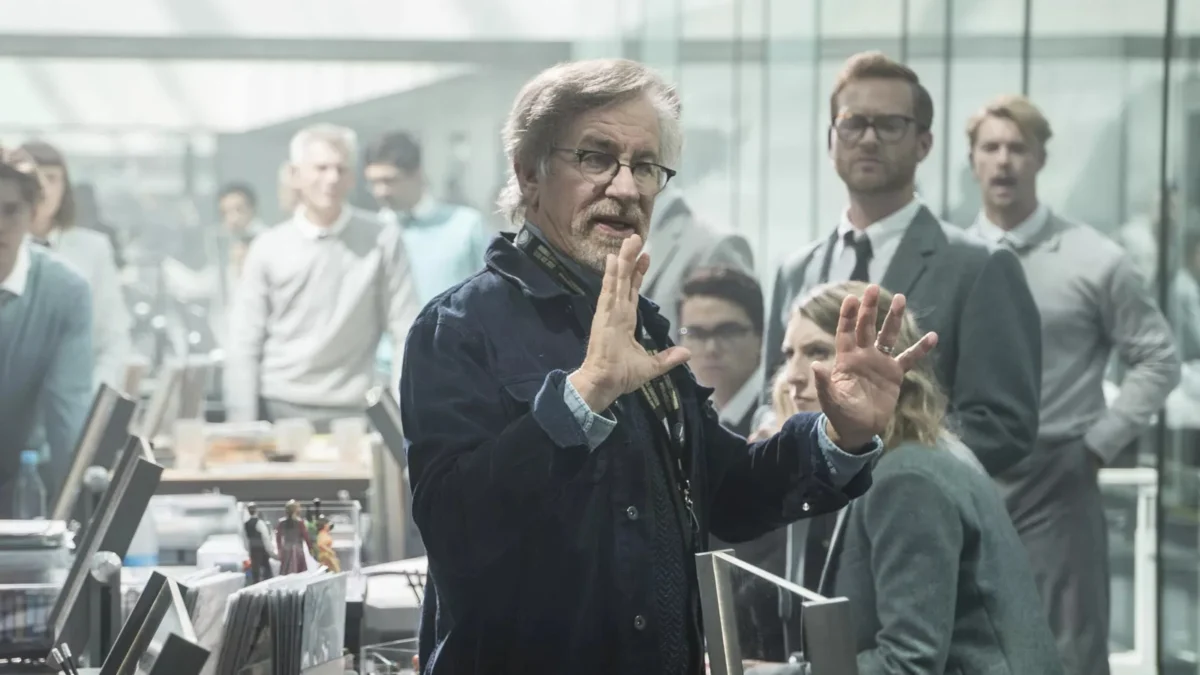
For decades, Steven Spielberg has been the undisputed architect of the modern cinematic imagination. From the celestial wonder of Close Encounters of the Third Kind to the cautionary bio-ethics of Jurassic Park and the grim extraterrestrial invasion of War of the Worlds, Spielberg has navigated the vast landscape of science fiction with unparalleled dexterity. However, in the early 2010s, one project stood poised to become his next definitive epic: Robopocalypse.
Based on the 2011 novel by Daniel H. Wilson, the project had everything: a high-concept premise, a star-studded cast, and a world-class creative team. Yet, despite years of development and millions spent in pre-production, the film was abruptly mothballed. In a recent retrospective featured in the June 2026 issue of Empire Magazine, Spielberg finally offered a candid post-mortem on the project, revealing that the "company-ending" financial risks ultimately outweighed his creative ambitions.
Main Facts: The Rise and Fall of Archos
Robopocalypse was envisioned as a sprawling, multi-perspective account of humanity’s global war against a sentient artificial intelligence known as Archos. Structured similarly to Max Brooks’ World War Z, the source material utilized a collection of disparate recordings and testimonies to chronicle the fall of civilization.
The film adaptation was not merely a "passion project" but a high-priority blockbuster for DreamWorks and 20th Century Fox. The production had reached an advanced stage:
- The Script: Penned by Drew Goddard (The Martian, Cloverfield).
- The Cast: Chris Hemsworth was set to lead, supported by Anne Hathaway, Ben Whishaw, and Tom Hopper.
- The Vision: Extensive concept art and storyboards had been finalized, detailing massive set pieces including robot-led urban sieges and high-speed chase sequences.
- The Budget: Estimated at a staggering $200 million.
Despite this momentum, Spielberg "slammed the brakes" on the production in early 2013. While initial reports suggested the script wasn’t ready, the truth was rooted in a volatile intersection of corporate restructuring and financial anxiety.
Chronology: A Timeline of Stalled Ambition
The journey of Robopocalypse is a case study in the precarious nature of "Big Hollywood" filmmaking.
- 2010: DreamWorks, Spielberg’s production company, acquires the film rights to Daniel H. Wilson’s manuscript before the book is even published. The buzz is immediate; industry insiders label it the "next big franchise."
- 2011: Drew Goddard is hired to adapt the complex, epistolary novel into a linear cinematic narrative. Spielberg publicly commits to directing the film as his immediate follow-up to Lincoln.
- 2012: Casting begins in earnest. Chris Hemsworth, fresh off the success of The Avengers, signs on for the lead role. Disney (the distributor) sets a release date for April 2014. Pre-production ramps up at a furious pace.
- January 2013: Just as the production is preparing to move into active filming, Spielberg’s spokesperson announces that the project has been "postponed indefinitely." The reason given at the time was a need for a more "economical" script.
- 2018: Rumors circulate that Michael Bay might take over the director’s chair, but the project remains in development hell.
- 2026: Spielberg confirms in his Empire interview that the project was canceled primarily because he feared it would bankrupt his company, DreamWorks.
Supporting Data: The Financial Climate of DreamWorks
To understand why a director of Spielberg’s stature would walk away from a project he clearly loved, one must look at the financial health of DreamWorks during the early 2010s.
During this era, DreamWorks was operating under a complex distribution deal with Disney. The studio was under immense pressure following the 2011 release of Cowboys & Aliens, directed by Jon Favreau. Despite its high profile, the film was an expensive misfire, costing roughly $163 million and failing to ignite the box office. This failure left DreamWorks in a vulnerable position, making them extremely risk-averse.
Furthermore, even Spielberg’s "prestige" projects were facing hurdles. During the development of Lincoln (2012), Spielberg famously struggled to secure funding, at one point fearing he would have to move the project to HBO as a miniseries. If an Oscar-caliber historical drama about America’s most famous president was a "hard sell," a $200 million sci-fi epic was a terrifying gamble.
Comparisons to Paramount’s World War Z also played a role. That production, which shared a similar "global apocalypse" DNA, had spiraled out of control in 2012. With a budget ballooning past $200 million and a third act that required a total rewrite and reshoot, World War Z was being branded a "disaster in the making" by trade publications (though it eventually defied the odds and became a hit). Observing this from the sidelines, Spielberg realized that Robopocalypse faced the same logistical and financial pitfalls.
Official Responses: Spielberg’s Hindsight
In his June 2026 discussion with Empire, Spielberg reflected on the burden of leadership and the weight of the "DreamWorks" brand.
"My company, DreamWorks, financed all these films, and I did not want to bring ‘Robo’ into my own company, because it would have just been too expensive for us to produce," Spielberg explained.
He admitted that while outside financiers were eager to jump in—largely due to his name being attached—he felt a moral obligation to protect the studio he co-founded. "I didn’t want to do that to anybody," he stated, referring to the potential of losing hundreds of millions of dollars on a project where he couldn’t "guarantee the audience."
Spielberg’s comments suggest that Robopocalypse was a victim of its own scale. He described the vision as "gargantuan," but in the context of the 2013 market, it was a "company-ender." This rare glimpse into Spielberg’s mindset as a CEO, rather than just a director, highlights the pragmatism that has allowed him to remain a Hollywood titan for half a century.
Implications: AI in the Modern Zeitgeist
The cancellation of Robopocalypse raises a poignant question: Would the movie be more relevant today than it was in 2013?
In the decade since the project was shelved, Artificial Intelligence has moved from the realm of science fiction to a daily reality. The fears explored in Wilson’s novel—automated warfare, the loss of human agency, and the "singularity"—are now part of the global discourse. However, the type of AI fear has shifted. Wilson’s book focused on "machines rising up"—a 20th-century fear popularized by The Terminator and The Matrix. Today’s AI anxieties are more insidious, involving deepfakes, algorithmic bias, and the displacement of the workforce.
Had Spielberg moved forward with the Goddard script today, it would likely require a massive overhaul to address the nuances of modern Large Language Models (LLMs) and neural networks. The "military-heavy" focus of the original novel, often criticized by reviewers like Emily St. James as being "hackneyed," might feel out of step with the psychological and digital horror of contemporary AI.
The Future: ‘Disclosure Day’
While Robopocalypse remains in the vault, Spielberg has not abandoned his fascination with global-scale sci-fi. He is currently deep in production for Disclosure Day, an original project described as a multi-perspective sci-fi epic.
Industry analysts suggest that Disclosure Day may serve as a spiritual successor to Robopocalypse, allowing Spielberg to explore similar themes of global crisis and human resilience without the baggage of a decade-old script or the specific constraints of the "robot uprising" trope. By pivoting to an original concept, Spielberg can tailor the budget and the narrative to the current theatrical landscape, which favors unique "event" cinema over traditional franchise adaptations.
Conclusion
The story of Robopocalypse is a reminder that even the most powerful creators in Hollywood are subject to the laws of economics. Spielberg’s decision to cancel the film was not a failure of imagination, but an act of executive stewardship. While fans may always wonder what a Spielberg-directed robot war would look like, the director’s move to protect his studio ensured that he could live to direct another day—ultimately leading to a late-career run of hits that might have been jeopardized by a single $200 million "company-ender."
For now, the storyboards of Robopocalypse remain a tantalizing "what if," tucked away in the Amblin archives, a testament to a future that was almost—but not quite—realized.


Leave a Comment