The Speculative Horizon: Analyzing the August 25, 2026, Literary Release Wave and the Evolution of Genre Fiction
Introduction: A Landmark Week for Speculative Fiction
The landscape of contemporary literature is undergoing a profound transformation, driven by a renewed public appetite for "speculative fiction"—an umbrella term encompassing Science Fiction, Fantasy, Horror, and Young Adult (YA) fiction. As of August 25, 2026, the publishing industry has hit a seasonal high note, with a diverse array of new titles hitting shelves and digital platforms. This week’s releases, curated and highlighted by Locus Magazine, represent more than just a list of new books; they signify the culmination of several years of shifting narrative trends and the ongoing digital evolution of book discovery.
In an era where readers are increasingly seeking both escapism and mirrors for complex global realities, the August 25 slate offers a comprehensive look at the state of the imagination. From high-concept interstellar odysseys to grounded, eerie psychological horror, the new arrivals reflect a market that is more inclusive, technologically aware, and genre-fluid than ever before.
Main Facts: The August 25 Release Portfolio
The primary focus of this week’s literary rollout is the "Big Four" of speculative genres. Locus Magazine, long considered the "journal of record" for the science fiction and fantasy fields, has identified several key pillars for this release window:
- Science Fiction: The new titles emphasize "Hard Sci-Fi" and "Solarpunk," moving away from the dystopian tropes of the early 2020s toward themes of restoration, advanced biotechnology, and the ethics of deep-space exploration.
- Fantasy: There is a notable surge in "Cozy Fantasy" and "Secondary World" adventures that prioritize intricate world-building and character-driven narratives over traditional "chosen one" tropes.
- Horror: The horror releases of August 2026 lean heavily into "Folk Horror" and "Analog Horror" aesthetics, reflecting a societal anxiety regarding the loss of privacy and the resurgence of ancient fears in a hyper-connected world.
- Young Adult (YA): The YA category continues to dominate market share by blending genres—most notably "Romantasy" (Romance and Fantasy)—and focusing on marginalized voices and neurodivergent protagonists.
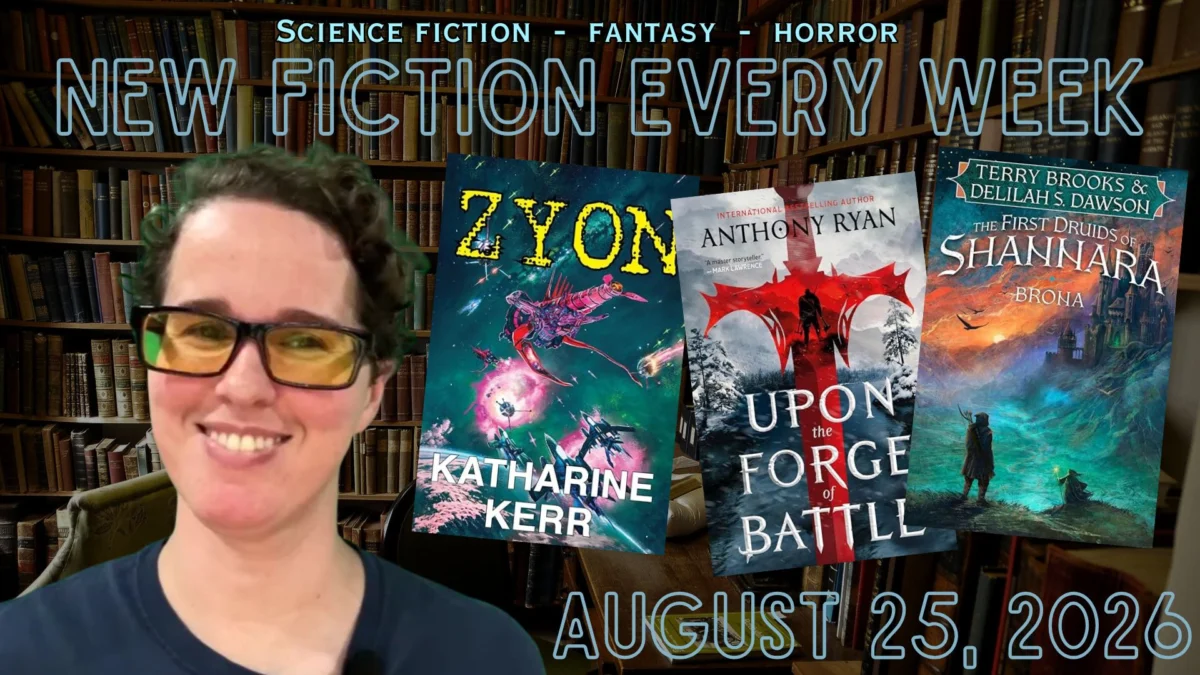
To supplement the traditional text-based reviews, Locus has integrated multi-media components, including a comprehensive video roundup. This shift highlights a broader industry trend: the "YouTube-ification" of book marketing, where visual previews and influencer-style curation are as vital as the written word.
Chronology: The Lead-Up to the Late-Summer Surge
The release of these titles on August 25, 2026, is not an isolated event but the result of a meticulously planned publishing cycle that began nearly two years prior.
- Q3 2024 – Q1 2025: Acquisition and Editing: Most of the titles released today were acquired during the post-pandemic publishing boom. Editors sought stories that could bridge the gap between traditional genre fans and the burgeoning "BookTok" and "BookTube" demographics.
- Late 2025: The ARC Phase: Advanced Reader Copies (ARCs) were distributed to critics and digital influencers six to eight months ago. This period saw the initial "buzz" building on social media platforms, particularly for the high-profile YA and Fantasy sequels released this week.
- Spring 2026: The Marketing Pivot: As the August 25 date approached, publishers shifted from broad-spectrum marketing to targeted digital campaigns. This included the production of the Locus video roundup, designed to capture the attention of readers who consume news via streaming video rather than long-form articles.
- August 25, 2026: Release Day: The official launch involves simultaneous global releases across physical bookstores, E-ink devices, and audiobook platforms. This date is strategically chosen to capture the "end-of-summer" reading market before the massive "pre-holiday" push in October and November.
Supporting Data: Market Trends and Consumer Behavior
The significance of the August 25 releases is backed by shifting data points in the global publishing market. According to industry analysts, speculative fiction has seen a 12% year-over-year growth in sales volume as of mid-2026.
The Rise of Cross-Genre Appeal
Internal data from major retailers indicates that "genre-blurring" is the most successful commercial strategy of 2026. Approximately 65% of the titles released this week do not fit into a single category. For example, several "Science Fiction" titles incorporate "Horror" elements (Space Gothic), while "Young Adult" novels are increasingly incorporating "Hard Science" themes.
The Video Influence
The inclusion of a YouTube roundup in the Locus announcement is supported by consumer behavior metrics. In 2026, 40% of readers under the age of 35 report discovering their next book through short-form or long-form video content rather than traditional search engines or storefront browsing. Locus’s decision to utilize a video format ensures that their curated list reaches a demographic that might otherwise bypass traditional literary journals.
The Sustainability of Independent Journalism
A critical data point mentioned in the Locus report is the reliance on reader donations. As advertising revenues for niche publications have fluctuated due to changes in AI-driven search algorithms, the "membership model" or "donation model" has become the lifeblood of literary criticism. Locus reports that over 50% of its operating budget now comes directly from its community, highlighting a "patronage" shift in how arts journalism is funded.

Official Responses: Industry Perspectives
The release of the August 25 roundup has prompted commentary from various sectors of the publishing world.
The Editorial Perspective
"This week’s selection represents the sheer breadth of the human imagination," stated a senior editor at a leading speculative fiction imprint. "We are seeing a move away from the ‘sameness’ of the early 2020s. Authors are taking bigger risks with narrative structure and voice, and the August 25 slate is a testament to that bravery."
The Author’s View
Many authors whose works are featured in the Locus roundup have expressed gratitude for the magazine’s continued role as a tastemaker. One debut horror novelist noted, "In a market saturated with content, having a platform like Locus highlight your work is the difference between being found and being lost in the noise. Their move into video content helps us reach the ‘visual generation’ of readers."
Locus Magazine’s Mission
In their official statement accompanying the release, the Locus team emphasized their commitment to the "Speculative Community." The plea for donations is not merely a request for funds but an invitation for readers to invest in the "ecosystem of the imagination." They argue that without independent reviewers and news hubs, the industry would become a monoculture dominated by a few "mega-bestsellers" at the expense of mid-list and experimental authors.
Implications: The Future of the Written Word
The August 25, 2026, release window serves as a microcosm for the future of the publishing industry. Several key implications can be drawn from this week’s developments:
1. The End of "Genre Silos"
The success of this week’s diverse titles suggests that the traditional boundaries between Sci-Fi, Fantasy, and Horror are permanently dissolving. Future writers will likely be trained and marketed as "speculative authors" rather than being pigeonholed into a single sub-genre. This allows for greater creative freedom and broader market reach.
2. The Digital-First Discovery Model
The reliance on YouTube roundups and social media engagement confirms that the "physical bookstore discovery" model is now secondary to the "digital recommendation" model. Publishers will likely continue to divert marketing budgets away from traditional print ads and toward content creators and interactive media.
3. The Crisis and Opportunity in Arts Journalism
The urgent call for donations from Locus highlights a precarious moment for literary criticism. While the content (the books) is thriving, the infrastructure (the reviewers and news outlets) is struggling. If independent outlets like Locus cannot find a sustainable financial path, the industry may lose its "institutional memory" and its ability to provide objective, expert-level critique.
4. Speculative Fiction as a Cultural Compass
As the world faces unprecedented technological and environmental changes in the mid-2020s, the August 25 releases suggest that speculative fiction has become the primary tool for cultural sense-making. By imagining "what if," these authors are providing readers with the emotional and intellectual frameworks needed to navigate a rapidly changing reality.
Conclusion
The August 25, 2026, release roundup is more than a mere list of titles; it is a snapshot of a vibrant, evolving, and resilient literary culture. As Locus Magazine continues to bridge the gap between traditional expertise and modern media consumption, the speculative fiction community remains at the forefront of the global conversation. Whether through a haunting horror novel, a soaring fantasy epic, or a grounded YA drama, the stories arriving this week offer a glimpse into the collective dreams—and nightmares—of the future. For the dedicated reader, the message is clear: the horizon of the imagination is expanding, and there has never been a better time to get lost in a book.