
The Surveillance Frontier: Navigating the Legal and Ethical Quagmire of Smart Glasses in the Enterprise
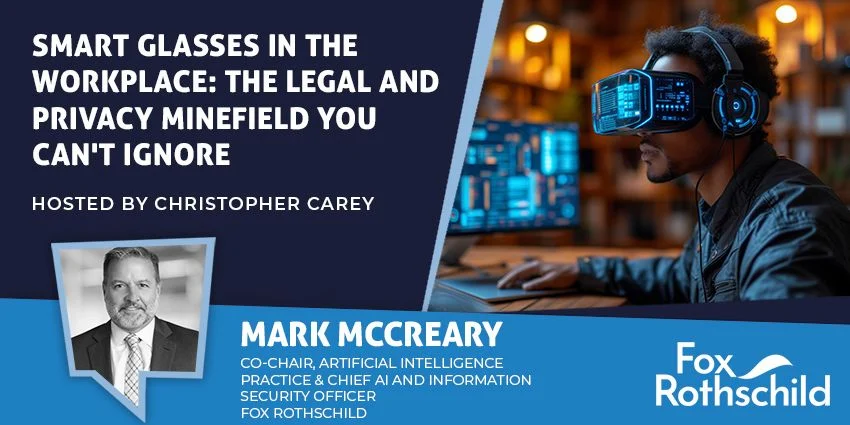
The rapid integration of wearable artificial intelligence into the professional sphere is outstripping the ability of legislative bodies to regulate it. As devices like the Meta Ray-Ban smart glasses become more discreet and powerful, the modern workplace is transforming into a theater of continuous, often invisible, data collection. While these devices promise enhanced productivity and seamless communication, they simultaneously introduce a "minefield" of legal liabilities, privacy violations, and data integrity risks.
According to Mark McCreary, Chief AI and Information Security Officer at Fox Rothschild, the enterprise is currently ill-equipped to handle the silent arrival of these devices. Speaking to UC Today, McCreary highlighted a precarious reality: the tools designed to streamline the workflow may inadvertently dismantle the trust and legal compliance of the organizations that adopt them.
Main Facts: The Stealth Integration of Wearable AI
Smart glasses represent a significant departure from previous workplace technologies. Unlike a laptop or a smartphone, which must be actively held or positioned to record, smart glasses allow for hands-free, continuous capture of high-definition video, audio, and spatial data. In many instances, colleagues and visitors may remain entirely unaware that they are being recorded or that their conversations are being processed by cloud-based AI models in real-time.
The core issues identified by industry experts include:
- Inconspicuous Recording: Modern smart glasses are designed to look like traditional eyewear, making it nearly impossible for others to discern when a recording session is active.
- AI Transcription Inaccuracies: The reliance on AI to transcribe recorded conversations introduces "hallucinations" and errors. If these inaccurate records are used in HR disputes or legal proceedings, they can create a secondary layer of conflict.
- Jurisdictional Complexity: The legality of recording is governed by a patchwork of state and federal laws that do not account for the mobile, remote nature of the modern workforce.
- Data Sovereignty: Many wearable devices send data back to the manufacturer’s servers to "improve the model," potentially exposing sensitive corporate intellectual property to third-party vendors and competitors.
Chronology: From Specialized Tools to Mass-Market Risks
The evolution of smart glasses in the workplace has moved through several distinct phases, each bringing the technology closer to the current state of legal uncertainty.
- 2013–2015: The Prototype Era. Google Glass introduced the concept of head-mounted displays to the public. However, due to its distinct, "cyborg-like" appearance and high price point, it remained a niche tool for specialized industrial applications, such as surgery or complex manufacturing assembly. The social stigma (the "Glasshole" phenomenon) largely kept it out of the general office environment.
- 2016–2021: Industrial Maturation. Companies like Vuzix and RealWear focused on the "frontline worker." These devices were bulky and clearly visible, designed for remote assistance in warehouses or oil rigs. Because their use was task-specific and overt, the legal implications were relatively contained.
- 2022–Present: The Consumer-Enterprise Convergence. The launch of the Meta Ray-Ban glasses marked a turning point. By merging high-end AI with fashionable, "normal" aesthetics, the technology entered the mainstream. Employees began bringing these personal devices into the office (BYOD), creating a scenario where the "always-on" camera became a standard, yet invisible, feature of the business suit.
- 2024 and Beyond: The Legal Reckoning. We are now entering a phase of litigation. Class-action lawsuits against manufacturers regarding privacy and data collection are beginning to move through the courts, forcing employers to define their stance before a judicial precedent is set for them.
Supporting Data: The Legislative Patchwork
The primary legal hurdle for smart glasses in the United States is the discrepancy between state wiretap and privacy laws. Currently, the US operates under a fragmented system that creates significant risk for multi-state enterprises.
The Consent Conundrum
US wiretap laws generally fall into two categories:
- One-Party Consent: The majority of states allow a recording as long as one person in the conversation (often the person recording) consents.
- Two-Party (All-Party) Consent: Between 11 and 13 states (including Pennsylvania, California, Florida, and Illinois) require every participant in a conversation to agree to being recorded.
McCreary points out that this creates a "geographic trap." An employer based in a one-party consent state like New York may mistakenly believe they are safe, while an employee recording a Zoom call from their home office in Pennsylvania is technically violating state law. In a world of hybrid work, the physical location of the wearer and the subject determines the legality of the act, making a single corporate policy difficult to enforce.
The European Contrast
In the European Union, the General Data Protection Regulation (GDPR) provides a more unified, albeit stricter, framework. GDPR classifies biometric and spatial data as sensitive. Under these rules, capturing a person’s likeness or voice without a clear legal basis (usually explicit consent or a documented legitimate interest) can result in fines totaling millions of euros. Unlike the US, which lacks a federal privacy standard, European businesses have a clearer—if more burdensome—mandate to prohibit unauthorized wearable recordings.
The "Hallucination" Factor
Supporting data from AI research suggests that even the most advanced transcription models have error rates ranging from 3% to 15%, depending on accents, background noise, and technical jargon. In a legal context, a 5% error rate is catastrophic. If an AI incorrectly transcribes a manager saying "I want to fire him" instead of "I want to hire him," the resulting litigation could hinge on a digital artifact rather than the truth.
Official Responses and Expert Warnings
The response from legal experts and corporate officers has been one of extreme caution. Mark McCreary’s assessment of the situation as a "minefield" reflects a growing consensus among Chief Information Security Officers (CISOs).
The Three Pillars of Liability
McCreary identifies three distinct parties that could face legal consequences when a smart glasses recording goes wrong:
- The Wearer: Individuals can be held personally liable for privacy violations or criminal wiretap infractions.
- The Manufacturer: Companies like Meta are facing scrutiny over whether their hardware facilitates privacy violations by design.
- The Employer: This is the most significant risk for the enterprise. Employers have a "duty of care" to maintain a safe and private environment. If an employer allows smart glasses in the office and a sensitive client meeting is recorded and leaked, the employer may be found negligent for failing to implement an "unauthorized recording" policy.
The Meta Class Action Context
Currently, the courts are beginning to test the limits of manufacturer and employer responsibility. A notable class-action lawsuit involving Meta’s data collection practices is serving as a bellwether for the industry. The outcome of such cases will likely determine if "notice" (such as the small LED light on the glasses) is legally sufficient to constitute consent.
Implications: The Path Forward for Enterprises
The arrival of smart glasses necessitates an immediate and comprehensive policy overhaul for any modern business. McCreary and other legal analysts suggest a multi-pronged strategy to mitigate risk.
1. The Paradox of the "Flat Ban"
While the simplest solution might seem to be a total ban on smart glasses in the workplace, such a policy is fraught with its own legal dangers. The Americans with Disabilities Act (ADA) requires employers to provide reasonable accommodations for employees with disabilities. Some smart glasses are prescribed for the visually impaired to help them navigate or read text. A blanket ban that does not include a robust ADA accommodation process could lead to discrimination lawsuits.
2. Visitor and Client Policies
Enterprises must look beyond their own staff. Policies regarding "Prohibited Devices" must be clearly posted at entrances, and non-disclosure agreements (NDAs) for visitors should specifically mention wearable recording devices. If a visitor records a proprietary manufacturing process or a confidential board meeting via their glasses, the company must have a legal mechanism to seize or delete that data.
3. The Vendor Contract Trap
Perhaps the most overlooked implication is the relationship between the enterprise and the device manufacturer. McCreary warns that standard consumer terms of service often allow the manufacturer to use data captured by the device to "train their AI models."
"It’s going to be very rare where it makes sense for you to give over information about how your company operates so that your vendor can improve their model and then sell it to your competitors," McCreary noted. Businesses must negotiate enterprise-grade contracts that ensure "data siloing," preventing corporate secrets from being absorbed into a public AI’s knowledge base.
4. Active Training and Culture
Policy on paper is insufficient. Employers must engage in active staff training to explain the why behind recording restrictions. This includes educating employees on the nuances of consent laws and the risks of using AI-generated transcripts for official business records.
Conclusion
Smart glasses are no longer a futuristic curiosity; they are a present-day liability. As the line between personal wearables and professional tools continues to blur, the burden of responsibility falls squarely on the employer. Navigating this "minefield" requires a delicate balance: embracing the technological advantages of AI while building a fortress of policy to protect the privacy of employees and the integrity of corporate data. Without a federal standard in the US, the next few years will likely be defined by "regulation by litigation," where the boundaries of the wearable frontier are drawn in the courtroom.


Leave a Comment